
You've spent $50,000 on Meta ads this quarter. Google Ads ate another $30,000. LinkedIn campaigns? Another $20,000. Your dashboard shows thousands of clicks, hundreds of trial signups, and dozens of demo requests. But here's the question keeping you up at night: which of those campaigns actually generated paying customers?
If you're running a SaaS marketing operation, this scenario hits close to home. You're juggling multiple ad platforms, watching prospects bounce between channels over weeks or months, and trying to connect the dots between that first ad click and the eventual $5,000 annual contract. Traditional tracking tells you someone clicked your ad. It might even tell you they signed up for a trial. But did they convert to paid? Did that LinkedIn ad actually influence the deal, or did it just happen to be the last thing they clicked before buying?
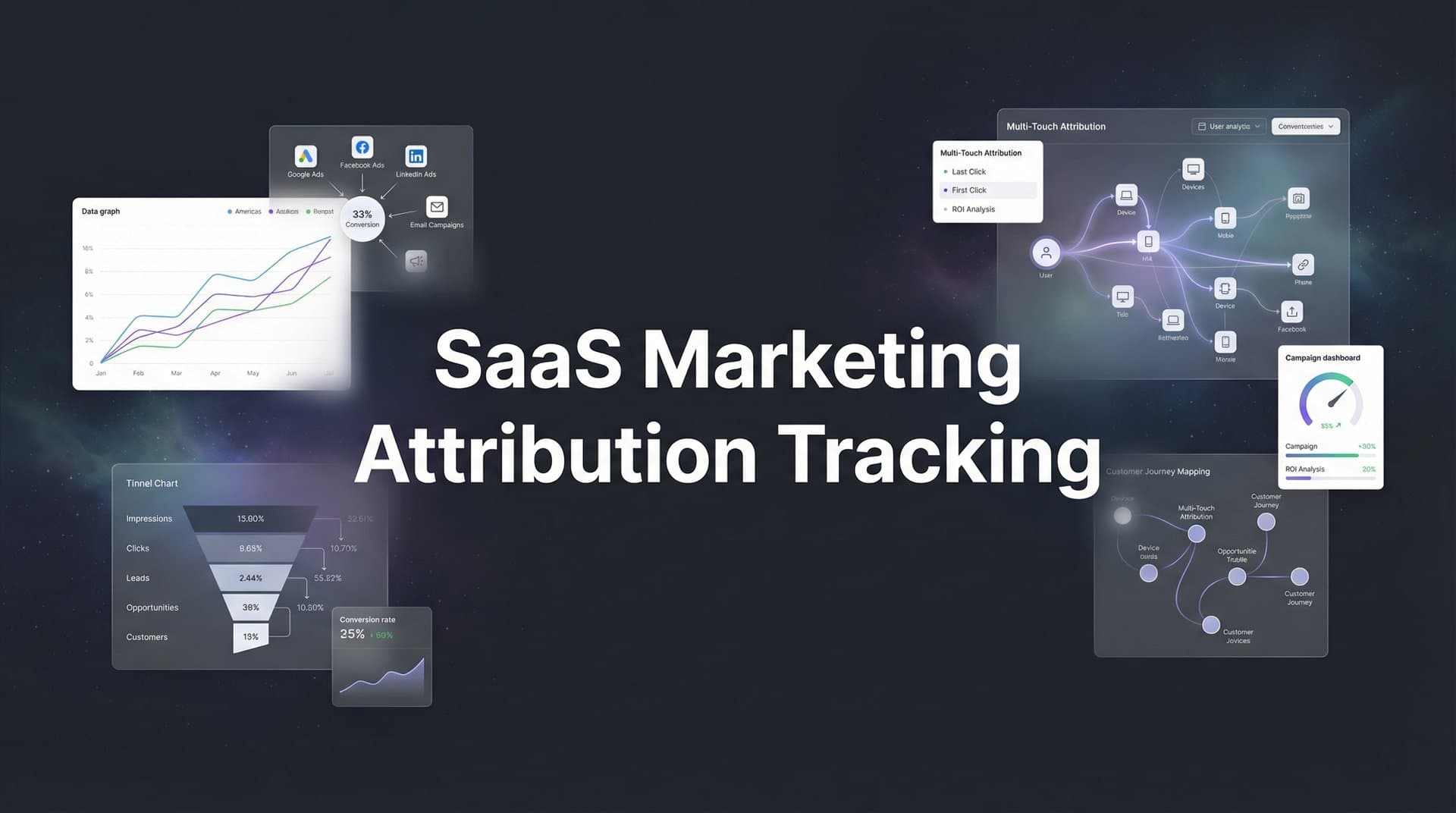
This is where marketing attribution tracking becomes your competitive advantage. It's the system that follows your prospects through their entire journey—from that first Facebook ad impression through the webinar they attended, the comparison blog post they read, the demo they booked, and finally to the moment they became a paying customer. For SaaS companies operating in an increasingly complex digital landscape, attribution tracking isn't just helpful. It's the difference between confidently scaling your winners and accidentally pouring budget into channels that look good on paper but don't actually drive revenue.
The SaaS Attribution Puzzle: Why Traditional Tracking Falls Short
SaaS marketing attribution presents challenges that e-commerce marketers never face. When someone buys a pair of shoes online, the journey is straightforward: they see an ad, click, browse, and buy—usually within the same session or day. Your tracking pixel captures it all, and you know exactly which ad drove the sale.
Now picture your typical B2B SaaS buyer. They first discover your product through a LinkedIn ad while researching solutions at work. Three days later, they Google your category and click your paid search ad to read comparison content. A week after that, they attend your webinar. Two weeks later, they finally request a demo. Then your sales team nurtures them for another month before they convert to a paid plan. That's six weeks, multiple devices, countless touchpoints, and several decision-makers involved in a single conversion.
Traditional pixel-based tracking breaks down completely in this scenario. Browser-based pixels can't follow users across devices when your prospect researches on their phone during their commute, then signs up from their work laptop. Cookie-based tracking fails when someone clears their browser data or uses different browsers for work and personal research.
The situation got exponentially worse with iOS 14.5 and App Tracking Transparency. When Apple gave users the option to block tracking, roughly 75% of iOS users opted out. Suddenly, a huge portion of your mobile traffic became invisible to your tracking pixels. Facebook's pixel, which used to capture detailed user behavior, now operates with massive blind spots. You're making budget decisions based on incomplete data.
Add in the complexity of free trials and freemium models, and attribution becomes even murkier. A trial signup might look like a conversion in your ad platform, but if only 20% of trials convert to paid customers, you're dramatically overestimating your campaign performance. You need to track not just who signed up, but who actually started paying—and connect that revenue back to the original marketing touchpoint that started their journey. Understanding marketing attribution software for SaaS is essential for solving this challenge.
The Mechanics of Modern Attribution: Following the Complete Journey
Effective marketing attribution tracking for SaaS requires a fundamentally different approach than traditional pixel-based tracking. Instead of relying solely on browser cookies that can be blocked or deleted, modern attribution systems use server-side tracking to capture first-party data directly from your servers.
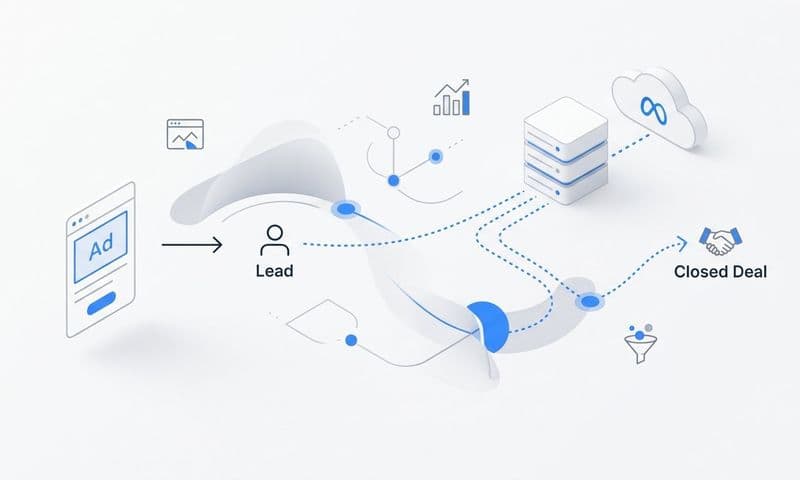
Here's how it works: When a visitor lands on your site from an ad, server-side tracking captures that referral information on your server—not just in their browser. This data gets stored in your database, tied to a unique identifier for that visitor. When they return later from a different device or channel, your attribution system can connect those visits to the same person by matching identifiers like email addresses, phone numbers, or account IDs once they provide that information.
This approach captures touchpoints that browser-based pixels miss entirely. When someone clicks your Facebook ad on their iPhone but opts out of tracking, your server still receives the referral data. When they return three days later on their work computer and sign up for a trial, your attribution system connects both touchpoints to the same prospect. You're building a complete picture of their journey, not just the fragments that cookies managed to capture.
Customer journey mapping takes this raw touchpoint data and constructs the actual path each prospect took from awareness to conversion. This isn't just a list of clicks—it's the story of how someone discovered your solution, evaluated alternatives, engaged with your content, and ultimately decided to buy. Your attribution system tracks ad impressions, organic searches, email opens, content downloads, webinar attendance, demo requests, and trial signups as distinct events in a timeline.
The real power emerges when you integrate your CRM into this attribution framework. Now you're not just tracking anonymous website visitors—you're connecting marketing touchpoints to actual revenue outcomes. When a lead converts to an opportunity in your CRM, your attribution system looks backward through their entire journey to identify which marketing activities influenced that deal. Implementing marketing attribution platforms for revenue tracking enables this level of insight.
This CRM integration also solves the trial-to-paid conversion challenge. Your attribution system doesn't just track trial signups as conversions—it waits to see which trials actually convert to paying customers, then attributes that revenue back to the marketing touchpoints that started the journey. You stop celebrating vanity metrics like trial signups and start optimizing for what actually matters: paying customers.
Choosing Your Attribution Model: Different Lenses on the Same Journey
Once you're capturing the complete customer journey, you need to decide how to assign credit for conversions across multiple touchpoints. This is where attribution models come in—different frameworks for distributing credit among the various marketing activities that influenced a sale.
First-touch attribution gives all credit to the initial touchpoint that brought someone into your funnel. If a prospect first discovered you through a LinkedIn ad, that campaign gets 100% credit for the eventual conversion, regardless of what happened afterward. This model reveals which channels are best at generating awareness and bringing new prospects into your ecosystem. It's particularly useful for top-of-funnel budget allocation—you can identify which campaigns are most cost-effective at introducing your brand to new audiences.
Last-touch attribution takes the opposite approach, giving all credit to the final touchpoint before conversion. If someone attended your webinar right before signing up for a paid plan, the webinar gets full credit even if they first discovered you months earlier through a different channel. This model highlights which activities are most effective at closing deals and converting prospects who are already in your funnel. For a deeper dive into this approach, explore last click marketing attribution software options.
The challenge with single-touch models is they ignore the reality of complex B2B buying journeys. If your average customer interacts with seven touchpoints before converting, giving all credit to just one touchpoint dramatically undervalues the other six. This is where multi-touch attribution models become essential for SaaS companies.
Linear attribution distributes credit equally across all touchpoints in the journey. If someone engaged with five different marketing activities before converting, each one receives 20% of the credit. This model acknowledges that every interaction played a role in the conversion, making it useful for understanding the full ecosystem of activities that drive results. However, it assumes all touchpoints are equally important, which often isn't true. Learn more about linear model marketing attribution software to see if this approach fits your needs.
Time-decay attribution gives more credit to touchpoints closer to the conversion. The theory is that interactions happening near the purchase decision have more influence than early-stage awareness activities. This model works well for SaaS companies with long sales cycles where recent engagement—like a demo or free trial—has more direct impact on the buying decision than the blog post they read two months earlier.
Position-based attribution (also called U-shaped) gives the most credit to the first and last touchpoints, with remaining credit distributed among middle interactions. Typically, first and last touch each receive 40% of the credit, while the middle touchpoints share the remaining 20%. This model recognizes that both introducing someone to your brand and closing the deal are critical moments, while still acknowledging the nurturing that happened in between.
For SaaS companies with deal sizes under $5,000 and relatively short sales cycles, time-decay or position-based models often provide the most actionable insights. They help you understand both what brings people in and what converts them, without overcomplicating the analysis. For enterprise SaaS with six-month sales cycles and multiple stakeholders, linear attribution might better reflect the reality that every touchpoint—from that initial thought leadership content to the final ROI calculator—played a meaningful role in building consensus among decision-makers. A comprehensive multi-touch marketing attribution platform guide can help you navigate these decisions.
Building Your Attribution Infrastructure: The Essential Components
Setting up effective attribution tracking requires connecting three core systems: your ad platforms, your website and marketing automation tools, and your CRM. Each component captures different pieces of the customer journey, and the integration between them creates the complete picture.
Start by connecting your major ad platforms—Meta, Google Ads, LinkedIn, and any other channels where you're running campaigns. Your attribution system needs to ingest data from these platforms to understand which campaigns, ad sets, and individual ads are generating clicks and impressions. This connection typically works through APIs that pull campaign performance data into your attribution platform automatically. You're not just tracking that someone came from "Facebook"—you're tracking which specific campaign, ad set, and creative drove their visit.
The critical piece here is implementing server-side tracking on your website. Instead of relying solely on browser pixels that can be blocked, you'll add server-side code that captures visitor data directly on your server and sends it to your attribution platform. When someone lands on your site from an ad, your server logs the referral source, campaign parameters, and visitor identifier. This data gets stored even if the visitor has blocked cookies or tracking pixels in their browser.
Your marketing automation platform—whether that's HubSpot, Marketo, or another tool—becomes the middle layer that tracks engagement beyond the initial website visit. When prospects download content, attend webinars, or open emails, your marketing automation tool logs these interactions. Integrating this data into your attribution system ensures you're tracking the full nurture journey, not just paid ad clicks and website visits. Robust marketing campaign tracking software makes this integration seamless.
CRM integration is where attribution tracking becomes truly powerful for SaaS companies. Your CRM holds the ultimate truth about which prospects became customers and how much revenue they generated. By connecting your CRM to your attribution platform, you can track each lead from their first marketing touchpoint all the way through to closed revenue. When a lead becomes an opportunity, your attribution system can look backward through their complete journey to identify which marketing activities influenced that deal.
This integration requires careful field mapping to ensure data flows correctly between systems. You'll typically match leads and contacts in your CRM to user profiles in your attribution platform using email addresses or unique identifiers. When deal stages change in your CRM—from lead to opportunity to closed-won—those events trigger updates in your attribution platform that connect revenue outcomes back to marketing touchpoints.
The technical implementation varies depending on your stack, but modern attribution platforms handle much of the complexity through pre-built integrations. You're not building custom code from scratch—you're configuring connections through user-friendly interfaces that pull data from your existing tools. The key is ensuring you have administrative access to all the systems you need to connect and that you're tracking consistent identifiers across platforms.
From Data to Decisions: Making Attribution Actionable
Raw attribution data is worthless unless you translate it into specific actions that improve your marketing performance. The real value emerges when you start using attribution insights to make smarter budget allocation decisions and optimize your campaigns for revenue, not vanity metrics.
Start by analyzing which campaigns drive qualified leads versus tire-kickers. Your attribution data reveals not just which campaigns generate the most trial signups, but which ones generate trials that actually convert to paying customers. You might discover that your Facebook campaigns generate 3x more trial signups than LinkedIn, but LinkedIn trials convert to paid at twice the rate. Suddenly, the channel that looked less impressive on surface-level metrics becomes your most valuable source of revenue.
This distinction matters enormously for SaaS companies where free trials and freemium models create a massive gap between signups and actual customers. Attribution tracking that connects all the way through to paid conversions lets you calculate true cost per acquisition by channel. You might be paying $50 per trial signup on Google Ads and $80 per trial on LinkedIn, but if Google trials convert at 10% and LinkedIn trials convert at 30%, your actual cost per customer is $500 on Google versus $267 on LinkedIn. Attribution data reveals which channels deliver profitable growth, not just high signup volume.
Use these insights to reallocate budget toward channels with the best revenue efficiency. If your attribution data shows that certain campaign types or audience segments consistently drive higher-value customers with better conversion rates, shift more budget to those winners. This isn't about gut feelings or which platform has the slickest dashboard—it's about following the money to channels that actually drive profitable growth. Understanding channel attribution in digital marketing helps you make these decisions with confidence.
Another powerful application is feeding accurate conversion data back to your ad platforms. When you send enriched conversion events from your attribution system back to Meta or Google, you're teaching their algorithms what a valuable conversion actually looks like. Instead of optimizing for any trial signup, you're training the platform to find people similar to those who became paying customers. This creates a virtuous cycle where your targeting gets progressively better as your attribution system identifies higher-quality conversion patterns.
Attribution data also helps you optimize your creative and messaging. When you can see which ad creative and landing page combinations drive the highest rates of trial-to-paid conversion, you can double down on messaging that resonates with your best customers. You might discover that ads emphasizing ROI and efficiency metrics attract prospects who convert at higher rates than ads focused on features and capabilities. That insight lets you refine your creative strategy to attract more of your ideal customers.
Attribution Pitfalls That Sabotage SaaS Marketing Budgets
Even with attribution tracking in place, several common mistakes can lead you to misallocate budget and make poor optimization decisions. Understanding these pitfalls helps you avoid the traps that waste marketing spend.
The biggest mistake is relying solely on platform-reported conversions without cross-referencing them against your attribution system. Facebook claims credit for a conversion when someone clicks your ad and later converts, even if they interacted with five other marketing touchpoints in between. Google Ads does the same thing. LinkedIn follows suit. When you add up the conversions each platform claims, you'll often find they total 150-200% of your actual customer count. This double-counting (or triple-counting) makes every channel look more effective than it actually is. Understanding the difference between marketing attribution software vs traditional analytics clarifies why this happens.
Your attribution system solves this by providing a single source of truth that assigns credit based on your chosen attribution model rather than letting each platform claim full credit. When you compare platform-reported conversions to attribution-tracked conversions, you'll typically find significant discrepancies that reveal which channels are inflating their numbers.
Another critical mistake is ignoring offline conversions and sales-assisted deals in your attribution analysis. For many B2B SaaS companies, the majority of revenue comes through sales-assisted deals rather than pure self-service conversions. If your attribution tracking only captures self-service signups and ignores the deals where someone filled out a demo request form, had three sales calls, and then signed a contract, you're missing the bulk of your revenue story. Make sure your CRM integration captures these sales-assisted conversions and attributes them back to the marketing touchpoints that generated the initial lead.
Using too short an attribution window is particularly problematic for SaaS companies with long sales cycles. If your attribution system only looks back 30 days when assigning credit, but your average sales cycle is 60 days, you're systematically undervaluing top-of-funnel activities that happened more than a month before conversion. Set your attribution window to match or exceed your typical sales cycle length. For enterprise SaaS with 90-day cycles, use a 90-day or even 120-day attribution window to ensure you're capturing the full journey. Review common attribution challenges in marketing analytics to avoid these mistakes.
Many SaaS marketers also make the mistake of treating all conversions equally in their attribution analysis. A customer who signs up for a $10/month plan shouldn't receive the same attribution weight as one who signs up for a $500/month enterprise plan. Use revenue-weighted attribution that factors in customer lifetime value or contract size when analyzing which channels drive the most valuable customers. You might discover that certain channels drive higher volume but lower value, while others generate fewer conversions but much higher revenue per customer.
Taking Control of Your Marketing Performance
Marketing attribution tracking isn't a luxury for SaaS companies anymore—it's the foundation of profitable growth. Without it, you're flying blind, making budget decisions based on incomplete data and platform-reported metrics that inflate performance. With it, you have a clear view of which campaigns actually drive revenue and can confidently scale the channels that deliver real results.
The shift from browser-based tracking to server-side, first-party data collection has made attribution more reliable than ever. You're no longer at the mercy of cookie deprecation and iOS privacy changes. By connecting your ad platforms, website, marketing automation, and CRM into a unified attribution system, you build a complete picture of how prospects become customers and which marketing activities influence those conversions.
The SaaS companies winning in today's competitive landscape aren't just spending more on marketing—they're spending smarter. They're using attribution data to identify which campaigns drive qualified leads that actually convert to paid customers. They're reallocating budget away from channels that generate impressive signup numbers but poor revenue outcomes. They're feeding accurate conversion data back to ad platforms to improve targeting and reach more of their ideal customers.
If you're still making budget decisions based on platform-reported metrics or celebrating trial signups without tracking which ones convert to revenue, you're leaving money on the table. The difference between a marketing operation that scales profitably and one that burns budget on underperforming channels comes down to attribution tracking that connects every touchpoint to actual revenue outcomes.
Ready to elevate your marketing game with precision and confidence? Discover how Cometly's AI-driven recommendations can transform your ad strategy—Get your free demo today and start capturing every touchpoint to maximize your conversions.