Incomplete conversion data in ad platforms is one of the most damaging problems a B2B SaaS marketing team can face. When your ad platform only sees a fraction of the conversions actually happening, its optimization algorithms make poor decisions, your ROAS looks worse than it is, and budget gets shifted to the wrong campaigns.
The root causes are well understood: browser privacy restrictions, iOS tracking changes, ad blockers, misconfigured pixels, and CRM data that never syncs back to your ad platforms. The result is always the same. You are spending real budget based on incomplete signals.
This list covers the top tools built to solve incomplete conversion data at every layer, whether the gap is in tracking setup, data enrichment, attribution modeling, or feeding cleaner signals back to Meta, Google, and other ad networks.
1. Cometly
Best for: B2B SaaS teams that need complete attribution from first ad click to closed-won revenue
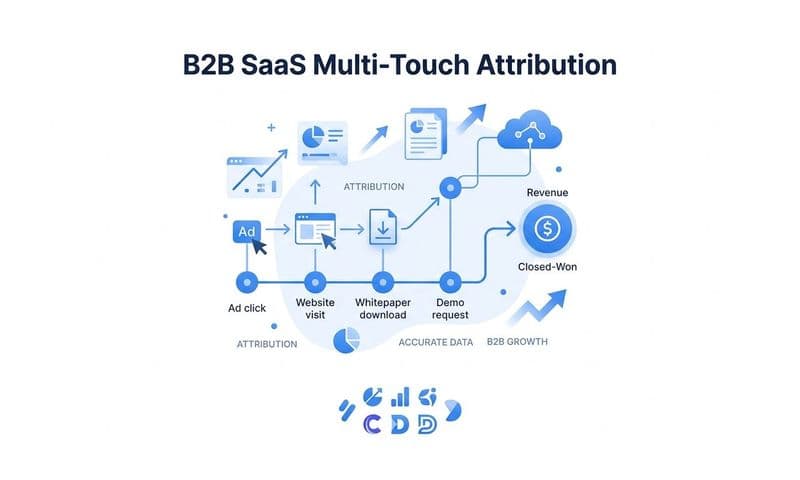
Cometly is a marketing attribution and analytics platform built specifically for B2B SaaS companies that connects ad platforms, CRM data, and website events into a single source of truth.
 9 Best Attribution Platforms for Agencies in 2026
Where This Tool Shines
Most attribution tools stop at the lead. Cometly goes further, connecting ad spend directly to pipeline stages and closed revenue. This matters enormously for B2B SaaS teams where the gap between a first ad click and a closed deal can span weeks or months, well beyond the default attribution windows that Meta and Google use.
The platform addresses incomplete conversion data at the source by using server-side tracking and Conversion API integration to bypass the browser-based limitations that cause pixel data to degrade. Instead of relying on what the browser reports, Cometly sends enriched, first-party conversion events directly from the server to Meta, Google, and other ad platforms, improving the quality of signals those platforms use to optimize your campaigns.
Key Features
Server-Side Conversion Tracking and CAPI Integration: Sends conversion events directly from the server to Meta and Google, bypassing ad blockers and browser privacy restrictions that degrade pixel data.
Multi-Touch Attribution Models: Compare first-touch, last-touch, linear, and other attribution models side by side to understand the true contribution of each channel and campaign.
Pipeline and Revenue Attribution: Connects ad spend to CRM deal stages so you can see which campaigns are actually generating pipeline and closed revenue, not just leads.
AI Ads Manager: Surfaces recommendations on which campaigns to scale, pause, or reallocate budget to based on actual revenue performance rather than platform-reported metrics.
Stripe Revenue Integration: Ties ad data directly to subscription revenue, giving SaaS teams a clear view of which campaigns drive paying customers.
70+ Native Integrations: Connects with major ad platforms, CRMs like HubSpot and Salesforce, and data tools without custom engineering work.
Best For
B2B SaaS marketing teams and growth leaders who need to connect ad spend to revenue, not just leads. Particularly valuable for teams running paid campaigns on Meta and Google who have experienced degraded attribution since iOS privacy changes, and for companies that want to feed better conversion signals back to ad platform algorithms.
Pricing
Paid plans available, with pricing based on tracked events and data volume. Contact Cometly directly for current pricing details.
2. Segment (Twilio Segment)
Best for: Engineering and marketing teams that need a centralized first-party data layer for all conversion events
Segment is a customer data platform that acts as a central hub for collecting, transforming, and routing first-party event data to any downstream destination.
 9 Best Conversion Tracking Alternatives to Pixels in 2026
Where This Tool Shines
Segment solves incomplete conversion data by replacing fragmented, platform-specific pixels with a single instrumentation layer. You instrument Segment once, and it routes clean, structured event data to every destination, including Meta, Google Ads, Salesforce, and your data warehouse. This eliminates the scenario where different tools are collecting different versions of the same event.
Its server-side event collection is particularly valuable for bypassing browser restrictions. Because events are sent from a server rather than the user's browser, ad blockers and cookie limitations do not interfere with the data reaching your ad platforms.
Key Features
Server-Side Event Collection: Collects and forwards events from your server rather than the browser, bypassing ad blockers and browser tracking restrictions.
400+ Destination Integrations: Routes data to Meta, Google Ads, Salesforce, HubSpot, and hundreds of other tools from a single source.
Event Schema Management: Enforces consistent event naming and parameter structures so conversion data is uniform across all platforms.
User Profiles: Unifies user data across sessions and devices to create a more complete picture of the customer journey.
Custom Functions: Allows event transformation before data is forwarded, so you can enrich or reformat conversion events to meet each platform's requirements.
Best For
Teams with engineering resources who want a robust, scalable data infrastructure. Segment is particularly well suited for companies managing multiple products or complex customer journeys where a single tracking layer pays significant dividends.
Pricing
Free tier available for low-volume use. Team and Business plans scale with monthly tracked users. Enterprise pricing available on request.
3. Triple Whale
Best for: DTC and Shopify brands that need first-party data and post-purchase attribution to fill tracking gaps
Triple Whale is a data platform that uses a first-party pixel and post-purchase attribution surveys to reconstruct conversion data that ad platforms miss.
 9 Best Tools to Fix Incomplete Conversion Data in Ad Platforms in 2026
Where This Tool Shines
Triple Whale was built around a core insight: if you cannot trust what Meta and Google report, you need your own data collection layer. Its first-party pixel captures conversion events independently of ad platform pixels, giving you a baseline that is not subject to the same browser restrictions or platform-level discrepancies.
The post-purchase survey feature adds a qualitative layer that no pixel can replicate. By asking customers how they heard about you at the point of purchase, Triple Whale captures channel influence that tracking simply cannot see, such as podcast ads, word of mouth, or influencer content.
Key Features
First-Party Pixel: Collects conversion data independently of Meta and Google pixels, providing a separate baseline for attribution.
Post-Purchase Attribution Surveys: Captures self-reported channel influence directly from customers at the moment of conversion.
Blended ROAS Dashboards: Combines data from multiple sources into a single performance view across all paid channels.
Creative Analytics: Reports on ad-level performance to identify which creatives are driving actual conversions.
Pixel Triplestore Technology: Applies cross-device identity resolution to improve attribution accuracy across fragmented user journeys.
Best For
Shopify and DTC brands managing significant paid media budgets who have experienced tracking degradation since iOS privacy changes. Less suited to complex B2B SaaS sales cycles with long deal timelines.
Pricing
Paid plans starting from several hundred dollars per month, scaling with revenue volume. Free trial available.
4. Northbeam
Best for: Performance marketers managing large cross-channel budgets who need attribution even when tracking data is partial
Northbeam is a multi-touch attribution platform that uses machine learning to model conversion attribution across paid channels where tracking is often incomplete.
 9 Best Cross Platform Tracking Solutions for Marketers in 2026
Where This Tool Shines
Northbeam takes a different approach to incomplete data: instead of only reporting on what it can directly observe, it uses machine learning models to estimate attribution when tracking data is partial. This is particularly useful for performance marketers who know their pixel data is degraded but still need actionable channel-level insights to make budget decisions.
Its cross-channel view is comprehensive, pulling together Meta, Google, TikTok, and other paid platforms into a single attribution model that accounts for the different ways each platform reports conversions. This makes it easier to compare performance across channels on a consistent basis.
Key Features
ML-Driven Attribution Modeling: Estimates conversion attribution even when tracking data is incomplete, using statistical modeling to fill gaps.
Cross-Channel Attribution: Covers Meta, Google, TikTok, and other paid platforms in a single normalized view.
Custom Attribution Windows: Goes beyond standard ad platform defaults to reflect actual purchase timelines.
Spend Pacing and Budget Optimization: Provides recommendations on budget allocation based on attributed performance.
Media Mix Modeling: Adds a channel-level budget allocation layer for understanding contribution without relying solely on pixel data.
Best For
Mid-market and enterprise advertisers with significant cross-channel paid media budgets who need attribution insights even in a degraded tracking environment. Best suited to performance marketing teams with dedicated analytics resources.
Pricing
Custom pricing based on ad spend. Designed for mid-market and enterprise advertisers. Contact Northbeam directly for a quote.
5. Rockerbox
Best for: Mid-market brands that want multi-touch attribution, media mix modeling, and survey data in one platform
Rockerbox is a marketing measurement platform that combines multi-touch attribution, media mix modeling, and customer surveys into a single normalized view of conversion data.
 9 Best Ad Tracking Solutions for Privacy Regulations in 2026
Where This Tool Shines
Rockerbox addresses incomplete conversion data from multiple angles simultaneously. Its strength is normalization: it takes conversion data from channels with inconsistent tracking quality and produces a unified view that accounts for those inconsistencies. This is especially useful for brands running a mix of digital and offline channels where tracking is inherently patchy.
The inclusion of media mix modeling alongside multi-touch attribution is a meaningful differentiator. MMM does not rely on pixel data at all, using statistical modeling of spend and outcome patterns instead. This makes it a useful complement to pixel-based attribution when tracking gaps are significant.
Key Features
Unified Conversion Data: Normalizes events across channels with inconsistent tracking quality into a single comparable view.
Configurable Multi-Touch Attribution Models: Includes linear, time decay, and data-driven models that can be compared side by side.
Media Mix Modeling: Estimates channel contribution without relying on pixel data, useful when tracking is severely degraded.
Customer Survey Integration: Supplements incomplete tracking data with self-reported channel influence from customers.
Incrementality Testing Support: Provides infrastructure for channel-level incrementality testing to validate attribution findings.
Best For
Mid-market brands with significant paid media investment across multiple channels, particularly those running a mix of digital and offline advertising where a single tracking approach is insufficient.
Pricing
Custom pricing. Positioned for mid-market brands with meaningful paid media budgets. Contact Rockerbox for a quote.
6. Stape
Best for: Marketers and agencies that want server-side tagging without managing their own server infrastructure
Stape is a server-side tagging platform that simplifies the deployment of server-side Google Tag Manager, making Meta CAPI and Google Enhanced Conversions accessible without deep engineering resources.
 9 Best Tools to Fix Incomplete Conversion Data in Ad Platforms in 2026
Where This Tool Shines
The barrier to server-side tracking has historically been technical: you need a server, you need to configure it, and you need to maintain it. Stape removes that barrier by providing a hosted server-side GTM container that handles the infrastructure layer. Marketers and agencies can implement server-side tracking without needing a DevOps team.
Its cookie keeper functionality is particularly useful for extending first-party cookie lifespans beyond what browsers like Safari allow by default. This directly addresses one of the core causes of incomplete conversion data for teams relying on client-side tracking.
Key Features
Hosted Server-Side GTM Container: Eliminates the need to manage your own server, making server-side tracking accessible to non-engineering teams.
Pre-Built Templates for Meta CAPI and Google Enhanced Conversions: Reduces implementation time significantly compared to building custom server-side setups.
Cookie Keeper Functionality: Extends first-party cookie lifespans to reduce the tracking loss caused by browser privacy restrictions.
User Data Enrichment: Enriches events with additional user data before forwarding to ad platforms to improve match rates.
Multi-Client Support: Allows agencies to manage multiple clients and domains from a single tagging server.
Best For
Marketing agencies managing multiple client accounts and in-house teams that want server-side tracking without the technical overhead of managing their own server infrastructure.
Pricing
Paid plans starting from low monthly fees based on server request volume. Free trial available.
7. Google Tag Manager (Server-Side)
Best for: Teams that want a free, flexible server-side tagging infrastructure they control entirely
Google Tag Manager supports a server-side container that collects events on a server before forwarding them to ad platforms, bypassing browser-based tracking limitations.
Where This Tool Shines
Server-side GTM is the foundational infrastructure layer for many teams solving incomplete conversion data. Because events are processed on your own server before being sent to ad platforms, they bypass ad blockers entirely and are not subject to the cookie restrictions that affect client-side pixels. You also gain a single point of control for forwarding events to multiple platforms simultaneously.
The native support for Google Enhanced Conversions is a direct fix for incomplete data in Google Ads. Enhanced Conversions uses hashed first-party data to match conversions that standard pixel tracking misses, improving the accuracy of reported conversion volumes in your campaigns.
Key Features
Server-Side Container: Receives events from a web container or direct server calls, processing them before forwarding to ad platforms.
Google Enhanced Conversions Support: Improves Google Ads conversion accuracy by matching hashed first-party data to signed-in Google users.
Multi-Platform Event Forwarding: Sends events to Meta CAPI, LinkedIn, and other ad platforms from a single server implementation.
First-Party Cookie Setting: Sets cookies from your own domain to extend lifespans beyond what third-party cookies allow.
Free to Use: The GTM platform itself carries no cost; only the server or hosting service required to run the container has an associated fee.
Best For
Teams with some technical capability who want maximum control over their server-side tagging infrastructure without paying for a managed platform. Works well in combination with a hosting service like Stape for teams that want to reduce the technical overhead.
Pricing
Free. Requires a server or hosting provider to run the server-side container, which carries its own cost depending on the provider and request volume.
8. Zapier
Best for: B2B teams that need to sync offline CRM conversion events back to ad platforms without engineering work
Zapier is a no-code automation platform widely used to sync offline conversion events from CRMs back to ad platforms, closing the gap between online lead capture and actual revenue outcomes.
Where This Tool Shines
For B2B SaaS teams, one of the most common causes of incomplete conversion data is the gap between a form fill and a closed deal. Ad platforms see the lead but never learn whether that lead became a paying customer. Zapier solves this specific problem by automating the upload of offline conversion events whenever a CRM deal stage changes, without requiring any custom development.
It is not a dedicated attribution platform, but for teams that already use HubSpot or Salesforce and want a quick path to feeding revenue signals back to Google Ads and Meta, Zapier offers a practical and accessible solution that can be set up in hours rather than weeks.
Key Features
No-Code CRM-to-Ad-Platform Workflows: Triggers offline conversion uploads automatically when deal stages change in HubSpot, Salesforce, or other CRMs.
Native Integrations with Google Ads Offline Conversions and Meta Offline Events: Connects directly to the offline conversion upload endpoints that both platforms support.
Multi-Step Zaps: Allows data transformation and filtering before sending conversion events, so only qualified deals trigger uploads.
Scheduling and Filtering Controls: Lets you define which deal stages, values, or conditions qualify as a conversion event worth sending to ad platforms.
Wide CRM Compatibility: Works with HubSpot, Salesforce, Pipedrive, and dozens of other CRM tools out of the box.
Best For
B2B SaaS and service teams that want to close the loop between CRM revenue data and ad platform conversion reporting without dedicated engineering resources. Best used as a complement to a broader attribution setup rather than a standalone solution.
Pricing
Free tier available for basic use. Paid plans start at a low monthly fee and scale with task volume.
9. HubSpot Ads Attribution
Best for: B2B teams already using HubSpot that want closed-loop ad attribution without adding another tool
HubSpot Ads connects ad platform data directly to CRM contact and deal records, giving B2B teams a closed-loop view of which ads influenced pipeline and revenue without leaving their existing CRM.
Where This Tool Shines
HubSpot's ads attribution is not the most sophisticated attribution tool on this list, but it solves a real and common problem: B2B teams that live in HubSpot have no native way to see which ad campaigns influenced their pipeline without exporting data or using a separate tool. The native integration removes that friction.
Because HubSpot connects ad clicks directly to contact records, you can filter your CRM by ad source and see exactly which contacts and deals originated from a specific campaign. For teams that do not need advanced multi-touch modeling, this level of visibility is often sufficient to make better budget decisions.
Key Features
Ad Click to Contact Record Connection: Links ad interactions directly to HubSpot contact records for closed-loop reporting within the CRM.
Revenue and Pipeline Influence Reporting: Shows which ads and campaigns influenced pipeline and closed revenue at the deal level.
Native Integrations with Meta, Google Ads, and LinkedIn: Connects to major ad platforms without requiring third-party tools or custom development.
Multi-Touch Attribution Reporting: Available on higher-tier Marketing Hub plans for teams that need more than last-touch reporting.
Automated Audience Syncing: Pushes CRM segments back to ad platforms for retargeting and lookalike audience creation.
Best For
B2B SaaS teams that are already committed to HubSpot as their CRM and want basic closed-loop attribution without adding a dedicated attribution platform. Teams with more complex attribution needs will likely outgrow it.
Pricing
Ads attribution features are available on HubSpot Marketing Hub Starter and above. Pricing scales with contact volume and plan tier.
Which Tool Is Right for Your Situation
The right choice depends on where your conversion data is breaking down and what your team has the resources to implement.
If you are a B2B SaaS company that needs to connect ad spend all the way to closed-won revenue with server-side tracking and multi-touch attribution built in, Cometly is the most purpose-built option on this list. It addresses the problem at every layer: tracking quality, attribution modeling, and revenue connection.
For teams that need a scalable first-party data infrastructure to feed multiple tools, Segment is the right foundation. If you are running server-side tagging without engineering support, Stape or server-side GTM will get you there. For B2B teams already in HubSpot that want a quick closed-loop view, HubSpot Ads Attribution removes the most immediate friction without adding new tools.
For DTC and Shopify brands dealing with post-iOS attribution gaps, Triple Whale and Northbeam are purpose-built for that environment. And for any B2B team that needs to sync CRM deal data back to ad platforms quickly, Zapier offers a practical path that requires no engineering at all.
The common thread across all of these tools is a shift away from relying solely on browser-based pixel data. First-party tracking, server-side events, and CRM-connected attribution are no longer optional for teams that want accurate conversion data. They are the baseline.
Ready to stop making budget decisions based on incomplete signals? Get your free demo and see how Cometly captures every touchpoint from first ad click to closed revenue, so your attribution reflects what is actually happening in your pipeline.