A truly successful conversion optimization website strategy starts with one non-negotiable step: building a rock-solid data foundation before you touch a single element on the page. It’s about ditching guesswork for a systematic process that connects every single change to a measurable impact on revenue. This is how you transform your site from a static online brochure into a dynamic engine for winning customers.
Building a Foundation for Reliable Growth
 Your Guide to a High-Performance Conversion Optimization Website
Before you can even think about optimizing, you need to see the full picture. The goal isn’t just to collect a mountain of data; it’s to gather the right data, and to do it accurately. Too often, generic CRO advice glosses over the critical first step of setting up a trustworthy tracking ecosystem. Without it, every A/B test, UX tweak, or personalization effort is built on shaky ground.
This means you have to move beyond the limitations of traditional, browser-based analytics. Those tools are easily skewed by ad blockers and the latest privacy updates from Apple or Google. By implementing server-side tracking, you capture every customer touchpoint directly from your server, creating a clean, reliable data stream that shows you what’s actually happening.
Defining Your North Star Metrics
One of the biggest mistakes I see is teams getting bogged down in vanity metrics—think page views or social media likes. A smart conversion optimization website strategy focuses on actions that directly lead to revenue. Your primary goals will look completely different depending on your business model.
To figure out what matters most, it's helpful to break down goals by business type.
Key Conversion Metrics by Business Type
Here's a quick breakdown of typical conversion goals and primary metrics for SaaS, E-commerce, and Agency websites to help you establish relevant benchmarks.
Business Type | Primary Conversion Goal | Key Tracking Metric |
|---|---|---|
SaaS | Paid Subscription | Demo Requests, Free Trial Sign-ups |
E-commerce | Completed Purchase | Add-to-Cart Rate, Checkout Completion |
Agency | Qualified Lead | Form Submissions, Consultation Bookings |
By focusing on these revenue-centric goals, you give every optimization decision a clear purpose. It keeps your team laser-focused on activities that tangibly grow the business, not just boost superficial numbers. You can find more details on how to use this information in our guide to turning your data into actionable data.
Mapping the Customer Journey to Find Leaks
Once your goals are crystal clear, the next step is to map out your critical user funnels. This just means tracing the step-by-step paths visitors take to reach your primary conversion goals. For an e-commerce store, a typical funnel might look something like this: Homepage → Category Page → Product Page → Add to Cart → Checkout.
Analyzing this journey is like holding a magnifying glass up to your website—it shows you exactly where people are dropping off. Are they bailing when they see the shipping costs? Are they hitting a landing page but never clicking the call-to-action? Pinpointing these leaks is the first move toward plugging them.
By identifying and addressing the specific points of friction in your user funnels, you can make targeted improvements that have an outsized impact on your overall conversion rate. It's about fixing the biggest problems first.
The performance gap here is staggering. Top-performing websites are hitting conversion rates over 11.45%, while others are stuck below 0.5%. To really build a foundation for reliable growth, you need a systematic understanding of the practices for Unlocking Website Conversion Rate Optimization. With average conversion rates hovering between 2.9% and 3.5%, there's a huge opportunity to get ahead. This foundational data work is what turns raw numbers into a clear roadmap, telling you exactly where to focus your efforts for maximum impact.
Running A/B Tests That Actually Drive Revenue
 Your Guide to a High-Performance Conversion Optimization Website
Effective A/B testing is the engine of any great conversion optimization website strategy, but let’s be real—it’s so much more than just tweaking button colors and hoping for the best. The experiments that actually move the needle on revenue are always rooted in a scientific process. They start with solid data and a clear, testable idea about how to improve user behavior.
Randomly testing elements without a strong "why" is a surefire way to waste time and get muddy, inconclusive results. Instead, every test should kick off with a hypothesis—a simple statement connecting a proposed change to an expected outcome. This one shift turns your optimization efforts from a guessing game into a systematic process of learning what your customers truly want.
A strong hypothesis isn't pulled out of thin air; it’s built on insights from your data. Did your funnel analysis show a massive drop-off on the pricing page? That’s your signal to start digging in there. A great hypothesis might sound something like this: "By replacing the feature list on our pricing page with customer testimonials, we believe we can increase demo requests by 15% because it will build more trust and address user uncertainty."
Formulating a Data-Driven Hypothesis
Your best A/B test ideas will come directly from the data you’ve already been collecting. When you combine quantitative numbers with qualitative feedback, you can move past the obvious tweaks and start focusing on changes that solve real user pain points.
Here are a few goldmines for test ideas:
- User Funnel Drop-offs: Pinpoint the pages with high exit rates. If visitors are bailing on your checkout page in droves, that’s exactly where you should focus your testing efforts.
- Heatmaps and Session Recordings: These tools show you what users are actually doing. Are they rage-clicking a non-clickable element? Are they completely ignoring your main call-to-action? This is where the best hypotheses are born.
- Customer Feedback and Surveys: Your users will often tell you exactly what’s confusing or frustrating them. A recurring complaint about unclear shipping info is a direct call to test new messaging on your product pages.
By grounding every test in an observation, you ensure your team’s energy is spent solving actual problems, not just chasing trends.
Prioritizing Your A/B Tests for Maximum Impact
Once you have a backlog of test ideas, the next challenge is deciding what to run first. Not all tests are created equal. Some have the potential for massive wins, while others might only produce tiny uplifts. A prioritization framework is essential for keeping your team focused on what truly matters.
A popular and effective model is the PIE framework, which scores each test idea based on three criteria:
- Potential: How much improvement can this test realistically deliver? A test on your highest-traffic landing page has way more potential than one on an obscure blog post.
- Importance: How valuable is the traffic to this page? Optimizing your checkout page is far more important than tweaking your "About Us" page.
- Ease: How difficult will this test be to implement? A simple headline change is much easier than a complete page redesign that requires a developer.
By assigning a score (e.g., 1-10) to each category for every test idea, you can create a ranked list that directs your team to the highest-impact, lowest-effort opportunities first. This ensures you're always working on the experiments most likely to move the needle on revenue.
Interpreting Results and Scaling Wins
Once an A/B test wraps up, the work isn't over. First, you have to make sure your results are statistically significant. This means you have enough data to be confident the difference in performance wasn't just random chance. Most testing platforms calculate this for you, but it’s a critical check before you declare a winner.
When you have a winning variation, the next move is to roll it out to 100% of your audience. But don't stop there. Document everything you learned from the experiment—even if it failed. A failed test that proves a hypothesis wrong is still an incredibly valuable insight into your customers' behavior.
For teams looking to move faster and generate results more quickly, adopting a structured approach is key. You can learn more about how to structure your experimentation in our guide to building an accelerated testing strategy. This continuous cycle of hypothesizing, testing, learning, and implementing is what separates a world-class conversion optimization website program from one that just spins its wheels. It’s how you build momentum and generate consistent, predictable growth.
Improving Conversions with Smart Personalization and UX
 Your Guide to a High-Performance Conversion Optimization Website
A generic, one-size-fits-all website is an instant conversion killer. Today's users don't just prefer personalized experiences—they expect them. They want to feel like you built your site just for them, and that's where smart personalization and a relentless focus on user experience (UX) come together to create a high-performance conversion optimization website.
This all starts with a simple shift in mindset: stop treating all your traffic like a single, faceless mob. Instead, you can segment your audience based on meaningful data points to deliver content and offers that actually resonate. This isn't about overhauling your entire site overnight; it's about making smart, targeted adjustments based on what you already know about your visitors.
Segmenting Your Audience for Maximum Impact
Effective personalization lives and dies by your ability to group visitors into distinct segments. Each segment gives you context about a user's intent, allowing you to tailor their journey from the very first click.
Here are a few powerful ways to slice up your audience:
- By Traffic Source: Someone who clicks a Google Ad for "project management software for small teams" has a completely different mindset than a long-time subscriber clicking a link in your newsletter. You can customize the landing page headline and hero image to perfectly match the ad copy, creating a seamless, reassuring experience.
- By On-Site Behavior: Pay attention to what users do on your site. For an e-commerce brand, a returning visitor who spent five minutes browsing running shoes should see those same products featured on the homepage when they come back. If they abandon their cart, a well-timed follow-up email with a small discount can be the nudge they need to finish the purchase.
- By Firmographic Data: This is a goldmine for B2B SaaS companies. With a reverse-IP lookup tool, you can identify a visitor's company size or industry and dynamically swap out the case studies or testimonials on the page. Showing a manufacturing company a case study from another manufacturer is infinitely more persuasive than a generic example.
The core idea is simple: use data to make your website more helpful. When your content speaks directly to a visitor's situation, you immediately reduce friction and build trust—the two pillars of a higher conversion rate.
For example, a PPC campaign is far more effective when the landing page perfectly mirrors the ad's promise. Dynamic Text Replacement (DTR) is a simple but powerful tool for this. It automatically swaps keywords in your landing page copy to match the user's search query, instantly reinforcing that they’ve landed in the right place. To get the most out of these efforts, it's crucial to understand the fundamentals of building a high-performing landing page, which you can explore in our detailed guide on how to optimize landing pages at https://www.cometly.com/post/how-to-optimize-landing-pages.
Building a Frictionless User Experience
While personalization tailors the message, a strong UX ensures the entire journey is smooth and intuitive. A great user experience isn't about flashy designs; it’s about getting out of the user's way so they can accomplish their goal with as little effort as possible. This is a non-negotiable part of any successful conversion optimization website program.
Three areas of UX tend to provide the biggest returns on conversion rates:
1. Simplified Navigation
If users can't find what they're looking for, they can't convert. It's that simple. Your navigation should be logical, with clear labels and a shallow structure. Overly cluttered menus or confusing jargon are common culprits that send bounce rates soaring.
2. Blazing-Fast Site Speed
Every second of load time counts. Study after study confirms that slow-loading pages absolutely murder conversions. Users are impatient, especially on mobile. Optimizing images, leveraging browser caching, and minimizing your code are foundational tasks for keeping your site fast and responsive.
3. Seamless Mobile Experience
With the majority of web traffic now coming from mobile devices, your site must be designed for smaller screens first. That means large, touch-friendly buttons, simple forms, and content that's easy to read without pinching and zooming. A clunky mobile experience is a direct signal to users that you don't value their time.
A huge part of improving website conversions, especially in e-commerce, is implementing proven strategies to reduce cart abandonment. More often than not, this comes down to fixing UX friction points in the checkout process. By combining tailored messaging with a frictionless site experience, you create a powerful system that guides users toward conversion at every turn.
Don't Forget Page Speed and User Trust
Beyond A/B tests and slick personalization, there are two invisible forces constantly working for or against you. I’m talking about technical performance—specifically page speed—and the psychological power of user trust.
Nailing these two things is absolutely fundamental. Get them wrong, and all your other CRO efforts could be for nothing.
Slow-loading pages are conversion killers, period. We live in an age of instant gratification, and visitors will bounce without a second thought if your site makes them wait. It’s not just an inconvenience; it’s a direct hit to your bottom line and a major source of friction that stops potential customers dead in their tracks.
Page speed has become one of the most quantifiable—and impactful—factors in conversion optimization. We’ve seen a one-second improvement in load time boost conversions by 7%. Getting your site to load in under two seconds can lift conversions by as much as 15%.
If your site loads in just one second, you could see conversion rates triple compared to a site that takes five seconds. Speed isn’t just a nice-to-have; it’s a core business metric.
How to Speed Up Your Website
Getting that lightning-fast experience isn’t about a single magic bullet. It’s a series of targeted technical tweaks. The first step is always to diagnose where you stand today. A free tool like Google PageSpeed Insights is the perfect place to start.
The report gives you a clear, color-coded score and a list of actionable diagnostics. It literally tells you what to fix to speed things up.
You’ll want to focus your energy on a few high-impact areas:
- Image Optimization: Compress every single image. Modern formats like WebP offer way better compression than old-school JPEGs and PNGs without sacrificing quality.
- Leverage Browser Caching: This tells a visitor's browser to store static files (like your logo, CSS, and JavaScript) locally. When they come back, the site loads almost instantly because they don’t have to re-download everything.
- Reduce Server Response Time: This often comes down to your hosting plan. If your server is slow to answer the initial request, it creates a bottleneck before your page can even begin to load.
- Minimize Code: Strip out all the unnecessary characters, spaces, and comments from your HTML, CSS, and JavaScript files. There are plenty of tools that can automate this, shrinking file sizes for faster downloads.
Speed isn't just a technical metric; it's a core component of the user experience. A fast site feels professional, reliable, and respectful of the user's time—all critical ingredients for building trust from the very first click.
Build Unshakable Credibility with Social Proof
Once your site is technically solid, you can shift your focus to the other half of the equation: building trust. Let’s face it, users are skeptical. They need proof that your business is legitimate, your products are good, and that other people have had positive experiences with you.
This is where social proof comes in.
It’s a simple psychological phenomenon: people assume the actions of others reflect the correct behavior in a given situation. For your website, it means showing—not just telling—visitors that you're a trustworthy choice.
Here’s how to put social proof to work:
- Customer Reviews and Testimonials: Don't hide these on a separate page. Place direct quotes from happy customers right next to key decision points, like a "Buy Now" button or a "Request a Demo" form. Adding a headshot and company name makes them feel much more authentic.
- Case Studies: For SaaS or agency businesses, in-depth case studies are pure gold. They go beyond simple praise to provide detailed proof of the results you deliver, showing tangible ROI.
- Trust Badges and Security Seals: Displaying logos from recognized security providers (like Norton or McAfee) or accepted payment methods (Visa, PayPal) can massively reduce anxiety during the checkout process.
- "As Seen On" Logos: Has your brand been featured in reputable publications? Showcase their logos. This borrows credibility from established brands and creates a positive "halo effect" for your own.
Of course, you need to make sure these elements are always rendering correctly and aren't slowing down your page. You can learn more about how to keep an eye on this in our guide on landing page monitoring. By pairing a blazing-fast user experience with powerful trust signals, you create an environment where visitors feel confident and comfortable taking that next step.
Connecting Website Wins to Real-World Revenue
Your optimization efforts are only as good as your ability to measure their impact on the bottom line. A higher sign-up rate or lower bounce rate looks great on a report, but the real question is, "Did it actually make us more money?" This is all about closing the loop between the changes you make on your website and the results that show up on the balance sheet.
It’s about moving beyond vanity metrics to prove the cold, hard value of your work. This is how you justify your budget, get buy-in for bigger projects, and turn your conversion optimization program into a serious growth engine.
Nail Your Data Accuracy from Website to Ad Platform
The entire foundation of connecting wins to revenue is data integrity. If your ad platforms are getting garbage data from your website, they can't possibly optimize your campaigns effectively. This is where technologies like server-side tracking and one-click conversion sync become non-negotiable.
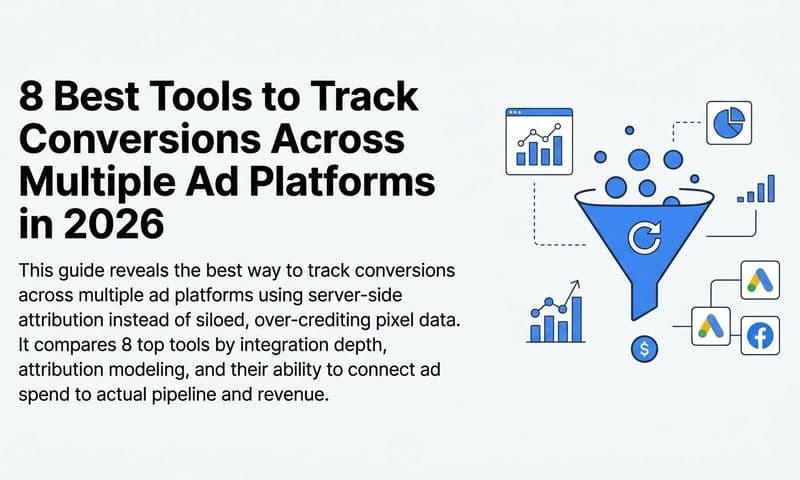
Unlike traditional browser-based tracking that gets easily blocked by privacy updates and ad blockers, server-side tracking sends conversion data directly from your server to platforms like Facebook Ads and Google Ads. This method is far more reliable, ensuring your ad platforms receive a complete and accurate picture of which campaigns are actually driving sales.
If you're evaluating vendors, our AI UGC ads breakdown can help.
This clean data feedback loop leads directly to:
- Improved ROAS (Return on Ad Spend): Ad algorithms get smarter, faster. They can better identify high-value audiences and optimize bidding strategies based on real conversion data, not just fuzzy click data.
- Better Campaign Performance: With clean data, you can confidently scale the campaigns that are crushing it and cut the ones that are bleeding cash, making every dollar in your marketing budget work harder.
- A Single Source of Truth: It kills the frustrating discrepancies between your website analytics and your ad platform reports, giving you a clear, unified view of what’s really happening.
Move Beyond Last-Click Attribution
For far too long, marketers have been trapped by last-click attribution, which gives 100% of the credit for a sale to the very last thing a customer did before converting. This model isn't just simplistic; it's dangerously misleading.
Think about it. A customer might see a Facebook ad, read a blog post a week later, and then finally convert by clicking a Google search ad. Last-click ignores the first two critical touchpoints that built awareness and trust.
Multi-touch attribution models fix this by distributing credit across multiple touchpoints in the customer journey. This finally reveals the true value of each channel, helping you understand how your top-of-funnel content and mid-funnel retargeting ads are contributing to the final sale.
When you adopt a multi-touch view, you start to see how different channels work together as a team. You might discover your blog posts are crucial for introducing new customers to your brand, even if they don't lead to immediate sales. You can get a much deeper understanding of this by exploring our complete guide on how to measure marketing attribution. That kind of insight is totally invisible with a last-click-only mindset.
Visualize the Entire Funnel with Custom Dashboards
The final piece of the puzzle is bringing all this data together in a way that’s actually easy to understand. Custom dashboards are your command center, visualizing the entire customer journey from the first ad click to the final sale.
A well-built dashboard should track your entire funnel, showing conversion rates at each stage and—most importantly—tying it all back to revenue.
This visual clarity is what justifies and scales your optimization programs. Instead of just telling stakeholders you increased the sign-up rate by 15%, you can show them that the change led to a $50,000 increase in monthly recurring revenue. That’s a conversation that gets attention and unlocks resources.
For instance, we know that when users actively engage with compelling social proof like user-generated content (UGC), their likelihood to purchase doubles, leading to a 102% increase in conversion rates. You can explore more powerful statistics like this in this detailed report on conversion rate optimization. When you can present conclusive, revenue-backed data like that, your optimization program stops being a "cost center" and becomes a proven growth engine.
Related reading: our complete guide to AI UGC vs real UGC.
Frequently Asked Questions
When you're diving into conversion optimization, a few common questions always pop up. It's totally normal. Getting the right answers helps you skip the usual pitfalls and start making progress faster. Here are a few we hear all the time.
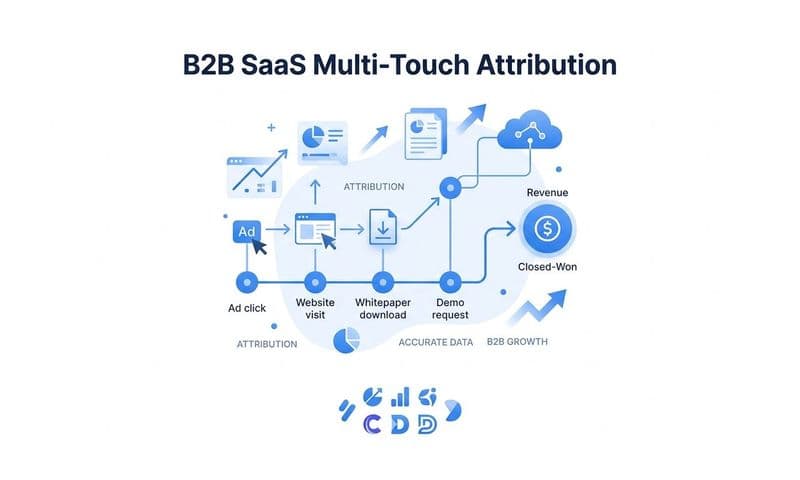
This diagram breaks down how modern tracking connects the initial ad click all the way to your final revenue reports. It’s all about creating a clear line of sight from spend to profit.
 Your Guide to a High-Performance Conversion Optimization Website
This flow really drives home how crucial reliable data is. Without it, you're just guessing at what's actually making you money.
How Long Does It Take To See CRO Results?
Everyone wants to know this, and the honest answer is: it depends.
Sometimes you'll see an immediate jump from a "quick win," like fixing a broken checkout button on a high-traffic page. But a real conversion optimization website program isn't a one-and-done fix. It's a long-term strategy.
Meaningful A/B test results need time to collect enough data to be statistically significant. For a site with less traffic, that could take a few weeks. Consistency is what really matters here. It’s the small, iterative improvements you make over several months that add up to big, sustainable growth.
What Is a Good Conversion Rate?
While the average website conversion rate across all industries is around 2.35%, chasing a universal "good" number can be a trap. It’s much smarter to benchmark against your own performance and aim for constant improvement.
A "good" conversion rate is one that’s consistently getting better every month.
Your industry, traffic source, and business model all dramatically change what a realistic conversion rate looks like. E-commerce benchmarks are totally different from B2B SaaS. The only metric that truly matters is your own progress. A lift from 1% to 1.5% is a massive 50% increase in conversions—that's a huge win.
If you want to get more granular, our guide on what is conversion rate in marketing breaks down the benchmarks by industry.
How Much Traffic Do I Need for A/B Testing?
You don't need millions of visitors to start A/B testing, but you do need enough traffic to get statistically significant results in a reasonable amount of time. A good rule of thumb is to aim for at least 1,000 conversions per month for the specific goal you're testing.
If your traffic is on the lower side, you can still optimize. Just focus on making bigger swings—changes that are likely to have a major impact rather than subtle tweaks. Prioritize gathering qualitative data from user surveys, feedback forms, and session recordings to build high-impact hypotheses that are worth testing, even if it takes a bit longer to see a clear winner.