
You wake up one morning, log into your Facebook Ads Manager, and your stomach drops. Campaigns that were crushing it last month now show half the conversions. Your ROAS looks terrible. Your best-performing lookalike audiences suddenly stopped working. And you're not alone—marketers everywhere experienced this same gut punch when iOS 14.5 rolled out in April 2021.
But here's what most people got wrong: the iOS privacy updates didn't kill digital advertising. They just changed the rules of the game.
Apple's App Tracking Transparency framework fundamentally altered how conversion data flows from users' devices to your ad platforms. The result? Your dashboards now show a fraction of what's actually happening, attribution windows shrunk dramatically, and the algorithms powering your campaigns are making decisions with incomplete information. It's like trying to navigate with a map that's missing half the roads.
The good news? Marketers who understand what changed and adapt their measurement approach can actually gain more accurate insights than before. This article breaks down exactly what Apple's privacy changes mean for your conversion tracking, why your ad data looks different now, and the practical solutions that restore visibility into your marketing performance. No fluff, no panic—just clear strategies to get your attribution back on track.
What Apple's App Tracking Transparency Framework Actually Changed
At the heart of Apple's privacy shift is something called the Identifier for Advertisers, or IDFA. Think of it as a unique ID tag that iOS devices used to carry around, allowing apps and advertisers to track user behavior across different apps and websites. Before iOS 14.5, this tracking happened automatically in the background. After the update, apps must explicitly ask users for permission to track them.
When users open an app that wants to track them, they see a prompt asking whether they'll allow tracking across other companies' apps and websites. Most users tap "Ask App Not to Track." Industry observations consistently show that the vast majority of iOS users decline tracking when given the choice. This simple opt-in requirement collapsed the pool of trackable iOS users from nearly everyone to a small minority.
The immediate impact on conversion tracking was severe. Ad platforms like Facebook and Google suddenly lost visibility into what happened after iOS users clicked on ads. Did they convert? Did they browse and leave? Did they add items to cart? For most iOS users, platforms can no longer tell. Understanding the full scope of iOS privacy updates affecting ad tracking helps you grasp why these changes were so disruptive.
Facebook responded with Aggregated Event Measurement, which limits advertisers to tracking just eight conversion events per domain. You need to prioritize which events matter most—purchases, add to carts, page views—because you can't track everything anymore. This forced many marketers to make tough choices about what to measure.
Conversion reporting also became delayed. Instead of seeing conversions in near real-time, you might wait up to 72 hours for data to appear. When you're running fast-moving campaigns and making daily optimization decisions, three-day-old data feels like ancient history.
But not everything broke. Email marketing still works normally. Your website analytics still capture on-site behavior. Direct traffic and organic search tracking remain intact. The core issue is specifically about tracking user journeys that start with paid ads on iOS devices and connecting those clicks to downstream conversions.
Understanding this scope helps you focus your solutions on the actual problem: restoring visibility into iOS conversion paths without relying on device-level tracking that users have now blocked.
Why Your Facebook and Google Ads Data Looks Different Now
Open your Facebook Ads Manager today and you'll see something you didn't see before iOS 14.5: modeled conversions. These are estimates—educated guesses that Facebook makes about conversions it can't directly observe. When the platform loses visibility into iOS user behavior, it uses statistical modeling to fill in the gaps.
Google does the same thing with conversion modeling in Google Ads. Both platforms analyze the conversions they can still measure, look at patterns in user behavior, and extrapolate to estimate total conversions. Sometimes these models are reasonably accurate. Sometimes they're not. The problem is you can't always tell which is which. Many marketers struggle with Google Ads conversion tracking issues that stem directly from these modeling limitations.
This means the conversion numbers in your ad dashboards are increasingly a blend of observed conversions and platform estimates. You're making budget decisions based partly on actual data and partly on algorithmic guesswork. For marketers who need precise attribution to justify ad spend, this creates a fundamental trust problem.
Attribution windows took another hit. Facebook used to offer a 28-day click attribution window, meaning if someone clicked your ad and converted within 28 days, Facebook would claim credit for that conversion. After iOS updates, the default attribution window shrunk to 7-day click. This change alone made many campaigns appear less effective overnight—not because performance actually declined, but because conversions happening after day seven simply stopped being counted.
Your reported ROAS probably dropped significantly when this happened. But your actual return on ad spend didn't necessarily change—you just lost visibility into longer conversion cycles.
Audience targeting capabilities degraded too. Lookalike audiences, once a powerhouse for scaling campaigns, became less precise because the platform has less data about iOS user behavior to build those audiences. Retargeting campaigns lost much of their effectiveness because you can't retarget users you can't track. Custom audiences based on website activity became smaller and less accurate.
The platforms are doing their best to adapt, but the fundamental challenge remains: they're trying to optimize your campaigns with incomplete information. It's like asking someone to tune your car's engine while wearing a blindfold—they might get it close, but they're definitely not seeing the full picture.
Server-Side Tracking: The Foundation for Accurate iOS Conversion Data
Here's where things get interesting. While browser and app-level tracking hit a wall with iOS updates, there's another way to capture conversion data that bypasses these restrictions entirely: server-side tracking.
Traditional client-side tracking works like this: a user clicks your ad, lands on your website, and a piece of JavaScript code (a pixel) fires in their browser, sending conversion data back to the ad platform. This approach depends on cookies and browser-based tracking, which iOS restrictions and privacy features now block.
Server-side tracking flips this model. Instead of relying on the user's browser to send data, your server sends conversion information directly to ad platforms. When a user converts on your site, your server captures that event and transmits it to Facebook, Google, or other platforms through their APIs. No browser tracking required. No dependence on cookies that users can block. The server-side conversion tracking benefits extend far beyond just iOS compliance.
Think of it like the difference between mailing a letter through the postal service versus hand-delivering it yourself. Client-side tracking is like putting conversion data in the mail and hoping it arrives. Server-side tracking is like walking the data directly to its destination—far more reliable.
The practical impact is significant. Server-side tracking captures conversions that client-side pixels miss, giving you a more complete view of campaign performance. You're measuring actual conversions from your database or CRM rather than relying on browser events that may or may not fire correctly.
Implementing server-side tracking requires some technical infrastructure. You need a server that can receive conversion events from your website or app, process them, and send them to ad platform APIs. This might involve working with your development team or using a marketing attribution platform that handles the server-side connection for you.
You'll also need to ensure you're sending the right data points. Ad platforms require specific information—like timestamp, event type, user identifiers, and conversion value—to properly attribute conversions to campaigns. Your server-side implementation needs to capture and transmit all these data points accurately.
The setup effort pays off. Marketers who implement server-side tracking consistently report seeing 20-40% more conversions than they saw with client-side tracking alone after iOS updates. That's not because they're getting more actual conversions—it's because they're finally seeing conversions that were always happening but weren't being tracked.
First-Party Data Strategies That Restore Attribution Clarity
The iOS privacy shift forced a fundamental question: whose data are you relying on? If you're depending entirely on third-party platforms to track and attribute conversions, you're building on shaky ground. First-party data—information you collect directly from your customers—becomes your most valuable asset.
CRM integration sits at the heart of modern attribution. When someone fills out a lead form, makes a purchase, or becomes a customer, that information lives in your CRM or database. The key is connecting those conversion events back to the original ad click or marketing touchpoint that started the journey.
This is where click IDs and UTM parameters become essential. When someone clicks your Facebook ad, Facebook appends a unique click ID (fbclid) to the landing page URL. Google does the same with gclid. If you capture these click IDs when users convert and store them in your CRM, you can definitively connect closed deals back to specific campaigns, even weeks or months later. Following best practices for tracking conversions accurately ensures you capture this critical data.
UTM parameters add another layer of tracking continuity. By tagging your campaign URLs with source, medium, campaign, and content parameters, you create a paper trail that follows users through their journey. When they eventually convert, you can see exactly which campaign, ad set, and creative drove that conversion—regardless of what ad platforms can or can't track.
First-party cookies also play a role. Unlike third-party cookies that track users across different websites, first-party cookies are set by your own domain and track behavior on your site only. These cookies still work normally on iOS and help you understand user behavior across multiple sessions on your website.
The real power comes from tracking actual revenue events rather than relying solely on pixel-based conversions. Your e-commerce platform knows exactly who purchased what and for how much. Your CRM knows which leads became customers and what they're worth. This transaction data is far more reliable than browser-based conversion pixels that may or may not fire correctly.
By connecting your revenue data back to marketing touchpoints through click IDs and UTM parameters, you build attribution that isn't dependent on what ad platforms can track. You're measuring actual business outcomes—purchases, subscriptions, contract signings—and attributing them to marketing activities based on data you own and control.
Feeding Better Data Back to Ad Platform Algorithms
Here's something many marketers miss: the iOS tracking limitations don't just affect your reporting dashboards. They fundamentally degrade how well ad platforms can optimize your campaigns.
Facebook's algorithm, Google's Smart Bidding, and every other machine learning system powering modern advertising depends on conversion signals. The algorithm shows your ad to users, observes who converts, identifies patterns in those conversions, and adjusts targeting to find more people likely to convert. When conversion data becomes sparse or delayed, the algorithm is essentially flying blind.
This explains why campaign performance often declined after iOS updates even when you didn't change anything about your ads or targeting. The algorithm simply had less data to work with, making its optimization less effective. Many advertisers found their iOS update broke their ad tracking in ways that cascaded into poor campaign performance.
The solution is feeding better conversion data back to ad platforms through Conversion APIs. Meta's Conversions API, Google's Enhanced Conversions, and similar tools from other platforms allow you to send first-party conversion data directly from your server to improve algorithm performance.
When you implement these APIs correctly, you're not just improving your own reporting—you're giving the ad platform's algorithm higher-quality signals to optimize against. You're sending conversion data that includes more context: purchase values, customer types, product categories, and other details that help the algorithm understand what makes a valuable conversion.
This enriched data improves targeting precision. Instead of the algorithm guessing which users might convert based on limited information, it can identify patterns in detailed conversion data you provide. The result is better audience targeting, more efficient ad delivery, and reduced wasted spend on users unlikely to convert.
The technical implementation involves setting up server-side connections to platform APIs and ensuring you're sending conversion events with all required and recommended parameters. You need to match conversion events to users through hashed email addresses, phone numbers, or other identifiers that platforms can use while respecting privacy.
Many marketers see improved campaign performance within weeks of implementing Conversion APIs, not because their ads got better, but because the optimization algorithms finally have the data they need to do their job effectively.
Building an iOS-Resilient Measurement Stack
So what does a complete solution actually look like? The most effective approach combines three core components: server-side tracking, multi-touch attribution, and conversion sync.
Server-side tracking forms the foundation by capturing conversion data that client-side pixels miss. This ensures you're measuring actual conversions from your database rather than relying on browser events that iOS restrictions block. For a comprehensive approach, explore post-iOS tracking solutions for marketers that address these challenges systematically.
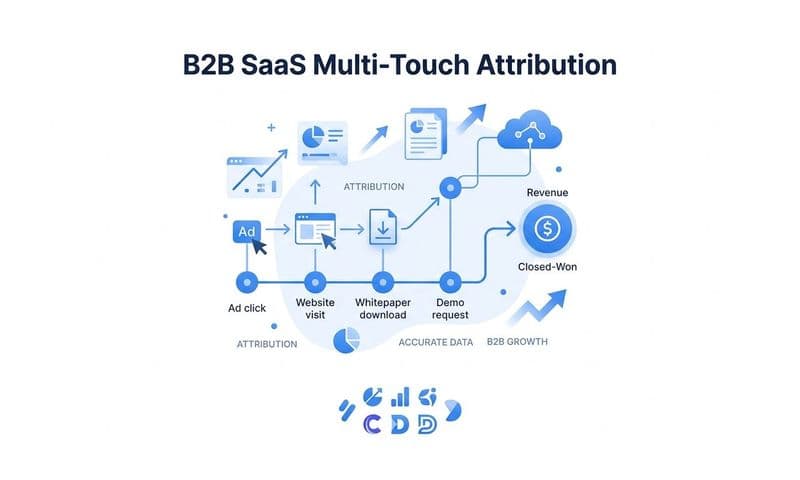
Multi-touch attribution adds the layer that shows you the complete customer journey. Platform-native attribution only shows you what happens within that platform's ecosystem. Multi-touch attribution connects touchpoints across all your marketing channels—paid ads, organic social, email, content marketing—to show which combinations of activities drive conversions.
This matters because most customer journeys involve multiple touchpoints. Someone might see your Facebook ad, visit your site directly a week later, click a Google ad the next day, and finally convert. Platform-native attribution would give all the credit to Google, missing the Facebook ad's role in starting the journey. Multi-touch attribution reveals the full story.
Conversion sync completes the picture by feeding your enriched, first-party conversion data back to ad platforms through their APIs. This improves both your reporting accuracy and algorithm optimization, creating a virtuous cycle of better data leading to better performance.
When comparing attribution models, you'll often find that your internal attribution shows more conversions and better performance than platform-reported metrics. This isn't because one is right and the other is wrong—they're measuring different things. Platform attribution shows what the platform can observe. Your internal attribution shows what actually happened based on your complete data. Understanding cross-platform conversion tracking solutions helps you reconcile these differences.
Privacy regulations continue evolving beyond iOS updates. Google has delayed but not abandoned plans to phase out third-party cookies in Chrome. Other privacy frameworks are emerging globally. Building your measurement stack on first-party data and server-side infrastructure prepares you for whatever privacy changes come next.
Moving Forward with Privacy-First Marketing
The iOS updates that disrupted conversion tracking in 2021 weren't the end of the story—they were the beginning of a fundamental shift toward privacy-first marketing. While the initial impact felt devastating to many advertisers, the solutions that emerged actually enable more accurate attribution than the old pixel-based approach ever provided.
Marketers who adapted their measurement approach discovered something valuable: owning your data through server-side tracking and first-party strategies gives you more control and better insights than depending entirely on platform-provided attribution. You're measuring actual business outcomes from your CRM and database rather than relying on browser pixels that may or may not fire correctly.
The key is connecting your full customer journey—from initial ad click through conversion and beyond—using data you collect and control. When you feed this enriched conversion data back to ad platforms through Conversion APIs, you improve not just your reporting but also the algorithm's ability to find and convert your best customers.
Privacy regulations will continue evolving. Browser restrictions will likely expand. But the fundamental principles remain constant: collect first-party data, track conversions server-side, attribute across all touchpoints, and sync conversion data back to ad platforms. This approach works regardless of what privacy changes come next.
The marketers who thrive in this environment are those who view privacy changes not as obstacles but as opportunities to build more sophisticated, accurate measurement systems. They're investing in attribution platforms that connect their entire marketing stack, provide visibility into true campaign performance, and feed better data to ad algorithms.
Ready to elevate your marketing game with precision and confidence? Discover how Cometly's AI-driven recommendations can transform your ad strategy—Get your free demo today and start capturing every touchpoint to maximize your conversions.