You've checked your ad platform dashboards, and the numbers look promising. But then you open your CRM or payment processor, and the revenue just doesn't match. Sound familiar? If your conversion tracking is not accurate, you're not alone, and you're not imagining things.
The root causes have multiplied significantly in recent years. iOS privacy restrictions reduced the visibility of user actions across apps and browsers. Cookie deprecation has chipped away at traditional pixel-based tracking. Users now move across multiple devices before converting, creating fragmented journeys that single-touch tracking simply can't follow. And when you're running campaigns on both Google and Meta simultaneously, both platforms will often claim full credit for the same conversion, inflating your reported results.
The real cost of inaccurate conversion tracking goes far beyond messy spreadsheets. When your data is wrong, you scale the wrong campaigns. You cut budgets from channels that are actually driving revenue. You feed corrupted signals back to ad platform algorithms, causing them to optimize toward the wrong users. Over time, the compounding effect of bad data leads to wasted ad spend and missed growth opportunities.
The good news is that these problems are fixable. Each one has a specific cause and a specific solution. This guide walks you through seven proven strategies to diagnose and repair inaccurate conversion tracking, so you can make decisions with real confidence instead of guesswork.
1. Audit Your Pixel and Tag Setup for Silent Failures
The Challenge It Solves
Pixels and tags fail quietly. A misconfigured event fires twice on the same conversion. A trigger breaks after a website update. A tag loads on the wrong page. None of these failures throw an error in your dashboard, but they corrupt your data over time. Many marketers don't realize their tracking pixels are not firing correctly until the discrepancies become too large to ignore.
The Strategy Explained
A systematic tag audit means going through every pixel, conversion tag, and event configuration to verify that each one fires correctly, fires once, and fires only when the intended action occurs. This includes checking for duplicate tags from multiple team members setting up the same pixel, outdated tags from legacy campaigns that no longer run, and event parameters that are passing incorrect or empty values.
Tools like Google Tag Manager's preview mode, Meta Pixel Helper, and browser developer tools let you inspect tag behavior in real time. The goal is to create a clean, documented map of every tracking event in your funnel and confirm that each one behaves exactly as intended.
Implementation Steps
1. Open Google Tag Manager or your tag management solution and list every active tag, trigger, and variable currently deployed on your site.
2. Use the GTM preview mode and Meta Pixel Helper to walk through each conversion path on your site, checking for duplicate fires, misfires on unintended pages, and missing events on key conversion points.
3. Cross-reference your tag list against your active campaigns and remove or pause any tags that are no longer tied to a running campaign or goal.
4. Document the correct event name, trigger conditions, and expected parameters for each conversion event, and use this as your baseline for future audits.
Pro Tips
Schedule a tag audit at least once per quarter, and always run one after any significant website change, redesign, or new campaign launch. A broken tag that goes unnoticed for 60 days can distort months of optimization decisions. Treat your tag setup like infrastructure: it needs regular maintenance, not just a one-time build.
2. Implement Server-Side Tracking to Bypass Browser Limitations
The Challenge It Solves
Browser-based tracking is increasingly unreliable. Ad blockers prevent pixels from loading. iOS restrictions limit the data that can be passed from apps and mobile browsers. Third-party cookies, which many tracking systems rely on, are being deprecated across major browsers. The result is that a meaningful portion of your conversions simply never get recorded when you rely solely on client-side tracking. Understanding tracking conversions without cookies has become essential for modern marketers.
The Strategy Explained
Server-side tracking moves the data collection process from the user's browser to your own server. Instead of relying on a pixel in the browser to fire and send data to an ad platform, your server receives the conversion event directly and forwards it to platforms like Meta via the Conversions API or to Google via server-side tagging. Because this happens at the server level, it bypasses ad blockers, cookie restrictions, and browser privacy settings entirely.
This approach is now an industry-standard recommendation for recovering data that browser-based tracking misses. It gives you a more complete picture of what's actually happening in your funnel, particularly for high-intent actions like purchases, form submissions, and sign-ups. You can learn more about the server-side conversion tracking benefits that make this approach so valuable.
Platforms like Cometly offer built-in server-side tracking that connects directly to your ad platforms, making implementation significantly more accessible for marketing teams without deep engineering resources.
Implementation Steps
1. Identify the key conversion events in your funnel that are most critical to your ad optimization, such as purchases, lead form completions, and trial sign-ups.
2. Set up Meta's Conversions API or Google's server-side tagging container to receive and forward these events from your server rather than the browser.
3. Enable event deduplication to ensure that when both a browser pixel and a server-side event fire for the same conversion, the platform only counts it once.
4. Compare your server-side event volume against your browser pixel volume to measure how much data you were previously losing.
Pro Tips
Server-side tracking works best when combined with first-party data, such as hashed email addresses or customer IDs, passed alongside the conversion event. This improves match rates with ad platforms and gives their algorithms better signals to work with during optimization.
3. Reconcile Platform Data Against Your CRM and Revenue Source
The Challenge It Solves
Ad platforms report conversions using their own attribution windows and models. When you run campaigns on multiple platforms simultaneously, each one applies its own logic to claim credit, often for the same conversion. The result is that your combined reported conversions across platforms can be significantly higher than your actual revenue. Without a reconciliation process, you're optimizing based on inflated and misleading numbers. This is one of the core reasons conversion tracking numbers are wrong for so many advertisers.
The Strategy Explained
Your CRM or payment processor is the only source of truth that isn't influenced by an ad platform's incentive to show strong results. By comparing what each platform reports against what your CRM actually recorded as leads or closed revenue, you can identify where over-reporting is happening, which channels are genuinely driving results, and where attribution credit is being double-counted.
This reconciliation process doesn't need to be complex. A regular comparison between ad platform conversion reports and CRM pipeline data, broken down by source and time period, is often enough to surface the most significant discrepancies. Cometly connects your ad platforms directly to your CRM, making this comparison automatic rather than a manual spreadsheet exercise.
Implementation Steps
1. Export conversion data from each ad platform for a defined time period, noting the attribution window each platform uses by default.
2. Pull the corresponding lead or revenue data from your CRM or payment processor for the same time period, filtered by the same traffic sources using UTM parameters.
3. Compare the totals side by side, looking for channels where platform-reported conversions significantly exceed CRM-recorded outcomes.
4. Use the discrepancy findings to adjust your attribution window settings in each platform to better reflect your actual sales cycle length.
Pro Tips
Pay particular attention to view-through conversions in your ad platform reports. These are conversions where a user saw an ad but didn't click, and they are a common source of inflated attribution. Most platforms include them by default, but they often don't reflect genuine ad-driven outcomes for direct-response campaigns. Understanding view-through conversion tracking issues can help you decide how to handle them in your reporting.
4. Adopt Multi-Touch Attribution to Replace Last-Click Guesswork
The Challenge It Solves
Last-click attribution assigns 100% of the conversion credit to the final touchpoint before a conversion. This means every touchpoint that educated, engaged, or nurtured the customer along the way gets zero credit. For businesses with longer sales cycles or multi-channel campaigns, last-click attribution systematically undervalues top-of-funnel channels and creates a distorted picture of what's actually working.
The Strategy Explained
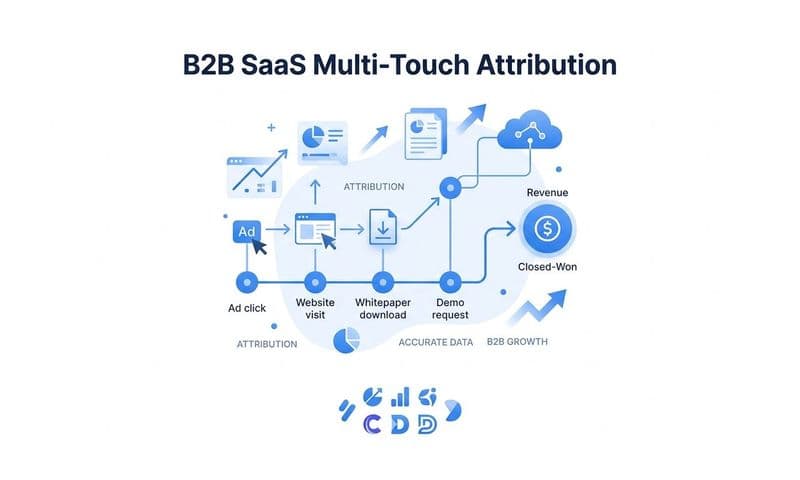
Multi-touch attribution distributes conversion credit across all the touchpoints in a customer journey. Depending on the model you choose, credit can be distributed equally across all touchpoints, weighted toward the first and last interactions, or assigned based on the time proximity to conversion. The right model depends on your sales cycle and the role each channel plays in your funnel. Mastering tracking conversions across multiple touchpoints is the foundation of effective multi-touch attribution.
The practical benefit is that you stop making budget decisions based on which channel happens to be last in line. You start seeing which channels initiate journeys, which ones keep prospects engaged, and which ones close. This leads to more balanced budget allocation and better performance across your entire marketing mix.
With Cometly's multi-touch attribution, you can compare different attribution models side by side, giving you the flexibility to see how credit distribution changes your view of channel performance without committing to a single model blindly.
Implementation Steps
1. Map out the typical customer journey for your highest-value conversions, identifying the channels and touchpoints that commonly appear before a conversion occurs.
2. Choose an attribution model that fits your sales cycle: linear for even distribution, time-decay for shorter cycles, or position-based for funnels where first and last touch matter most.
3. Apply the model to your existing conversion data and compare the resulting channel performance rankings against what last-click attribution was showing you.
4. Use the new attribution view to identify undervalued channels that were contributing to conversions but not receiving credit, and adjust your budget allocation accordingly.
Pro Tips
Don't switch attribution models and immediately reallocate large budgets. Run both models in parallel for at least 30 days to observe how performance data shifts before making significant budget decisions. Attribution model changes reveal new insights gradually, not all at once.
5. Feed Enriched Conversion Data Back to Ad Platform Algorithms
The Challenge It Solves
Ad platforms like Meta and Google use the conversion signals you send them to train their machine learning algorithms. If the data you're sending is incomplete, delayed, or inaccurate, the algorithm optimizes toward the wrong behaviors. This means your campaigns find users who look like your low-quality conversions instead of your best customers, degrading performance over time without an obvious explanation.
The Strategy Explained
Conversion sync, sometimes called offline conversion import or enhanced conversions, involves sending verified, high-quality conversion data back to ad platforms after it has been validated against your CRM or payment processor. Instead of only sending a pixel fire that says "someone reached the thank-you page," you send enriched signals that confirm a real purchase occurred, include the actual revenue value, and match back to the specific user with first-party identifiers. This is especially important when tracking conversions for lead generation, where the real value often occurs long after the initial click.
This gives ad platform algorithms a cleaner, more accurate training signal. They can then identify and target users who are more likely to generate real revenue, not just users who are likely to trigger a low-quality pixel event. Cometly's Conversion Sync automates this process, sending enriched conversion events back to Meta, Google, and other platforms in real time.
Implementation Steps
1. Identify your highest-value conversion events, such as closed deals, paid subscriptions, or qualified leads, and confirm they are being recorded accurately in your CRM.
2. Set up an offline conversion import or Conversions API integration that sends these CRM-verified events back to your ad platforms, including revenue values and first-party identifiers where available.
3. Include hashed customer data such as email addresses or phone numbers to improve match rates between your CRM records and ad platform user profiles.
4. Monitor your campaign performance over the following weeks to observe whether optimization quality improves as the algorithm receives better training data.
Pro Tips
The quality of the data you send back matters more than the volume. A smaller set of verified, high-value conversions with accurate revenue data will train the algorithm more effectively than a large set of unverified or low-quality events. Prioritize accuracy over quantity when deciding which events to sync.
6. Eliminate Cross-Domain and Redirect Tracking Gaps
The Challenge It Solves
Many marketing funnels involve more than one domain. A user might click an ad on your main website, get redirected to a third-party landing page builder, and then complete a purchase on a separate checkout platform. Every time a user crosses a domain boundary, there's a risk that the tracking connection breaks. When it does, the conversion either goes unattributed or gets misattributed to direct traffic, making your paid campaigns look less effective than they are.
The Strategy Explained
Cross-domain tracking requires explicit configuration to pass user and session identifiers across domain boundaries. In Google Analytics 4, this involves setting up cross-domain measurement so that sessions are not reset when a user moves between your tracked domains. For ad platforms, it means ensuring that click IDs like GCLID for Google or FBCLID for Meta are preserved and passed through each step of the funnel, including redirects. When UTM parameters are not tracking properly, cross-domain issues are often the culprit.
Redirects are a particularly common source of tracking loss. When a URL redirect strips query parameters, the click IDs that tie a conversion back to a specific ad are lost. Auditing every redirect in your funnel and confirming that parameters are preserved is a straightforward fix that can recover a significant amount of previously unattributed conversion data.
Implementation Steps
1. Map every domain and subdomain that exists in your conversion funnel, from the initial landing page through to the final confirmation or thank-you page.
2. Configure cross-domain measurement in Google Analytics 4 by adding all relevant domains to your cross-domain list under data stream settings.
3. Test each redirect in your funnel by clicking through from an ad and checking whether the GCLID, FBCLID, and UTM parameters are still present in the URL at each step using your browser's address bar or a URL parameter checker.
4. Update any redirects that strip parameters to use 301 redirects that preserve the full query string, or switch to direct links where possible.
Pro Tips
Third-party tools like landing page builders, booking platforms, and checkout systems sometimes strip URL parameters as part of their own tracking setup. Contact the support teams of any third-party tools in your funnel to confirm how they handle incoming URL parameters and whether custom parameter preservation is available.
7. Use AI-Powered Analysis to Catch Anomalies Before They Compound
The Challenge It Solves
Even after fixing your technical tracking setup, conversion data can degrade over time. A tag breaks after a site update. A new campaign introduces a misconfigured event. A platform changes its attribution logic. Without active monitoring, these issues can go undetected for weeks, causing compounding budget waste and distorted optimization decisions before anyone notices something is wrong.
The Strategy Explained
AI-powered anomaly detection continuously monitors your conversion data for patterns that fall outside normal ranges, such as sudden drops in conversion volume, unexpected spikes in a specific event, or growing discrepancies between platform-reported and CRM-recorded outcomes. Rather than waiting for a human to notice something looks off, the system flags it automatically so you can investigate and fix it quickly. This is critical for tracking multiple ad campaigns accurately at scale.
This is where tools like Cometly's AI Chat and AI Ads Manager add meaningful value. Instead of manually reviewing dashboards across multiple platforms, you can ask your data questions in plain language and get instant answers about what's performing, what's changed, and where anomalies exist. The AI surfaces insights that would take hours to find manually, and it does so continuously rather than only when you remember to check.
Implementation Steps
1. Establish baseline conversion volumes for each key event in your funnel, noting the typical daily and weekly ranges you expect based on historical data.
2. Set up automated alerts in your analytics platform or attribution tool to notify you when conversion volume for any key event drops or spikes beyond a defined threshold from your baseline.
3. Create a weekly review cadence where you compare current conversion data against the previous period across all platforms and your CRM, looking for emerging discrepancies.
4. Use AI-powered analysis tools to ask specific diagnostic questions about your data, such as which campaigns have seen the largest recent changes in conversion rate or which events show the widest gap between platform-reported and CRM-verified outcomes.
Pro Tips
Don't only monitor total conversion volume. Also monitor conversion rates at each stage of your funnel separately. A drop in overall conversions could be caused by lower traffic, a broken tag at a specific step, or a change in audience quality. Monitoring each stage independently helps you pinpoint the exact location of the problem faster.
Your Implementation Roadmap
Inaccurate conversion tracking is rarely caused by a single problem. It's almost always a combination of technical gaps, structural issues, and strategic blind spots that compound each other over time. The good news is that each one has a clear solution, and fixing them systematically transforms your data from a source of confusion into a genuine competitive advantage.
Here's how to prioritize your implementation. Start with the pixel and tag audit in Strategy 1. This is your diagnostic foundation. You need to know what's actually firing before you can fix anything else. From there, move to server-side tracking in Strategy 2 to recover the data your browser-based setup is missing. Then reconcile your platform data against your CRM in Strategy 3 to understand where over-reporting is distorting your view of performance.
Once your data foundation is solid, build toward multi-touch attribution in Strategy 4 and conversion sync in Strategy 5 to improve both your own decision-making and the quality of signals you're sending back to ad algorithms. Address cross-domain gaps in Strategy 6 for any funnel that spans multiple domains or tools. And put AI-powered anomaly detection from Strategy 7 in place as your ongoing safety net.
Fixing conversion tracking is not a one-time project. It's an ongoing discipline that requires regular audits, proactive monitoring, and a commitment to using your CRM as the authoritative source of truth rather than trusting ad platform reports at face value.
If you're ready to bring all of these capabilities together in one place, Get your free demo of Cometly today. Cometly captures every touchpoint from ad click to CRM event, connects your ad platforms to your revenue data, and feeds enriched conversion signals back to Meta, Google, and beyond so your campaigns optimize toward real results. Accurate tracking starts here.