Third-party cookies have been on borrowed time for years, and the reality has fully arrived. Safari and Firefox have blocked third-party cookies by default for several years now. Google Chrome began rolling out Tracking Protection in early 2024 and has continued expanding privacy controls through 2025 and into 2026. Apple's App Tracking Transparency framework, launched with iOS 14.5, further disrupted pixel-based conversion tracking for mobile and web campaigns.
For marketers running paid campaigns across Meta, Google, TikTok, and other platforms, this means attribution gaps, incomplete conversion data, and ad platform algorithms that struggle to optimize without reliable signals. If you've noticed your Meta ROAS looking shakier or your Google conversion volumes dropping without an obvious cause, signal loss from cookie restrictions is likely a contributing factor.
Here's the thing: the marketers who are thriving in this environment aren't mourning the loss of third-party cookies. They've rebuilt their tracking infrastructure around more durable, accurate, and privacy-respecting alternatives. These aren't stopgap measures. In many cases, they deliver more complete data than cookie-based tracking ever could.
This guide breaks down seven proven cookie-based tracking alternatives you can implement now to maintain full visibility into your customer journeys, feed better data to ad platforms, and make confident budget decisions without depending on a technology that's rapidly becoming obsolete.
1. Server-Side Tracking
The Challenge It Solves
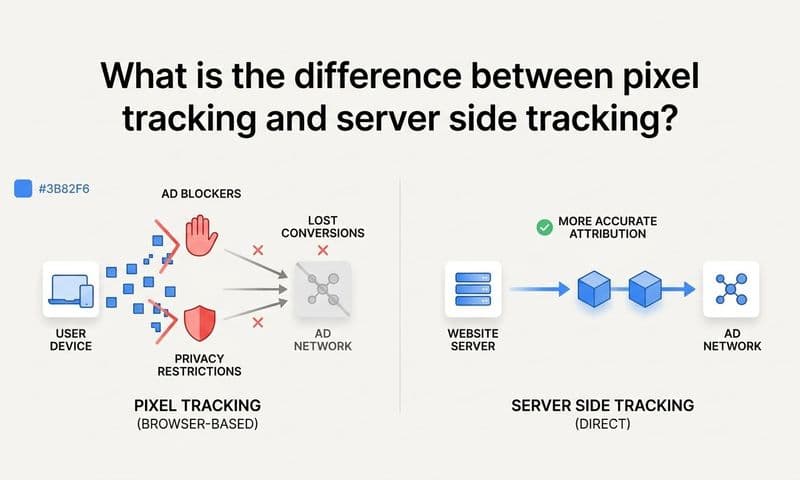
Traditional pixel-based tracking fires from the user's browser, which means it's vulnerable to ad blockers, browser privacy restrictions like Safari's Intelligent Tracking Prevention, and the general instability of client-side JavaScript execution. Every time a browser blocks or delays a pixel, you lose a conversion event. Over time, those gaps compound into serious attribution blind spots that distort your performance data and starve your ad platform algorithms of the signals they need.
The Strategy Explained
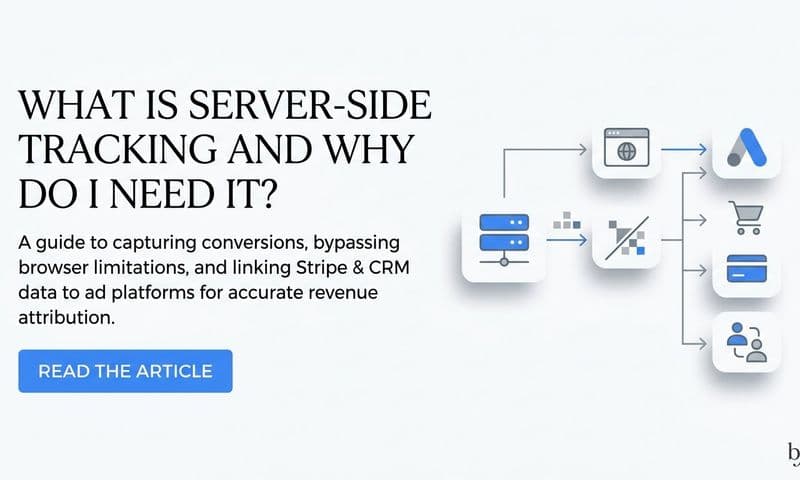
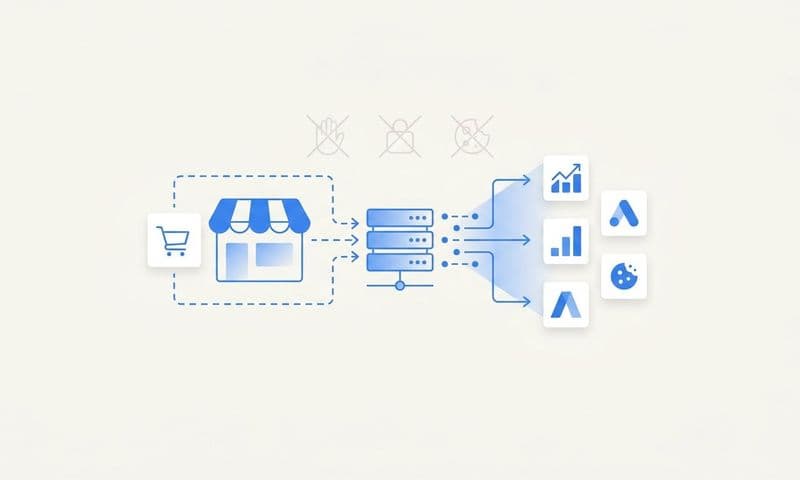
Server-side tracking moves the conversion data transmission from the user's browser to your own server. Instead of relying on a browser pixel to fire and reach Meta or Google, your server receives the event data first and then forwards it directly to the ad platform. Because this happens server-to-server, it bypasses browser-level restrictions entirely.
This approach is more reliable, more persistent, and less susceptible to data loss from ad blockers or Intelligent Tracking Prevention. It also gives you greater control over what data gets sent, allowing you to enrich events with first-party identifiers before they reach the ad platform. For a deeper dive, read our guide on server-side tracking vs pixel tracking to understand the key differences.
Implementation Steps
1. Set up a server-side tagging environment, either through Google Tag Manager's server-side container, a dedicated tracking platform like Cometly, or a custom server implementation.
2. Configure your website to send raw event data to your server first rather than directly to ad platforms from the browser.
3. Map your key conversion events (purchases, leads, sign-ups) and route them through the server-side layer to each ad platform's endpoint.
4. Validate that server-side events are being received correctly by comparing against browser-side data and checking platform event managers.
Pro Tips
Run server-side and browser-side tracking in parallel during your initial setup to catch discrepancies and deduplicate events properly. Most platforms use event IDs to prevent double-counting when both signals arrive. The goal is to use server-side as the primary, reliable signal while browser-side acts as a secondary confirmation layer.
2. First-Party Data Collection
The Challenge It Solves
When third-party cookies disappear, so does the ability to track users across websites you don't own. The solution isn't to find another way to track strangers across the web. It's to build deeper, more direct relationships with the people who interact with your brand. First-party data gives you a tracking foundation you own entirely, one that no browser update or privacy regulation can take away from you.
The Strategy Explained
First-party data is information collected directly from your users with their knowledge and consent. This includes email addresses captured through lead forms, account login identifiers, CRM records tied to purchases, and behavioral data collected on your own website or app. Because this data comes from direct interactions with your brand, it's inherently more accurate and more durable than any inferred third-party signal. Our article on first-party data tracking explains the fundamentals in detail.
The key is using these identifiers to create persistent user profiles that can be matched across sessions, devices, and even ad platforms through hashed email matching. When a user logs in or submits a form, you have a deterministic identity anchor that survives cookie deletion and browser restrictions.
Implementation Steps
1. Audit your current touchpoints and identify where you can capture email addresses or create login opportunities, such as gated content, newsletter sign-ups, checkout flows, and account creation.
2. Connect your CRM to your analytics and ad platforms so that offline and online conversions can be tied back to the same user identity.
3. Use hashed email matching to upload customer lists to Meta, Google, and other platforms for audience matching and conversion enrichment.
4. Create a clear value exchange so users understand what they receive in return for sharing their information, which increases opt-in rates and data quality.
Pro Tips
The quality of your first-party data matters more than the volume. A smaller list of highly engaged, accurately identified users will outperform a large list of vague or outdated records. Invest in data hygiene and consistent identity resolution from the start, and your attribution accuracy will improve significantly over time.
3. Multi-Touch Attribution Platforms
The Challenge It Solves
Last-click attribution was already a poor reflection of how customers actually make decisions. Without third-party cookies, even that limited view becomes harder to maintain. Marketers running campaigns across multiple channels often see fragmented data where each platform claims credit for the same conversion, and no single view shows the full customer journey. The result is misallocated budget and an inability to understand which channels are genuinely contributing to revenue.
The Strategy Explained
Dedicated multi-touch attribution platforms stitch together touchpoints across channels using first-party signals, deterministic matching, and server-side data rather than cookie-based cross-site tracking. Instead of relying on a browser cookie to connect a Google ad click to a Meta retargeting impression to a final purchase, these platforms use your own data, including CRM records, server-side events, and hashed identifiers, to build a complete picture of the customer journey. Explore our breakdown of touchpoint attribution tracking for a closer look at how this works in practice.
This approach assigns credit across all contributing touchpoints, giving you a more honest view of which channels and campaigns are actually driving conversions versus which ones are just claiming the last click.
Implementation Steps
1. Choose an attribution platform that supports server-side data ingestion and integrates with your key ad platforms and CRM. Cometly is built specifically for this, connecting ad platforms, CRM data, and website events into a unified attribution view.
2. Define your attribution models based on your business type and sales cycle. Consider linear, time-decay, or data-driven models depending on how your customers typically convert.
3. Connect all your ad platforms and conversion data sources to the attribution platform so it has full visibility across channels.
4. Review attribution reports regularly and compare model outputs to identify which channels are undervalued by last-click reporting.
Pro Tips
Don't rely on a single attribution model. Use multi-touch attribution as a lens to compare different perspectives on your data. When multiple models consistently point to the same channel as a strong contributor, that's a high-confidence signal worth acting on with your budget decisions.
4. Conversion APIs and Direct Platform Integrations
The Challenge It Solves
Ad platform algorithms depend on conversion signals to optimize bidding, audience targeting, and campaign delivery. When browser-based pixels miss events due to ad blockers or privacy restrictions, the algorithm receives a distorted picture of what's actually converting. Over time, this degrades campaign performance because the platform is optimizing toward an incomplete and inaccurate signal set. Understanding why your conversion tracking numbers are wrong can help you diagnose these issues.
The Strategy Explained
Conversion APIs allow you to send verified conversion events directly from your server to ad platforms, bypassing the browser entirely. Meta's Conversions API (CAPI), Google's Enhanced Conversions, and TikTok's Events API all operate on this principle. Instead of waiting for a browser pixel to fire, you send a server-to-server event with enriched data including hashed email addresses, phone numbers, and other first-party identifiers that help the platform match the conversion to the right user.
This not only recovers missed conversions but also improves match rates, which means the platform's algorithm gets better signals and can optimize more effectively. Better signals translate to better targeting, more efficient bidding, and stronger campaign performance over time.
Implementation Steps
1. Set up Meta's Conversions API through your server, a partner integration, or a platform like Cometly that handles CAPI transmission automatically.
2. Implement Google's Enhanced Conversions to pass hashed first-party data alongside your conversion tags, improving match rates for Google Ads optimization.
3. Configure TikTok's Events API if you're running campaigns on that platform, following the same server-side event transmission approach. Our guide on TikTok ads attribution tracking covers the specifics.
4. Use event deduplication parameters on all platforms to ensure browser-side and server-side events don't double-count the same conversion.
Pro Tips
The more first-party identifiers you can include with each API event, the higher your match rate will be. Hashed emails, phone numbers, and external IDs all contribute to better matching. Prioritize capturing these identifiers at every conversion point so your API events are as enriched as possible when they reach the platform.
5. Probabilistic and Modeled Attribution
The Challenge It Solves
Even with server-side tracking and Conversion APIs in place, there will always be gaps. Some users browse without logging in. Some conversions happen across devices with no deterministic link between them. Some journeys span weeks with touchpoints that are difficult to connect. No tracking system captures every single interaction perfectly, and pretending otherwise leads to overconfidence in incomplete data.
The Strategy Explained
Probabilistic and modeled attribution uses machine learning and statistical modeling to fill the gaps where deterministic matching cannot reach. Rather than ignoring unattributed conversions or lumping them into a "direct" bucket, modeling techniques analyze patterns across known data to make informed inferences about the journeys that couldn't be fully tracked.
Google's Consent Mode, for example, uses behavioral modeling to estimate conversions from users who didn't consent to tracking. Data-driven attribution models within Google Ads use observed conversion patterns to assign fractional credit across touchpoints. These approaches acknowledge the reality of incomplete data and apply rigorous statistical methods to make the most of what you have. For more context on how these tools compare, see our article on revenue attribution tracking tools.
Implementation Steps
1. Enable Google's Consent Mode on your website to allow Google to model conversions from non-consenting users based on aggregate behavioral patterns.
2. Switch from rule-based attribution models to data-driven attribution in Google Ads if your account has sufficient conversion volume to support it.
3. Use your attribution platform's modeling capabilities to estimate the contribution of channels and touchpoints that fall outside your deterministic tracking coverage.
4. Treat modeled data as a directional signal rather than an exact measurement. Use it to inform budget decisions at the channel level, not to make granular ad-level optimizations.
Pro Tips
Modeled attribution works best when your deterministic data foundation is strong. The more first-party data and server-side events you have, the more accurate your models will be. Think of modeling as a complement to your primary tracking stack, not a replacement for building it properly.
6. Contextual and Cohort-Based Targeting
The Challenge It Solves
Much of the conversation around cookie deprecation focuses on tracking and attribution, but the targeting side of the equation matters just as much. Third-party cookies powered behavioral targeting across the web, allowing advertisers to follow users from site to site based on their browsing history. As that capability erodes, marketers need targeting strategies that don't depend on individual cross-site tracking profiles.
The Strategy Explained
Contextual targeting matches your ads to the content of the page being viewed rather than the browsing history of the individual viewing it. If someone is reading an article about running shoes, a contextual ad for athletic apparel is highly relevant without requiring any knowledge of who that person is. This approach has become significantly more sophisticated with modern natural language processing, making it far more precise than the keyword-matching contextual targeting of the early web.
Cohort-based targeting, represented by Google's Topics API within the Privacy Sandbox initiative, groups users into broad interest categories based on their recent browsing history without exposing individual-level data. Advertisers can target these interest cohorts without accessing any personally identifiable or cross-site tracking information. Understanding the broader landscape of tracking users without third-party cookies helps put these targeting shifts into perspective.
Implementation Steps
1. Audit your current targeting strategies and identify which campaigns rely heavily on third-party behavioral data that will become less available over time.
2. Work with your display and programmatic partners to expand contextual targeting options, focusing on content categories and keywords that align with your audience's interests.
3. Monitor the rollout of Google's Topics API and Privacy Sandbox features, and test cohort-based targeting options as they become available in your campaigns.
4. Invest in your own first-party audience segments as a complement to contextual targeting, using CRM data and lookalike modeling based on your best customers.
Pro Tips
Contextual targeting often performs strongest when your creative is tightly aligned with the content environment. A generic ad placed contextually won't outperform behavioral targeting. But an ad that speaks directly to the mindset of someone reading a specific type of content can deliver strong engagement and conversion rates without any individual tracking at all.
7. Unified Analytics Dashboards
The Challenge It Solves
Implementing multiple cookieless tracking strategies creates a new problem: your data is now spread across server-side tracking systems, Conversion APIs, attribution platforms, CRM records, and ad platform dashboards. Without a way to bring all of this together, you end up with fragmented reporting that makes it nearly impossible to make confident cross-channel budget decisions. You might know your Meta CAPI is working, but you can't easily compare it against your Google Enhanced Conversions data alongside your organic traffic performance.
The Strategy Explained
A unified analytics dashboard centralizes all your cookieless tracking solutions into a single view, eliminating fragmentation and giving you the cross-channel visibility you need to make smart decisions. Rather than toggling between five different platforms and trying to reconcile conflicting numbers in a spreadsheet, you see all your conversion data, attribution paths, and channel performance in one place.
This is where platforms like Cometly deliver significant value. By connecting your ad platforms, CRM, server-side events, and conversion API data into a single analytics layer, Cometly gives you a complete picture of the customer journey and surfaces AI-powered recommendations for where to shift budget based on what's actually driving revenue.
Implementation Steps
1. Identify all the data sources that feed your marketing measurement, including ad platforms, CRM, website analytics, and server-side event streams.
2. Choose a unified analytics platform that can ingest data from all these sources and normalize it into a consistent reporting structure.
3. Define your key performance metrics and build dashboard views that allow you to compare channel performance on an apples-to-apples basis.
4. Set up regular reporting cadences and use the unified view to inform weekly budget allocation decisions rather than relying on individual platform dashboards that each show a self-serving version of performance.
Pro Tips
The real power of a unified dashboard isn't just reporting. It's the ability to act on insights quickly. When your data is fragmented, by the time you've reconciled it, the optimization window has often passed. Centralized data lets you move faster, which compounds into meaningfully better campaign performance over a full quarter.
Putting Your Cookieless Tracking Stack Together
If you're looking at these seven strategies and wondering where to start, here's a practical implementation roadmap based on impact and urgency.
Start with server-side tracking and first-party data collection. These two form the foundation of everything else. Without reliable server-side event transmission and a strong first-party identity layer, every other strategy you layer on top will be built on shaky ground. Get these right first.
Next, implement Conversion APIs for your primary ad platforms. Meta CAPI, Google Enhanced Conversions, and TikTok Events API directly improve the quality of signals feeding your ad algorithms. This has an immediate, measurable impact on campaign optimization and should be a high priority for any team running significant paid media spend.
From there, layer in multi-touch attribution and unified analytics. This is where your tracking investment starts to pay dividends in terms of decision-making clarity. When you can see the full customer journey and compare performance across channels in a single view, budget allocation becomes a data-driven exercise rather than a guessing game.
Finally, incorporate probabilistic modeling and contextual targeting as complementary layers that fill gaps and future-proof your audience strategy.
The most important mindset shift here is recognizing that these alternatives are not compromises. They are upgrades. Cookie-based tracking was always fragile, inconsistent, and increasingly inaccurate. The strategies outlined in this guide are more durable, more privacy-respecting, and in many cases more accurate than what they replace.
Cometly is built specifically for this transition. With server-side tracking, multi-touch attribution, AI-powered optimization recommendations, and Conversion Sync that feeds enriched data back to Meta, Google, and more, it brings your entire cookieless tracking stack into one platform. Get your free demo today and start capturing every touchpoint to maximize your conversions.