The slow death of third-party cookies has been one of the most disruptive shifts in digital advertising. Even though Google adjusted its timeline and introduced a user-choice prompt in mid-2024, the reality is already here: Safari's Intelligent Tracking Prevention and Firefox's Enhanced Tracking Protection have blocked third-party cookies by default for years. A significant portion of your web traffic is already cookieless, right now.
For marketers running paid campaigns across multiple platforms, this means the tracking and attribution methods you have relied on are becoming less reliable by the day. Audience signals weaken. Conversion data gets patchy. Ad platform algorithms lose the fuel they need to optimize effectively.
The good news? Cookie deprecation does not mean the end of accurate marketing measurement. It means adopting smarter, more resilient strategies that respect user privacy while still giving you the data you need to optimize spend and scale campaigns.
This guide walks through seven practical cookie deprecation alternatives, each designed to help you maintain or even improve your attribution accuracy in a cookieless landscape. These are not theoretical workarounds. They are the strategies that industry leaders are actively building into their measurement stacks right now.
1. Server-Side Tracking
The Challenge It Solves
Browser-based tracking is fragile. Ad blockers, Intelligent Tracking Prevention, browser privacy settings, and cookie restrictions all chip away at your data before it ever reaches your analytics platform. When tracking fires from the browser, it is at the mercy of every extension, setting, and policy the user has in place. The result is incomplete conversion data and a distorted picture of campaign performance.
The Strategy Explained
Server-side tracking moves the tracking logic from the user's browser to your own server. Instead of relying on a JavaScript pixel that can be blocked or restricted, your server captures conversion events directly and sends them to your analytics and ad platforms. Because this happens outside the browser environment entirely, ad blockers and pixel tracking cookie limitations simply cannot interfere.
This approach also gives you more control over the data you collect and send. You can enrich events with first-party data before passing them downstream, improving signal quality across every platform you feed. Think of it like routing your data through a channel you own and control, rather than one that depends on the user's browser cooperating.
Implementation Steps
1. Set up a server-side tagging container using a platform like Google Tag Manager Server-Side or a dedicated attribution tool that supports server-side event collection.
2. Configure your website or app to send raw event data to your server first, rather than firing pixels directly from the browser.
3. From your server, forward enriched conversion events to your ad platforms, analytics tools, and CRM in real time.
4. Validate that server-side events are matching and deduplicating correctly against any browser-side signals you still collect.
Pro Tips
Deduplication is critical when running server-side and browser-side tracking in parallel. Make sure each event carries a unique event ID so platforms like Meta and Google do not count the same conversion twice. Cometly's server-side tracking infrastructure is built specifically to handle this, keeping your attribution clean and your ad platform signals accurate.
2. First-Party Data Collection
The Challenge It Solves
Third-party cookies were a shortcut. They let marketers borrow data collected by someone else rather than building their own. When that shortcut disappears, marketers who never invested in their own data assets are left with very little to work with. Attribution becomes guesswork, and personalization collapses. The dependency on rented data is the real vulnerability here.
The Strategy Explained
First-party data is information you collect directly from your own customers and prospects through your own channels. This includes CRM records, email sign-ups, on-site behavior, purchase history, form submissions, and logged-in user activity. Understanding the difference between first-party and third-party cookies is essential because first-party data is not subject to the same restrictions as third-party cookies.
Building a strong first-party data foundation means creating reasons for users to identify themselves on your properties. Gated content, loyalty programs, account creation, and personalized experiences all encourage users to share their information willingly. Once you have that data, you can use it to power attribution, audience targeting, and campaign optimization without relying on third-party identifiers at all.
Implementation Steps
1. Audit your current data collection touchpoints and identify gaps where you are capturing anonymous sessions but not connecting them to known users.
2. Create value exchanges that encourage identification, such as personalized dashboards, exclusive content, or early access offers in exchange for an email address or account login.
3. Connect your CRM to your analytics and ad platforms so that offline and online data can be unified into a single customer view.
4. Establish clear data governance practices to ensure the data you collect is accurate, consented, and properly maintained over time.
Pro Tips
Do not treat first-party data collection as a one-time project. It is an ongoing discipline. The quality of your data matters as much as the quantity. A smaller set of accurate, enriched customer records will outperform a large database of stale or incomplete entries every time.
3. Multi-Touch Attribution Modeling
The Challenge It Solves
Last-click attribution was already a flawed model before cookie deprecation. Now, without third-party cookies connecting user sessions across sites and devices, even last-click becomes unreliable. Marketers lose visibility into the touchpoints that influenced a conversion before the final click, making it nearly impossible to understand which channels are actually driving results and which are just getting credit.
The Strategy Explained
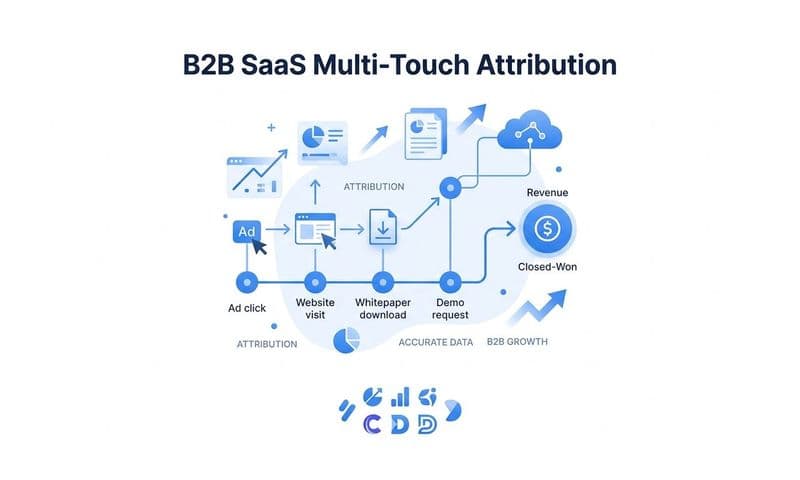
Multi-touch attribution maps the full customer journey by assigning credit to every meaningful touchpoint along the path to conversion. Instead of relying on third-party cookies to stitch together cross-site behavior, modern multi-touch attribution uses first-party signals, deterministic matching, and CRM data to connect the dots.
When a user clicks a paid ad, visits your site, opens an email, and then converts through a direct session days later, multi-touch attribution captures each of those interactions and distributes credit accordingly. This gives you a far more accurate picture of what is actually driving revenue, and it helps you allocate budget toward the channels that contribute most across the full funnel. Many marketers are exploring ad conversion tracking alternatives that support this kind of holistic measurement.
Implementation Steps
1. Define the attribution window and model that best reflects your typical sales cycle, whether that is linear, time-decay, position-based, or a custom data-driven model.
2. Connect all of your marketing channels to a single attribution platform so that touchpoints from paid search, paid social, email, and organic are all captured in one place.
3. Use first-party identifiers like email addresses or CRM IDs to stitch together touchpoints across sessions and devices without relying on third-party cookies.
4. Regularly audit your attribution data to identify any gaps in touchpoint coverage and adjust your tracking setup accordingly.
Pro Tips
No single attribution model is perfect. The real value comes from comparing models side by side to understand how credit shifts depending on the lens you use. Platforms like Cometly make it easy to switch between attribution models and see how each one tells a different story about your campaign performance.
4. Conversion APIs and Platform-Native Solutions
The Challenge It Solves
When browser pixels fail to fire accurately due to ad blockers or cookie restrictions, the conversion signals you send to ad platforms like Meta and Google become incomplete. Weaker signals mean weaker algorithmic optimization. Your campaigns miss out on the data they need to find the right audiences, bid efficiently, and improve over time. This is not just a measurement problem. It directly impacts your ad performance and return on spend.
The Strategy Explained
Conversion APIs are server-to-server integrations that send conversion data directly from your server to the ad platform's API, bypassing the browser entirely. Meta's Conversions API, Google's Enhanced Conversions, and TikTok's Events API are now considered standard best practices rather than optional add-ons. They represent a proven conversion tracking alternative to pixels and are the ad industry's direct response to the cookieless challenge.
By sending enriched conversion events server-side, you restore the signal quality that ad platform algorithms depend on. Better data in means better optimization out. Your campaigns can target more accurately, bid more efficiently, and scale more confidently because the platform's machine learning is working with complete information rather than a degraded subset of it.
Implementation Steps
1. Set up the Conversions API for each ad platform you run campaigns on, starting with Meta and Google as the highest-priority integrations.
2. Pass hashed customer identifiers such as email addresses and phone numbers alongside conversion events to improve match rates between your data and the platform's user graph.
3. Implement event deduplication logic to ensure server-side API events and any remaining browser-side pixels do not double-count the same conversion.
4. Monitor event match quality scores within each ad platform to verify that your API integration is performing as expected.
Pro Tips
The quality of your Conversions API data depends heavily on how much customer information you pass with each event. More matching parameters, such as email, phone, name, and location, lead to higher match rates and better algorithmic performance. Cometly's Conversion Sync feature is designed to feed enriched, conversion-ready events back to Meta, Google, and other platforms automatically.
5. Privacy-Safe Identity Resolution
The Challenge It Solves
Third-party cookies were the glue that held cross-device and cross-session user journeys together. Without them, the same person browsing your site on their phone in the morning and completing a purchase on their laptop in the afternoon looks like two completely different users. This fragmentation inflates your apparent audience size, distorts your funnel metrics, and makes attribution wildly inaccurate.
The Strategy Explained
Privacy-safe identity resolution reconnects fragmented user sessions using first-party identifiers rather than third-party cookies. Hashed email addresses, login data, and first-party IDs become the connective tissue that links touchpoints across devices and sessions. Because these identifiers come from the user's direct relationship with your brand, they are both more reliable and more privacy-respecting than cookie-based tracking methods ever were.
When a user logs into your site or provides their email address, that identifier can be used to unify their entire journey, from first ad click to final conversion, regardless of which device or browser they used at each step. This deterministic matching approach produces far more accurate attribution than probabilistic cookie-based methods.
Implementation Steps
1. Identify all the points in your customer journey where users authenticate or share their email address, and ensure those events are captured and stored as first-party identifiers.
2. Hash all personal identifiers before passing them to any third-party platform to maintain user privacy and comply with data protection expectations.
3. Use your CRM as the central source of truth for identity resolution, linking ad platform data, website behavior, and offline conversions back to known customer records.
4. Evaluate identity resolution solutions or platforms that can extend your first-party matching across publisher networks where your users are also authenticated.
Pro Tips
Encourage account creation and email authentication at every reasonable touchpoint in your user experience. Each authenticated session is a data point that strengthens your identity graph and improves attribution accuracy across the board. The more of your traffic you can resolve to known users, the less you depend on any cookie-based tracking at all.
6. AI-Powered Analytics
The Challenge It Solves
Even with the best server-side tracking and first-party data strategy in place, there will always be gaps. Some users will never authenticate. Some journeys will remain partially invisible. The question is not how to eliminate data gaps entirely but how to make smart decisions despite them. Manual analysis of incomplete data sets is time-consuming and prone to error, especially when you are managing campaigns across multiple channels simultaneously.
The Strategy Explained
AI-powered analytics uses machine learning to analyze the first-party data patterns you do have, surface optimization insights, and intelligently fill gaps left by cookie loss. Instead of relying on every individual data point being captured perfectly, AI can identify trends and correlations across your available data to give you actionable recommendations with confidence. Many teams are turning to alternatives to traditional marketing analytics software that incorporate these AI capabilities natively.
Think of it like having an analyst who never sleeps, continuously scanning your campaign data across every channel, flagging underperformers, identifying high-converting audiences, and recommending budget shifts before you would have spotted the pattern yourself. This is where AI moves from a buzzword to a genuine competitive advantage in cookieless measurement.
Implementation Steps
1. Consolidate all of your first-party data sources, including ad platform data, CRM records, and website analytics, into a single platform where AI can analyze them together rather than in silos.
2. Define the key performance metrics and business outcomes you want the AI to optimize toward, such as cost per acquisition, return on ad spend, or lead quality.
3. Act on AI-generated recommendations systematically, testing suggested changes and measuring their impact to build confidence in the model over time.
4. Use AI-powered chat or query interfaces to ask natural language questions about your data rather than waiting for scheduled reports.
Pro Tips
AI is only as good as the data it works with. Investing in data quality upstream, through server-side tracking, Conversion APIs, and first-party collection, directly improves the quality of AI-generated insights downstream. Cometly's AI Chat and AI Ads Manager are built to surface these insights across your full campaign portfolio in real time.
7. Media Mix Modeling
The Challenge It Solves
User-level tracking, even when done well, has inherent limitations in a privacy-first world. Consent rates vary. Identity resolution is never complete. And some channels, such as connected TV, out-of-home, and audio, have never been trackable at the user level at all. Relying solely on user-level attribution means systematically undervaluing the channels you cannot directly track, which leads to poor budget allocation decisions.
The Strategy Explained
Media mix modeling, often called MMM, takes a completely different approach. Instead of tracking individual users, it uses aggregate statistical analysis to measure the relationship between your marketing spend across channels and your business outcomes over time. By analyzing historical data on spend, impressions, external factors like seasonality, and revenue results, MMM estimates the incremental contribution of each channel to your overall performance.
This approach has seen a significant resurgence as marketers seek post-cookie advertising measurement strategies that do not depend on user-level cookie tracking at all. It is particularly valuable for validating channel-level effectiveness at scale and for making strategic budget allocation decisions across your full marketing mix, including channels that are invisible to attribution tools.
Implementation Steps
1. Gather at least one to two years of historical data on marketing spend by channel, along with corresponding business outcome data such as revenue, leads, or conversions.
2. Include external variables in your model that may influence outcomes independently of your marketing, such as seasonality, economic conditions, and promotional events.
3. Run the statistical model to estimate the contribution of each channel and identify diminishing returns thresholds where additional spend produces less incremental output.
4. Use MMM findings alongside your user-level attribution data to triangulate a more complete picture of channel effectiveness and inform budget planning cycles.
Pro Tips
Media mix modeling works best as a complement to your granular attribution data, not a replacement for it. Use MMM to validate strategic channel decisions and budget allocation at a high level, then rely on your multi-touch attribution and conversion API data for day-to-day campaign optimization. The two approaches answer different questions, and together they give you a more complete measurement framework.
Putting Your Cookieless Strategy Into Action
The seven strategies covered in this guide are not competing alternatives. They are complementary layers in a resilient measurement stack. The marketers who thrive in a cookieless world will not be the ones who find a single silver bullet. They will be the ones who build a layered, interconnected approach where each method reinforces the others.
Here is how to prioritize your implementation:
Start with the foundation: Server-side tracking and first-party data collection are your highest-priority investments. Without accurate data flowing through channels you control, every other strategy is built on shaky ground.
Add granular campaign intelligence: Layer in multi-touch attribution and Conversion APIs next. These give you the campaign-level insights and ad platform signal quality you need to optimize spend day to day.
Scale with AI and validate with MMM: Once your foundation is solid, AI-powered analytics helps you surface insights and act faster across your full portfolio. Media mix modeling then validates your channel strategy at the aggregate level and informs your larger budget decisions.
Weave in identity resolution throughout: Privacy-safe identity resolution is not a standalone step. It strengthens every other layer by connecting fragmented journeys into coherent customer views.
The shift away from third-party cookies is not a crisis. It is an opportunity to build a measurement infrastructure that is more accurate, more durable, and more aligned with where the industry is heading. The marketers who invest in this now will have a significant advantage over those who wait.
Ready to build your cookieless measurement foundation? Get your free demo of Cometly today and see how our AI-driven attribution, server-side tracking, and Conversion Sync capabilities can help you capture every touchpoint, understand what is really driving revenue, and scale your campaigns with confidence.