Picture this: you're reviewing your monthly ad performance report, and something feels off. Your Facebook campaigns show 100 conversions, but your CRM only recorded 65. Google Ads claims 80 sales, but your analytics platform sees 52. The numbers don't match, your cost per acquisition is climbing, and you're left guessing which campaigns actually drove revenue.
This isn't a technical glitch. It's the new reality of digital marketing in a post-cookie world.
For over two decades, third-party cookies have been the invisible infrastructure powering digital advertising. They tracked users across websites, built retargeting audiences, and fed conversion data back to ad platforms. They made attribution possible. But that foundation has crumbled.
Safari blocked third-party cookies years ago. Firefox followed. Chrome introduced Privacy Sandbox as an alternative approach, fundamentally changing how tracking works. The result? Marketers are operating with incomplete data, shrinking audiences, and attribution models that no longer reflect reality.
Here's the thing: while cookie deprecation creates genuine challenges, it also forces a necessary evolution. The old tracking methods were built on borrowed data and browser-dependent technologies. The new landscape demands first-party data ownership, server-side infrastructure, and attribution systems that connect directly to your revenue outcomes.
This shift isn't about losing visibility. It's about building more accurate, sustainable measurement systems that actually work in 2026 and beyond. Let's break down what's changed, what it means for your campaigns, and how to adapt before your competitors do.
The Privacy Revolution That Changed Everything
Third-party cookie deprecation didn't happen overnight. It was a gradual shift driven by three converging forces: browser companies prioritizing user privacy, governments enacting strict data protection laws, and consumers demanding more control over their digital footprint.
Apple fired the first shot in 2017 with Intelligent Tracking Prevention (ITP) in Safari. Initially, it limited how long third-party cookies could persist. With each update, the restrictions tightened. By 2020, Safari blocked third-party cookies entirely by default. Firefox implemented Enhanced Tracking Protection around the same time, blocking cookies from known trackers and cross-site tracking scripts.
These weren't minor browser updates. Safari and Firefox combined represent roughly 20-30% of web traffic depending on your audience demographics. Overnight, marketers lost visibility into a significant portion of their customer journeys on these browsers.
Then came Chrome's announcement. Google initially planned to phase out third-party cookies completely by 2022, then delayed to 2023, then 2024. Each delay gave marketers temporary relief but also created uncertainty. Eventually, Google shifted to Privacy Sandbox—a collection of APIs designed to enable ad targeting and measurement without cross-site tracking. It's a fundamentally different approach that requires new technical infrastructure.
But browser changes alone don't tell the full story. Privacy regulations accelerated the shift. GDPR in Europe established strict rules around data collection and user consent. CCPA in California gave consumers the right to know what data companies collect and opt out of its sale. Similar laws emerged globally, creating a patchwork of compliance requirements.
These regulations didn't just add legal complexity. They changed user behavior. Cookie consent banners became ubiquitous, and many users started actively declining tracking. Even when cookies are technically available, user consent rates vary widely by region and industry.
Behind all of this is a genuine cultural shift. Consumers are more aware of digital tracking than ever before. High-profile data breaches, privacy scandals, and investigative journalism have made people question who has access to their browsing data and how it's used. Tech companies responded to this pressure by positioning privacy as a competitive advantage.
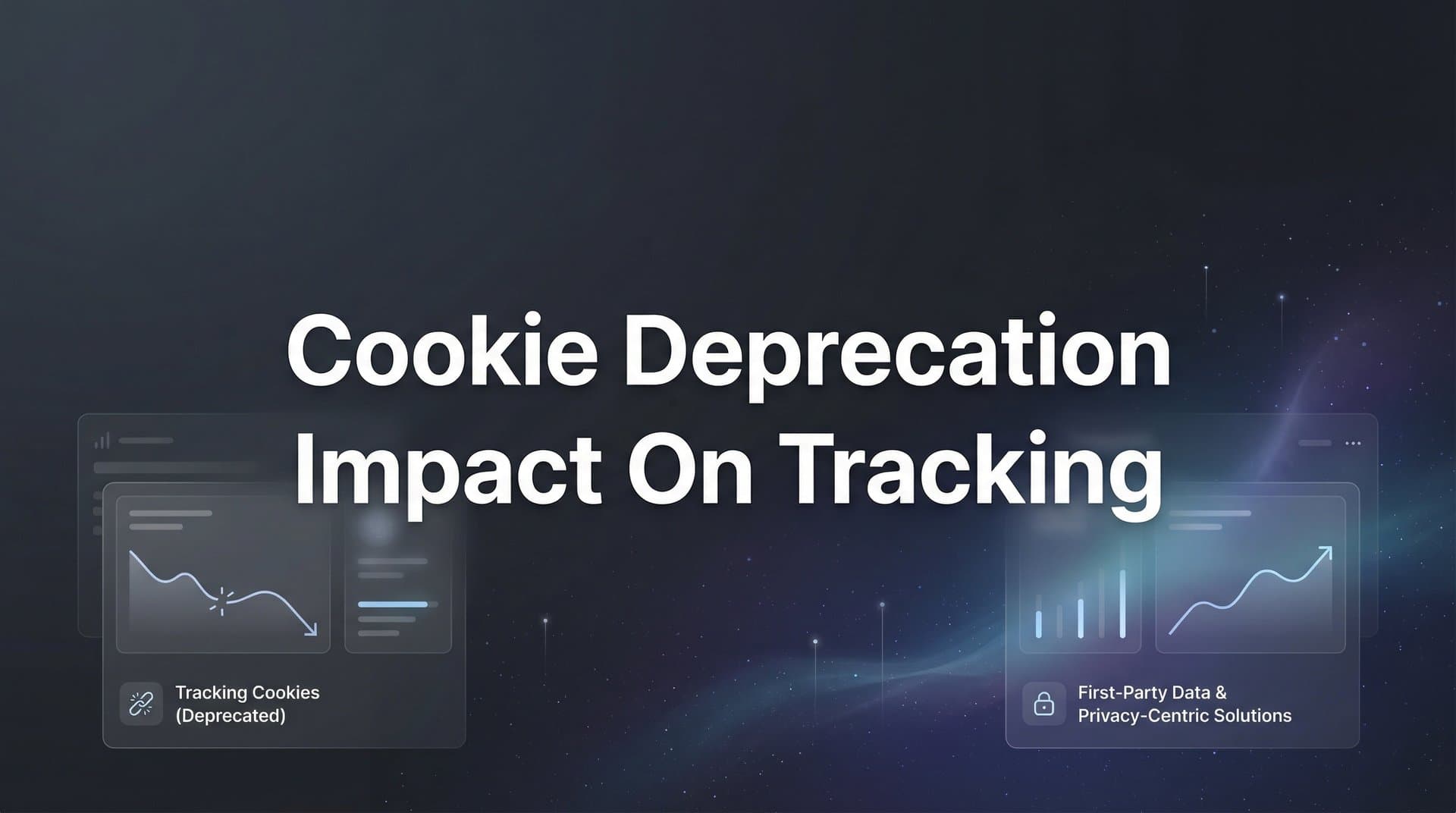
The result is a tracking landscape that looks nothing like it did five years ago. Cross-site tracking is restricted or blocked across major browsers. User consent is required in most regions. And the invisible web of third-party cookies that once powered digital advertising has been dismantled. Understanding what cookieless tracking means is now essential for every marketer.
When Your Attribution Model Stops Working
Cookie deprecation isn't just a technical inconvenience. It fundamentally breaks how most marketing measurement systems work. If you've noticed your attribution reports looking increasingly unreliable, you're not alone.
Third-party cookies enabled cross-site tracking. When someone clicked your Facebook ad, visited your website, then returned three days later through a Google search and purchased, cookies tracked that entire journey. Your attribution model could credit both touchpoints. That capability is largely gone.
Without cross-site tracking, you lose visibility into the customer journey. Someone clicks your ad, but their browser blocks the tracking pixel. They browse your site, but you can't connect their session to the original ad click. They convert, but the conversion fires without attribution data. Your ad platform records an impression and a click but never sees the conversion.
This creates attribution gaps. Your last-click model only sees the final touchpoint—usually direct traffic or branded search—while ignoring the awareness campaigns that drove initial discovery. Your multi-touch model can't attribute credit to touchpoints it can't see. The result is incomplete data that misrepresents campaign performance.
Retargeting audiences have shrunk dramatically. Building a retargeting list used to be simple: drop a pixel on your website, and anyone who visited would be cookied and added to your audience. Now, browsers block those pixels or limit their lifespan. Your retargeting pools are smaller, less accurate, and refresh more slowly.
The impact extends to lookalike audiences. Ad platforms build lookalikes by analyzing the characteristics of your converting customers. But if the platform can't accurately track who converted, the lookalike model trains on incomplete data. The audiences become less precise, and performance degrades over time.
Ad platform algorithms suffer most. Facebook's algorithm, Google's Smart Bidding, TikTok's automated campaigns—they all rely on conversion data to optimize delivery. When a user converts, the platform learns which audiences, placements, and creative variations drove that outcome. It uses that signal to improve future targeting.
Cookie deprecation reduces signal quality. Conversions go untracked or misattributed. The algorithm receives fewer data points, and the ones it gets are less reliable. Optimization becomes slower and less effective. You'll notice this as higher costs, lower conversion rates, and campaigns that seem to lose performance over time despite no obvious changes. Many advertisers experience paid ad tracking not working as expected.
Some marketers try to compensate with longer attribution windows or statistical modeling. These can help, but they're workarounds that don't solve the underlying problem: you're operating with incomplete data, and your measurement infrastructure is built on a foundation that no longer exists.
The traditional marketing measurement playbook assumed persistent cross-site tracking. That assumption is now broken. Everything built on top of it—your attribution models, your audience strategies, your optimization tactics—needs to be rebuilt for a privacy-first world.
The Hidden Costs Showing Up in Your Reports
Cookie deprecation isn't just a future concern. Marketers are experiencing tangible impacts right now, and the costs show up in ways that aren't always obvious.
Match rates between ad platforms and actual conversions have declined significantly. You run a campaign, the platform reports 100 conversions, but your CRM only shows 70 sales. The gap isn't a technical error—it's the result of tracking limitations. Some conversions fire without attribution data, some users block pixels entirely, and some browsers restrict how conversion events are reported.
This creates a trust problem. When your ad platform reports different numbers than your analytics tool, which do you believe? When your CRM shows fewer conversions than your attribution platform, how do you reconcile the discrepancy? Many marketers end up making decisions based on incomplete or conflicting data.
Cost per acquisition has increased for many advertisers. When ad algorithms receive fewer conversion signals, they optimize less effectively. Campaigns that once delivered consistent performance start showing higher CPAs. You're paying more for the same results, or getting fewer results for the same budget.
Proving ROI becomes harder. Your CFO asks which marketing channels are driving revenue. You pull your attribution report, but you know it's incomplete. You explain the limitations, the tracking challenges, the browser restrictions. The conversation shifts from "here's what's working" to "here's why we can't measure accurately." That's not a position any marketer wants to be in.
Budget allocation decisions become guesswork. Without reliable attribution data, you can't confidently identify which campaigns deserve more investment and which should be cut. You might be overspending on channels that look good in last-click reports but aren't actually driving new customer acquisition. Or you might be underfunding awareness campaigns because their impact isn't visible in your broken attribution model. Understanding channel attribution in digital marketing becomes critical for accurate budget decisions.
The customer journey becomes fragmented. You see someone clicked an ad, but you don't know if they visited your site. You see a website session, but you can't connect it to a specific campaign. You see a conversion, but you can't trace it back to the marketing touchpoint that initiated the journey. Each piece of data exists in isolation, and you're left trying to piece together a complete picture from incomplete fragments.
Some marketers respond by increasing ad spend, hoping that higher volume will compensate for lower efficiency. Others pull back entirely, cutting budgets because they can't prove ROI. Both approaches are reactions to the same problem: you're operating blind, making decisions without the data you need to make them confidently.
The real cost isn't just financial. It's the opportunity cost of not knowing what's actually working. It's the strategic cost of making budget decisions based on incomplete information. And it's the competitive cost of falling behind while other marketers build measurement systems that actually work in this new environment.
Why Server-Side Tracking Changes the Game
If browser-based tracking is broken, the solution is to stop relying on browsers entirely. That's exactly what server-side tracking does.
Traditional client-side tracking works like this: someone visits your website, and a JavaScript pixel fires in their browser. That pixel sends data to an ad platform or analytics tool. The browser acts as the middleman, and if it blocks third-party cookies or tracking scripts, your data collection fails.
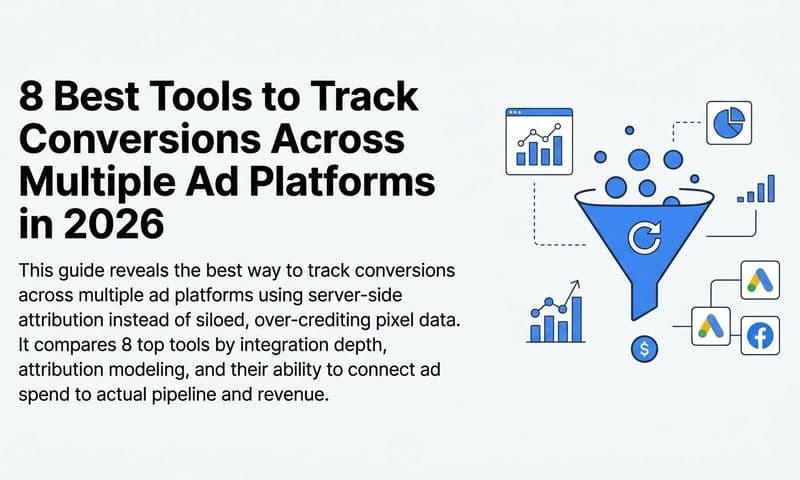
Server-side tracking removes the browser from the equation. Instead of relying on pixels that fire in the user's browser, your server sends data directly to ad platforms and analytics tools through server-to-server connections. The user's browser restrictions don't matter because the data never passes through it.
Here's why this matters: when someone converts on your website, your server captures that event—the purchase, the lead form submission, the signup. It then sends that conversion data directly to Facebook, Google, or whatever platforms you're using. The data is first-party, collected from your own infrastructure, and transmitted securely without browser interference.
This approach bypasses ITP, Enhanced Tracking Prevention, and other browser restrictions. Safari can't block a server-to-server connection. Firefox's privacy features don't interfere with data your server sends directly to ad platforms. You're no longer dependent on browser cooperation to track conversions. Our server-side tracking implementation guide walks through the technical details.
Server-side tracking also enables data enrichment. When a client-side pixel fires, it only knows what the browser can tell it—usually just a conversion event and maybe a transaction value. When your server sends the data, it can include additional context: customer lifetime value, product categories, subscription tier, CRM status, or any other data your business captures.
This enriched data gives ad platforms more signal to optimize against. Instead of just knowing someone converted, the algorithm knows they're a high-value customer who purchased premium products. It can use that information to find more users who match that profile.
The technical implementation requires infrastructure changes. You need a server that can receive conversion events from your website or app, process them, and send them to ad platforms via their APIs. For Meta, that's the Conversions API. For Google, it's Enhanced Conversions. Each platform has its own server-side solution.
Many marketers worry that server-side tracking is too complex or technical. The reality is that modern attribution platforms handle the heavy lifting. You connect your data sources, configure your conversion events, and the platform manages the server-side connections. You get the benefits without building custom infrastructure from scratch.
First-party data tracking becomes your foundation. Instead of relying on third-party cookies to track users across the web, you focus on collecting data from your own properties—your website, your app, your CRM. This data is yours, it's compliant with privacy regulations, and it's not subject to browser restrictions.
The shift from client-side to server-side isn't just a technical upgrade. It's a fundamental change in how marketing measurement works. You're moving from borrowed, browser-dependent data to owned, infrastructure-level data. That's the difference between a measurement system that breaks with every browser update and one that remains stable regardless of external changes.
How Better Data Improves Ad Performance
Server-side tracking isn't just about preserving your ability to measure conversions. It's about feeding ad platforms higher-quality data that makes their algorithms work better.
Ad platforms are machines that optimize toward the signals you give them. If you send incomplete or inaccurate conversion data, the algorithm optimizes toward incomplete or inaccurate outcomes. If you send enriched, accurate data, the algorithm learns what actually drives valuable conversions and finds more of those opportunities.
Conversion APIs enable this by allowing you to send detailed event data directly from your server. When someone purchases, you don't just send "conversion happened." You send the purchase value, the products bought, the customer type, and any other relevant context. The platform's algorithm uses all of that information to understand what makes a valuable conversion.
This creates a feedback loop. Better data leads to better optimization, which leads to better targeting, which leads to more valuable conversions, which generates more data to optimize against. The cycle compounds over time.
Match rates improve significantly with server-side tracking. When you send conversion data directly from your server, it's not subject to browser blocking or user opt-outs that affect pixels. The ad platform receives a more complete picture of campaign performance, and its reported conversions align more closely with your actual business outcomes. Following best practices for tracking conversions accurately ensures you maximize this alignment.
This alignment matters for optimization. If the algorithm thinks a campaign drove 50 conversions when it actually drove 80, it will undervalue that campaign and reduce its delivery. If you send accurate data showing all 80 conversions, the algorithm correctly identifies the campaign as high-performing and scales it appropriately.
Targeting precision improves when platforms have better training data. Lookalike audiences become more accurate because they're built from complete conversion data rather than partial signals. Interest targeting performs better because the algorithm can identify which interests correlate with actual conversions, not just tracked conversions.
Lower acquisition costs often follow. When ad platforms optimize more effectively, they find converting users more efficiently. Your cost per click might stay the same, but your conversion rate improves because the algorithm is better at identifying high-intent users. The result is lower cost per acquisition without increasing ad spend.
Dynamic creative optimization works better with enriched data. If the platform knows which product categories drive the most valuable conversions, it can automatically show creative featuring those products. If it knows which messaging resonates with high-value customers, it can prioritize that messaging in its delivery.
The key insight is that ad platforms want to perform well. Their business model depends on delivering results for advertisers. But they can only work with the data you give them. If you send limited, inaccurate signals, they'll struggle to optimize. If you send comprehensive, accurate data, they'll use it to improve your campaign performance.
Many marketers focus on creative, targeting, and bidding strategies while neglecting the data infrastructure that powers optimization. But the best creative and targeting won't overcome poor data quality. The algorithm needs good inputs to generate good outputs. Learn how ad tracking tools can help you scale ads using accurate data.
Building this feedback loop requires connecting your conversion data—from your website, CRM, and backend systems—directly to ad platforms through server-side connections. It requires sending not just that a conversion happened, but the context that makes it valuable. And it requires maintaining that data flow consistently so the algorithm always has current information to optimize against.
Building Measurement That Lasts
Cookie deprecation exposed a deeper truth: relying on any single tracking method creates fragility. The solution isn't to find the next cookie replacement. It's to build a measurement framework that combines multiple data sources and adapts as the landscape continues to evolve.
First-party data becomes your foundation. This is data you collect directly from customer interactions—website visits, purchases, email engagement, CRM activities. It's yours, it's compliant, and it's not dependent on third-party technologies that can be deprecated or restricted.
The challenge is connecting first-party data across systems. Your website analytics tool sees sessions and conversions. Your CRM sees leads and customers. Your ad platforms see impressions and clicks. Each system has pieces of the customer journey, but none has the complete picture.
Attribution platforms solve this by integrating all your data sources into a unified view. They connect ad platform data to website analytics to CRM outcomes, creating a complete map of the customer journey from first touchpoint to final conversion and beyond. Exploring cookieless attribution tracking methods reveals how this integration works in practice.
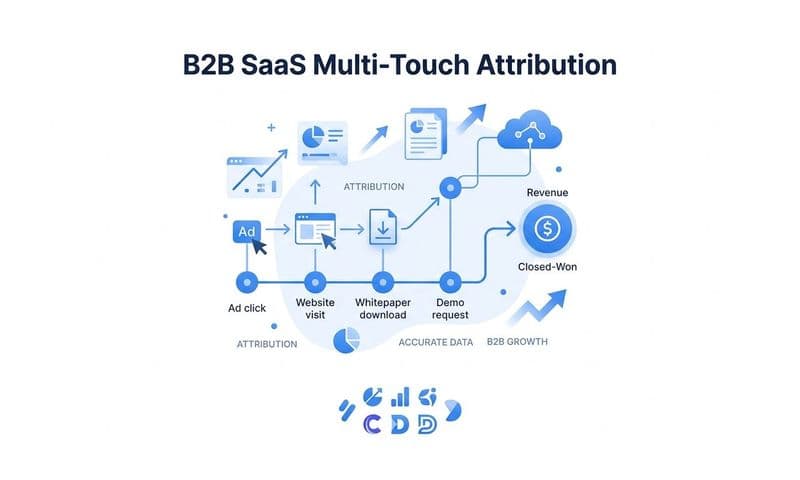
This integration enables multi-touch attribution that actually works. Instead of relying on cookies to track the journey, you're connecting data points from your owned systems. Someone clicks a Facebook ad—that's tracked in Facebook. They visit your site—that's tracked in your analytics. They submit a lead form—that's in your CRM. The attribution platform connects all three events to the same user journey.
The result is visibility into which touchpoints actually contribute to conversions. You can see that display ads drive awareness, social campaigns drive consideration, and search captures intent. You can allocate budget based on each channel's true contribution rather than what last-click attribution suggests.
AI-powered recommendations add another layer of intelligence. Instead of manually analyzing attribution data to identify patterns, AI can surface insights automatically. It might notice that customers who engage with video content convert at higher rates, or that certain audience segments respond better to specific messaging, or that campaigns perform differently by day of week.
These insights help you optimize without guessing. You're not relying on intuition or incomplete data—you're acting on patterns identified across your entire customer base. The AI continuously analyzes new data and updates recommendations as performance changes.
Building this framework requires technical integration work upfront, but it creates a measurement system that's resilient to future changes. If another browser implements tracking restrictions, your server-side infrastructure isn't affected. If a new privacy regulation emerges, your first-party data collection remains compliant. If ad platforms change their APIs, your attribution platform adapts. A proper attribution tracking setup ensures this resilience from day one.
The framework also needs to accommodate different attribution tracking methods. Last-click has its place for understanding final conversion drivers. First-click helps evaluate awareness channels. Linear and time-decay models provide different perspectives on journey contribution. The ability to compare models and understand how they differ reveals insights that any single model would miss.
Many marketers treat attribution as a reporting exercise—something you check after campaigns run. But attribution should inform active decision-making. Which campaigns deserve more budget? Which audiences are most valuable? Which creative messages drive action? The answers live in your attribution data if you're collecting it comprehensively.
Future-proofing also means building for flexibility. The tracking landscape will continue evolving. New privacy regulations will emerge. Browsers will implement new restrictions. Ad platforms will change their measurement capabilities. A rigid measurement system breaks under these changes. A flexible one adapts.
The Path Forward
Cookie deprecation forced a reckoning for digital marketing. The tracking methods that powered advertising for two decades are gone or severely limited. Attribution models built on cross-site tracking no longer reflect reality. Ad platform optimization suffers from incomplete conversion data.
But this disruption created an opportunity to build something better. Server-side tracking that bypasses browser restrictions. First-party data strategies that you own and control. Attribution systems that connect all your marketing touchpoints to actual revenue outcomes. Measurement frameworks that adapt as privacy regulations evolve.
The marketers who act now gain a significant advantage. While competitors struggle with broken attribution and declining ad performance, you'll have complete visibility into what's driving results. While others guess at budget allocation, you'll make decisions based on comprehensive data. While their ad algorithms optimize against incomplete signals, yours will receive enriched conversion data that improves targeting and lowers acquisition costs.
The shift requires investment—in infrastructure, in integration, in new measurement approaches. But the alternative is operating blind in an increasingly complex landscape. Every month you delay is another month of incomplete data, missed optimization opportunities, and budget decisions made without confidence.
Cookie deprecation isn't the end of effective marketing measurement. It's the catalyst for building systems that are more accurate, more sustainable, and more aligned with how privacy-conscious consumers expect their data to be handled. The question isn't whether to adapt—it's whether you'll lead the transition or scramble to catch up later.
Your customer journey doesn't stop existing just because browsers block tracking. The touchpoints still happen, the conversions still occur, and the patterns still exist. The difference is whether you have the infrastructure to capture them. Server-side tracking, first-party data collection, and comprehensive attribution give you that capability.
The marketing landscape has changed permanently. The measurement systems that worked in 2020 don't work in 2026. But the new systems—built on owned data, server infrastructure, and privacy-first principles—work better than what came before. They're more accurate, more reliable, and more resilient to future changes.
Now is the time to build that foundation. Connect your data sources. Implement server-side tracking. Feed your ad platforms enriched conversion data. Build attribution that shows the complete customer journey from first impression to final purchase and beyond.
Ready to elevate your marketing game with precision and confidence? Discover how Cometly's AI-driven recommendations can transform your ad strategy—Get your free demo today and start capturing every touchpoint to maximize your conversions.