Your Facebook ads dashboard shows 100 conversions. Google Analytics reports 75. Your CRM says 50 deals actually closed. Which number do you trust?
This isn't a hypothetical scenario—it's the daily reality for marketers navigating the cookieless future. Safari eliminated third-party cookies years ago through Intelligent Tracking Prevention. Firefox followed with Enhanced Tracking Protection. Chrome has announced plans to phase out third-party cookies, with timelines shifting repeatedly since the initial 2020 announcement.
For decades, marketers relied on third-party cookies to track user journeys across websites, attribute conversions to specific campaigns, and feed optimization data back to ad platforms. Those tiny pieces of code made it possible to know whether someone who clicked your Facebook ad last Tuesday eventually converted on your website Thursday afternoon.
Now that foundation is crumbling. iOS 14.5's App Tracking Transparency update in 2021 already forced marketers to rethink mobile attribution. Browser restrictions continue tightening. Privacy regulations like GDPR and CCPA give users more control over their data. The infrastructure that powered digital marketing measurement for two decades is being dismantled piece by piece.
The solution isn't to accept partial visibility or guess which campaigns drive revenue. It's to adopt cookieless tracking—methods that deliver more accurate attribution than third-party cookies ever could. This guide explains exactly what cookieless tracking is, why it often provides better data than cookie-based approaches, and how to implement it to maintain complete visibility into your marketing performance.
The End of Third-Party Cookies: Why Marketing Attribution Had to Evolve
Understanding cookieless tracking starts with understanding what's actually disappearing and why it matters.
Third-party cookies are small text files placed on a user's browser by domains other than the one they're visiting. When you visit a website and see a Facebook pixel or Google Analytics tag, those tools drop third-party cookies that follow you across the web. This cross-site tracking enabled marketers to build detailed profiles of user behavior and attribute conversions to specific touchpoints.
First-party cookies, by contrast, are set by the website you're actually visiting. They power basic functionality like keeping you logged in or remembering items in your shopping cart. These aren't going anywhere—they're essential for website operation and don't raise the same privacy concerns.
The distinction matters because browsers are only blocking third-party cookies. Safari's Intelligent Tracking Prevention, launched in 2017 and strengthened repeatedly since then, restricts how long third-party cookies can persist and blocks many cross-site tracking capabilities entirely. Firefox's Enhanced Tracking Protection blocks third-party cookies by default for all users.
Privacy regulations accelerated this shift. GDPR in Europe requires explicit consent before dropping cookies. CCPA in California gives consumers the right to opt out of data sales. iOS App Tracking Transparency forces apps to ask permission before tracking users across other companies' apps and websites. These regulations reflect a fundamental change in how society views digital privacy.
For marketers, the impact is immediate and measurable. Cross-device tracking becomes nearly impossible when browsers block the cookies that connected a user's phone activity to their laptop purchases. Conversion attribution degrades when you can't track the full path from initial ad exposure to final purchase. Ad platform optimization suffers when algorithms receive incomplete conversion data.
Picture running a campaign where someone sees your Instagram ad on their phone, clicks a Google search ad on their work computer, and converts on their home laptop. Third-party cookies made it possible to connect those dots. Without them, each interaction looks like a separate, unrelated visitor. You see three different users instead of one customer journey.
The attribution window problem compounds these challenges. When browsers do allow third-party cookies, they often expire them quickly—sometimes within 24 hours. If someone clicks your ad on Monday but doesn't convert until Friday, that conversion might not get attributed to your campaign at all.
This isn't just about losing visibility into past performance. Incomplete conversion data means ad platforms can't optimize effectively. Facebook's algorithm learns which audiences convert by analyzing conversion signals. Google's Smart Bidding adjusts bids based on conversion probability. When these platforms receive partial data, their optimization becomes less accurate, often driving up costs and reducing campaign effectiveness.
How Cookieless Tracking Actually Works
Cookieless tracking doesn't mean tracking nothing. It means tracking smarter—using methods that don't depend on browser cookies to connect user actions across touchpoints.
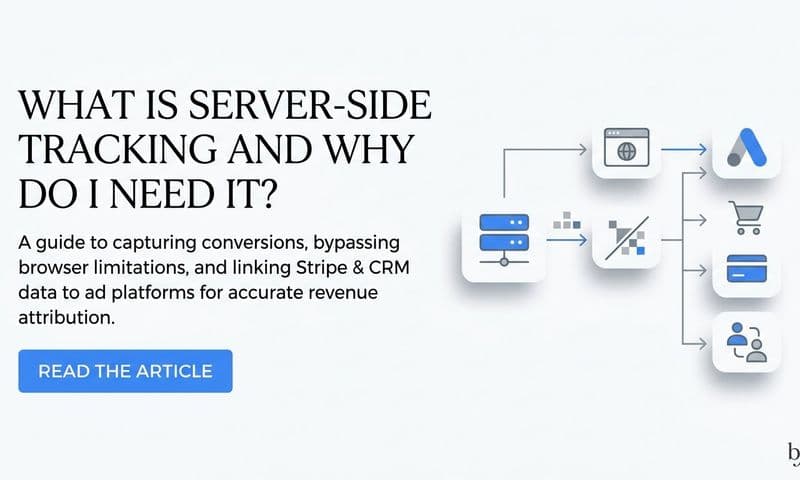
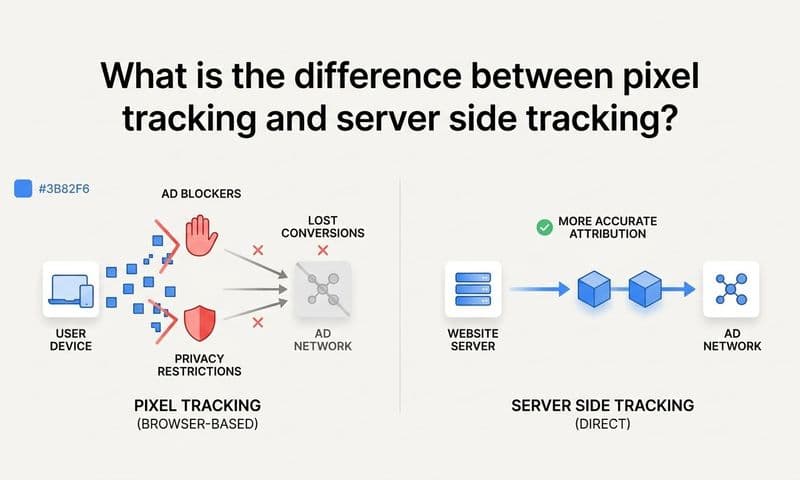
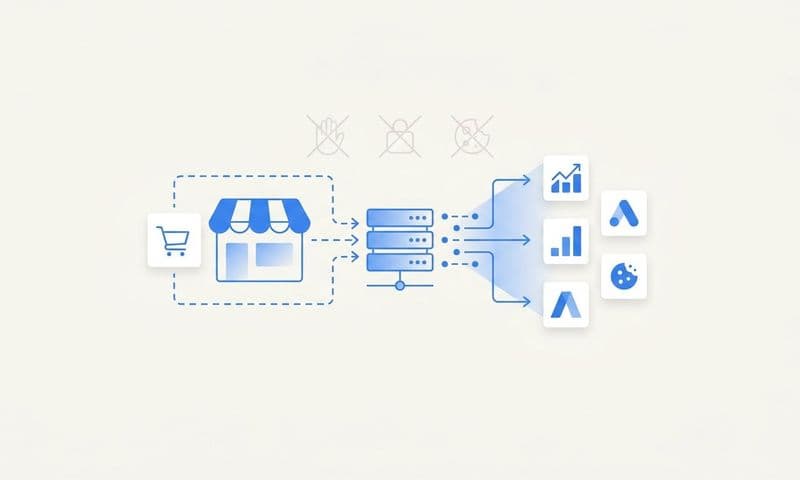
The foundation is server-side tracking. Instead of relying on JavaScript tags in a user's browser to send data to ad platforms, server-side tracking sends conversion data directly from your web server. When someone completes a purchase on your website, your server communicates that conversion to Facebook, Google, or other platforms using their server-side APIs.
This approach bypasses browser limitations entirely. Ad blockers can't stop it. Browser privacy settings don't affect it. Cross-device tracking gaps disappear when you're matching conversions based on email addresses or phone numbers rather than browser cookies.
Think of it like this: cookie-based tracking is like following someone by placing a tracker in their car. Server-side tracking is like getting a text message when they arrive at their destination. You don't need to follow the journey—you just need to know the outcome and connect it to the right starting point.
First-party data strategies form the second pillar. This means collecting and using information directly from your customers through your own properties—your website, app, email list, or CRM. When users log in, subscribe to your newsletter, or make a purchase, you capture identifiers like email addresses and phone numbers that persist across devices and browsers.
These identifiers become the glue connecting touchpoints. Someone clicks your Facebook ad, lands on your website, and enters their email to download a guide. Later, they return through a Google search, log in with that same email, and make a purchase. Even without cookies, you can connect both touchpoints to the same person and attribute the conversion appropriately.
The matching process uses two main approaches: deterministic and probabilistic.
Deterministic matching relies on exact identifiers. When you send an email address or phone number to an ad platform through server-side tracking, they can match it precisely to a user account. If someone used the same email for their Facebook account and your website checkout, that's a deterministic match—you know with certainty it's the same person.
Probabilistic matching uses patterns and signals to infer connections. This might include IP addresses, device characteristics, browsing patterns, and timing. If someone clicks an ad from a specific IP address and device type, then a purchase happens moments later from the same IP and device, there's a high probability it's the same user even without a definitive identifier.
Modern marketing attribution platforms combine both approaches. They use deterministic matching when exact identifiers are available and probabilistic methods to fill gaps. The result is often more accurate than cookie-based tracking ever was, because you're not limited by cookie expiration, browser restrictions, or cross-device tracking challenges.
The key difference from cookie-based tracking is control. With third-party cookies, you're at the mercy of browser policies and user privacy settings. With cookieless tracking, you own the data collection infrastructure and can ensure completeness and accuracy regardless of browser behavior.
Five Cookieless Tracking Methods Marketers Are Using Today
Understanding the concept is one thing. Implementing it requires specific tools and approaches. Here are the five methods that leading marketers use to maintain accurate attribution without third-party cookies.
Server-Side Tagging and Conversion APIs: Meta's Conversions API and Google's Enhanced Conversions represent the most direct path to cookieless tracking for paid advertising. These tools let you send conversion data directly from your server to ad platforms, bypassing browser-based tracking entirely.
When someone completes a purchase, your server sends the conversion event along with customer information—typically a hashed email address or phone number—directly to Facebook or Google. The ad platform matches this data to user accounts and attributes the conversion to the right campaign. Because the data flows server-to-server, browser settings and ad blockers can't interfere.
The implementation requires technical setup but delivers immediate benefits. Many marketers report seeing conversion counts increase by significant amounts simply because they're now capturing events that browser-based tracking missed. More importantly, feeding complete conversion data back to ad platforms improves their optimization algorithms, often reducing cost per acquisition over time.
First-Party Cookie Strategies with Proper Consent: First-party cookies aren't going anywhere, and when implemented with proper consent management, they remain a valuable tracking tool. The key is using them within a single domain and respecting user privacy preferences.
A first-party cookie strategy means tracking user behavior on your own website using cookies you control. You can track which pages someone visits, how long they stay, what they add to cart, and when they convert. This data stays within your domain and isn't shared across third-party sites.
Consent management platforms help you comply with privacy regulations while maximizing data collection. When users consent to tracking, you can use first-party cookies to build detailed behavioral profiles. When they don't, you rely on server-side methods and first-party data that doesn't require cookie consent.
CRM-Based Attribution: Your CRM contains the ultimate source of truth—actual revenue. CRM-based attribution connects ad clicks and marketing touchpoints directly to deals in your sales system, creating attribution that tracks all the way to closed revenue rather than stopping at website conversions.
This approach works by capturing campaign parameters when leads enter your system, then tracking those leads through your sales pipeline. When a deal closes, you know exactly which ads, keywords, and campaigns influenced that customer's journey. The attribution isn't based on cookies at all—it's based on matching customer records across systems.
For B2B marketers and businesses with longer sales cycles, CRM-based attribution is often more valuable than cookie-based tracking ever was. You're not just seeing which ads drove form fills—you're seeing which ads drove actual revenue. That distinction transforms how you allocate budget and optimize campaigns. Explore the best marketing attribution tools for B2B SaaS companies to find solutions tailored to complex sales cycles.
Contextual Targeting and Cohort-Based Approaches: Some marketers are moving away from individual user tracking entirely, focusing instead on contextual signals and aggregated cohorts. Contextual targeting places ads based on page content rather than user behavior. Cohort-based approaches group users into privacy-preserving segments rather than tracking individuals.
Google's Privacy Sandbox initiatives, including Topics API and Attribution Reporting API, represent this direction. Instead of tracking individual users across sites, these tools provide aggregated insights about groups of users with similar interests. Advertisers can still optimize campaigns, but without building detailed individual profiles.
While these approaches don't provide the granular attribution many marketers need, they offer a privacy-compliant alternative for awareness campaigns and situations where individual tracking isn't feasible or necessary.
Unified ID Solutions: Several industry initiatives are developing universal identifiers that can replace third-party cookies while maintaining user privacy. The Trade Desk's Unified ID 2.0 and other similar solutions use encrypted email addresses as persistent identifiers across participating publishers and platforms.
Users provide their email address once, it gets encrypted, and that encrypted identifier follows them across participating sites. Marketers can track user journeys and attribute conversions without relying on third-party cookies. The key difference from cookies is user control—these systems require explicit consent and give users the ability to opt out at any time.
The effectiveness of unified ID solutions depends on adoption. As more publishers and platforms participate, these identifiers become more useful for cross-site attribution. They're particularly relevant for display advertising and programmatic buying, where third-party cookies played the largest role.
Building Your Cookieless Attribution Stack
Implementing cookieless tracking isn't about choosing one method—it's about building a complete attribution stack that captures every touchpoint regardless of browser restrictions or user privacy settings.
Start with server-side tracking as your foundation. This means implementing conversion APIs for your primary ad platforms—Meta Conversions API if you run Facebook or Instagram ads, Google Enhanced Conversions for Google Ads, and similar server-side solutions for other platforms you use. Server-side tracking ensures you capture conversion data even when browser-based pixels fail.
Our roundup of the best tracking software for Facebook ads can help you shortlist.
The technical implementation typically involves setting up a server-side tag manager or working with an attribution platform that handles server-side tracking automatically. You'll need to pass customer information—usually hashed email addresses or phone numbers—along with conversion events. This data gets matched to user accounts on ad platforms, enabling accurate attribution without cookies.
Next, integrate your CRM to connect marketing touchpoints to actual revenue. This integration captures campaign parameters when leads enter your system and tracks them through your sales pipeline. When deals close, you can attribute revenue to specific campaigns, ads, and keywords. This level of channel attribution in digital marketing goes far beyond what cookie-based tracking ever provided.
The integration works by passing UTM parameters or campaign identifiers from your website to your CRM when someone fills out a form or converts. As that lead progresses through your sales process, those identifiers stay attached to their record. When they become a customer, you know exactly which marketing touchpoints influenced their journey.
Conversion sync capabilities complete the stack. This means sending enriched conversion data back to ad platforms to improve their optimization algorithms. When you can tell Facebook not just that a conversion happened, but that it resulted in a $5,000 deal that closed after a 30-day sales cycle, their algorithm can optimize for high-value customers rather than just any conversion.
Modern attribution platforms handle this sync automatically, sending conversion updates to ad platforms as deals progress through your pipeline. The result is ad algorithms that optimize based on actual business outcomes rather than surface-level metrics like form fills or demo requests.
AI plays an increasingly important role in analyzing this enriched first-party data. With complete journey visibility—from initial ad click through every touchpoint to final revenue—AI can identify patterns that humans miss. It can spot which ad creative works best for high-value customers, which channels drive the fastest sales cycles, or which campaign combinations produce the highest return on ad spend. Learn more about predictive analytics for marketing campaigns to leverage these AI-driven insights.
The key is connecting all these components into a unified system. Your website tracking captures behavioral data. Server-side tracking sends conversions to ad platforms. CRM integration connects marketing to revenue. Conversion sync feeds optimization data back to algorithms. AI analyzes the complete dataset to surface actionable insights.
This integrated approach delivers attribution that's not just cookieless—it's better than cookie-based tracking ever was. You're seeing the complete customer journey, tracking all the way to revenue, and feeding optimization data that improves campaign performance over time.
Implementing Cookieless Tracking: A Practical Roadmap
Theory is valuable, but implementation is where results happen. Here's a practical roadmap for transitioning to cookieless tracking without losing attribution visibility during the process.
Step 1: Audit Your Current Tracking Setup
Begin by documenting every tracking method you currently use. List all pixels, tags, and analytics tools. Identify which ones rely on third-party cookies and which use first-party data. Check your conversion tracking in each ad platform and compare reported conversions to actual results in your CRM or analytics system.
This audit reveals your cookie dependencies and highlights gaps in your current attribution. You might discover that Safari users are significantly underreported in your Facebook conversion data, or that cross-device conversions aren't being captured at all. These gaps represent the opportunity cost of continuing with cookie-based tracking.
Step 2: Prioritize Server-Side Implementations
Focus first on your highest-spend ad platforms. If you invest heavily in Facebook advertising, implement Meta Conversions API immediately. For Google Ads campaigns, set up Enhanced Conversions. These server-side implementations deliver the fastest return because they improve attribution accuracy for your largest budget allocations. Consider the best tracking solution for Facebook ads to maximize your conversion capture.
Start with key conversion events—purchases, qualified leads, or whatever metrics drive your business decisions. You don't need to migrate every single event to server-side tracking on day one. Begin with the conversions that matter most for attribution and optimization.
Work with your development team or choose an attribution platform that simplifies server-side implementation. The technical complexity shouldn't be a barrier—many modern tools handle the server-side setup with minimal coding required.
Step 3: Test and Validate Data Accuracy
Run server-side tracking in parallel with your existing cookie-based methods for at least two weeks. Compare the data to ensure accuracy before fully transitioning. You should see server-side tracking capture equal or greater conversion counts, particularly for Safari users and cross-device journeys.
Check that customer matching works correctly. Verify that conversions are being attributed to the right campaigns. Test edge cases—what happens when someone uses a different email address at checkout than they used to click your ad? How does the system handle mobile app conversions versus web conversions?
This validation period prevents the nightmare scenario of switching to cookieless tracking only to discover your conversion data is incomplete or inaccurate. Take the time to verify everything works correctly before relying on it for budget decisions.
Step 4: Expand to Complete Journey Tracking
Once server-side tracking is validated for your primary ad platforms, expand to capture the complete customer journey. Implement CRM integration to track leads through your sales pipeline. Set up conversion sync to feed revenue data back to ad platforms. Build out your attribution tracking for multiple campaigns to include every touchpoint from initial awareness to final purchase.
This expansion transforms attribution from a point-in-time snapshot to a complete journey view. You're no longer just seeing which ad drove a conversion—you're seeing every interaction that influenced the decision, and you can attribute credit appropriately across all touchpoints.
Future-Proofing Your Marketing Measurement
The transition to cookieless tracking represents more than compliance with browser policies and privacy regulations. It's an opportunity to build attribution that's more accurate, more complete, and more actionable than what third-party cookies ever provided.
Server-side tracking captures conversions that browser-based pixels miss. First-party data strategies create persistent customer identities across devices and sessions. CRM integration connects marketing to actual revenue rather than stopping at website conversions. The result is attribution that shows what's really driving business outcomes, not just what's happening on your website.
Marketers who embrace this shift gain a competitive advantage. While others struggle with degraded attribution and incomplete data, you'll have complete visibility into campaign performance. While their ad algorithms optimize based on partial conversion data, yours will optimize based on actual revenue and customer value. Discover more cookieless tracking solutions for marketers to stay ahead of the curve.
The cookieless future isn't something to fear—it's something to leverage. Better data leads to better decisions. Better decisions lead to better results. The infrastructure you build today for cookieless tracking will serve you for years to come, regardless of how browser policies or privacy regulations evolve.
Now is the time to evaluate your current attribution setup. Are you capturing every touchpoint? Can you track customer journeys across devices and browsers? Does your data flow all the way to revenue, or does it stop at website conversions? Are you feeding complete conversion data back to ad platforms to improve their optimization? Understanding marketing performance tracking fundamentals helps answer these critical questions.
If the answer to any of these questions is no, you're leaving money on the table. Incomplete attribution means misallocated budgets. Partial conversion data means suboptimal ad performance. The gap between what you think is working and what's actually driving revenue costs you every single day.
Cookieless tracking closes that gap. It gives you the complete picture you need to scale campaigns with confidence, knowing exactly which investments drive returns and which don't. That clarity transforms marketing from educated guessing to data-driven decision making.
Ready to elevate your marketing game with precision and confidence? Discover how Cometly's AI-driven recommendations can transform your ad strategy—Get your free demo today and start capturing every touchpoint to maximize your conversions.