You're running campaigns across Facebook, Google, email, and maybe TikTok. Each platform reports impressive numbers. Facebook says it drove 200 conversions. Google claims credit for 150. Your email platform celebrates 75. Add them up, and you've apparently generated 425 conversions—except your actual sales total is 180.
This isn't a tracking error. It's the natural consequence of analyzing marketing channels in isolation.
Modern customers don't convert in a straight line. They discover your brand through a Facebook ad, research on Google, read your emails, revisit through retargeting, and finally convert after seeing another ad. That single customer touched five channels, and each platform claimed full credit for the conversion. Without cross channel analytics, you're making budget decisions based on inflated metrics and incomplete stories.
Beyond Single-Channel Silos: Understanding Cross Channel Analytics
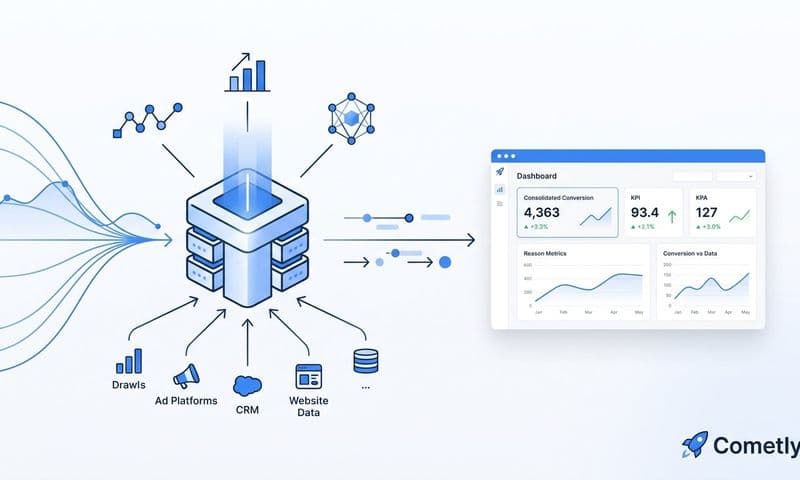
Cross channel analytics is the practice of collecting, integrating, and analyzing customer data across all marketing touchpoints to understand how channels work together to drive conversions. It's not just about seeing data from multiple platforms—it's about connecting the dots to reveal the complete customer journey.
Think of it this way: single-channel analytics is like watching one player on a basketball team and trying to understand why they won the game. You might see them score the final basket, but you miss the assists, defensive plays, and strategic passes that made that shot possible.
Multi-channel analytics takes this a step further by showing you stats for every player, but still treats them as individuals. You can see what each person did, but you don't understand how they worked together as a team.
Cross channel analytics reveals the full game. It tracks how a single customer moves through your marketing ecosystem—from that initial Instagram impression, through the Google search, past the abandoned cart email, and finally to the retargeting ad that sealed the deal. You're not just collecting data from multiple sources; you're connecting those data points to understand cause and effect.
This matters because channels don't exist in isolation. A customer who sees your brand awareness campaign on Facebook is more likely to click your Google ad later. An email subscriber who receives your newsletter is more receptive to retargeting. These interactions compound and influence each other, but you can only see this compounding effect when you track the entire journey, not just individual touchpoints.
The technical foundation requires three elements working in harmony: unified data collection across all touchpoints, identity resolution to connect anonymous sessions to known customers, and attribution modeling to understand each channel's contribution. Without all three, you're back to guessing which channels actually drive results.
Why Fragmented Data Costs You Revenue
When marketing platforms can't communicate with each other, they each apply their own attribution logic to claim credit for conversions. This creates a mathematical impossibility: 100% of your conversions apparently came from Facebook, 100% came from Google, and 100% came from email. Everyone's a hero, and nobody's telling the truth.
The real cost isn't just inflated metrics—it's the budget decisions you make based on those metrics.
Let's say you're spending $10,000 monthly on Facebook awareness campaigns and $5,000 on Google Search retargeting. Your last-click attribution shows Google driving most conversions, so you shift budget away from Facebook. What you don't see is that Facebook's awareness campaigns are creating the initial interest that makes people search for your brand later. Cut Facebook, and your Google conversions drop too.
This is the attribution problem in action. Last-click attribution systematically undervalues awareness and consideration channels while overvaluing bottom-funnel tactics. First-click attribution does the opposite, ignoring the nurturing that moves prospects toward conversion. Both perspectives are incomplete, and making decisions based on either one leaves money on the table.
The iOS tracking challenges introduced by App Tracking Transparency have made this problem exponentially worse. When users opt out of tracking, platforms lose visibility into which ads actually drove conversions. Facebook's reported conversion numbers became less reliable overnight, forcing marketers to make decisions with even less confidence than before.
Cookie deprecation across browsers compounds the issue. Third-party cookies that once tracked users across websites are disappearing, creating blind spots in the customer journey. You might see a customer on your website, but you can't connect that visit to the ad they clicked three days ago.
The competitive disadvantage is stark. While you're optimizing based on incomplete data, competitors with proper cross channel analytics are seeing the full picture. They know exactly which channel combinations drive conversions, which audience segments respond to which messages, and where to allocate budget for maximum return. You're making educated guesses. They're making data-driven decisions.
The Five Pillars of Effective Cross Channel Analytics
Building a cross channel analytics system requires more than connecting a few platforms. You need a comprehensive infrastructure that captures, connects, and analyzes data across your entire marketing ecosystem.
Data Collection: Capturing Every Touchpoint
The foundation starts with comprehensive data collection across all customer interactions. This means tracking paid ads on Facebook, Google, TikTok, and LinkedIn. It means capturing organic traffic from search, social, and referrals. It includes email opens, clicks, and conversions. Website behavior, form submissions, and content engagement all feed into the system.
Server-side tracking has become essential for accurate data collection. Unlike pixel-based tracking that relies on browser cookies and can be blocked by privacy settings, server-side tracking sends data directly from your server to analytics platforms. This approach survives cookie blockers, ad blockers, and iOS privacy restrictions, giving you more complete and accurate data.
The key is capturing not just the conversion, but every touchpoint leading up to it. When someone converts, you need to know they first saw a Facebook ad on Monday, searched your brand on Wednesday, opened an email on Thursday, and clicked a retargeting ad on Friday. Each touchpoint matters for understanding what actually drives results.
Identity Resolution: Connecting the Dots
A customer who visits your site on mobile, later returns on desktop, and eventually converts after clicking an email is the same person—but without identity resolution, your analytics treat them as three separate visitors. This fragmentation destroys your ability to understand the customer journey.
Identity resolution connects these disparate sessions into a unified customer profile. It uses email addresses, phone numbers, customer IDs, and device fingerprints to recognize when different sessions belong to the same person. When someone fills out a form or logs in, that action becomes an anchor point that connects their previous anonymous browsing to their known identity.
This capability transforms your analytics from tracking sessions to tracking people. Instead of seeing "100 website visitors from Facebook ads," you see "23 unique customers who first discovered us through Facebook, later searched our brand, and are now actively considering a purchase." The strategic implications are profound.
Attribution Modeling: Understanding True Contribution
Once you can track the complete customer journey, you need a framework for understanding how much credit each touchpoint deserves. Cross-channel attribution models distribute conversion credit across the entire journey rather than giving everything to the first or last click.
Linear attribution gives equal credit to every touchpoint. If someone touched five channels before converting, each channel gets 20% credit. This approach values every interaction equally, which works well for shorter sales cycles where each touchpoint matters similarly.
Time-decay attribution gives more credit to touchpoints closer to conversion, acknowledging that recent interactions often have more influence on the final decision. Position-based attribution emphasizes the first touchpoint (for creating awareness) and last touchpoint (for closing the deal) while distributing remaining credit across middle interactions.
The most sophisticated approach is data-driven attribution, which uses machine learning to analyze thousands of customer journeys and determine which touchpoints statistically correlate with conversion. This model adapts to your specific business, sales cycle, and customer behavior patterns rather than applying generic rules.
Implementing Cross Channel Analytics: A Practical Roadmap
Building a cross channel analytics practice doesn't require ripping out your entire marketing stack and starting over. The most successful implementations follow a systematic approach that builds capability incrementally.
Step 1: Audit Your Current Data Sources
Start by mapping every place customer data lives in your organization. Your ad platforms (Facebook Ads Manager, Google Ads, LinkedIn Campaign Manager) each contain campaign performance data. Your CRM holds customer information and deal stages. Your email platform tracks engagement metrics. Your website analytics shows visitor behavior. Your payment processor records transaction details.
The audit reveals gaps in your tracking coverage. You might discover that phone call conversions aren't being tracked back to the originating ad campaign. Offline events like trade show leads might not connect to digital touchpoints. Email clicks might not link to subsequent website behavior. Each gap represents a blind spot in your customer journey understanding.
Document how data currently flows between systems. Does your CRM automatically sync with your email platform? Do conversion events from your website feed back to ad platforms? Understanding current integrations helps you identify where connections need to be built or improved.
Step 2: Establish Unified Tracking Infrastructure
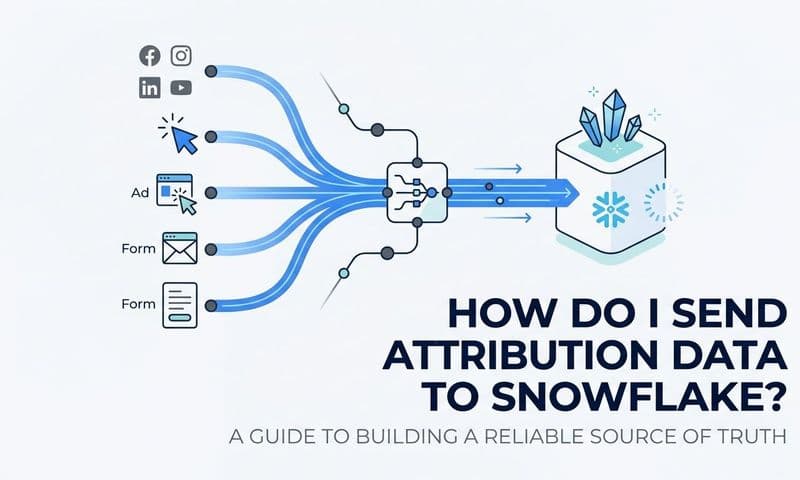
The technical implementation centers on creating a single source of truth for customer journey data. This typically involves implementing a cross-channel tracking implementation that sits between your various marketing tools and consolidates data into a unified view.
Server-side tracking forms the backbone of this infrastructure. Rather than relying on browser pixels that can be blocked or fail to fire, server-side tracking captures events directly from your backend systems. When a customer completes a purchase, your server sends that conversion event to your analytics platform, your ad platforms, and your CRM simultaneously.
This approach solves the iOS tracking problem by not relying on device-level tracking. It overcomes cookie restrictions by tracking events server-to-server rather than browser-to-server. The result is more complete, more accurate data that survives the privacy restrictions that plague pixel-based tracking.
Integration with your CRM creates the connection between marketing touchpoints and revenue outcomes. When a lead converts to a customer, that information flows back to your marketing analytics, allowing you to track not just conversions but actual revenue attributed to each channel and campaign.
Step 3: Choose Attribution Models That Match Your Business
Your attribution model should reflect your actual sales cycle and customer journey complexity. A B2B company with a six-month sales cycle involving multiple decision-makers needs a different approach than an e-commerce store with impulse purchases.
For businesses with longer sales cycles, time-decay or position-based attribution often provides the most actionable insights. These models recognize that awareness campaigns initiated months ago deserve credit for eventually closed deals, while still acknowledging the importance of bottom-funnel tactics that sealed the conversion.
Shorter sales cycles with fewer touchpoints can benefit from simpler models like linear attribution, which gives equal credit across the journey without overcomplicating the analysis. The goal is insight, not complexity for its own sake.
Many platforms now offer data-driven attribution that learns from your specific customer journey patterns. This approach requires sufficient conversion volume to train the model effectively—generally at least 200-300 conversions monthly—but provides the most accurate attribution when you have the data to support it.
From Insights to Action: Using Cross Channel Data to Optimize Campaigns
Cross channel analytics only creates value when you act on the insights it reveals. The goal isn't just better reporting—it's better marketing decisions that drive more revenue at lower cost.
Identify High-Performing Channel Combinations
With complete journey visibility, patterns emerge that single-channel analytics can't reveal. You might discover that customers who first engage through Facebook ads and later click a Google search ad convert at 3x the rate of customers who only touch one channel. This insight immediately suggests a strategy: increase Facebook awareness campaigns to feed more prospects into your Google retargeting funnel.
Or you might find that email subscribers who engage with your content before seeing retargeting ads have dramatically higher conversion rates than cold retargeting audiences. This suggests prioritizing email list growth and engagement as a prerequisite for profitable retargeting, rather than treating these channels as independent tactics.
These channel combination insights guide budget allocation in ways that single-channel metrics never could. Instead of asking "should I spend more on Facebook or Google?", you're asking "what combination of Facebook awareness, Google search, and email nurturing produces the highest return?" The latter question leads to far more profitable answers.
Feed Enriched Data Back to Ad Platforms
Modern ad platforms like Facebook and Google use machine learning to optimize ad delivery. They show your ads to people most likely to convert based on patterns they've observed. But their optimization is only as good as the conversion data you send them.
When you send enriched conversion data that includes customer journey context, purchase values, and downstream revenue, you're training the ad platform's algorithm with better information. Facebook's algorithm can optimize not just for conversions, but for high-value conversions that follow specific journey patterns. Google can learn which search queries lead to customers who generate the most lifetime value.
This feedback loop improves campaign performance without changing your creative or targeting. The platforms get smarter about who to show your ads to, resulting in better conversion rates and lower costs per acquisition. The technical term is "conversion sync," and it's one of the most underutilized optimization tactics available to marketers.
Leverage AI-Powered Analysis
Human analysts can spot obvious patterns, but AI can surface insights hidden in massive datasets. When you're tracking thousands of customers across dozens of touchpoints, machine learning algorithms can identify correlations and patterns that would take weeks of manual analysis to discover.
AI-powered analytics might reveal that customers who engage with specific content topics are 5x more likely to convert, suggesting which content to prioritize in your strategy. It might identify that certain audience segments respond dramatically better to particular channel sequences, informing how you structure campaigns for different customer types.
The competitive advantage here is speed. While competitors manually analyze reports and slowly adjust campaigns, AI-powered systems surface opportunities in real-time, allowing you to optimize faster and capture market opportunities before others notice them.
Building a Sustainable Cross Channel Analytics Practice
Implementing the technology is only half the battle. Creating lasting value requires building organizational practices and habits around cross channel insights.
Start with Your Highest-Impact Channels
You don't need to connect every marketing touchpoint on day one. Start with the channels that drive the most conversions and revenue. For most digital marketers, this means paid social (Facebook, Instagram), paid search (Google Ads), and email marketing. Get these core channels integrated and tracked accurately before expanding to secondary channels like display advertising, affiliate marketing, or offline touchpoints.
This focused approach delivers value faster while building the expertise and confidence needed to expand. Once your team sees the insights from tracking three major channels together, they'll be eager to add more data sources and deepen the analysis.
Establish Cross-Channel Reporting Cadences
Traditional marketing reports focus on channel-specific metrics: Facebook ad performance, Google Ads results, email campaign stats. Cross channel analytics requires shifting to journey-focused reporting that asks different questions.
Instead of "how did our Facebook campaigns perform this month?", ask "what role did Facebook play in our highest-value customer journeys?" Instead of "what's our email open rate?", ask "how does email engagement correlate with conversion rates across other channels?" These journey-focused questions surface insights that drive better strategic decisions.
Weekly or bi-weekly reviews of cross-channel data help teams stay aligned on what's actually driving results rather than optimizing individual channels in isolation. A well-designed multi-channel marketing analytics dashboard makes these reviews efficient and actionable. This regular cadence turns insights into action and builds organizational muscle around data-driven decision making.
The Competitive Advantage of Knowing
Marketing without cross channel analytics is like driving with a foggy windshield. You can see shapes and make educated guesses, but you can't see clearly enough to drive with confidence. Competitors with clear visibility will outmaneuver you every time.
The businesses winning in competitive markets aren't necessarily the ones with the biggest budgets or the most creative ads. They're the ones who know exactly which ads and channels drive revenue, which customer segments respond to which messages, and where to allocate budget for maximum return. They're making decisions based on complete data while competitors guess based on incomplete metrics.
This knowledge compounds over time. Each campaign teaches you more about what works. Each customer journey adds to your understanding of effective channel combinations. Six months of cross channel analytics creates an insurmountable advantage over competitors still analyzing channels in isolation.
Your Next Steps: Moving from Fragmented to Unified
Cross channel analytics isn't a luxury for enterprise brands with massive budgets. It's essential infrastructure for any marketer who wants to make confident, data-driven decisions about where to invest their resources.
The transformation from fragmented channel metrics to unified customer journey insights changes everything. You stop wondering which channels actually drive results and start knowing. You stop allocating budget based on inflated last-click metrics and start investing in the channel combinations that genuinely create customers. You stop optimizing individual campaigns in isolation and start orchestrating integrated strategies where channels amplify each other.
The technical barriers that once made cross channel analytics accessible only to enterprise teams have dissolved. Server-side tracking solutions overcome iOS restrictions and cookie deprecation. Modern attribution platforms connect disparate data sources without requiring months of custom development. AI-powered analysis surfaces insights that would take teams of analysts weeks to discover manually.
Start by auditing your current analytics setup. Identify the gaps where customer journey data disappears between channels. Map out which touchpoints you can track and which remain invisible. This audit reveals exactly where you're flying blind and where improved tracking would deliver the most value.
Then evaluate platforms designed specifically for cross-channel attribution and marketing ROI. Look for solutions that offer server-side tracking to overcome modern privacy restrictions, identity resolution to connect customer journeys across devices, and multi-touch attribution models that reveal true channel contribution. The right platform transforms your marketing from guesswork to precision.
Ready to elevate your marketing game with precision and confidence? Discover how Cometly's AI-driven recommendations can transform your ad strategy—Get your free demo today and start capturing every touchpoint to maximize your conversions.