You're spending $10,000 a month on Facebook ads, another $8,000 on Google, and $5,000 on LinkedIn campaigns. Your dashboard shows clicks, impressions, and even some conversions. But when your CFO asks the simple question—"Which channels are actually bringing in customers?"—you freeze. Facebook's dashboard claims 50 conversions. Google says 45. LinkedIn reports 30. Your CRM shows only 60 new customers total. The math doesn't add up, and you're left making budget decisions based on incomplete, conflicting data.
This is the attribution gap that plagues modern marketing teams. You're not just tracking clicks anymore—you need to understand which touchpoints in a complex, multi-channel journey actually drive revenue. Customer acquisition attribution solves this puzzle by connecting every marketing interaction to real business outcomes, giving you the clarity to invest confidently in what works and cut what doesn't.
This guide breaks down everything you need to know about customer acquisition attribution: what it is, why traditional tracking falls short, which models fit different business strategies, and how to build a framework that turns fragmented data into actionable insights. By the end, you'll understand how to stop guessing and start making data-driven decisions that improve your marketing ROI.
Breaking Down the Attribution Puzzle: How Marketing Touchpoints Connect to Conversions
Customer acquisition attribution is the process of identifying which marketing touchpoints influence a prospect's journey from first interaction to becoming a paying customer. Think of it as connecting the dots between every ad click, website visit, email open, and social media interaction that leads someone to purchase.
Here's why this matters more than ever: modern customers don't see one ad and immediately buy. They might discover your brand through a Facebook ad, research you on Google a week later, read a blog post, sign up for your email list, ignore your emails for two weeks, then finally convert after clicking a retargeting ad. That's five touchpoints across three channels before a single dollar of revenue.
Without proper attribution, you're flying blind. You might see that retargeting ad as your hero channel because it gets the "last click" before conversion—but what if that person would never have known about you without the initial Facebook ad? Or what if the blog post was the moment they truly understood your value? Attribution answers these questions by valuing the customer journey and mapping the entire path to purchase.
The difference between attribution and basic analytics is crucial. Google Analytics tells you how many people visited your site and which pages they viewed. That's useful, but it doesn't tell you which marketing efforts brought them there or which combination of touchpoints convinced them to convert. Customer acquisition attribution goes deeper—it tracks the source of every visitor, connects their behavior across sessions and devices, and ultimately links specific marketing activities to revenue outcomes.
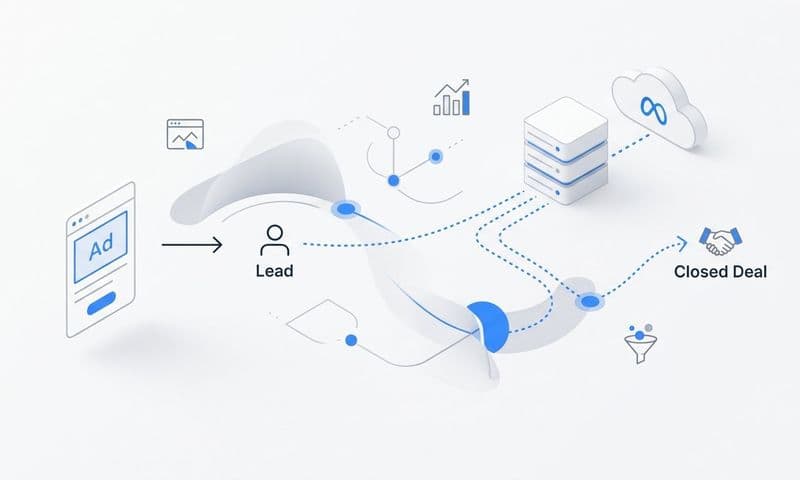
This becomes even more critical when you're running campaigns across multiple platforms. Each ad platform operates in its own silo, reporting conversions based on its own tracking pixel. Facebook sees someone click your ad and convert three days later—it counts that as a Facebook conversion. But Google also showed that person a search ad two days before they converted, so Google counts it too. Both platforms are technically correct based on their limited view, but neither tells you the complete story.
Effective attribution breaks down these silos. It creates a unified view of the customer journey that shows you not just which channels touched a customer, but how those touchpoints worked together to drive the conversion. This is the foundation for making smart budget allocation decisions and understanding what's truly driving your growth.
Attribution Models Compared: Finding the Right Fit for Your Marketing Strategy
Not all attribution models are created equal, and choosing the wrong one can lead you to dramatically misinterpret your marketing performance. Let's break down the most common approaches and when each makes sense.
First-Touch Attribution: This model gives 100% of the credit to the very first marketing touchpoint a customer encountered. If someone discovered you through a Facebook ad, then later clicked a Google search ad, opened three emails, and finally converted through a retargeting campaign, first-touch attribution credits only that initial Facebook ad.
The upside? It helps you understand which channels are best at creating awareness and bringing new people into your ecosystem. The downside? It completely ignores everything that happened after that first interaction. This works reasonably well for businesses with very short sales cycles—if people typically convert within a day or two of discovering you—but it's misleading for longer, more complex journeys.
Last-Touch Attribution: The opposite approach—this model credits the final touchpoint before conversion. In our example above, the retargeting campaign gets 100% of the credit because it was the last thing the customer interacted with before purchasing.
This is the default model for most ad platforms, which is why Facebook and Google often both claim credit for the same conversion. Each platform sees itself as the "last touch" from its perspective. Last-touch attribution can be useful for understanding which channels are best at closing deals, but it dangerously undervalues the earlier touchpoints that built awareness and interest. You might conclude that retargeting is your most valuable channel and cut your prospecting budget—only to watch your retargeting pool dry up because you're not bringing in new prospects.
Linear Multi-Touch Attribution: This model distributes credit equally across all touchpoints in the customer journey. If someone interacted with five different marketing touchpoints before converting, each one gets 20% of the credit.
The benefit is that every channel that played a role gets recognized. The limitation is that not all touchpoints are equally influential. The blog post that finally convinced someone you solve their problem probably deserves more credit than the third email they ignored but technically opened. Understanding the difference between single source attribution and multi-touch attribution models helps you choose the right approach for your business.
Time-Decay Multi-Touch Attribution: This approach gives more credit to touchpoints closer to the conversion. The logic is that recent interactions are more influential in the final decision than earlier ones. If someone discovered you six months ago but didn't seriously consider buying until last week's email campaign, time-decay attribution weights that recent email more heavily.
This model works well for businesses with longer sales cycles where the final stages of consideration are more critical than initial awareness. However, it can undervalue the importance of that first touchpoint that introduced the prospect to your solution.
Position-Based (U-Shaped) Multi-Touch Attribution: This model assigns 40% of the credit to the first touchpoint, 40% to the last touchpoint, and distributes the remaining 20% among the middle interactions. It recognizes that both creating awareness and closing the deal are critical, while still acknowledging the supporting role of mid-journey touchpoints.
For many businesses, position-based attribution offers a balanced view. It values both top-of-funnel channels that bring in new prospects and bottom-of-funnel channels that convert them, without completely ignoring the nurturing that happens in between.
The right model depends on your specific business context. Companies with short sales cycles and simple customer journeys might find first-touch or last-touch sufficient. Businesses with complex, multi-month sales processes involving numerous touchpoints across many channels typically need multi-touch attribution models to understand what's really working. The key is choosing a model that reflects how your customers actually make buying decisions.
The Tracking Challenge: Why Most Marketers Struggle with Accurate Attribution
Even if you choose the perfect attribution model, you'll still face a fundamental problem: actually capturing accurate data across the entire customer journey. This is where most attribution efforts break down, and it's gotten significantly harder in recent years.
The biggest culprit? Privacy changes that have fragmented how tracking works. Apple's iOS App Tracking Transparency framework, introduced in 2021, requires apps to ask permission before tracking users across other apps and websites. The result? Most users opt out, creating massive blind spots in your data. When someone clicks your Facebook ad on their iPhone, then later converts on their laptop, traditional tracking often can't connect those two events as the same person.
Cookie restrictions compound this problem. Browsers like Safari and Firefox now block third-party cookies by default, and Chrome has announced plans to phase them out. Third-party cookies were the backbone of cross-site tracking—they allowed ad platforms to follow users from your ad to your website and beyond. Without them, the trail goes cold at the point of ad click, leaving you unable to track what happens next. Many marketers are now losing attribution data due to privacy updates at an alarming rate.
This creates what marketers call "the attribution gap"—the difference between what you can track and what's actually happening. You know conversions are occurring because you see new customers in your CRM, but you can't always connect those customers back to specific marketing touchpoints. It's like knowing someone entered your store and made a purchase, but having no idea which billboard, TV commercial, or social media ad brought them in.
Platform-reported conversions add another layer of confusion. Each ad platform uses its own tracking pixel and attribution window, leading to overlapping claims. Facebook might count a conversion if someone clicked your ad anytime in the last seven days before purchasing. Google might count it if they clicked a search ad in the last 30 days. If both events happened, both platforms claim the conversion—even though there was only one actual customer.
This isn't malicious; it's just how platform-level attribution works. Each system operates with incomplete information, seeing only its own touchpoints and making assumptions about causation. The problem is that when you add up all the conversions each platform reports, you get a number far higher than your actual customer count. Learning how to fix attribution discrepancies in data becomes essential for accurate reporting.
The disconnect between ad platforms and CRM data creates perhaps the most critical gap. Your ad platforms might report 100 conversions, but your sales team only closed 60 deals from those leads. Which 60? Which channels drove the high-quality leads that actually turned into revenue versus the tire-kickers who filled out a form but never bought? Without connecting ad data to CRM outcomes, you're optimizing for lead volume instead of revenue—a recipe for wasting budget on channels that generate activity but not actual business value.
These tracking challenges aren't going away. Privacy regulations are tightening, not loosening. The marketers who win in this environment are those who build attribution systems that work despite these limitations—which brings us to how you actually do that.
Building Your Attribution Framework: From Data Collection to Actionable Insights
Effective attribution requires more than choosing a model—you need infrastructure that captures clean, connected data across your entire marketing ecosystem. Here's how to build that foundation.
Connect Your Data Sources: Your ad platforms, website analytics, and CRM need to share information to track the full customer journey. This means implementing tracking that captures where prospects come from, what they do on your site, and whether they ultimately become customers. Most businesses use a combination of platform pixels, website analytics tools, and CRM integrations to create this connected view.
The challenge is making sure all these systems can identify the same person across different touchpoints. When someone clicks your Facebook ad, visits your website, fills out a form, and appears in your CRM as a lead, you need a way to connect those four events as one journey. This typically requires consistent user identification through email addresses, phone numbers, or unique customer IDs that persist across systems. Implementing proper customer attribution tracking is foundational to this process.
Implement Server-Side Tracking: This is the solution to many of the privacy-related tracking challenges we discussed earlier. Instead of relying solely on browser-based cookies and pixels that users can block, server-side tracking sends data directly from your web server to ad platforms and analytics tools.
Here's why this matters: when someone submits a form on your website, your server knows their email address, what they purchased, and other key information—regardless of whether their browser allows cookies or tracking pixels. Server-side tracking lets you send this conversion data to Facebook, Google, and other platforms using their server-to-server APIs, giving you more complete and accurate attribution even when browser-based tracking fails.
Server-side tracking also enables you to send enhanced conversion data back to ad platforms. Instead of just telling Facebook "someone converted," you can send information about the conversion value, customer lifetime value predictions, and other attributes that help the platform's algorithm optimize for the outcomes you actually care about. This creates a feedback loop where better attribution data improves ad performance, which drives better results.
Establish Consistent UTM Parameters and Naming Conventions: This might sound basic, but inconsistent tracking parameters are one of the most common reasons attribution data becomes unusable. If your team sometimes uses "utm_source=facebook" and other times uses "utm_source=fb" or "utm_source=Facebook_Ads," you've just split your Facebook traffic into three separate sources in your analytics.
Create a standardized naming convention document that everyone on your team follows. Define exactly how you'll tag campaigns across different platforms, what your UTM parameter structure looks like, and how you'll handle special cases like influencer partnerships or offline campaigns. This consistency is what makes your attribution data analyzable at scale. For teams managing complex campaigns, attribution tracking for multiple campaigns requires disciplined naming conventions.
Your UTM structure should capture the essential information you need for attribution: source (which platform), medium (paid social, organic search, email, etc.), campaign (specific campaign name), and ideally content (which specific ad or variant). When every campaign follows this structure, you can easily aggregate data to answer questions like "How does Facebook perform compared to Google?" or drill down to "Which specific ad creative drove the most revenue?"
Map Your Customer Journey: Before you can attribute conversions accurately, you need to understand what a typical customer journey looks like for your business. Document the common paths people take from first awareness to purchase. Do they usually discover you through paid ads, then research on Google, then convert? Or do they come through content, join your email list, and convert weeks later? Understanding the stages of customer acquisition helps you identify critical touchpoints.
This journey mapping helps you set appropriate attribution windows—the time period during which you'll credit touchpoints for influencing a conversion. If your sales cycle is typically 30 days, using a 7-day attribution window will miss most of the journey. Understanding your customer journey also helps you identify which touchpoints matter most and deserve measurement priority.
The goal is creating a system where data flows cleanly from initial ad click through conversion and into your CRM, maintaining consistent user identification throughout. When you can see the complete journey—which ad someone clicked, what content they engaged with, which emails they opened, and ultimately whether they became a customer—you have the foundation for meaningful attribution analysis.
Turning Attribution Data Into Smarter Budget Decisions
Collecting attribution data is pointless if you don't use it to improve your marketing decisions. Here's how to translate insights into action that improves ROI.
Identify Which Channels Drive High-Value Customers: Not all conversions are created equal. A channel might drive 100 conversions at a $50 cost per acquisition, while another drives 50 conversions at $100 each—but if the second channel's customers have twice the lifetime value, it's actually the better investment.
Connect your attribution data to customer value metrics. Which channels bring in customers who make larger initial purchases? Which sources produce customers with higher retention rates or stronger lifetime value? This analysis often reveals surprising patterns. You might discover that organic search traffic converts at a lower rate than paid social, but those organic customers stick around three times longer, making them far more valuable in the long run. Understanding true customer acquisition cost requires factoring in these lifetime value differences.
Use these insights to set different target CPAs for different channels based on the value they deliver. Your highest-value channels can justify higher acquisition costs because they're bringing in better customers. Lower-value channels need to hit lower CPAs to be profitable. This nuanced approach beats the common mistake of applying one target CPA across all channels.
Reallocate Budget Based on True Performance: Once you understand which channels actually drive revenue, the next step is shifting budget accordingly. This sounds obvious, but many marketers struggle with it because platform-level metrics tell a different story than attribution data.
A retargeting campaign might show an amazing 10x ROAS in Facebook's dashboard because it gets credit for conversions that were actually driven by earlier touchpoints. Your attribution data might reveal that while retargeting plays a supporting role, it's not the primary driver—and the prospecting campaigns you were considering cutting are actually bringing in the new customers that make retargeting possible.
Make budget reallocation decisions based on your attribution model, not platform-reported metrics. If multi-touch attribution shows that your content marketing and SEO efforts are consistently part of high-value customer journeys, increase investment there even if those channels don't get "last-click" credit. If certain paid channels consistently appear in customer journeys but rarely convert on their own, recognize their supporting role and fund them appropriately. Following attribution analytics best practices ensures your budget decisions are grounded in accurate data.
Feed Better Data to Ad Platform Algorithms: Modern ad platforms use machine learning to optimize delivery, but they can only optimize for the data they receive. When you send accurate, complete conversion data back to platforms through server-side tracking and conversion APIs, you improve their ability to find similar high-value customers.
This creates a powerful flywheel effect. Better attribution data leads to better conversion tracking. Better conversion tracking gives ad platforms clearer signals about what success looks like. Clearer signals improve the platform's optimization. Better optimization drives stronger results. Stronger results generate more attribution data to analyze and refine further.
Many marketers miss this opportunity by only sending basic conversion events to ad platforms. If you're just telling Facebook "a purchase happened" without including the purchase value, customer type, or other contextual information, you're limiting the algorithm's ability to optimize. Use your attribution insights to send enhanced conversion data that helps platforms understand not just what converted, but what kind of conversions you value most.
The key to all of this is treating attribution as an ongoing optimization process, not a one-time analysis. Set up regular reviews—weekly or monthly depending on your volume—where you examine attribution data, identify trends, test hypotheses about what's working, and adjust your strategy accordingly. The marketers who win are those who continuously learn from their attribution data and act on what they learn.
Your Path to Attribution Clarity
Start with clear goals that define what success looks like for your business. Are you optimizing for lead volume, revenue, customer lifetime value, or something else? Your attribution framework should track the metrics that actually matter to your business outcomes, not just the easiest things to measure.
Choose an attribution model that matches your sales cycle complexity and channel mix. If you're running a simple business with short sales cycles and one or two primary channels, first-touch or last-touch might suffice. If you're managing complex, multi-channel campaigns with longer consideration periods, invest in multi-touch attribution that captures the full journey. The model you choose should reflect how your customers actually make buying decisions.
Commit to ongoing optimization rather than treating attribution as a set-it-and-forget-it system. Customer behavior changes. New channels emerge. Privacy regulations evolve. Your attribution approach needs to adapt alongside these shifts. Schedule regular reviews of your attribution data, test different models to see which provides the most actionable insights, and continuously refine your tracking implementation to capture better data.
The difference between guessing and knowing which marketing efforts drive revenue is the difference between wasting budget on vanity metrics and confidently scaling what works. Customer acquisition attribution transforms marketing from an art into a science—giving you the clarity to invest in channels that deliver real business value and cut those that don't.
When you can see the complete customer journey from first touchpoint to conversion, you make fundamentally different decisions. You stop chasing platform-reported metrics that inflate performance and start optimizing for actual revenue. You identify which channels work together to drive conversions instead of crediting everything to the last click. You feed better data back to ad platforms, improving their optimization and your results.
Ready to elevate your marketing game with precision and confidence? Discover how Cometly's AI-driven recommendations can transform your ad strategy—Get your free demo today and start capturing every touchpoint to maximize your conversions.