You've just closed a sale worth thousands of dollars. Your CEO asks the question every marketer dreads: "Which ad campaign brought them in?" You check Facebook Ads Manager—it claims credit. Google Ads says it was their search campaign. LinkedIn insists their sponsored post sealed the deal. Meanwhile, your analytics show the customer visited your site five times over two weeks, clicked three different ads, read two blog posts, and downloaded a guide before converting.
So which channel actually deserves the credit? More importantly, which one should get more budget next month?
This is the attribution problem that keeps marketing teams stuck in guesswork mode, burning budget on campaigns they can't prove are working. Marketing attribution solves this by connecting every touchpoint in the customer journey to actual revenue—showing you exactly what's driving results and what's just along for the ride.
The Foundation: How Marketing Attribution Actually Works
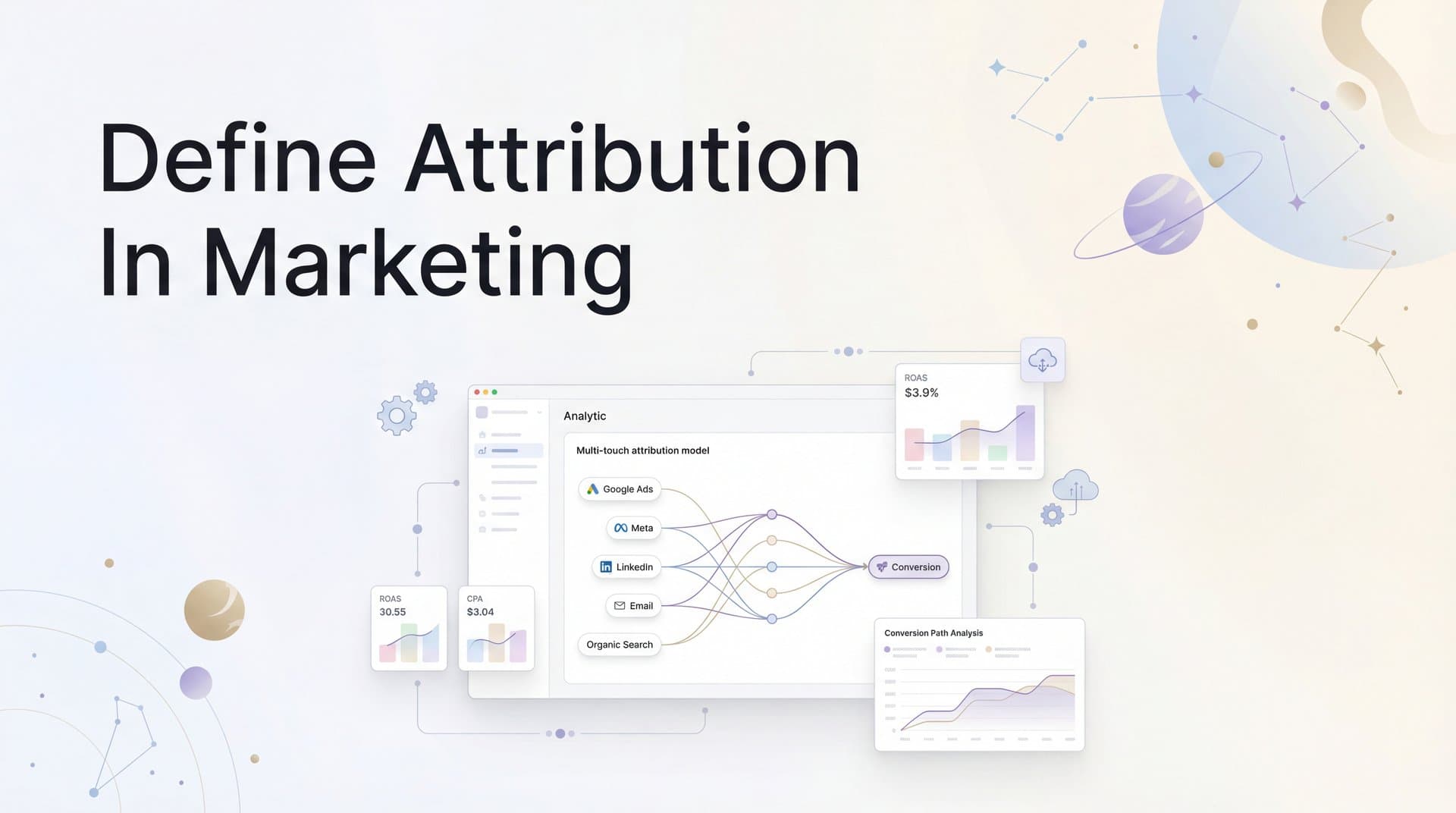
Marketing attribution is the analytical process of identifying which marketing touchpoints contribute to conversions and assigning them appropriate credit. Think of it as building a complete map of your customer's journey from first awareness to final purchase, then determining which stops along that route actually influenced their decision.
Here's the reality most marketers face: modern buyers don't see one ad and immediately convert. They interact with your brand across multiple channels, devices, and sessions before making a purchase decision. Industry observations consistently show that B2B buyers typically engage with six to eight touchpoints before converting, while B2C customers often interact with even more.
A typical journey might look like this: Someone clicks your Facebook ad on their phone during their morning commute. Three days later, they Google your product name at work and click your search ad. That evening, they visit your site directly and read a blog post. A week later, they receive your email newsletter and click through to a product page. Finally, they return via a retargeting ad and complete the purchase.
Without attribution, you'd only see the last click—that retargeting ad—and incorrectly conclude it was your best performer. You might cut budget from the Facebook ad that actually introduced them to your brand, or the blog content that educated them about your solution.
Attribution works by tracking these touchpoints using several key technologies working together. Tracking pixels fire when users interact with your ads or visit specific pages. UTM parameters tag your URLs so you can identify which campaigns drove each visit. Cookies store information about user behavior across sessions. Server-side tracking captures conversion data directly from your server, bypassing browser limitations. CRM integration connects online behavior to actual customer records and revenue data.
The technical foundation matters because it determines what you can actually see. Client-side tracking—the traditional method using browser cookies and JavaScript—has become increasingly unreliable due to privacy changes and ad blockers. Server-side tracking has emerged as the more accurate alternative, capturing data that browser-based methods miss entirely.
When these systems work together properly, you get a unified view of the customer journey. You can see which ads they clicked, which content they consumed, how many times they visited before converting, and ultimately which touchpoints played meaningful roles in their decision process. That visibility transforms marketing from educated guessing into data-driven decision making.
Attribution Models Explained: Choosing Your Credit System
Once you're tracking the customer journey, you need a system for assigning credit to different touchpoints. This is where attribution models come in—they're the rules that determine how much credit each interaction receives for driving a conversion.
The simplest approach is single-touch attribution, which assigns 100% of the credit to one touchpoint. First-click attribution gives all credit to the initial interaction that brought someone into your funnel. This model makes sense when you're primarily focused on brand awareness and top-of-funnel performance—you want to know which channels are best at introducing new prospects to your business.
Last-click attribution does the opposite, giving all credit to the final touchpoint before conversion. This model works well for bottom-of-funnel campaigns where you're specifically trying to close deals. If you're running a limited-time promotion or a retargeting campaign designed to convert warm prospects, last-click shows you which messages are actually closing sales.
The problem with single-touch models is obvious: they ignore everything that happened in between. That Facebook ad that introduced your brand gets zero credit under last-click attribution. That nurture email sequence that educated the prospect gets ignored under first-click attribution. You're making budget decisions based on incomplete information.
Multi-touch attribution models solve this by distributing credit across multiple touchpoints. Linear attribution takes the simplest approach—it splits credit equally among all interactions. If someone had four touchpoints before converting, each one gets 25% credit. This model recognizes that multiple channels contributed, though it doesn't account for the varying importance of different interactions. For a deeper dive into how linear model marketing attribution works in practice, understanding its strengths and limitations is essential.
Time-decay attribution assigns more credit to touchpoints closer to the conversion. The logic is sound: interactions that happened right before someone converted likely had more influence on their decision than something they saw three weeks earlier. This model works well for businesses with longer sales cycles where recent engagement is a strong signal of purchase intent.
Position-based attribution (also called U-shaped) gives the most credit to the first and last touchpoints—typically 40% each—and distributes the remaining 20% among middle interactions. This model recognizes that introducing someone to your brand and closing the sale are both critical moments, while still acknowledging the role of nurturing touchpoints in between.
Data-driven attribution uses machine learning algorithms to analyze your actual conversion data and determine which touchpoints statistically correlate with successful outcomes. Instead of applying a predetermined rule, the algorithm looks at patterns across thousands of customer journeys and assigns credit based on what actually predicts conversions in your specific business. Understanding how machine learning can be used in marketing attribution reveals why this approach often outperforms rule-based models.
So which model should you use? Most sophisticated marketers need multi-touch attribution to see the complete picture. If you're running campaigns across multiple channels—paid social, paid search, content marketing, email—you need to understand how they work together. Single-touch models will consistently over-credit certain channels while ignoring others that play important supporting roles.
The best approach is often to compare multiple models side by side. Look at your performance through first-click, last-click, and multi-touch lenses. When you see significant differences, you've found channels that are either over-credited or under-credited by simpler models. That insight helps you make smarter budget allocation decisions. For a comprehensive breakdown of all available options, explore the different types of marketing attribution models.
Why Attribution Has Become Non-Negotiable in 2026
Attribution used to be a nice-to-have capability for sophisticated marketing teams. Today, it's become essential for survival. Three major shifts have made accurate attribution the difference between profitable growth and burning cash on campaigns that don't actually work.
Privacy changes have fundamentally broken traditional tracking methods. Apple's iOS updates restricting app tracking have made it nearly impossible to follow users across apps and websites using traditional methods. The deprecation of third-party cookies in major browsers has eliminated another tracking method that marketers relied on for years. What used to be straightforward—tracking a user from ad click to conversion—now requires sophisticated server-side solutions.
The result is massive blind spots in your data. Client-side tracking methods that worked perfectly well in 2020 now miss significant portions of your conversion data. If you're still relying solely on browser-based tracking, you're making decisions based on incomplete information. You might be cutting budget from channels that are actually performing well but aren't getting credit because conversions aren't being tracked properly. These are the attribution challenges in marketing analytics that every team must now navigate.
Ad platform self-reporting has become increasingly problematic. Facebook, Google, TikTok, and other platforms each use their own attribution methodologies and measurement windows. They're incentivized to show strong performance—that's how they keep your ad spend flowing. The problem emerges when you add up the conversions each platform claims credit for and discover they total 150% of your actual sales.
This isn't necessarily intentional manipulation—it's a natural result of different platforms using different tracking methods and attribution windows. But the outcome is the same: you can't trust any single platform's reporting to give you an accurate picture of performance. You need an independent attribution system that tracks conversions from a neutral perspective and assigns credit based on what actually happened, not what each platform wants to claim.
Rising advertising costs have made precision essential. Cost per click on major platforms has increased substantially over the past several years as more advertisers compete for the same audience attention. When ads were cheap, you could afford to be somewhat inefficient—wasting 20% of your budget on underperforming campaigns was annoying but not fatal. At today's costs, that same inefficiency can mean the difference between profitable growth and losing money on customer acquisition.
Modern marketing teams can't afford to guess which campaigns are working. You need to know with confidence which channels drive real revenue, which ads resonate with your target audience, and which touchpoints play critical roles in the customer journey. Attribution gives you that confidence. It transforms "I think this campaign is working" into "I know this campaign generated $47,000 in revenue last month and has a 3.2x ROAS."
Common Attribution Pitfalls That Skew Your Data
Even teams that implement attribution systems often fall into traps that compromise their data accuracy. Understanding these pitfalls helps you avoid making decisions based on misleading information.
The most common mistake is relying solely on platform-reported conversions. When Facebook Ads Manager says you got 50 conversions and Google Ads claims 45 conversions, but your actual sales total only 60, something's clearly wrong. This is the double-counting problem—both platforms are claiming credit for the same conversions, often because they both played a role in the customer journey.
If you optimize campaigns based on each platform's self-reported numbers, you'll make terrible decisions. You might increase budget on a channel that's getting credited for conversions it didn't actually drive, while cutting spend from channels that are genuinely performing well but aren't getting proper credit in platform reporting.
Another critical error is ignoring offline touchpoints and CRM events. Many customer journeys include interactions that don't happen online—phone calls, in-person meetings, sales conversations, demo requests. If your attribution system only tracks digital interactions, you're missing crucial parts of the story. That webinar someone attended might have been the moment they decided to buy, but if it's not in your attribution data, you'll never know its impact.
CRM integration solves this by connecting your marketing data to actual customer records and revenue. You can see not just which campaigns drove conversions, but which ones brought in high-value customers who stayed long-term and generated significant lifetime value. Platforms focused on marketing attribution platforms revenue tracking make this connection seamless.
Using the wrong attribution window is another subtle but impactful mistake. An attribution window determines how long after someone clicks your ad you'll still give that ad credit for a conversion. If your typical sales cycle is 30 days but you're using a 7-day attribution window, you're systematically under-crediting campaigns that introduce prospects who take longer to convert.
The solution is matching your attribution window to your actual sales cycle. B2B companies with long enterprise sales cycles might need 60 or 90-day windows. E-commerce brands selling impulse purchases might only need 7-day windows. Look at your conversion data to see how long prospects typically take from first interaction to purchase, then set your attribution windows accordingly.
Finally, many teams fail to account for view-through conversions—when someone sees your ad but doesn't click, then later converts through another channel. If you only track click-through attribution, you're missing the brand awareness impact of display campaigns and social ads that introduce people to your product even when they don't immediately click.
Building an Attribution System That Delivers Accurate Insights
Implementing effective attribution requires connecting multiple data sources into a unified system. The goal is creating a single source of truth that shows the complete customer journey regardless of which channels they used or devices they switched between.
Start by centralizing data from all your marketing channels. Your attribution platform needs to pull conversion data from Facebook, Google, LinkedIn, TikTok, and any other ad platforms you use. It needs access to your website analytics to track on-site behavior. It requires integration with your email marketing platform to see which campaigns drove engagement. Most critically, it needs connection to your CRM to link marketing touchpoints to actual customers and revenue.
This integration is where most attribution efforts fail. Teams implement partial solutions that track some channels but not others, creating blind spots that undermine the entire system. If you're tracking paid ads but not organic social, or website visits but not email engagement, you're still making decisions based on incomplete data. Robust cross channel marketing attribution software eliminates these gaps by unifying all your data sources.
Server-side tracking has become essential for capturing accurate conversion data. Traditional client-side tracking relies on browser cookies and JavaScript, which are increasingly blocked by privacy features, ad blockers, and browser restrictions. Server-side tracking captures conversion events directly from your server, bypassing these limitations entirely.
The difference in data accuracy can be substantial. Many businesses discover they were missing 20-30% of their conversions when they relied solely on client-side tracking. Those missing conversions were still happening—customers were still buying—but the tracking methods couldn't see them. This meant campaigns were being optimized based on incomplete data, leading to poor budget allocation decisions.
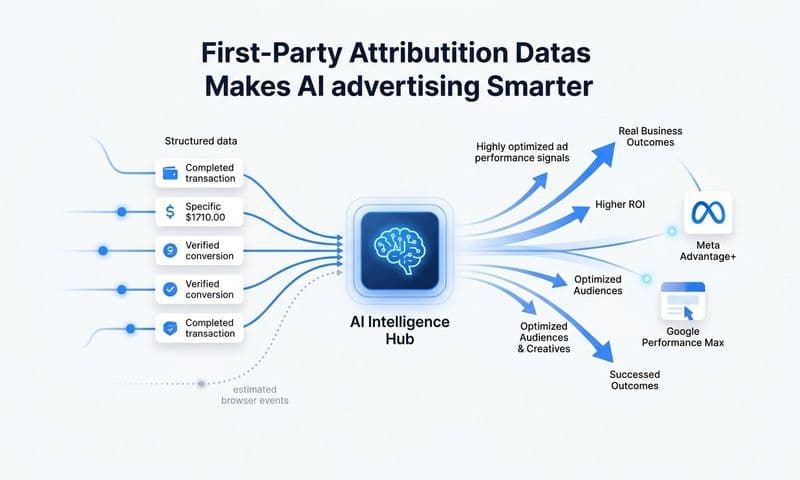
Server-side tracking also enables you to send enriched conversion data back to ad platforms. This is crucial because Facebook, Google, and other platforms use conversion data to optimize their algorithms—showing your ads to people more likely to convert. When you feed them more complete, accurate conversion data through server-side events, their algorithms work better, improving your campaign performance.
Here's what that looks like in practice: Someone converts on your website. Your server-side tracking captures that conversion with complete accuracy, regardless of browser settings or ad blockers. That conversion data flows into your attribution platform, which assigns appropriate credit across all the touchpoints that influenced the sale. Simultaneously, the conversion event is sent back to Facebook and Google with enriched data about the customer and purchase, helping those platforms optimize future ad delivery.
Attribution platforms like Cometly handle this entire workflow automatically. They connect to your ad accounts, website, and CRM, implementing server-side tracking to capture every conversion. They apply attribution models to show you which campaigns and channels are truly driving revenue. And they feed conversion data back to ad platforms to improve their optimization algorithms—creating a virtuous cycle where better data leads to better campaign performance, which generates more conversions and even better data. When evaluating options, comparing marketing attribution software features helps identify which platform fits your specific needs.
The key is choosing a platform that doesn't require extensive technical implementation. Modern attribution solutions should integrate with your existing marketing stack through simple connections, not custom development projects. You should be able to start tracking attribution within days, not months.
Putting Attribution Data to Work: From Insights to Action
Attribution data only creates value when you use it to make better marketing decisions. The goal isn't just understanding what happened—it's changing what you do next based on those insights.
Start by identifying your true top-performing channels. Look beyond surface-level metrics like clicks and impressions to see which channels actually drive revenue. You might discover that a channel generating lots of traffic produces few conversions, while another with less traffic consistently brings in high-value customers. That insight should immediately inform your budget allocation.
Compare performance across different attribution models to find channels that are under-credited or over-credited. If a channel looks amazing under last-click attribution but mediocre under multi-touch models, it's probably getting too much credit for conversions that other channels helped drive. Conversely, channels that perform well under first-click but poorly under last-click might be excellent at introducing new prospects but need support from other channels to close deals.
Use attribution insights to spot underperforming campaigns before they drain significant budget. When you can see which specific ads, audiences, or keywords are driving conversions versus which ones are just generating clicks, you can make surgical optimizations. Cut spend from campaigns that aren't converting. Increase budget on campaigns that consistently drive revenue. This precision prevents the common mistake of making sweeping changes that kill good campaigns along with bad ones.
Attribution data also reveals opportunities to scale winning strategies with confidence. When you know exactly which campaigns are driving profitable conversions, you can increase their budgets aggressively without the fear that comes from uncertainty. You're not hoping the campaign will continue to perform—you have data proving it works and showing you why it works.
Look for patterns across your best-performing campaigns. Do certain ad creatives consistently drive more conversions? Do specific audience segments respond better to your messaging? Does performance vary by time of day or day of week? These insights help you replicate success across new campaigns instead of constantly testing from scratch. Building a comprehensive marketing attribution report makes these patterns visible and actionable for your entire team.
The most sophisticated use of attribution data is optimizing the entire customer journey, not just individual campaigns. When you can see the typical path from awareness to conversion, you can identify gaps and opportunities. Maybe prospects who engage with your content before seeing your ads convert at much higher rates—that insight suggests investing more in content marketing to warm up your audience before hitting them with paid campaigns.
Moving Forward With Attribution
Understanding and implementing marketing attribution has shifted from competitive advantage to basic requirement. In an environment where privacy changes have fragmented tracking, ad platforms over-report their impact, and rising costs demand precision, you simply cannot afford to make marketing decisions based on guesswork or incomplete data.
Attribution gives you clarity. It shows you which campaigns are actually driving revenue, which touchpoints influence customer decisions, and where to allocate budget for maximum return. It transforms marketing from "we think this is working" into "we know exactly what's driving results and why."
The teams that win in this environment are the ones who can track the complete customer journey, accurately assign credit across touchpoints, and use those insights to optimize their marketing mix. They're not guessing which ads work—they're scaling proven winners with confidence. They're not wasting budget on campaigns that look good in platform reporting but don't actually drive revenue—they're investing in channels that deliver measurable returns.
Modern attribution platforms have made this accessible to marketing teams of all sizes. You don't need a data science team or months of implementation work. The right platform connects to your existing marketing stack, implements server-side tracking automatically, and starts delivering insights within days.
Ready to elevate your marketing game with precision and confidence? Discover how Cometly's AI-driven recommendations can transform your ad strategy—Get your free demo today and start capturing every touchpoint to maximize your conversions.