You're running campaigns across Meta, Google, TikTok, and LinkedIn. Each platform reports its own metrics. Your CRM shows leads coming in. Your bank account shows revenue going out. But when you try to connect the dots between which ads actually drove those sales, you hit a wall.
This is the reality for most digital marketers in 2026. You're not lacking data—you're drowning in it. The problem isn't volume; it's clarity. Every platform claims credit for the same conversion. Your spreadsheets overflow with impressions and clicks, but your boss wants to know one thing: which campaigns are actually making money?
Digital marketing data analytics solves this exact problem. It's the discipline of collecting, connecting, and analyzing data across all your marketing channels to understand what's truly driving revenue. This isn't about tracking more metrics or building prettier dashboards. It's about transforming scattered data points into a clear picture of your customer journey—from first click to final purchase—so you can make confident decisions about where to invest your budget.
Beyond Vanity Metrics: What Digital Marketing Data Analytics Actually Means
Digital marketing data analytics is the practice of collecting, measuring, and analyzing data across all marketing channels to understand performance and optimize ROI. But that definition doesn't capture what makes it fundamentally different from simply "looking at your numbers."
Think of it this way: most marketers track what's easy to measure. Impressions, clicks, cost per click, engagement rates. These surface-level metrics tell you what happened, but they don't tell you why it matters. You might celebrate a campaign with 100,000 impressions and a 5% click-through rate, only to discover it generated zero actual customers.
Real digital marketing data analytics goes deeper. It tracks the full customer journey—from the first ad impression through every touchpoint to the final conversion and beyond. It connects your ad spend to actual revenue outcomes. It reveals not just which ads got clicked, but which ads led to purchases, which channels work together to drive conversions, and which campaigns are bleeding budget without results.
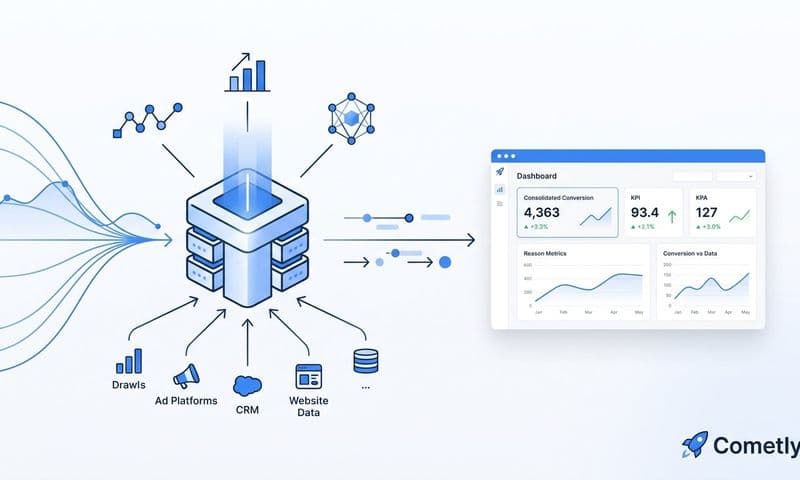
The core components work together as a system. Data collection captures interactions across all your channels—ad clicks, website visits, form submissions, email opens, CRM events. Data integration brings these scattered sources together into a unified view. Analysis reveals patterns, performance trends, and optimization opportunities. Actionable reporting translates those insights into decisions you can implement immediately.
Here's what separates analytics that drive results from analytics that just consume time: the connection to revenue. When you can trace a conversion back through every marketing touchpoint that influenced it, you stop guessing about what works. You know which campaign deserves more budget. You know which channel to cut. You know which combination of touchpoints creates your most valuable customers.
This shift from vanity metrics to revenue-connected analytics changes how you think about marketing performance. A campaign with lower engagement but higher conversion value becomes more valuable than one with impressive clicks but no sales. A channel that assists conversions without getting final-click credit becomes worth maintaining. Your entire optimization strategy transforms when you measure what actually matters.
The Data Sources That Matter Most for Marketing Teams
Your marketing data lives in multiple places, and each source tells part of the story. Understanding which sources matter most—and how they fit together—is the foundation of effective analytics.
Ad platforms form your first layer of data. Meta Ads Manager shows you campaign performance across Facebook and Instagram. Google Ads tracks search and display campaigns. TikTok Ads Manager reports on your short-form video performance. LinkedIn Campaign Manager handles your B2B targeting. Each platform provides detailed metrics about impressions, clicks, conversions, and costs.
But here's the problem: each platform only sees its own touchpoints. Meta doesn't know your customer clicked a Google ad first. Google doesn't know they saw your TikTok video before searching. LinkedIn doesn't know they visited your website three times before clicking your ad. This creates a fundamental blind spot in your data.
Website analytics provide the second critical layer. Tools like Google Analytics track visitor behavior on your site—which pages they view, how long they stay, what actions they take. This data reveals what happens after the ad click, showing you which traffic sources lead to engaged visitors versus quick bounces.
Your CRM system holds the third piece of the puzzle. This is where leads become customers, where you track deal values, where you see lifetime customer value. For most businesses, this is where marketing data analytics finally connects to revenue data. But if your CRM isn't connected to your ad platforms and website analytics, you're missing the connection between marketing spend and sales outcomes.
Conversion events tie everything together. These are the actions that matter to your business: form submissions, purchases, demo bookings, trial signups, qualified leads. Tracking these events across all touchpoints—not just within individual platforms—reveals your true customer journey.
The challenge intensifies in today's privacy-focused landscape. iOS tracking restrictions limit what ad platforms can see through browser-based pixels. Cookie deprecation reduces cross-site tracking capabilities. Third-party data becomes less reliable. This makes first-party data increasingly valuable.
First-party data is information you collect directly from your customers and website visitors. Email addresses from form submissions. Purchase history from your store. Behavior data from your website. CRM records from your sales team. This data belongs to you, isn't subject to platform restrictions, and provides the most accurate view of your customers.
When these data sources remain siloed, you make decisions based on incomplete information. You might pause a campaign that Meta reports as unprofitable, not knowing it's assisting conversions that Google is claiming credit for. You might increase budget on a channel driving cheap clicks, not realizing those visitors never convert. You might miss that your highest-value customers consistently interact with three specific touchpoints before purchasing.
Effective digital marketing data analytics brings these sources together. It connects ad platform data with website behavior, links website visitors to CRM records, and tracks conversions back to their originating campaigns. This unified view transforms scattered metrics into a complete picture of what's actually driving your results.
We compare the leading options in our AI marketing video generator roundup.
Attribution Models: Connecting Touchpoints to Conversions
Attribution is how you assign credit for conversions across the multiple touchpoints in a customer journey. Get this wrong, and you'll optimize for the wrong channels. Get it right, and you'll know exactly where to invest your budget.
First-touch attribution gives 100% credit to the first interaction a customer has with your marketing. If someone clicks your Meta ad, then later clicks a Google ad, then converts, first-touch attributes the entire conversion to Meta. This model helps you understand what's driving initial awareness and bringing new prospects into your funnel.
Last-touch attribution does the opposite—it credits the final interaction before conversion. In the same scenario, Google gets 100% credit because it was the last touchpoint. Most ad platforms default to last-touch attribution, which is why they often over-report their contribution. Every platform wants to claim credit for the final click.
The problem with both single-touch models? They ignore everything in between. Real customer journeys are rarely linear. Someone might see your TikTok ad, search your brand name on Google, visit your website directly, receive a retargeting ad on Meta, then finally convert through an email campaign. Which touchpoint deserves credit? All of them played a role.
Multi-touch attribution distributes credit across the customer journey. Different multi-touch models weight touchpoints differently. Linear attribution splits credit equally among all interactions. Time-decay attribution gives more credit to recent touchpoints. Position-based attribution emphasizes first and last touches while acknowledging middle interactions. Understanding attribution models in digital marketing helps you choose the right approach for your business.
The real challenge emerges with cross-platform attribution. Your customer interacts with multiple channels, but each platform only sees its own touchpoints. Meta reports a conversion. Google reports the same conversion. TikTok might claim it too. Add them up, and you've suddenly "generated" 300% of your actual conversions.
This over-counting happens because platforms use their own attribution windows and models. Meta might use a 7-day click, 1-day view window. Google might use a 30-day click window. When the same customer clicks ads on both platforms within those windows, both platforms claim the conversion. Your reported ROI looks incredible until you realize you're counting the same sales multiple times.
Proper attribution requires a unified view of the customer journey. You need to track when someone first interacts with your marketing, every subsequent touchpoint across all channels, and the final conversion—all tied to the same individual. This reveals which campaigns and channels actually drive revenue versus which ones just happen to be present when conversions occur.
Consider a common scenario: Your Meta retargeting campaigns show excellent ROAS. But when you dig deeper with proper multi-touch attribution, you discover those customers were already in your funnel from Google search campaigns. Meta is getting credit for conversions it assisted but didn't originate. Without this insight, you might over-invest in retargeting while under-funding the search campaigns bringing in new customers.
The attribution model you choose should align with your business goals and sales cycle. B2B companies with long sales cycles benefit from models that credit early-stage awareness touchpoints. E-commerce businesses with shorter cycles might focus more on last-touch or time-decay models. The key is consistency—pick a model and use it to compare channel performance over time.
Advanced attribution goes beyond just assigning credit. It analyzes patterns in converting customer journeys. Which sequence of touchpoints leads to the highest-value customers? How many interactions typically occur before conversion? Which channels work best together? These insights transform attribution from a reporting exercise into a strategic advantage. Many marketers face attribution challenges in marketing analytics that require systematic solutions.
Turning Raw Data Into Strategic Decisions
Collecting data is pointless if you can't translate it into action. The value of digital marketing data analytics emerges when you use insights to make better decisions about budget allocation, campaign optimization, and scaling strategies.
Start by identifying your high-performing ads and campaigns. Look beyond surface metrics like click-through rate. Which specific ads drive conversions? Which ad creative resonates with your highest-value customers? Which targeting parameters lead to profitable outcomes? The answers often surprise marketers who've been optimizing for engagement instead of revenue.
Equally important is identifying underperforming spend. Many marketers discover they're burning budget on campaigns that generate activity but not results. A campaign might deliver cheap clicks but terrible conversion rates. A channel might drive traffic that bounces immediately. An audience segment might engage with ads but never purchase. Cutting this wasted spend often delivers the fastest ROI improvement.
Budget allocation becomes strategic when you base it on actual conversion data. Instead of splitting budget evenly across channels or following industry benchmarks, you can invest proportionally to each channel's contribution to revenue. If your data shows that Google search drives 40% of your conversions while consuming only 25% of your budget, you have a clear opportunity to scale.
The analysis process should be systematic. Compare campaign performance using consistent metrics—cost per acquisition, return on ad spend, customer lifetime value by source. Segment your data to find patterns: which days of the week perform best, which geographic regions convert highest, which device types drive the most valuable customers. These insights reveal optimization opportunities you'd never spot looking at aggregate numbers. Learning how to use data analytics in marketing effectively requires this disciplined approach.
This is where AI and automation transform analytics from a manual reporting task into a continuous optimization engine. Processing large datasets to identify patterns is exactly what AI excels at. Modern analytics platforms can automatically flag when campaign performance drops, surface which ad variations are winning, and recommend budget shifts based on real-time conversion data.
AI can analyze thousands of data points simultaneously to answer questions that would take humans days to research. Which combination of audience targeting and ad creative drives the lowest cost per acquisition? How does performance vary by time of day across different channels? Which customer segments show the highest lifetime value, and what marketing touchpoints influenced them? Discover the power of AI marketing analytics to accelerate your optimization efforts.
These recommendations become actionable when they're specific and timely. Instead of "Meta performance is down," you get "Campaign X's CPA increased 40% in the last 3 days due to audience saturation—recommend expanding targeting or refreshing creative." Instead of vague insights, you get clear next steps.
The feedback loop matters as much as the initial analysis. Implement a change based on your data, then measure the results. Did shifting budget from LinkedIn to Google improve overall ROAS? Did the new ad creative reduce cost per conversion? Did expanding to a new audience segment maintain quality while increasing volume? This test-and-learn approach, powered by good analytics, compounds your marketing effectiveness over time.
Strategic decisions extend beyond individual campaigns. Your data might reveal that customers who interact with both paid search and social ads before converting have 50% higher lifetime value. This insight should inform your entire channel strategy—not just budget allocation, but creative messaging, audience targeting, and campaign structure across platforms.
Building a Data-Driven Marketing Analytics Stack
The right analytics infrastructure makes the difference between having data and actually using it. Your marketing analytics stack should capture accurate data, integrate it seamlessly, and present insights you can act on immediately.
Tracking infrastructure forms the foundation. This is how you capture interactions across all your marketing channels. Traditional browser-based pixels have limitations—they're blocked by ad blockers, restricted by browser privacy features, and affected by iOS tracking prevention. This is why server-side tracking has become essential for accurate data collection.
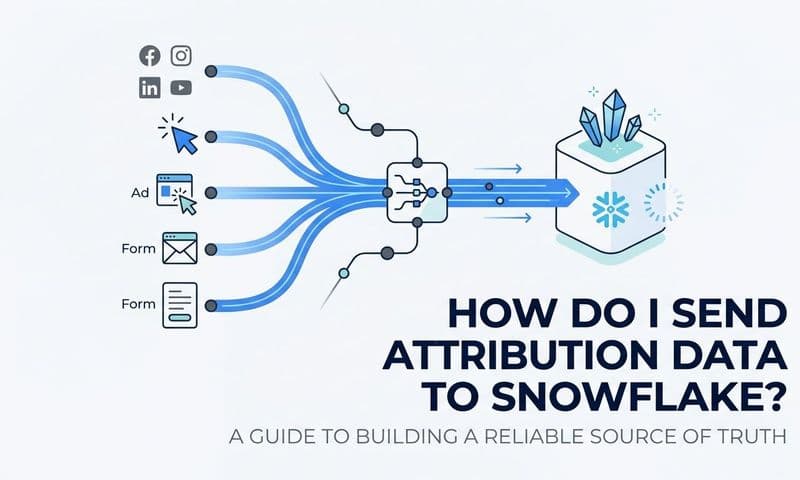
Server-side tracking sends data directly from your servers to analytics platforms and ad networks, bypassing browser restrictions. When a customer converts on your website, your server sends that conversion event directly to Meta, Google, and your analytics platform. This approach captures more complete data, isn't affected by browser settings, and provides better accuracy for attribution.
The data integration layer connects your various sources into a unified system. This is where ad platform data, website analytics, CRM records, and conversion events come together. Without proper integration, you're stuck manually combining data from different sources—a time-consuming process that introduces errors and delays insights.
Modern integration approaches use APIs to automatically sync data between systems. When a lead converts in your CRM, that information flows back to your marketing analytics platform. When someone makes a purchase, that revenue data connects to the ad campaigns that influenced them. This real-time integration enables faster optimization decisions.
Your analytics dashboard is where insights become visible. The best dashboards don't just display data—they highlight what matters. You should be able to see at a glance which campaigns are profitable, which are underperforming, and where you have opportunities to scale. Customizable views let different team members focus on the metrics relevant to their role. Explore the best data visualization tools for marketing analytics to create impactful dashboards.
Reporting tools transform your data into formats stakeholders can understand. Automated reports ensure your team stays informed without manual work. Scheduled reports can deliver weekly performance summaries, monthly trend analysis, or quarterly strategic reviews. The key is making reporting effortless so you spend time acting on insights instead of compiling them. Master marketing analytics and reporting to communicate results effectively.
Here's a component many marketers overlook: feeding enriched conversion data back to ad platforms. When you send detailed conversion information to Meta, Google, and other platforms—not just that a conversion happened, but the revenue value, customer type, and other attributes—you improve their algorithms' ability to optimize.
Ad platforms use conversion data to train their targeting and bidding algorithms. The more accurate and detailed your conversion data, the better they can identify which audiences are likely to convert and how much to bid. This creates a virtuous cycle: better data leads to better targeting, which leads to better results, which generates more data to improve targeting further.
Conversion APIs make this possible. Meta's Conversions API, Google's enhanced conversions, and similar tools from other platforms let you send server-side conversion data directly to ad platforms. This bypasses browser-based tracking limitations while providing richer data than pixels alone could capture.
The complete stack works together seamlessly. Your tracking infrastructure captures every interaction. Your integration layer connects these data points to individual customer journeys. Your analytics platform processes this unified data to surface insights. Your reporting tools keep your team informed. And your conversion sync feeds enriched data back to ad platforms to improve their optimization.
Building this stack doesn't require massive technical resources. Modern marketing data analytics software handles most of the complexity, offering pre-built integrations with major ad platforms, CRM systems, and analytics tools. The investment pays for itself quickly through better optimization decisions and reduced wasted spend.
Putting Your Analytics Into Action
Having powerful analytics means nothing if you're not using them to drive decisions. The difference between marketers who succeed with data and those who drown in it comes down to establishing clear processes for regular review and optimization.
Weekly reviews should focus on performance trends and immediate optimization opportunities. Check which campaigns saw significant changes in cost per acquisition or return on ad spend. Identify any sudden drops in conversion rates that need investigation. Look for quick wins—underperforming ad sets you can pause, successful campaigns ready to scale, or budget that should shift between channels.
Your weekly analysis doesn't need to be comprehensive. Focus on the metrics that directly impact revenue: cost per acquisition, conversion rates, and return on ad spend by channel and campaign. Flag anything unusual for deeper investigation. The goal is catching problems early and capitalizing on wins while they're hot.
Monthly reviews take a broader view. Analyze trends over the past 30 days. Which channels are growing or declining in efficiency? How is your overall customer acquisition cost trending? Are certain audience segments performing better than others? This is when you make strategic adjustments to campaign structure, audience targeting, and budget allocation.
Look at your attribution data monthly to understand how channels work together. You might discover that customers who see both your social ads and search ads convert at higher rates. Or that certain touchpoint sequences consistently lead to higher-value customers. These insights should inform how you structure campaigns across platforms. Understanding channel attribution in digital marketing reveals these cross-platform dynamics.
Quarterly reviews are strategic planning sessions. Evaluate your overall marketing effectiveness. Compare quarter-over-quarter performance across all channels. Assess whether your attribution model is still appropriate. Review customer lifetime value by acquisition source. This is when you make major strategic decisions about channel mix, budget levels, and growth initiatives.
The feedback loop between analytics and optimization should be continuous, not periodic. When your analytics reveal an insight, implement the change quickly. Test new approaches based on what your data suggests. Measure the results. Refine your strategy based on outcomes. This iterative process compounds your marketing effectiveness over time.
Scaling strategies emerge naturally from good analytics. When you identify what's working—specific campaigns, audience segments, creative approaches, or channel combinations—you can scale with confidence. Instead of hoping your increased budget will maintain efficiency, you're expanding proven winners backed by data.
Smart scaling isn't just about increasing budget. It's about replicating success patterns. If your data shows that a particular ad creative and audience combination drives efficient conversions, create variations to test. If a specific touchpoint sequence leads to high-value customers, structure campaigns to encourage that journey. If certain geographic regions over-perform, expand targeting there first.
The key is maintaining the discipline of measurement as you scale. Many marketers optimize effectively at small budgets, then lose that rigor as they grow. Continue tracking the same metrics. Keep analyzing what's working. Stay responsive to performance changes. The analytics practices that got you to profitability will keep you there as you scale.
Moving Forward With Data-Driven Marketing
Digital marketing data analytics isn't about collecting more data—you already have plenty. It's about connecting the right data to revenue outcomes so you can make confident decisions about where to invest your budget.
The marketers who master this discipline gain a fundamental advantage. While competitors guess about what's working, you know. While others optimize for vanity metrics, you optimize for revenue. While they struggle to justify marketing spend, you demonstrate clear ROI. This clarity transforms marketing from a cost center into a predictable growth engine.
The path forward starts with evaluating your current analytics setup. Are you tracking the full customer journey across all channels? Can you attribute conversions accurately to the campaigns that influenced them? Do you have real-time visibility into what's driving revenue? Are you feeding enriched conversion data back to ad platforms to improve their optimization?
If you're still working with siloed data, manual reporting, and unclear attribution, you're making decisions with one hand tied behind your back. The good news? Modern marketing analytics platforms solve these challenges without requiring massive technical resources or data science expertise.
The difference between good marketing and great marketing often comes down to how well you understand your data. When you can see which campaigns drive revenue, which channels work together, and which touchpoints create your most valuable customers, optimization becomes straightforward. You're not guessing anymore—you're scaling what works and cutting what doesn't.
Ready to elevate your marketing game with precision and confidence? Discover how Cometly's AI-driven recommendations can transform your ad strategy—Get your free demo today and start capturing every touchpoint to maximize your conversions.