You check Facebook Ads Manager and see 50 conversions. You open your CRM and count 30 actual sales. The gap stares back at you, and you have no clean explanation for it. Sound familiar?
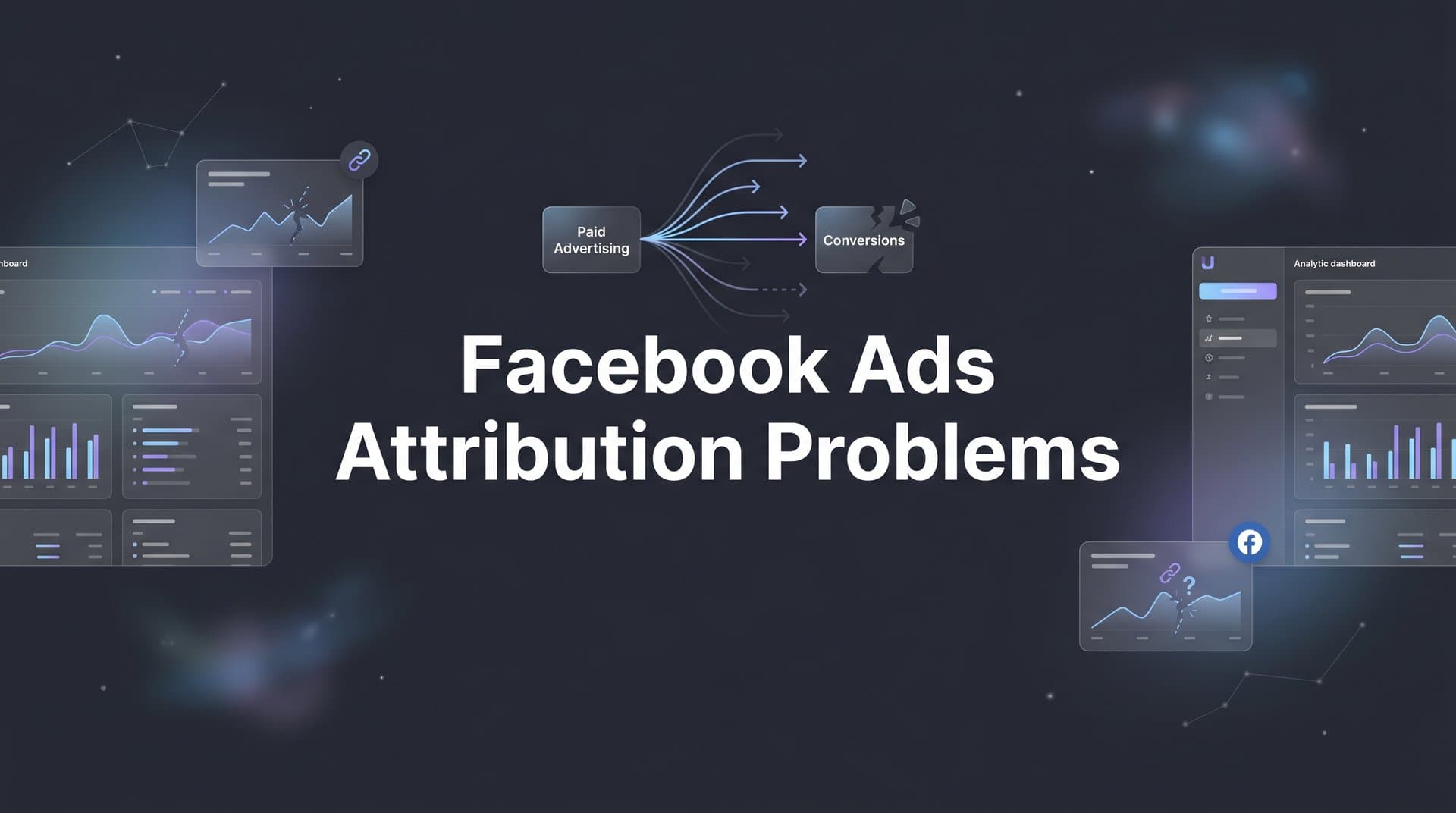
This is not a rounding error or a minor sync delay. It is one of the most common and costly problems in paid advertising today: Facebook ads attribution problems that quietly distort your data, mislead your decisions, and drain your budget in ways that are hard to detect until the damage is already done.
The roots of this problem run deep. Privacy changes have stripped away the tracking signals Facebook once relied on. The platform's own reporting model is built with a structural bias toward claiming credit. And the increasingly fragmented nature of the customer journey means conversions slip through the cracks or get counted multiple times across competing platforms.
The result is a marketing environment where the numbers you see in Ads Manager often tell a very different story from what is actually happening in your business. And if you are making budget decisions, scaling campaigns, or measuring ROAS based on those numbers alone, you are flying partially blind.
This article breaks down exactly why Facebook's attribution data has become unreliable, what that means for your ad spend, and how to build a measurement approach that gives you a genuine picture of what is driving revenue. Let's get into it.
The Privacy Shift That Changed Everything
For years, Facebook's pixel was a remarkably effective tool. It tracked users across websites, tied conversions back to ad exposures, and gave advertisers a reasonably accurate view of campaign performance. Then Apple introduced App Tracking Transparency (ATT) with iOS 14.5 in April 2021, and the game changed fundamentally.
ATT requires apps to explicitly ask users for permission before tracking them across other apps and websites. When iOS users are presented with that prompt, the majority choose to opt out. This single change removed a massive share of the tracking data Facebook depended on to attribute conversions, particularly on mobile devices where a large portion of ad engagement happens.
Facebook's pixel, which works by dropping a cookie in the user's browser, was already facing headwinds before ATT arrived. Safari's Intelligent Tracking Prevention (ITP) and Firefox's Enhanced Tracking Protection (ETP) had been systematically restricting third-party cookies for years. The broader industry move away from third-party cookies has accelerated these restrictions further. Collectively, these changes mean that a growing percentage of the conversions your campaigns generate simply cannot be tracked by a browser-based pixel, which is why so many advertisers are dealing with tracking pixel issues today.
Meta's response to this data loss introduced another layer of complexity: statistical modeling. When Facebook cannot directly observe a conversion, it estimates one. Through a framework called Aggregated Event Measurement (AEM), Meta uses modeled data to fill in the gaps left by missing signals. The numbers you see in Ads Manager are increasingly a blend of actual tracked events and statistical approximations.
This matters enormously for how you interpret your data. When Facebook reports 50 conversions, some of those are real, verified events sent by the pixel or Conversions API. Others are modeled estimates based on aggregate patterns. The platform does not always make it easy to distinguish between the two, which means the confidence you might place in those numbers is often higher than the underlying data quality warrants.
The practical implication is straightforward but uncomfortable: the conversion counts you rely on to evaluate campaign performance are, in many cases, educated guesses dressed up as hard data. Building a scaling strategy on top of that foundation carries real risk.
How Facebook's Reporting Model Works Against You
Beyond the technical tracking limitations, there is a structural issue baked into how Facebook measures and reports its own performance. Facebook operates as a self-attributing network, which means it applies its own attribution logic to determine which conversions it gets credit for. And unsurprisingly, that logic tends to favor Facebook.
Here is how it works in practice. When a user is exposed to a Facebook ad and then converts within a defined attribution window, Facebook counts that as its conversion. The default window is currently 7-day click and 1-day view. That means if someone clicks your ad and converts within seven days, Facebook claims it. If someone merely sees your ad and converts within one day through any channel, Facebook also claims it. Understanding these attribution window limitations is critical to interpreting your data correctly.
The 7-day click window is reasonable for many products, but it creates significant over-counting for businesses with longer consideration cycles. A user might click a Facebook ad, spend a week researching competitors, then convert after clicking a Google search ad. Facebook claims the conversion. Google claims the conversion. Your actual sales count: one.
View-through attribution is where things get particularly distorted. Facebook claiming credit for a conversion because a user saw an ad, without ever clicking it, is a generous interpretation of influence. If that same user converted through a direct visit, an email, or a search ad, attributing the conversion to Facebook's ad view inflates ROAS in a way that does not reflect actual campaign impact.
This is not unique to Facebook. Most ad platforms operate with some degree of self-serving attribution logic. But because Facebook's scale is so large and its default windows are broad, the over-reporting effect can be substantial. Marketers who rely solely on Ads Manager data often believe their Facebook campaigns are performing significantly better than they actually are when measured against independent attribution.
The practical danger here is budget misallocation. If Facebook is reporting a 4x ROAS but your actual blended return when measured through a neutral attribution model is closer to 2x, you are likely over-investing in Facebook relative to other channels that are contributing but not getting credit. The platform's reporting is not designed to show you the full picture. It is designed to show you Facebook's version of the picture.
Cross-Platform Blind Spots That Distort Your Numbers
The attribution problems do not stop at Facebook's own reporting mechanics. The modern customer journey is fragmented across devices, sessions, and channels in ways that create systematic blind spots for any single platform trying to measure its own impact.
Consider the cross-device gap. A user scrolls through their Instagram feed on a smartphone, taps a Facebook ad, browses your product page, and then closes the app. Three days later, they sit down at their laptop, search for your brand on Google, click an organic result, and complete a purchase. Facebook may or may not connect those two sessions to the same user. If it does not, the conversion goes unattributed to Facebook even though the ad initiated the journey. If it does connect them, and Google also claims credit for the branded search click, you now have two platforms each reporting a full conversion for a single sale.
This double-counting problem is one of the most well-documented challenges in multi-platform advertising. When you add up the conversions reported across Facebook, Google, TikTok, and other channels, the total routinely exceeds your actual revenue. Each platform applies its own attribution window and logic, and they overlap constantly. The Google Ads and Facebook Ads attribution conflict is a prime example of how this plays out in practice.
Then there is the offline and CRM disconnect. Many businesses, particularly in B2B, high-consideration retail, or service industries, generate leads through Facebook ads that convert through a process Facebook cannot see. A prospect clicks an ad, fills out a form, speaks with a sales rep over several calls, and closes weeks later. Facebook's pixel captured the form fill, but the actual revenue event happened in a CRM or over the phone. Facebook sees a lead. It does not see the sale. This means the campaigns that are genuinely driving closed revenue are often undervalued in Facebook's reporting because the final conversion is invisible to the pixel.
How These Attribution Gaps Drain Your Ad Budget
Understanding why attribution breaks down is important. Understanding what it costs you is what makes it urgent.
When your attribution data is inaccurate, your budget allocation reflects a distorted reality. Campaigns that Facebook reports as high-performing receive more investment. Campaigns that are actually driving revenue but show modest numbers in Ads Manager get cut or starved. Over time, this creates a systematic misallocation where you are optimizing toward Facebook's version of performance rather than your actual business outcomes. These are the kinds of paid ads attribution problems that silently erode profitability across your entire media mix.
The algorithmic feedback loop makes this worse. Facebook's ad delivery algorithm learns from the conversion signals you send it. If those signals are based on modeled data, view-through attributions, and double-counted events, the algorithm is learning from noise. It optimizes toward audiences and behaviors associated with those flawed signals, which degrades targeting quality over time. You end up paying more to reach audiences that look like converters in Facebook's model but do not actually convert in your business.
The scaling trap is where this becomes most damaging. A marketer sees a strong ROAS in Ads Manager and decides to increase budget significantly. But the ROAS was inflated by attribution over-counting. As spend scales, real revenue does not keep pace. Profitability erodes. The marketer assumes the issue is creative fatigue or audience saturation and keeps testing, not realizing the original performance numbers were never real to begin with. Learning how to identify wrong conversion data is the first step toward breaking this cycle.
This cycle repeats across countless accounts. The fix is not better creative or more aggressive bidding. It is fixing the measurement layer so that the decisions you make are grounded in accurate data rather than platform-reported estimates that serve the platform's interests as much as yours.
Practical Fixes for More Accurate Facebook Attribution
The good news is that the tools to address these problems exist and are accessible. Fixing Facebook ads attribution problems does not require abandoning the platform. It requires building a more robust measurement infrastructure around it.
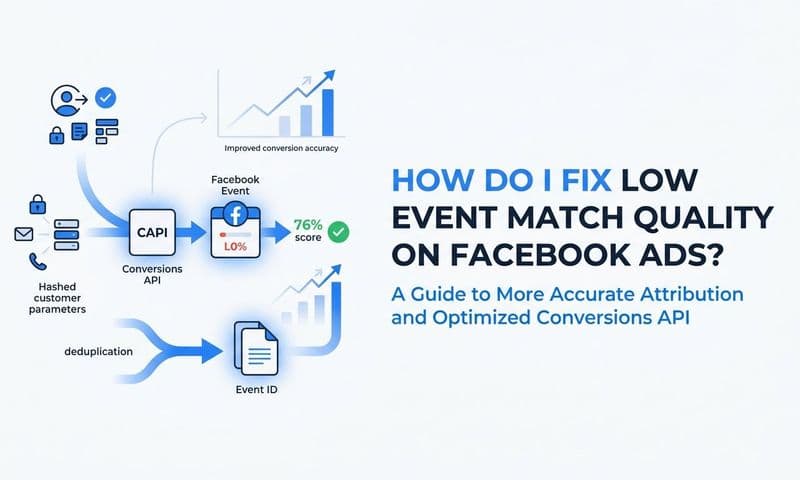
Server-Side Tracking via Conversions API: The most foundational fix is implementing Meta's Conversions API (CAPI). Unlike the browser-based pixel, CAPI sends conversion events directly from your server to Facebook, bypassing browser restrictions, ad blockers, and the data loss caused by iOS privacy changes. When implemented alongside the pixel, CAPI significantly improves signal recovery, giving Facebook more accurate data to work with and giving you more reliable conversion counts. This is not optional anymore. For any advertiser running meaningful spend on Meta, server-side tracking is a baseline requirement. For a deeper dive into implementation, explore this guide on how to improve Facebook Ads tracking accuracy.
Multi-Touch Attribution Tools: Rather than relying on any single platform's self-reported numbers, attribution tools for Facebook Ads aggregate data across all your channels, including Facebook, Google, email, organic, and your CRM, to build a unified view of the customer journey. These tools apply attribution models that distribute credit across touchpoints based on actual contribution rather than each platform's self-serving logic. The result is a single source of truth that reveals which channels and campaigns are genuinely driving revenue, independent of what each platform claims.
Conversion Syncing: Once you have cleaner, more accurate conversion data from a neutral attribution layer, you can sync those enriched events back to Facebook's algorithm. Instead of feeding the algorithm modeled estimates and view-through attributions, you are sending it verified conversion signals tied to actual revenue. This improves the quality of Facebook's optimization, helping the algorithm find audiences that genuinely convert rather than audiences that match a noisy approximation of conversion behavior. Better input data produces better targeting, which produces better results over time.
Together, these three approaches form the core of a modern attribution fix. They do not eliminate every gap, but they close the most significant ones and shift your decision-making from platform-reported estimates to independently verified data.
Building an Attribution Stack You Can Actually Trust
Fixing attribution is not a one-time task. It is a foundational infrastructure project that, once built correctly, pays dividends across every campaign you run. Here is how to approach it systematically.
Start by connecting your ad platforms. Every channel where you spend money, including Meta, Google, TikTok, LinkedIn, and others, should be integrated into a central attribution system. This gives you a consolidated view of spend and reported performance across platforms, which is the starting point for identifying where double-counting and discrepancies are occurring. A comprehensive Facebook Ads tracking solution can serve as the backbone of this integration.
Next, integrate your CRM. This is the step most advertisers skip, and it is often the most valuable. When your CRM is connected to your attribution layer, you can tie ad-level data to actual closed revenue, not just leads or pixel-tracked conversions. You can see which campaigns generate leads that actually close, how long the sales cycle is by channel, and where the real revenue is coming from. This is particularly critical for B2B and high-consideration purchases where the gap between a Facebook conversion event and an actual sale can be weeks long.
Implement server-side tracking to close the data gap between your ad platforms and your actual conversion events. This ensures that the signals being sent to Facebook and other platforms reflect real activity rather than the degraded data that browser-based pixels capture after privacy restrictions.
Layer on multi-touch attribution to get a channel-neutral view of performance. This is where AI-powered analysis becomes genuinely valuable. Platforms like Cometly use AI to surface which ads and campaigns are truly driving revenue across channels, connecting every touchpoint from ad click to CRM event to provide a complete, enriched view of the customer journey. Instead of guessing which campaigns deserve more budget, you get data-backed recommendations grounded in actual revenue outcomes. You can learn more about how to improve Facebook Ads performance with better data through this approach.
The final piece is closing the loop by feeding better data back to the ad platforms. When you sync accurate, enriched conversion events back to Meta and Google, their algorithms improve. They learn from real revenue signals rather than modeled estimates. This creates a virtuous cycle: better data leads to better optimization, which leads to better campaign performance, which generates cleaner conversion signals, which further improves optimization. Over time, this compounds into a meaningful competitive advantage.
The Path Forward Starts With Better Data
Facebook ads attribution problems are not going to resolve themselves. If anything, the forces driving them, including expanding privacy regulations, stricter browser restrictions, and increasingly complex multi-platform customer journeys, will intensify over time. Marketers who continue to rely on Facebook's native reporting as their primary source of truth will keep making decisions based on data that is incomplete, biased, and increasingly modeled rather than measured.
The path forward requires a deliberate shift in how you approach measurement. Server-side tracking to recover lost signal. Multi-touch attribution to eliminate platform bias and double-counting. CRM integration to connect ad spend to actual revenue. And conversion syncing to feed the ad platforms the clean data they need to optimize effectively.
This is not about distrusting Facebook as a channel. It is about building the measurement infrastructure that lets you use Facebook, and every other channel, with confidence. When your attribution data is accurate, your budget decisions improve. Your scaling decisions improve. Your relationship with the algorithm improves. Everything downstream of measurement quality gets better.
The first step is auditing your current setup. Look at how your pixel is implemented, whether you have Conversions API running, how your attribution windows are configured, and whether your CRM data is connected to your ad reporting. That audit will reveal where the biggest gaps are and where to focus first.
Cometly is purpose-built for exactly this challenge. It connects your ad platforms, CRM, and website to track the entire customer journey in real time, applies multi-touch attribution across all channels, and uses AI to surface which campaigns are genuinely driving revenue. It also syncs enriched conversion data back to Meta and Google so their algorithms can optimize toward real outcomes. Get your free demo today and start building an attribution stack that gives you the clarity and confidence to scale profitably.