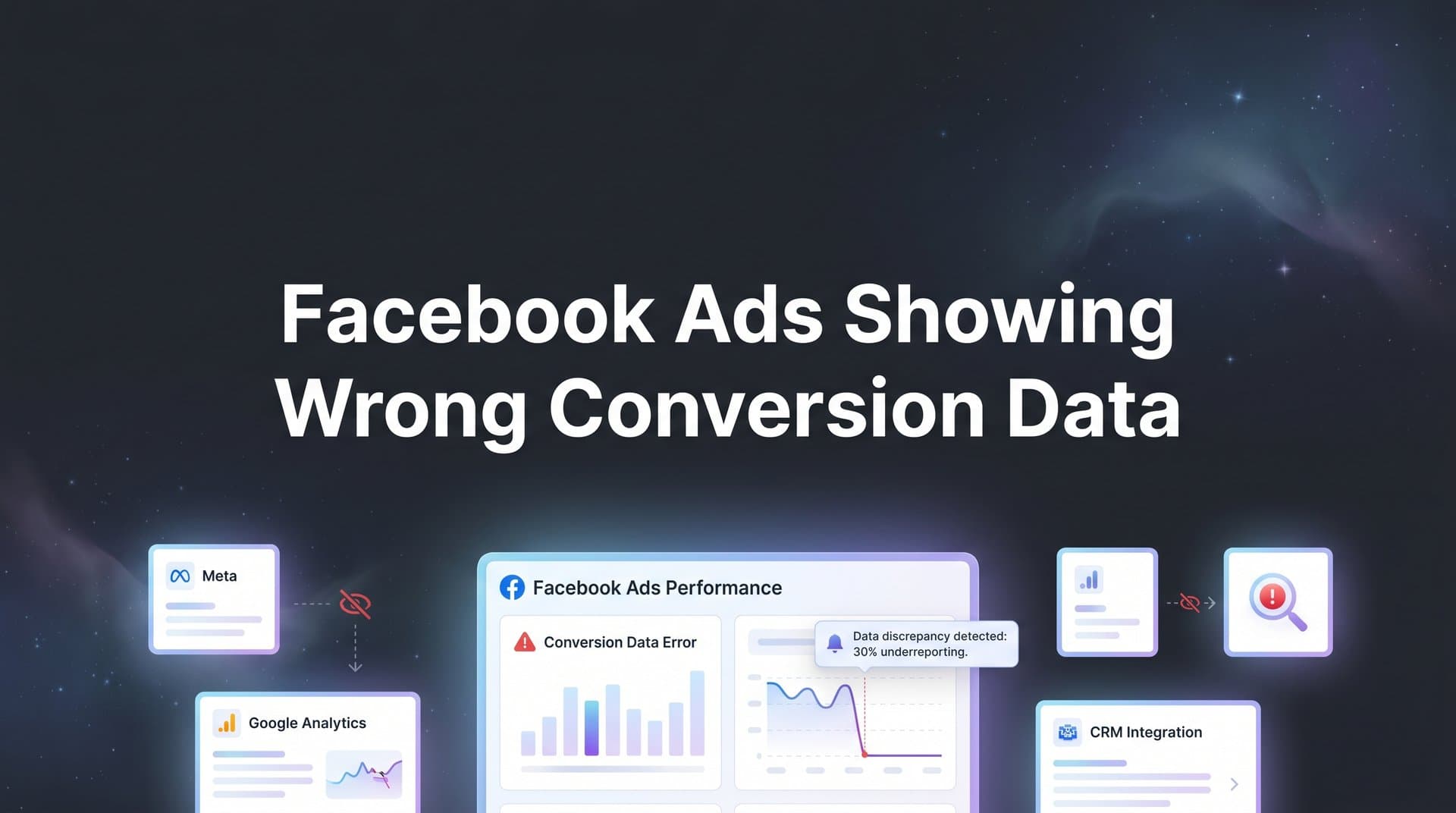
You check your Facebook Ads Manager and see 50 conversions reported. But your CRM only shows 23 actual sales. Sound familiar?
Inaccurate conversion data in Facebook Ads is one of the most frustrating challenges digital marketers face today. This discrepancy is not just annoying. It actively damages your ability to optimize campaigns, allocate budget effectively, and prove ROI to stakeholders.
The root causes range from iOS privacy changes and browser tracking limitations to misconfigured pixels and attribution window mismatches. The good news? Most conversion data issues can be diagnosed and fixed systematically.
This guide walks you through a proven troubleshooting process to identify why your Facebook Ads are showing wrong conversion data and how to fix each issue. By the end, you will have accurate conversion tracking that reflects your actual business results.
Step 1: Audit Your Facebook Pixel Installation and Event Setup
Your Facebook pixel is the foundation of conversion tracking. If it is not firing correctly, everything downstream becomes unreliable.
Start by installing the Facebook Pixel Helper browser extension for Chrome. This free tool shows you exactly which pixels are active on any page you visit, what events they are firing, and whether any errors exist.
Navigate through your entire conversion funnel as a user would. Click on one of your ads, land on your website, and complete the full journey to conversion. Watch the Pixel Helper icon in your browser toolbar at each step.
The pixel should fire exactly once per page load. If you see duplicate events, multiple pixels, or events firing on page refreshes, you have identified your first problem. Duplicate conversion events are a common culprit behind inflated numbers.
Next, open Facebook Events Manager and review the Diagnostics tab. This section highlights pixel errors, missing events, and configuration warnings. Pay special attention to any red or yellow indicators.
Check that your standard events are properly configured. A Purchase event should only fire when someone completes a transaction, not when they view a product page. A Lead event should fire when a form is submitted, not when the form page loads.
Test edge cases too. What happens if someone refreshes the thank you page? Does the conversion event fire again? It should not. Implement proper event deduplication by assigning unique event IDs to each conversion.
Look for missing events in your funnel. If users must go through multiple steps to convert, are you tracking ViewContent, AddToCart, and InitiateCheckout events? These intermediate events help Facebook optimize delivery even when the final Purchase event is not tracked perfectly.
Verify that your conversion values are accurate. If you are tracking Purchase events, the value parameter should reflect the actual transaction amount, not a placeholder number.
Common pixel installation mistakes include placing the base pixel code in the wrong location, failing to update event parameters when your site changes, and not testing on mobile devices where behavior may differ. Understanding why Facebook Ads fail to track conversions can help you avoid these pitfalls.
If you find errors during this audit, fix them before moving to the next step. A properly functioning pixel is non-negotiable for accurate conversion data.
Step 2: Verify Your Attribution Settings Match Your Sales Cycle
Even with a perfectly installed pixel, wrong attribution settings can make your conversion data misleading.
Facebook's default attribution window is 7-day click and 1-day view. This means Facebook takes credit for conversions that happen within 7 days of someone clicking your ad, or within 1 day of someone viewing it.
Here is where it gets tricky. If your actual sales cycle is 14 days from first click to purchase, Facebook will miss conversions that happen on day 8 through day 14. Your reported conversion numbers will be artificially low.
Conversely, if you are running awareness campaigns and using view-through attribution, Facebook might claim credit for conversions from people who saw your ad but would have converted anyway. This inflates your numbers.
To check your current settings, go to Ads Manager and click on the columns dropdown. Select "Customize Columns," then scroll to the conversion metrics. You will see options for different attribution windows.
Think about your customer journey. How long does it typically take from first ad interaction to conversion? For low-consideration purchases like impulse buys, a 1-day click window might be appropriate. For high-ticket B2B services, you might need to analyze 28-day click data.
The view-through attribution window is particularly important to scrutinize. A 1-day view window means if someone sees your ad on Monday and converts on Tuesday without clicking, Facebook counts it as a conversion.
For many businesses, view-through conversions are unreliable. Someone might have seen your ad in their feed while scrolling quickly, then later searched for your product directly and purchased. Did your ad really drive that conversion, or would they have found you anyway? Learning about Facebook Ads attribution helps clarify these complex scenarios.
Consider testing different attribution windows to see which aligns best with your CRM data. Run reports using 1-day click, 7-day click, and 28-day click windows, then compare each to your actual sales records.
The goal is not to make Facebook look good or bad. The goal is to understand which attribution model most accurately reflects reality for your specific business.
Once you identify the right attribution window, use it consistently for all campaign analysis and optimization decisions. Switching between windows makes it impossible to track performance trends accurately.
Step 3: Implement Server-Side Tracking with Conversions API
Browser-based pixel tracking has become increasingly unreliable. Ad blockers, browser privacy features, and Apple's App Tracking Transparency framework all prevent the Facebook pixel from firing properly.
This is where the Facebook Conversions API (CAPI) becomes essential. Instead of relying on a browser to send conversion data to Facebook, CAPI sends data directly from your server to Facebook's servers.
Think of it like this. The pixel is a messenger that depends on the user's browser to deliver the message. If the browser blocks the messenger, Facebook never gets the message. CAPI is a direct phone call from your server to Facebook, bypassing the browser entirely.
Setting up Conversions API requires technical implementation, but the accuracy improvement is worth it. If you use a platform like Shopify, WooCommerce, or other major e-commerce systems, there are often plugins or integrations that simplify setup.
The basic process involves configuring your server to send conversion events to Facebook when specific actions occur. When someone completes a purchase on your site, your server sends a Purchase event to Facebook with details like transaction value, product information, and user identifiers.
Here is the critical part: event deduplication. If you are running both the pixel and CAPI, you need to prevent Facebook from counting the same conversion twice.
Implement this by assigning a unique event ID to each conversion. When the pixel fires a Purchase event, it includes event ID "12345." When your server sends the same Purchase event via CAPI, it also includes event ID "12345." Facebook recognizes these as the same event and counts it only once.
To verify your CAPI implementation, go to Events Manager and select your pixel. Look for the "Server" column in your events overview. You should see events being received from both "Browser" and "Server" sources.
Click into a specific event to see the Event Match Quality score. This metric shows how well Facebook can match your server events to user profiles. A higher score means better attribution and optimization.
Improve your Event Match Quality by sending as many user parameters as possible: email, phone number, first name, last name, city, state, and zip code. Hash these parameters before sending to protect user privacy. Mastering how to sync conversion data to Facebook Ads ensures your server-side implementation works flawlessly.
Test your CAPI setup thoroughly. Complete test conversions and verify they appear in Events Manager with the correct parameters and values. Check that deduplication is working by confirming you do not see duplicate events with the same event ID.
Many marketers report significant improvements in conversion tracking accuracy after implementing CAPI properly. The difference is especially noticeable for iOS users and anyone using ad blockers.
Step 4: Cross-Reference Facebook Data with Your CRM and Analytics
You cannot fix what you cannot measure. The next step is quantifying exactly how far off your Facebook conversion data is from reality.
Export your conversion data from Facebook Ads Manager for a specific date range. Choose a recent period like the last 30 days. Include columns for campaign name, ad set name, conversions, and conversion value.
Now pull the same date range from your CRM. Export all sales or leads that occurred during that period. Include the source/medium data if your CRM tracks it.
Do the same with Google Analytics if you use it. Navigate to Acquisition > All Traffic > Source/Medium and filter for facebook / cpc traffic. Export conversion data for the same date range.
Pull transaction data from your payment processor as well. Stripe, PayPal, or whatever system you use will have a record of every actual transaction.
Now comes the detective work. Compare these data sources side by side. What patterns emerge?
Is Facebook consistently reporting 30% more conversions than your CRM shows? That suggests attribution window issues or view-through conversions inflating numbers. This is a classic case of Facebook Ads reporting wrong conversions.
Is Facebook reporting fewer conversions than your CRM? That points to pixel tracking failures or iOS limitations preventing proper event capture.
Look at specific campaigns and ad sets. Are certain campaigns showing massive discrepancies while others align well? This can reveal which traffic sources or audience segments have tracking issues.
Check the time dimension too. Are weekends showing bigger gaps than weekdays? Are certain hours of the day more affected? This can indicate when pixel failures are most common.
Document your findings in a spreadsheet. Create columns for Facebook conversions, CRM conversions, Analytics conversions, and actual transactions. Calculate the percentage difference for each.
This cross-reference exercise serves two purposes. First, it gives you a baseline to measure improvement against as you implement fixes. Second, it helps you identify which specific issues are causing the biggest problems.
If Facebook shows 100 conversions but your CRM shows 70, and Analytics shows 65, you know you have work to do. If the gap is only 5%, your tracking is probably in decent shape.
The goal is not perfect alignment across all platforms. Different attribution models and tracking methods will always create some variance. But major discrepancies indicate problems that need fixing.
Step 5: Configure Aggregated Event Measurement for iOS Users
Apple's App Tracking Transparency framework fundamentally changed how Facebook tracks iOS users. If you are not properly configured for iOS tracking, you are missing a significant portion of your conversion data.
The first requirement is domain verification. Go to Facebook Business Manager, navigate to Business Settings, then Brand Safety > Domains. Add your website domain and verify ownership.
Domain verification proves to Facebook that you own the website, which is required for tracking iOS 14.5+ users who opt out of tracking.
Next, configure Aggregated Event Measurement. This is Facebook's workaround for iOS privacy restrictions. Instead of tracking individual user behavior in real time, Facebook receives aggregated, delayed data about conversion events.
You can prioritize up to 8 conversion events per domain. Go to Events Manager, select your pixel, and click on "Aggregated Event Measurement" in the left sidebar.
This is where strategy matters. Your 8 events should be ranked in order of business importance. The first event gets the most accurate tracking, the eighth gets the least.
For most e-commerce businesses, Purchase should be your top priority. For lead generation, it might be Lead or CompleteRegistration. Think about which conversions directly impact revenue.
Include events that represent different stages of your funnel. You might prioritize Purchase first, then AddToCart, then ViewContent. This gives Facebook enough signal to optimize delivery even when it cannot track every individual conversion.
Understand the limitations. iOS conversion data may be delayed by up to 3 days. You will not see real-time results for iOS users. Facebook may also use modeled conversions to fill in gaps, which means some reported conversions are statistical estimates rather than tracked events. This often leads to Facebook Ads underreporting conversions.
This does not mean iOS tracking is useless. It means you need to set realistic expectations and look at longer time windows when analyzing campaign performance.
After configuring Aggregated Event Measurement, monitor your conversion data by operating system. In Ads Manager, break down your results by "Platform and Device" to see iOS performance separately from Android and desktop.
If you notice that iOS conversion rates are significantly lower than Android, but your actual sales data shows similar conversion rates across devices, you have confirmed that iOS tracking limitations are affecting your data.
There is no perfect fix for iOS attribution challenges. The privacy restrictions are here to stay. But proper configuration ensures you are capturing as much data as possible within those constraints.
Step 6: Use a Unified Attribution Platform for Ground Truth Data
Facebook will always report conversions through its own attribution lens. Google Ads will do the same. Every ad platform wants to take maximum credit for conversions.
This creates a fundamental problem. If you add up the conversions reported by Facebook, Google, TikTok, and LinkedIn, you will often get more total conversions than you actually had. Each platform is claiming overlapping credit. Understanding the Google Ads and Facebook Ads attribution conflict is essential for resolving these discrepancies.
A unified attribution platform solves this by providing an independent source of truth. Instead of trusting each ad platform's self-reported numbers, you track the complete customer journey yourself.
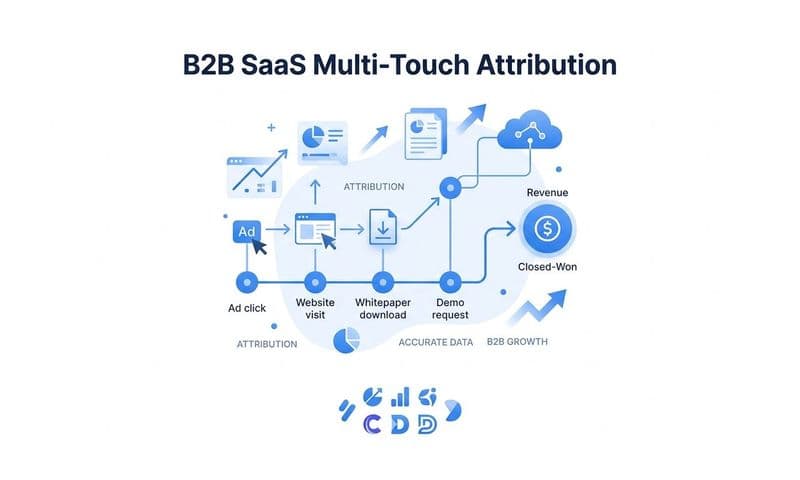
These platforms work by connecting all your data sources: your ad platforms, website analytics, CRM, and payment processor. They track each customer's path from first touchpoint to final conversion.
When someone sees a Facebook ad on Monday, clicks a Google ad on Wednesday, and converts on Friday, a unified platform shows you that complete journey. You can then decide which touchpoint deserves credit based on your chosen attribution model.
Multi-touch attribution is particularly valuable for understanding complex customer journeys. Instead of giving 100% credit to the last click, you can distribute credit across all meaningful touchpoints.
This reveals which channels are actually driving conversions versus which ones are simply getting last-click credit. You might discover that Facebook is excellent at generating initial awareness, while Google Search closes the deal.
The real power comes from feeding accurate conversion data back to your ad platforms. When you know which conversions are real and which touchpoints contributed, you can send that validated data to Facebook via Conversions API.
This creates a feedback loop. Better conversion data helps Facebook's algorithm optimize more effectively. Better optimization leads to more real conversions. More conversions give you more data to validate.
Look for attribution platforms that offer server-side tracking, CRM integration, and the ability to sync conversion data back to ad platforms. The best attribution tool for Facebook Ads captures every touchpoint from ad click to CRM event, providing AI-powered insights to help you understand what is truly driving revenue.
When evaluating platforms, consider ease of implementation, data accuracy, and whether the solution can handle your specific tech stack. Some platforms specialize in e-commerce, others in lead generation or B2B sales cycles.
The investment in proper attribution pays for itself quickly. When you can confidently identify which campaigns drive real revenue, you stop wasting budget on vanity metrics and start scaling what actually works.
Independent attribution also protects you from platform reporting changes. When Facebook adjusts its attribution model or when new privacy restrictions emerge, your independent tracking continues providing reliable data.
Putting It All Together
Fixing Facebook Ads conversion data issues requires a systematic approach. Start by auditing your pixel setup to ensure events fire correctly without duplicates. Then verify your attribution settings actually match your sales cycle.
Implement server-side tracking through Conversions API to capture conversions that browser-based pixels miss. Cross-reference your data sources to quantify exactly how big your discrepancies are. Configure iOS tracking properly through domain verification and Aggregated Event Measurement.
Finally, consider implementing a unified attribution platform that provides independent measurement across all your marketing touchpoints.
Here is your quick action checklist:
Pixel fires correctly on all conversion pages without duplicates
Attribution windows match your actual customer journey length
Conversions API is active with proper event deduplication configured
Domain verified in Business Manager for iOS tracking
8 priority events configured in Aggregated Event Measurement
Independent attribution system tracking complete customer journeys
Take action today by running the Facebook Pixel Helper on your conversion pages. That single step will reveal whether your foundation is solid or needs immediate attention.
Most conversion tracking issues are not mysterious. They are systematic problems with systematic solutions. Work through each step methodically, test your changes, and measure the improvement.
Ready to elevate your marketing game with precision and confidence? Discover how Cometly's AI-driven recommendations can transform your ad strategy. Get your free demo today and start capturing every touchpoint to maximize your conversions.