Most marketing teams operate with a frustrating blind spot. Paid ads live in one dashboard. Organic traffic lives in another. And when a customer clicks a Google ad, reads three blog posts over two weeks, then converts through a retargeting campaign on Meta, nobody can agree on what actually drove the sale.
This disconnect between organic and paid attribution is not just an analytics headache. It leads to misallocated budgets, undervalued content efforts, and scaling decisions built on incomplete data. Your SEO team thinks their blog posts are being ignored. Your paid team thinks they are doing all the heavy lifting. The truth is usually somewhere in the middle, and without unified measurement, you will never know where.
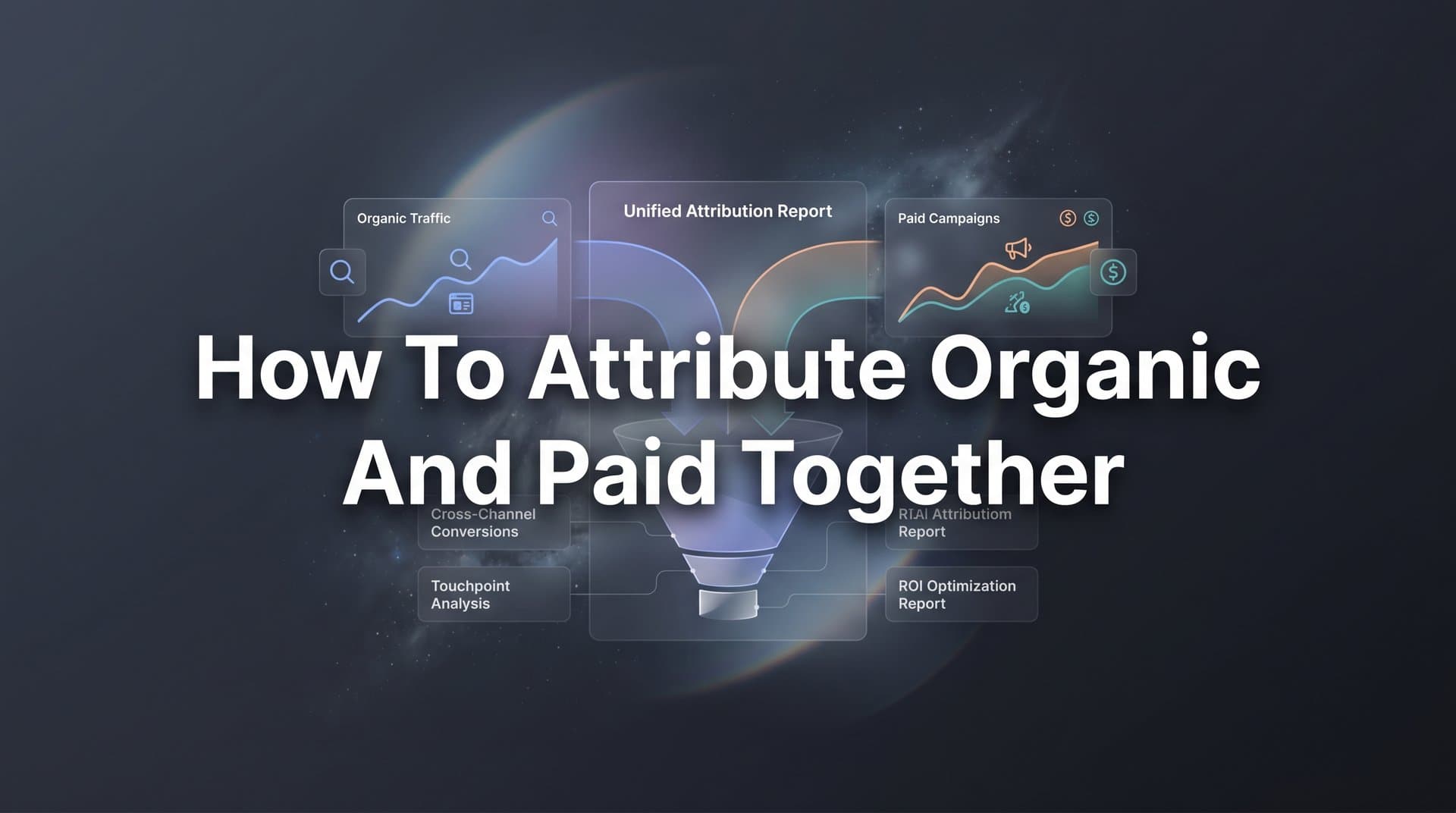
When you attribute organic and paid together, you see the full customer journey from first touch to revenue. You understand how your SEO content warms up audiences before paid ads close the deal. You spot the moments where organic search and paid campaigns work in tandem rather than in isolation. The result is smarter budget allocation, stronger cross-channel strategy, and a clearer picture of true marketing ROI.
This guide walks you through the exact steps to unify organic and paid attribution into a single, reliable system. You will learn how to set up the tracking foundation, connect your data sources, choose the right attribution model, and use your unified data to make better decisions. Whether you are a solo marketer managing multiple channels or part of a larger team trying to align paid and content strategies, these steps will give you a clear path forward.
No guesswork, no fragmented dashboards. Just a complete view of what is actually driving your revenue.
Step 1: Map Every Touchpoint Across Organic and Paid Channels
Before you can attribute organic and paid together, you need a clear picture of every way a prospect can interact with your brand. This sounds obvious, but most teams skip this step and end up building attribution systems with blind spots baked in from the start.
Start by listing every organic source that drives traffic and conversions. This includes SEO and organic search, organic social media posts, referral traffic from other websites, direct traffic from people typing your URL, and email marketing from nurture sequences or newsletters. Each of these represents a potential first or middle touch in a customer journey.
Then list every paid source: Google Ads search and display campaigns, Meta Ads across Facebook and Instagram, TikTok ads, LinkedIn sponsored content, YouTube ads, and any programmatic or display networks you run. Every paid channel where you spend money needs to be accounted for in your attribution framework. Using dedicated tracking software for paid ads can help ensure no channel is missed.
Next, sketch out the typical customer journeys that blend organic and paid touches. A common pattern looks like this: a prospect finds your brand through an organic blog post, leaves without converting, sees a paid retargeting ad two days later, clicks through, and signs up. Another pattern might be a branded Google search after seeing a paid social ad, followed by reading two more blog posts before requesting a demo. These multi-touch journeys are the norm, not the exception.
Document every conversion event that matters to your business. For most marketing teams, this includes form fills, purchases, demo requests, free trial signups, and content downloads. Note where each conversion is currently being tracked: is it firing in Google Analytics, your ad platform pixel, your CRM, or all three? Gaps here will become attribution gaps later.
Watch for micro-conversions: Email signups, content downloads, and webinar registrations often bridge the gap between organic and paid journeys. A prospect who downloads a guide through an organic blog visit is far more likely to convert on a paid retargeting ad later. If you are not tracking these micro-conversions, you are missing critical connective tissue in the customer journey.
Your success indicator for this step is a complete channel and touchpoint map that covers every way a prospect can interact with your brand before converting. This document becomes the blueprint for everything that follows. Spend the time to get it right, because every gap in your map becomes a gap in your attribution data.
Step 2: Implement Consistent UTM Tagging and Server-Side Tracking
With your touchpoint map in hand, the next step is making sure every interaction is actually trackable. This comes down to two things: a standardized UTM naming convention for paid traffic and reliable server-side tracking to capture what browser-based pixels miss.
UTM parameters are the tags you append to URLs in your paid campaigns so your analytics tools know exactly where traffic came from. A properly tagged URL tells you the source (google, meta, tiktok), the medium (cpc, paid-social, display), the campaign name, the ad content, and the keyword or targeting term. Without consistent tagging, your attribution data becomes a mess of unidentified traffic that gets lumped into "direct" or "other." If you are new to this concept, our guide on UTM tracking and how it helps marketing covers the fundamentals.
The first thing to do is audit your existing UTM parameters before building anything new. Inconsistent naming is one of the most common causes of fragmented attribution data. If one campaign tags traffic as "facebook" and another tags it as "Facebook" and another uses "fb," your analytics tool will treat these as three separate sources. Establish a naming convention document and make it mandatory for every campaign launch. Lowercase everything, use hyphens instead of spaces, and be specific with campaign names so you can identify them months later.
Organic traffic requires a different approach. You cannot add UTM tags to organic search results, but you can ensure your analytics properly categorizes organic sessions. Connect Google Search Console to your analytics platform so you have visibility into which queries are driving organic visits. Make sure social referral traffic from organic posts is being correctly identified rather than falling into direct or unknown buckets.
Here is where server-side tracking becomes essential. Traditional client-side tracking relies on JavaScript pixels firing in the user's browser. Apple's App Tracking Transparency framework, ad blockers, and browser privacy settings have made this increasingly unreliable. A significant portion of conversions are simply not being recorded by client-side pixels, which means your attribution data is missing real touchpoints. Understanding how tracking pixels work helps clarify why server-side alternatives are now critical.
Server-side tracking moves the data collection to your server rather than the user's browser. When a conversion happens, your server sends the event data directly to your analytics platform and ad platforms, bypassing the browser entirely. This captures touchpoints that pixels miss, giving you a more complete dataset to work with when attributing across channels.
The practical impact: When you combine consistent UTM tagging with server-side tracking, you dramatically reduce the volume of unattributed conversions and misidentified traffic. Every paid click gets properly identified. Organic sessions are correctly categorized. And the conversions that were previously falling through the cracks start showing up in your attribution reports where they belong.
Your success indicator for this step is a clean, consistent data stream where every paid click carries a properly formatted UTM tag and your conversion events are being captured server-side with minimal data loss.
Step 3: Connect Your Ad Platforms, CRM, and Website Into One Data Layer
Siloed data is the root cause of broken cross-channel attribution. You can have perfect UTM tagging and reliable server-side tracking, but if your data lives in three separate tools that never talk to each other, you still cannot see the full customer journey. This step is about building the connections that bring everything together.
Start with your ad platforms. Meta, Google Ads, TikTok, LinkedIn, and any other paid channels you run all need to feed data into a central attribution system. This means connecting each platform so that paid click data, impression data, and spend data flow automatically into one place. Accurate tracking of paid social conversions is essential to making this work across every channel.
Next, connect your CRM. This is the step that most marketing teams skip, and it is the one that matters most for understanding true revenue impact. Your ad platforms and website analytics can tell you about front-end conversions like form fills and signups. But your CRM holds the downstream data: which leads actually became customers, what deals closed, and what the revenue value of each conversion was. Without CRM integration, you are attributing to form fills and hoping they correlate with revenue. With CRM integration, you are attributing directly to closed deals and lifetime value.
If you use HubSpot, Salesforce, or a similar CRM, the goal is to connect contact records and deal stages back to the original marketing touchpoints that drove them. When a lead closes six weeks after clicking a paid ad and reading two blog posts, that revenue should be traceable back to those specific interactions. Building unified dashboards for marketing and sales attribution makes this visibility possible without manual report stitching.
Then connect your website analytics so that organic sessions, page views, and on-site behavior are tracked alongside paid interactions. An organic blog visit that happens two weeks before a paid conversion is a meaningful touchpoint. If your website data is not connected to the same system as your ad platform data, that touchpoint is invisible in your attribution reports.
This is exactly where Cometly is built to help. Cometly integrates your ad platforms, CRM, and website tracking into a single unified view so every touchpoint from ad click to CRM event is captured in one place. Instead of manually stitching together data from Google Analytics, your Meta Ads dashboard, and your CRM, you get a complete picture of the customer journey without the spreadsheet gymnastics.
Your success indicator: You can open a single platform and see both an organic blog visit and a paid ad click attributed to the same customer journey, connected to a real revenue outcome in your CRM. When that view exists, you have a real data layer to work with.
Step 4: Choose a Multi-Touch Attribution Model That Reflects Reality
With your tracking infrastructure in place and your data sources connected, the next question is: how do you distribute credit across all those touchpoints? This is where attribution modeling comes in, and the model you choose will significantly change how you perceive the value of organic versus paid.
Last-click attribution gives 100% of the credit for a conversion to the final touchpoint before it happened. If a customer read three blog posts over two weeks and then clicked a paid retargeting ad to convert, last-click gives all the credit to that retargeting ad. The organic content gets nothing. This is why so many marketing teams undervalue their SEO and content efforts: their attribution model is systematically ignoring the awareness and nurturing work that made the paid conversion possible. Understanding the difference between single-source and multi-touch attribution is the first step toward fixing this.
Multi-touch attribution distributes credit across all touchpoints in the journey. There are several models to understand:
Linear attribution gives equal credit to every touchpoint. If there were five interactions before a conversion, each gets 20% of the credit. This is simple and fair, but it does not reflect the reality that some touchpoints matter more than others.
Time-decay attribution gives more credit to touchpoints that happened closer to the conversion. The most recent interactions receive the highest weight. This works well for short sales cycles but can still undervalue early organic touches in longer journeys.
Position-based attribution (also called U-shaped) gives the most credit to the first and last touchpoints, typically 40% each, with the remaining 20% distributed across the middle touches. This model is particularly useful when you are blending organic and paid, because it credits both the first organic discovery and the paid conversion touch that closed the deal.
Data-driven attribution uses machine learning to analyze your actual conversion paths and assign credit based on which touchpoints statistically contributed most to conversions. This is the most accurate model, but it requires a meaningful volume of conversions before the algorithm has enough data to produce reliable results. For a deeper dive into each approach, our guide on understanding marketing attribution models breaks them all down.
For most teams just starting to attribute organic and paid together, position-based attribution is the right starting point. It immediately surfaces the value of first-touch organic interactions without completely ignoring the paid channels that drive final conversions. Once you have sufficient conversion volume, typically several hundred conversions per month, you can transition to data-driven attribution and let the algorithm learn the patterns in your specific data.
One of the most valuable exercises at this stage is comparing models side by side. When you switch from last-click to position-based, you will likely see organic content pages gaining significant credit they were never receiving before. That shift in numbers often changes budget conversations immediately.
Step 5: Analyze Cross-Channel Journeys and Identify Organic-Paid Synergies
Now comes the part where the data starts telling you something genuinely useful. With unified attribution in place, you can read your cross-channel reports to find the patterns that were invisible before.
Start by looking for recurring journey structures. You are looking for patterns like: organic search consistently appearing as the first touch before paid retargeting closes, or a specific blog post appearing in a high percentage of journeys that end with a demo request. These patterns reveal the structural relationship between your organic and paid channels.
Identify your highest-value cross-channel paths. Which organic content pages most frequently appear in journeys that end with paid conversions? If a particular blog post about a problem your product solves keeps showing up as the first touch in high-value customer journeys, that page is doing critical awareness work. Learning how to attribute revenue to specific campaigns helps you quantify this impact precisely.
Look specifically for organic content that is doing heavy lifting in the awareness stage but was getting no credit under your old attribution setup. These are the hidden assets in your marketing mix. A piece of content that consistently appears early in journeys that end with paid conversions is essentially pre-qualifying your retargeting audiences. It is warming up prospects so that when your paid ad reaches them, they already have context and trust.
This is also where AI-powered recommendations become valuable. Cometly's AI can surface which paid campaigns perform best when supported by organic touchpoints, helping you understand which combinations of content and paid ads produce the strongest conversion rates. The growing role of AI marketing analytics makes it possible to uncover these insights at scale instead of manually cross-referencing reports.
The most important mindset shift: Stop treating organic and paid as competing channels fighting for budget and credit. The data will almost always show that they have a compounding effect. Organic content builds trust and awareness. Paid ads accelerate conversions among audiences that organic content has already warmed up. When you see that relationship clearly in your attribution data, it changes how you think about both channels entirely.
Your goal in this step is to walk away with a clear list of which organic content pieces and which paid campaigns work best together, and why. That list becomes the foundation for your optimization decisions in the next step.
Step 6: Optimize Budget Allocation Using Unified Attribution Data
This is where unified attribution stops being an analytics exercise and starts generating real business value. With a clear picture of how organic and paid work together, you can make budget decisions based on what the data actually shows rather than what each channel team advocates for.
Use your unified attribution data to reallocate paid budget toward campaigns that perform best when supported by organic touchpoints. If your data shows that retargeting campaigns converting audiences who previously visited organic blog posts produce significantly stronger results than cold audience campaigns, that is a signal to invest more in retargeting and to create more organic content that feeds those retargeting audiences. Knowing how to scale paid advertising profitably depends on having this kind of cross-channel visibility.
On the organic side, invest in content that feeds your paid retargeting pools. If specific blog posts or landing pages consistently appear as early touchpoints in high-value customer journeys, those pages deserve more investment: better SEO optimization, updated content, stronger calls to action that capture email addresses and feed nurture sequences.
One of the most impactful things you can do with your unified data is feed enriched conversion events back to your ad platforms. Meta and Google both use machine learning to optimize your campaigns, but their algorithms can only optimize toward the signals you send them. If you are only sending pixel fires for front-end form fills, the algorithm optimizes for leads. If you send enriched conversion data that includes downstream revenue events from your CRM, the algorithm learns to find people who actually become customers, not just people who fill out forms.
Cometly's Conversion Sync does exactly this: it sends enriched, conversion-ready events back to Meta, Google, and other ad platforms so their algorithms optimize toward your actual revenue events. The result is better targeting, reduced wasted spend, and improved return on ad spend over time as the platform AI gets smarter about who to show your ads to.
This creates a feedback loop that compounds over time. Your attribution data informs budget decisions. Better budget decisions improve campaign performance. Improved performance generates more conversion data. More conversion data makes your attribution model more accurate. And more accurate attribution leads to even better budget decisions.
Your success indicator: You can confidently answer the question "what would happen to paid performance if we cut organic investment?" because your data shows the relationship between organic touchpoints and paid conversion rates. When you can answer that question with data rather than instinct, you have built something genuinely valuable.
Putting It All Together: Your Unified Attribution Checklist
Bringing organic and paid attribution together is not a one-time project. It is an ongoing practice that gets more valuable as your data matures and your conversion volume grows. The attribution model you start with will evolve. The patterns you find in your cross-channel reports will shift as you optimize. The feedback loop between attribution data and budget decisions will compound over time.
Here is a quick checklist to confirm you have the foundation in place before you start:
Touchpoint mapping: Have you documented every organic and paid channel that drives traffic and conversions, including micro-conversions?
UTM standardization: Is your UTM naming convention documented, consistent, and enforced across every campaign?
Server-side tracking: Are your conversion events being captured server-side to account for ad blockers, iOS restrictions, and cookie limitations?
Data connections: Are your ad platforms, CRM, and website analytics all connected to a single attribution system?
Attribution model: Are you using multi-touch attribution instead of last-click, with a plan to move to data-driven once you have sufficient volume?
Conversion sync: Are you feeding enriched conversion data back to Meta, Google, and other ad platforms so their algorithms optimize toward real revenue?
If you want to skip the manual stitching and get a unified view of organic and paid attribution from day one, Cometly connects your ad platforms, CRM, and website to track the entire customer journey in real time. You can compare attribution models, see exactly which channels drive revenue, and let AI surface optimization opportunities across every touchpoint. Get your free demo today and start capturing every touchpoint to maximize your conversions.