Marketing teams often work in silos—paid media specialists focus on ad platforms, content teams track engagement metrics, and sales looks at pipeline data. The result? Misaligned priorities, duplicated efforts, and endless debates about which channels actually drive revenue.
Sound familiar?
When your Facebook Ads manager celebrates a 3x ROAS while your content lead claims organic drove most conversions, and sales insists their outreach closed the deals, you're not just dealing with measurement problems. You're facing a collaboration crisis.
Analytics can bridge these gaps, but only when teams know how to use shared data as a collaboration tool rather than just a reporting mechanism. The difference is crucial: reporting tells you what happened in your channel, while collaborative analytics shows how every touchpoint works together to drive outcomes.
This guide walks you through a practical process for building analytics-driven collaboration within your marketing team. You'll learn how to establish a single source of truth, create shared dashboards that everyone actually uses, and implement workflows that turn data into coordinated action.
Whether you're managing a small in-house team or coordinating across agencies and departments, these steps will help you move from fragmented reporting to unified decision-making. Let's get started.
Step 1: Audit Your Current Data Sources and Identify Collaboration Gaps
Before you can fix collaboration problems, you need to understand exactly where your data lives and who can access it. Most marketing teams have more analytics tools than they realize, each creating its own version of reality.
Start by mapping every analytics platform currently in use across your team. This includes obvious tools like Google Analytics and your CRM, but also ad platform dashboards (Meta Ads Manager, Google Ads, LinkedIn Campaign Manager), social media analytics, email marketing platforms, and any specialized tracking tools. Don't forget spreadsheets where team members maintain their own reports.
Create a simple matrix showing which team members access which tools. You'll quickly spot the silos. Your paid media specialist lives in Meta Ads Manager but never checks the CRM. Your content team tracks engagement in social platforms but has no visibility into conversion data. Sales sees closed deals but doesn't know which marketing touchpoints preceded them.
These aren't just data gaps. They're collaboration breakdowns waiting to happen.
Next, document the specific problems these silos create. Where do handoffs fail? When do decisions stall because someone lacks the data they need? Pay attention to recurring conflicts: Does your team argue about attribution because everyone's looking at different numbers? Do campaign planning meetings devolve into debates about which channel "really" works?
Interview each team member individually. Ask them what data they wish they had access to and what questions they can't currently answer. You'll often find that people want to collaborate but lack the shared visibility to do so effectively.
The goal isn't to give everyone access to everything. It's to identify where limited visibility actively prevents coordination. Maybe your content team needs to see which blog topics drive qualified leads, not just pageviews. Maybe your paid media specialist needs CRM data to understand which campaigns generate revenue, not just conversions.
Success indicator: You should finish this step with a complete inventory showing who accesses what data, where the critical gaps exist, and how those gaps impact team coordination. This becomes your roadmap for the steps ahead.
Step 2: Define Shared KPIs That Connect Every Team Member's Work
Here's where most teams get collaboration wrong: they let each channel optimize for its own metrics. Paid ads chases ROAS, content pursues engagement, email focuses on open rates, and nobody's actually aligned on what success looks like for the business.
The solution isn't more metrics. It's better ones.
Start by identifying the revenue-connected KPIs that matter most to your business. These might include qualified leads generated, customer acquisition cost, revenue attributed to marketing, or customer lifetime value. The key is that these metrics connect directly to business outcomes, not just marketing activity. Understanding marketing analytics metrics helps ensure you're measuring what actually drives growth.
Then create a KPI hierarchy that shows how individual contributions ladder up to these shared goals. At the top level, you have your primary business metric—let's say monthly recurring revenue growth. Below that, you show the contributing factors: new customer acquisition, expansion revenue, retention. Below that, you map how each marketing function contributes.
This hierarchy transforms how team members see their work. Your content lead isn't just driving traffic anymore. They're contributing to new customer acquisition by generating qualified leads from organic search. Your paid media specialist isn't just optimizing ROAS. They're accelerating deal velocity by retargeting high-intent prospects identified through content engagement.
The magic happens when everyone can see these connections clearly. Suddenly, collaboration becomes obvious. If content generates awareness and paid media converts high-intent prospects, coordinating these efforts makes perfect sense. When both teams optimize for the same outcome—qualified leads that convert to revenue—channel turf wars disappear.
Get buy-in by showing each team member how their specific work connects to shared goals. Use real data from your attribution system to demonstrate these connections. When your email marketer sees that their nurture sequences contribute 30% of the touches before a conversion, they understand their role in the bigger picture.
Document 5-7 shared KPIs with clear ownership and targets. These become the foundation for every dashboard, every meeting, and every strategic decision. Make sure each KPI has a primary owner who's accountable for moving it, but ensure everyone understands how they contribute.
Success indicator: Every team member should be able to explain how their daily work connects to your primary business metrics. If they can't, your KPI framework needs more work.
Step 3: Centralize Your Attribution Data for Cross-Channel Visibility
This is where theory meets reality. You can define shared KPIs all day, but if your team can't actually see how channels work together to drive those outcomes, nothing changes.
Centralizing attribution data means connecting your ad platforms, CRM, and website tracking into a unified system that tracks the complete customer journey. This isn't about replacing your existing tools. It's about creating a layer above them that shows how they all work together. Exploring data analytics marketing approaches can help you understand how to connect every touchpoint to revenue.
Start by implementing tracking that captures every meaningful touchpoint. When someone clicks a Facebook ad, visits your blog, downloads a resource, receives an email, and eventually converts, you need to see that entire sequence. Server-side tracking helps ensure accuracy even as browser-based tracking becomes less reliable.
The goal is to give every team member visibility into the full customer journey, not just their channel's slice. Your paid media specialist should see that their retargeting ad was the fifth touchpoint in a journey that started with organic search. Your content team should understand that their blog post was the first interaction for prospects who later converted through paid ads.
This is where multi-touch attribution becomes essential for collaboration. When you only use last-click attribution, every channel fights for the final touchpoint. First-click attribution creates the opposite problem. Multi-touch attribution distributes credit across the journey, acknowledging that most conversions require multiple interactions across channels. Learning about attribution challenges in marketing analytics helps you navigate these complexities effectively.
Set up attribution models that reflect your actual customer journey. If you have a long sales cycle with multiple touchpoints, consider time-decay or position-based models that give appropriate weight to different stages. The specific model matters less than ensuring everyone agrees on how you're measuring contribution.
Make this data accessible to everyone who needs it. Your content team should be able to see which topics generate the most qualified leads across the full funnel. Your paid media specialist should understand which campaigns work best at different journey stages. Your sales team should see the complete marketing touchpoint history for every lead.
When everyone can see the same complete picture, collaboration shifts from competitive to cooperative. Instead of arguing about which channel deserves credit, teams start coordinating to optimize the entire journey.
Success indicator: All team members can access a single view showing how channels work together to drive conversions. When someone asks "which channel is working?", the answer should reference the full journey, not a single touchpoint.
Step 4: Build Shared Dashboards Designed for Team Decision-Making
Most marketing dashboards are built for reporting, not decision-making. They show what happened but don't help teams figure out what to do about it. If your dashboard is just a collection of channel-specific metrics, you're missing the point.
Design dashboards around business questions, not individual channels. Instead of separate views for paid ads, organic, email, and social, create dashboards that answer specific strategic questions: Which campaigns are driving qualified leads? Where should we allocate next month's budget? Which customer segments are most profitable?
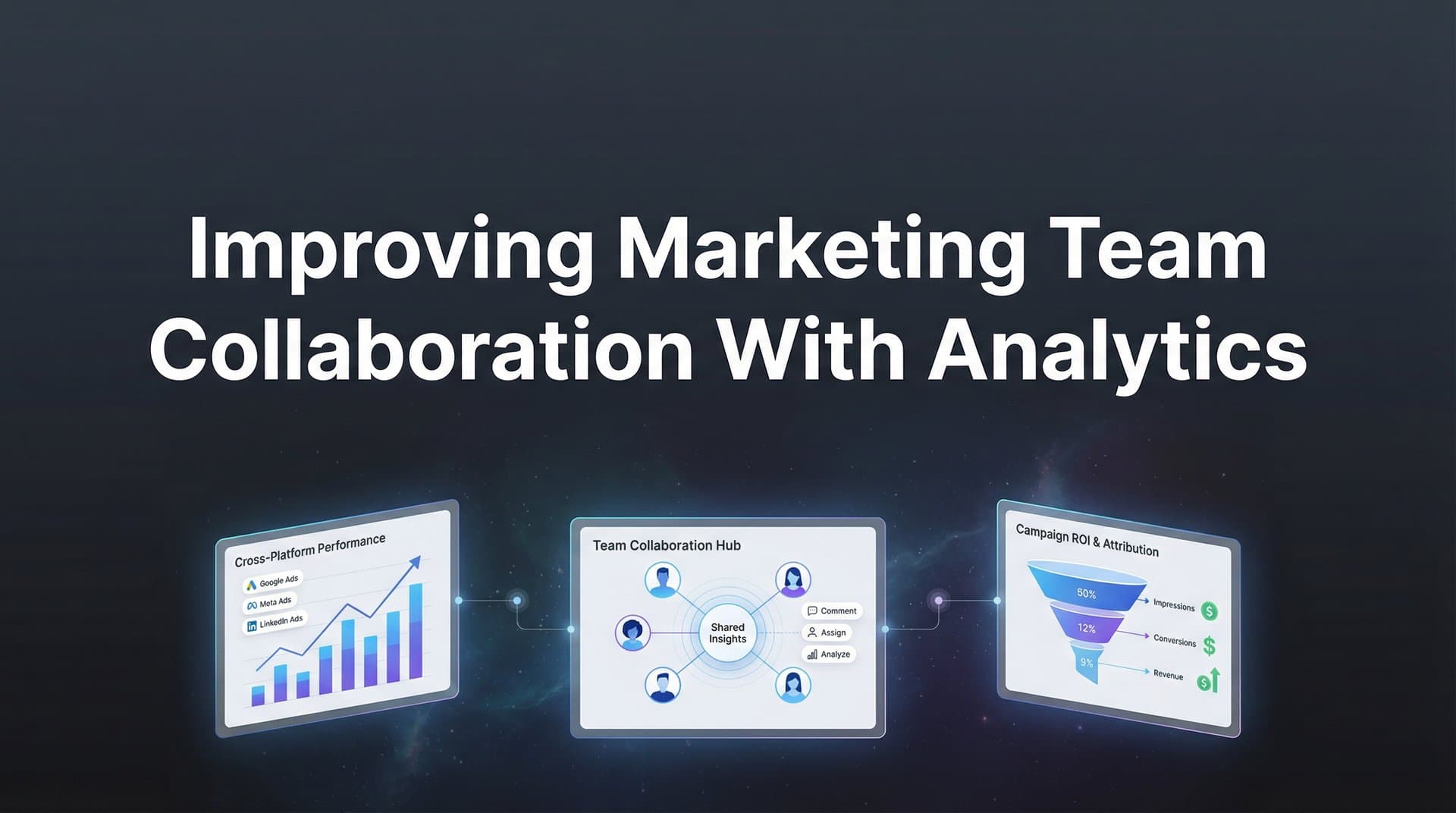
Start with a primary dashboard that shows cross-channel performance and attribution across the full funnel. This becomes your team's single source of truth. Include metrics that everyone cares about: total qualified leads, cost per acquisition by source, revenue attribution by channel, and conversion rates at each funnel stage. Reviewing top marketing analytics dashboard companies can help you identify the right platform for your needs.
Use multi-touch attribution views to show how channels work together. A good collaborative dashboard might show that organic search generates 40% of first touches, paid social contributes 35% of mid-funnel touches, and paid search captures 45% of final conversions. This data immediately suggests coordination opportunities: content topics that work well for awareness, retargeting strategies for mid-funnel engagement, and conversion-focused campaigns for bottom-funnel prospects.
Design specifically for your weekly team meetings. What decisions need to be made? What data supports those decisions? If you're planning next month's campaigns, your dashboard should show which channels and messages performed best with which segments. If you're optimizing budget allocation, you need clear ROI data across channels with attribution context.
Keep it simple. A dashboard cluttered with dozens of metrics helps nobody. Focus on the 8-10 metrics that actually drive decisions. Everything else is noise.
Make the dashboard interactive so team members can explore questions that come up during discussions. If someone asks about performance in a specific segment or time period, they should be able to filter the view themselves rather than waiting for a custom report. The right data visualization tools for marketing analytics make this exploration intuitive.
Success indicator: Your entire team should reference the same dashboard in planning discussions. When someone says "the data shows", everyone should know exactly which dashboard they're talking about. If different team members are still citing different numbers from different tools, you haven't achieved shared visibility yet.
Step 5: Establish a Weekly Analytics Review Rhythm
Shared data means nothing without shared conversations. The weekly analytics review is where collaboration actually happens, but only if you structure it correctly.
Schedule a focused 30-minute meeting every week at the same time. Consistency matters more than duration. This isn't a status update meeting where everyone reports what they did. It's a decision-making session focused on what the data tells you to do differently.
Use a simple three-question framework: What changed this week? Why did it change? What should we do about it? This structure keeps the conversation focused on insights and actions rather than just reporting numbers. Understanding marketing analytics and reporting best practices helps you turn data into revenue-driving decisions.
Assign rotating ownership for presenting insights and proposed actions. When your content lead presents one week and your paid media specialist presents the next, everyone develops data literacy and cross-channel perspective. The person presenting should come prepared with 2-3 specific observations and recommended actions based on the shared dashboard.
Start each meeting by reviewing action items from the previous week. Did the budget reallocation work? Did the coordinated campaign between content and paid ads improve performance? This accountability loop ensures decisions actually get implemented and measured.
Keep the focus on cross-channel insights. Individual channel updates belong in separate meetings or async updates. The weekly review should surface opportunities for coordination: "Organic traffic from this topic is converting well, should we create paid campaigns targeting similar audiences?" or "These paid ads are generating clicks but not converting, can content create resources to improve the landing experience?"
Document decisions and assign clear owners for follow-up actions. Use a shared document or project management tool so everyone knows what was decided and who's responsible for implementation. Effective marketing team collaboration tools streamline this process significantly.
The key is making these meetings valuable enough that people actually want to attend. If your weekly review becomes a boring recitation of numbers everyone already knows, attendance will drop. Focus on surprises, opportunities, and decisions that require team input.
Success indicator: Consistent meeting cadence with documented action items and measurable outcomes. You should be able to point to specific strategic changes that resulted from insights surfaced in these meetings.
Step 6: Create Feedback Loops Between Channels and Teams
The final step transforms occasional coordination into systematic collaboration. Feedback loops ensure that learnings from one channel benefit the entire team, and that everyone's experiments contribute to collective knowledge.
Set up processes for sharing what works across channels. When your paid media specialist discovers that a specific message or audience segment performs exceptionally well, that insight should immediately flow to your content team. Can they create blog posts or resources targeting that audience? Can email campaigns test similar messaging?
Use your attribution data to identify these coordination opportunities. If paid ads are generating awareness but prospects aren't converting until they engage with content, create a systematic handoff. Build retargeting campaigns that promote relevant content to ad clickers. Create email sequences that combine both approaches. Learning how to leverage analytics for marketing strategy helps you identify these patterns consistently.
Document and share test results across the team. Create a simple testing log that tracks what was tested, which channel ran it, what the results were, and what other channels could learn from it. When content discovers that how-to guides outperform thought leadership for a specific segment, paid ads can adjust their landing pages accordingly.
Schedule monthly cross-channel planning sessions where teams coordinate upcoming campaigns based on shared performance data. If content is planning a major topic cluster, paid ads can prepare supporting campaigns. If paid media is launching a new audience test, content can create resources optimized for that segment.
The attribution system becomes the foundation for these feedback loops. When you can see exactly how channels work together in successful customer journeys, you can replicate those patterns intentionally. If the data shows that prospects who engage with both organic content and paid retargeting convert at 3x the rate of those who only see one channel, you build campaigns specifically designed to create that combination.
Create lightweight templates for sharing insights. A simple Slack message or email that says "Tested X, learned Y, suggests Z for other channels" is often enough. The goal is making knowledge transfer effortless, not creating bureaucracy.
Success indicator: Regular cross-channel coordination based on shared performance data. You should see evidence of teams proactively building on each other's successes rather than operating independently. When a test in one channel automatically triggers considerations in other channels, your feedback loops are working.
Putting It All Together
Building analytics-driven collaboration isn't about buying new tools or hiring data scientists. It's about creating shared visibility and aligned incentives across your marketing team so everyone's optimizing for the same outcomes.
Start with the audit to understand your current gaps. Map every data source, identify where silos prevent collaboration, and document the specific problems they create. This foundation shows you exactly what needs to change.
Then work through defining shared KPIs that connect every team member's work to revenue outcomes. When everyone understands how their efforts contribute to business results, collaboration becomes natural rather than forced. Discovering how to use data analytics in marketing provides the framework for making these connections visible.
Centralizing attribution data creates the visibility that makes coordination possible. When your entire team can see complete customer journeys instead of isolated channel metrics, they stop fighting over credit and start working together to optimize the full experience.
Build dashboards designed for team decision-making, not individual reporting. Focus on business questions and cross-channel insights that drive strategic choices during your weekly planning sessions.
The weekly review rhythm and feedback loops turn these foundations into lasting habits. Consistent conversations about what the data shows and what to do about it keep teams aligned. Systematic sharing of learnings ensures everyone benefits from individual experiments.
Quick-start checklist: Complete your data source audit this week and identify the three biggest collaboration gaps. Schedule a team meeting to align on 5-7 shared KPIs that everyone can rally around. Identify one dashboard that could become your single source of truth and start building it with cross-channel attribution views. Set up your first weekly analytics review for next week.
When your entire team can see how their work connects to revenue and how channels work together to drive outcomes, collaboration happens naturally. The debates shift from "which channel gets credit?" to "how can we coordinate better to improve the full journey?"
That's when marketing teams stop working in silos and start working as a system. And that's when performance really accelerates.
Ready to elevate your marketing game with precision and confidence? Discover how Cometly's AI-driven recommendations can transform your ad strategy. Get your free demo today and start capturing every touchpoint to maximize your conversions.