
You're running campaigns across Meta, Google, TikTok, and multiple other platforms. Your budget is significant. Your creative is strong. But when you pull your attribution reports, something feels off. Conversions are happening—you can see them in your CRM—but they're not showing up in your ad dashboards. Or they're appearing days late. Or they're being attributed to "direct" traffic when you know they came from a paid campaign.
This isn't a technical glitch you can refresh away. It's the new reality of digital advertising after Apple fundamentally restructured how data flows between apps, websites, and ad platforms. Starting with iOS 14's App Tracking Transparency framework and continuing through subsequent updates, Apple has systematically limited the tracking mechanisms that marketers relied on for years.
The result? Attribution gaps that make it harder to know which campaigns drive revenue. Audience targeting that's less precise than it used to be. Ad platform algorithms making optimization decisions with incomplete information. For marketers managing serious ad spend, these aren't minor inconveniences—they're challenges that directly impact ROI and strategic decision-making.
This guide breaks down exactly what changed, why it matters for your campaigns, and—most importantly—how to build a measurement strategy that works despite these restrictions. You'll learn the technical mechanics behind Apple's privacy framework, understand why platform-native solutions only solve part of the problem, and discover how server-side tracking and first-party data can restore the attribution accuracy you need to scale with confidence.
How Apple's Privacy Framework Changed Digital Advertising
Apple's App Tracking Transparency framework introduced a simple but powerful requirement: apps must explicitly ask users for permission before tracking their activity across other companies' apps and websites. When you open an app on iOS, you see a prompt asking if you'll allow tracking. Most users tap "Ask App Not to Track."
This opt-in requirement fundamentally changed how the Identifier for Advertisers (IDFA) works. The IDFA is a unique device identifier that ad platforms previously used to connect user behavior across different apps and the mobile web. When someone clicked your Facebook ad, visited your website, and later made a purchase through your app, the IDFA was the thread that tied those actions together. It allowed platforms to attribute conversions to specific ads and build detailed user profiles for targeting.
With App Tracking Transparency, that connection breaks when users opt out. Ad platforms can no longer access the IDFA for users who decline tracking. They lose visibility into what happens outside their own ecosystem. If someone clicks your Instagram ad but completes the purchase on your website or through a different app, the platform may not see that conversion at all. Understanding the full iOS App Tracking Transparency impact is essential for modern marketers.
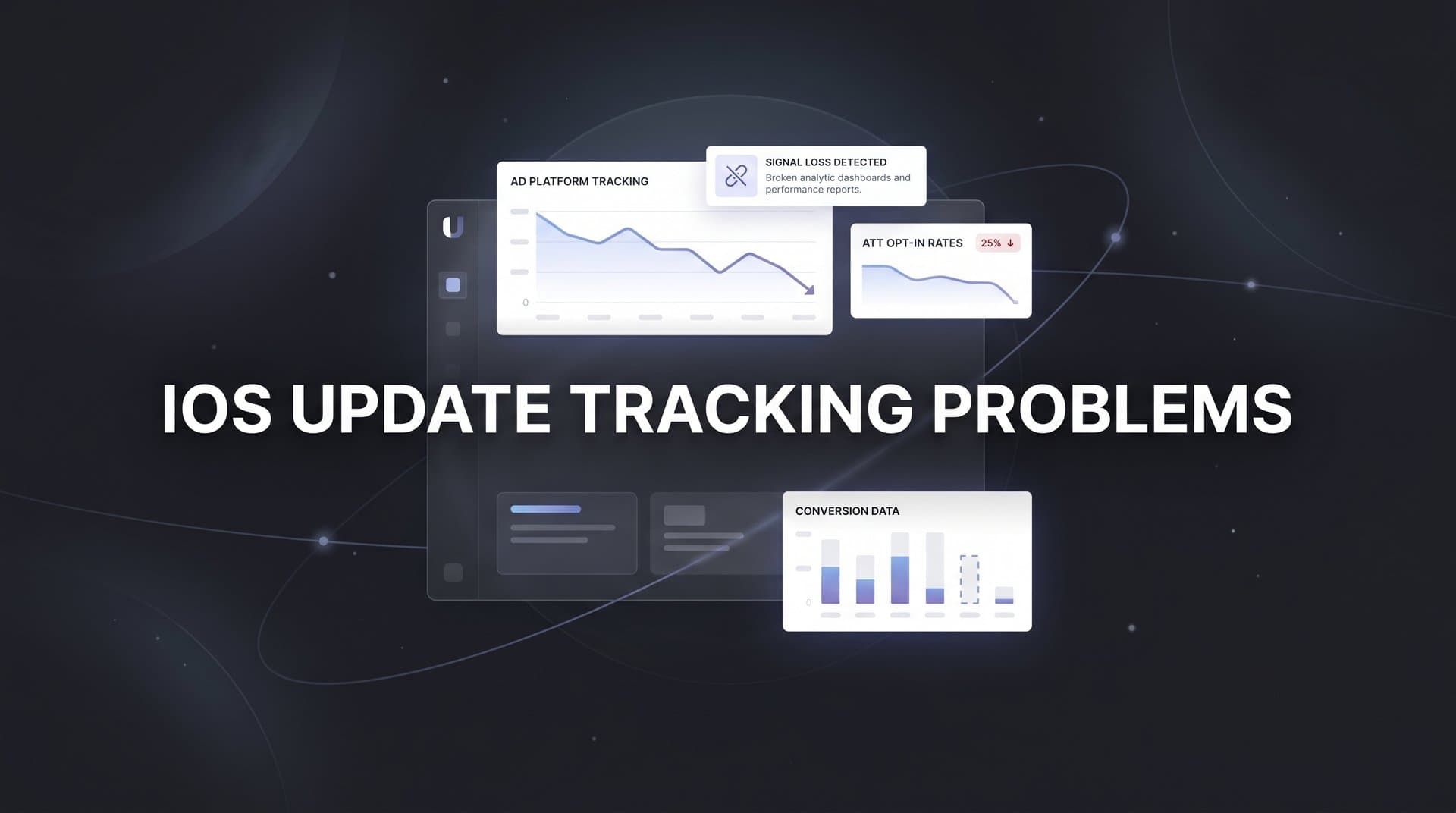
The technical impact extends beyond just losing the IDFA. Conversion data that does flow back to ad platforms arrives delayed and aggregated. Instead of real-time, user-level data showing exactly which ad drove which conversion, platforms receive batched reports with conversion counts grouped by campaign or ad set. This aggregation protects user privacy but removes the granular signals that algorithms use for optimization.
Think of it like trying to navigate with a map that only updates once per day and shows general areas instead of specific addresses. You can still get where you're going, but the journey is slower and less precise. Ad platforms can still optimize campaigns, but they're working with less information and longer feedback loops.
The data flow that marketers took for granted—user sees ad, clicks, browses website, converts, platform receives conversion signal, algorithm optimizes—now has multiple points where information can be lost or delayed. When a user opts out of tracking, the connection between ad exposure and conversion becomes invisible to the platform. The conversion still happens in the real world, but from the platform's perspective, it never occurred.
This creates a fundamental attribution problem. Your campaigns are driving results, but the data showing which specific ads or audiences are performing best is incomplete or missing entirely. You're making optimization decisions with partial information, which means you might be scaling campaigns that aren't actually your best performers or pausing ones that are driving conversions you can't see.
The Real-World Impact on Your Ad Campaigns
Attribution gaps are the most immediate and frustrating consequence. You know conversions are happening because you can see them in your CRM, your payment processor, or your analytics platform. But when you check your Meta Ads Manager or Google Ads dashboard, those conversions aren't attributed to the campaigns you're running. Instead, they show up as direct traffic, organic search, or they don't appear at all.
This isn't just an inconvenience for reporting. It directly affects how you allocate budget. If a campaign is driving conversions that aren't being tracked, it will appear to underperform. You might reduce spend on what's actually a profitable campaign. Conversely, you might increase budget on campaigns that look good in platform reporting but aren't actually driving the downstream revenue you care about. Many marketers are losing tracking data after iOS update without realizing the full extent of the problem.
Audience targeting has degraded significantly. Lookalike audiences and retargeting campaigns depend on platforms having detailed data about who converts and what actions they take before converting. When platforms can't track user behavior across apps and websites, they have less data to build these audiences. Your lookalike audiences become less precise because they're modeled on incomplete conversion data. Your retargeting pools shrink because the platform can't identify as many users who visited your site or engaged with your content.
The optimization challenges run deeper than most marketers realize. Ad platform algorithms are essentially prediction engines. They analyze which ads, audiences, and placements drive conversions, then automatically adjust bidding and delivery to maximize results. But these algorithms need fast, accurate feedback to work effectively. When conversion data is delayed by days or missing entirely, the algorithm is essentially flying blind.
Picture running a campaign where the platform's algorithm is making hundreds of micro-decisions per hour about who to show your ads to and how much to bid. Each decision should be informed by recent conversion data showing what's working. But if that conversion data is delayed by three days, the algorithm is optimizing based on outdated information. By the time it learns that yesterday's strategy worked, the market has already shifted.
This lag affects every automated feature platforms offer. Campaign Budget Optimization can't effectively distribute spend across ad sets if it doesn't know which ones are converting. Automated bidding strategies can't find the right bid level if conversion signals arrive days late. Dynamic creative can't identify which combinations perform best without real-time feedback.
The cumulative effect is that campaigns require more manual oversight and take longer to optimize. What used to stabilize and perform well within a few days now needs a week or more to gather enough data. Testing new audiences or creative becomes slower and more expensive because the feedback loop is broken.
Why Platform-Native Solutions Fall Short
Meta's response to iOS tracking restrictions came in two main forms: Aggregated Event Measurement and the Conversions API. Aggregated Event Measurement limits how many conversion events you can optimize for and introduces delays in reporting. Instead of tracking dozens of custom events with real-time data, you're limited to eight prioritized events with data that may be delayed up to three days.
The Conversions API helps by allowing you to send conversion data directly from your server to Meta, bypassing browser and app-level restrictions. This is genuinely useful and represents a step in the right direction. But it only solves part of the problem. The Conversions API improves data flow between your website and Meta, but it doesn't help you understand how Meta campaigns perform relative to your Google, TikTok, or other channel investments. It optimizes within Meta's ecosystem, not across your entire marketing mix. Understanding these iOS tracking limitations for Facebook Ads is crucial for setting realistic expectations.
Google has taken a different approach with the Privacy Sandbox and enhanced conversion tracking. These solutions use techniques like conversion modeling to estimate conversions that can't be directly measured. When Google can't track a specific user's journey from click to conversion, it uses statistical modeling to infer what likely happened based on similar users and historical patterns.
Modeling can be helpful for filling gaps, but it introduces uncertainty. You're making decisions based on estimated conversions rather than actual measured behavior. For some campaigns, the estimates are reasonably accurate. For others—especially when targeting niche audiences or running complex funnels—the models may not reflect reality. You're trusting an algorithm to guess at conversions it can't see.
The fundamental limitation with all platform-native solutions is that each platform optimizes for its own performance, not your business outcomes. Meta wants to show you that Meta ads drive conversions. Google wants to prove Google ads work. Neither platform has visibility into your full customer journey across all touchpoints. This is why many marketers experience cross-platform tracking problems that compound their attribution challenges.
Consider a typical customer path: they see your Meta ad, click through, browse your site but don't convert. Three days later, they search for your brand on Google, click your search ad, and purchase. Then they receive an email confirmation and later upgrade their purchase through a direct visit. Which channel deserves credit for that conversion? Meta for the initial awareness? Google for the final click? The email for the engagement? Your direct relationship for the upgrade?
Platform-native tools can't answer this question because each platform only sees its own touchpoint. Meta sees the initial click. Google sees the search and conversion. Your email platform sees the engagement. But none of them see the complete picture. They're all reporting on the same conversion from their own perspective, which means you're likely counting the same revenue multiple times across different platforms.
This creates a strategic blind spot. You can't accurately compare channel performance when each channel is measuring success differently. You can't make informed budget allocation decisions when you don't know which touchpoints actually drive incremental revenue versus which ones are taking credit for conversions that would have happened anyway.
Server-Side Tracking: The Foundation for Accurate Attribution
Server-side tracking fundamentally changes where and how you collect data. Instead of relying on browser cookies or mobile app SDKs that can be blocked or restricted, you capture user interactions directly on your server. When someone clicks an ad, visits your site, or completes a conversion, that data is recorded server-side before it ever reaches a third-party platform.
This approach bypasses the restrictions that Apple's privacy framework imposes. App Tracking Transparency limits what happens on the device level—what data apps can access and share. But it doesn't restrict what your own server can track about interactions with your own properties. When a user visits your website or uses your app, you have the right to collect first-party data about that session. Server-side tracking ensures you capture that data reliably, regardless of device-level privacy settings. This is a key component of effective post-iOS tracking solutions.
The key advantage is that you control the data collection. You're not depending on a third-party cookie that might be blocked or a device identifier that might be restricted. You're capturing interactions as they happen on your server, creating a complete record of each user's journey across your touchpoints. This includes the ad they clicked, the pages they viewed, the actions they took, and ultimately whether they converted.
First-party data collection through server-side tracking gives you a foundation that platform-native solutions can't provide. You're building a comprehensive view of the customer journey that includes all channels and touchpoints, not just what happens within a single platform's ecosystem. When someone interacts with your Meta ad, then your Google search ad, then your email campaign, you can see all of those interactions connected to the same user journey.
This complete visibility is what makes accurate attribution possible. You're not guessing which channel drove the conversion based on incomplete data. You're looking at the actual sequence of touchpoints that led to the purchase. You can see that the Meta ad created initial awareness, the Google search ad captured high-intent traffic, and the email provided the final nudge. Each channel played a role, and you have the data to quantify that contribution.
Server-side tracking also enables you to connect ad clicks to CRM events and revenue outcomes. When someone becomes a customer, you can tie that conversion back through their entire journey, including which ads they saw and clicked. When they make repeat purchases or upgrade their plan, you can attribute that lifetime value to the original acquisition channels. This gives you a true picture of campaign performance measured in actual revenue, not just initial conversions.
The technical implementation involves setting up tracking on your server that captures user interactions and sends that data to your attribution platform. When someone clicks an ad, your server records the click source, campaign parameters, and user identifier. As they navigate your site, your server tracks their behavior. When they convert, your server captures that conversion and connects it to the original traffic source.
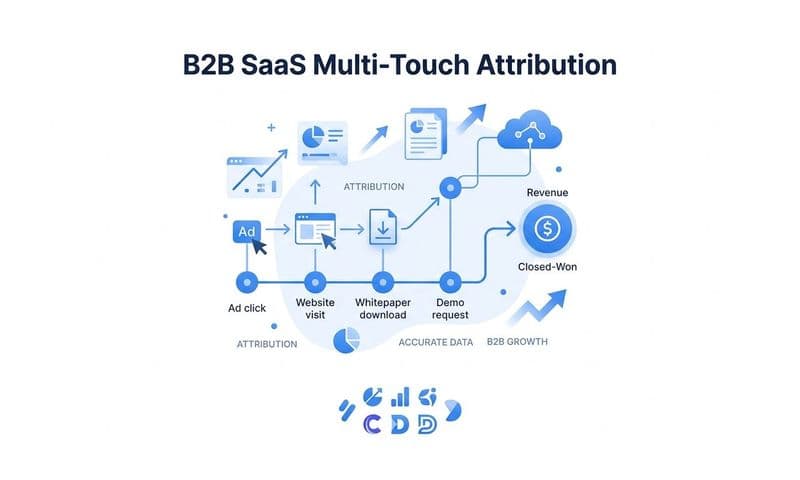
This data then flows to your attribution platform, where it's unified with data from other sources—your CRM, your payment processor, your email platform. The result is a single source of truth that shows the complete customer journey across all touchpoints. You can analyze which combination of channels drives the best results, compare different attribution models, and make optimization decisions based on comprehensive data rather than fragmented platform reports.
Building a Privacy-Resilient Measurement Strategy
Implementing proper UTM structures across all your campaigns is the first step toward reliable attribution. UTM parameters are the tags you add to your campaign URLs that identify the source, medium, campaign, and other details about where traffic originates. When someone clicks a link with UTM parameters, those tags travel with them through their journey, allowing you to track which specific campaign drove their visit.
The key is consistency. Every campaign across every platform should use a standardized UTM structure. Your Meta ads, Google campaigns, email sends, and any other traffic sources should all follow the same naming conventions. This consistency makes it possible to aggregate and compare performance across channels. Without it, you end up with fragmented data that's difficult to analyze because different campaigns are tagged differently. Learning how to fix iOS tracking issues starts with getting these fundamentals right.
First-party tracking ensures you capture these UTM parameters and connect them to user behavior. When someone arrives at your site with campaign parameters in the URL, your tracking system should record those parameters and associate them with that user's session. As they navigate your site, take actions, and eventually convert, all of that activity remains connected to the original campaign source. This creates a clear attribution trail from ad click to conversion.
Conversion sync takes your first-party data and feeds it back to ad platforms to improve their optimization. Remember that platform algorithms need conversion signals to work effectively. When iOS restrictions prevent platforms from seeing conversions, their algorithms optimize with incomplete information. Conversion sync solves this by sending conversion data from your server directly to the platforms.
This is different from basic conversion tracking. Instead of relying on the platform to track conversions through browser pixels or mobile SDKs, you're actively sending conversion events from your server to the platform's API. You're providing the platform with accurate, first-party conversion data that includes all the context needed for optimization—which campaign drove the conversion, the conversion value, when it happened, and any custom parameters that matter for your business. This approach helps you achieve accurate tracking for iOS users despite platform limitations.
The result is that ad platform algorithms receive better data and make better optimization decisions. They can accurately identify which audiences, creatives, and placements drive conversions. They can adjust bidding strategies based on real conversion signals rather than delayed or modeled data. Your campaigns perform better because the algorithms powering them have the information they need to optimize effectively.
Comparing attribution models becomes essential when you're working with complete journey data. Different attribution models assign credit to touchpoints differently. First-click attribution gives all credit to the initial touchpoint. Last-click gives it all to the final interaction before conversion. Linear attribution spreads credit evenly across all touchpoints. Time-decay gives more credit to recent interactions.
No single model is universally correct. The right model depends on your business, your sales cycle, and how customers actually make decisions. By comparing multiple attribution models using the same comprehensive dataset, you can understand how different perspectives change which channels appear most valuable. This helps you make more informed budget allocation decisions and avoid over-optimizing for a single attribution view that might not reflect reality.
The goal isn't to find the one perfect attribution model. It's to understand your customer journey well enough that you can make strategic decisions regardless of which model you use. When you have complete data showing all touchpoints, you can see patterns that transcend any single attribution approach. You can identify which channels consistently appear in converting journeys, which combinations of touchpoints work best together, and where your marketing investment drives the most incremental value.
Your Path Forward: Adapting to the New Attribution Reality
The tracking challenges created by iOS privacy updates aren't temporary obstacles that will eventually resolve. They represent a permanent shift in how digital advertising works. Apple has made clear that user privacy is a core priority, and other platforms are moving in similar directions. Marketers who treat this as a passing problem will find themselves increasingly unable to measure and optimize their campaigns effectively.
The solution is to build your measurement strategy on first-party data and server-side tracking. This approach gives you control over your attribution data regardless of what restrictions platforms implement. You're not depending on third-party cookies, device identifiers, or platform-specific tracking mechanisms that can be limited or removed. You're capturing the data you need directly, creating a reliable foundation for attribution that works despite privacy restrictions.
Server-side tracking captures the complete customer journey across all your touchpoints. Conversion sync feeds that data back to ad platforms so their algorithms can optimize effectively. Proper UTM structures and first-party tracking ensure every campaign is measured consistently. Together, these elements create a measurement system that's both privacy-compliant and accurate.
The competitive advantage goes to marketers who adapt quickly. While others struggle with incomplete attribution and make decisions based on fragmented platform data, you'll have a comprehensive view of campaign performance. You'll know which channels drive real revenue, not just which ones take credit for conversions in their own dashboards. You'll be able to optimize based on actual customer behavior rather than modeled estimates or delayed reports.
This isn't about working around privacy protections or finding loopholes in Apple's framework. It's about building a legitimate, privacy-compliant measurement approach that gives you the data you need to run effective campaigns. First-party data collection respects user privacy while still providing the insights necessary for attribution. Server-side tracking works within the rules while solving the technical challenges that iOS restrictions create.
Take Control of Your Attribution Today
iOS tracking problems have fundamentally changed digital advertising, but accurate attribution is still achievable. The marketers who thrive in this new environment are those who move beyond platform-native solutions and build comprehensive measurement systems based on first-party data and server-side tracking.
Cometly's attribution platform is built specifically to solve these challenges. It captures every touchpoint across your marketing channels, connects ad clicks to CRM conversions and revenue outcomes, and feeds enriched conversion data back to your ad platforms for better optimization. You get the complete customer journey visibility you need to make confident scaling decisions, regardless of iOS restrictions or platform limitations.
The platform's AI-driven recommendations analyze your attribution data to identify high-performing campaigns and optimization opportunities across every channel. You're not just seeing what happened—you're getting actionable insights about where to allocate budget, which audiences to scale, and which campaigns drive the best ROI measured in actual revenue.
Ready to elevate your marketing game with precision and confidence? Discover how Cometly's AI-driven recommendations can transform your ad strategy—Get your free demo today and start capturing every touchpoint to maximize your conversions.