You're running campaigns across Meta, Google, TikTok, and three other platforms. Your CRM shows 247 new leads this month. Your ad dashboards display thousands of clicks. Your website analytics track hundreds of sessions. But here's the question that keeps you up at night: which of those advertising dollars actually drove revenue?
This is the paradox modern marketers face daily. We're drowning in data while starving for the one thing that matters—clear insights that tell us what's working and what's wasting budget.
Market research analytics bridges this gap. It's the difference between guessing which campaigns deserve more budget and knowing with confidence where every dollar should go. Companies that master this connection between data and decisions consistently outperform competitors who still rely on gut instinct and surface-level metrics. The stakes are simple: in a landscape where ad costs keep rising and attribution gets harder, the marketers who can accurately track and optimize their customer journey win.
Beyond Spreadsheets: How Market Research Analytics Actually Works
Market research analytics is the systematic process of collecting, analyzing, and interpreting data about your markets, customers, and competitors to inform business decisions. But let's be clear—this isn't your traditional market research playbook.
Traditional market research meant quarterly surveys, focus groups in conference rooms, and reports that took weeks to compile. By the time you had insights, the market had already shifted. That approach still has its place, but it's fundamentally reactive.
Modern market research analytics operates in real time. It tracks behavioral signals as they happen—every ad click, every page view, every form submission, every purchase. Instead of asking people what they might do, you're observing what they actually do across every touchpoint in their journey. Understanding the real-time marketing analytics benefits helps you appreciate why this shift matters so much.
Think of it like the difference between asking someone if they'd buy a product versus watching their actual shopping behavior across multiple visits, devices, and channels before they finally convert.
The core components work together as an interconnected system. First, you need data collection infrastructure—the tracking pixels, server-side integrations, and event streams that capture customer interactions across your entire digital ecosystem. This creates the foundation.
Next comes analysis frameworks—the attribution models, segmentation logic, and statistical methods that transform raw events into meaningful patterns. This is where you move from "10,000 people clicked our ad" to "customers who engage with both our Facebook ads and email campaigns convert at 3x the rate of single-touchpoint leads."
Finally, insight activation turns analysis into action. The best analytics setup surfaces recommendations automatically: which campaigns to scale, which audiences to pause, which creative variations perform best for different customer segments.
Modern analytics also incorporates predictive modeling. Instead of just reporting what happened last month, it forecasts which leads are most likely to convert, which customers might churn, and which market segments offer the highest growth potential. Exploring data science for marketing analytics reveals how these predictive capabilities are transforming decision-making.
The shift is profound. You're not conducting research studies anymore—you're building a continuous intelligence system that gets smarter with every customer interaction.
The Four Pillars of Effective Market Research Analytics
Effective market research analytics rests on four interconnected pillars. Master these, and you'll have a complete picture of your marketing performance.
Customer Behavior Analytics: This tracks how people actually interact with your brand across every touchpoint. It captures the ad they first clicked, the blog post they read three days later, the product page they visited on mobile, and the email that finally convinced them to purchase.
Most marketers only see fragments of this journey. Your Facebook Ads Manager shows ad clicks. Google Analytics shows website sessions. Your CRM shows form submissions. Customer behavior analytics connects these dots into complete customer stories.
The insight comes from patterns. You might discover that customers who view your pricing page within their first session convert 5x faster than those who don't. Or that mobile ad clicks lead to desktop purchases 48 hours later. These behavioral signals tell you where to invest and how to optimize your funnel.
Competitive Intelligence: Understanding your own performance means nothing without market context. Competitive analytics monitors where your competitors are advertising, what messaging they're using, how they're positioning against you, and where they're gaining or losing market share.
This isn't about copying competitors—it's about identifying gaps and opportunities. If every competitor is flooding Facebook with the same value proposition, that might signal an opportunity to differentiate on a different platform or with contrasting messaging.
Share of voice matters here. If you're spending 20% of what competitors spend on paid search but capturing 35% of conversions, you've found an efficiency advantage worth doubling down on.
Campaign Performance Analytics: This is where marketing attribution analytics becomes critical. Campaign performance analytics measures which specific marketing efforts drive actual conversions and revenue—not just engagement or awareness.
The challenge is that customer journeys are rarely linear. Someone might see your Instagram ad, ignore it, then search your brand name two weeks later after seeing a LinkedIn post, finally converting after clicking a retargeting ad.
Which campaign deserves credit? Single-touch attribution models (first-click or last-click) oversimplify this reality. Multi-touch attribution distributes credit across all meaningful touchpoints, showing you the true contribution of each channel and campaign.
This pillar answers your most important questions: Which campaigns should get more budget? Which channels drive the highest-quality leads? Which creative variations actually move people toward purchase?
Predictive Analytics: This uses historical data to forecast what's coming next. Instead of just reporting that your customer acquisition cost increased last month, predictive analytics might forecast that continuing your current trajectory will make your target customers unprofitable within 90 days.
Customer lifetime value predictions help you make smarter acquisition decisions. If your analytics can identify that customers from organic search have 3x higher lifetime value than paid social customers, you can justify higher acquisition costs for search traffic.
Predictive models also identify early warning signals. A sudden drop in engagement from a previously high-value segment might predict churn before it happens, giving you time to intervene with retention campaigns.
The most sophisticated predictive analytics can forecast market trends, seasonal patterns, and demand shifts—helping you allocate budget proactively rather than reactively.
Building Your Analytics Stack: Essential Tools and Data Sources
Your analytics infrastructure determines what insights you can access. Think of it as building a nervous system for your marketing—the better your data collection and integration, the faster you can respond to what's working.
First-Party Data Sources: These are the foundational data streams you own and control. Website analytics platforms track visitor behavior, session duration, page paths, and conversion events. Your CRM captures lead information, deal stages, and customer interactions. Ad platform dashboards report spend, impressions, clicks, and platform-reported conversions.
Customer feedback—from surveys, support tickets, and reviews—adds qualitative context to quantitative metrics. When your analytics show a drop in conversion rates, customer feedback might reveal the "why" behind the numbers.
The power of first-party data has grown dramatically as third-party cookies disappear and privacy regulations tighten. The data you collect directly from customer interactions on your owned properties becomes your most reliable asset.
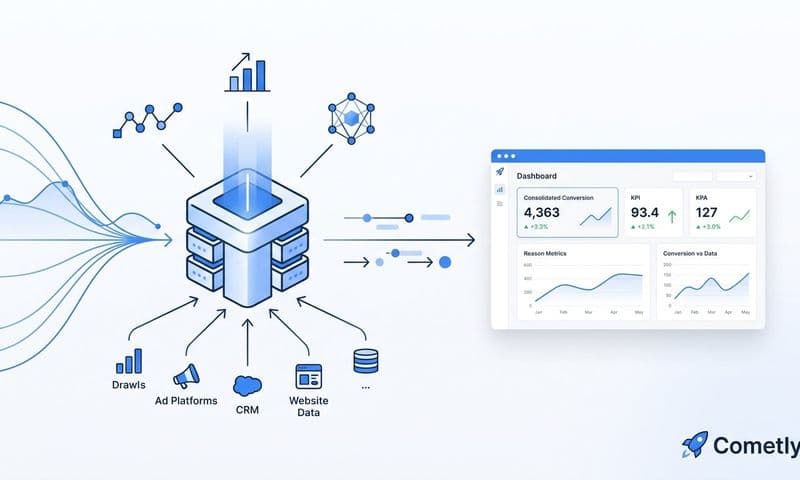
The Attribution Platform Role: Here's where most analytics stacks break down. You have data scattered across a dozen platforms, each reporting different numbers, using different attribution windows, and tracking different conversion events.
Attribution platforms solve this fragmentation by connecting all your data sources into a unified view. They track the complete customer journey across channels, devices, and touchpoints—then apply attribution models that show which marketing activities actually drive results. Understanding the difference between marketing attribution software vs traditional analytics clarifies why dedicated attribution tools matter.
This is where tools like Cometly become essential. Instead of manually exporting data from each platform and trying to reconcile conflicting reports in spreadsheets, an attribution platform automatically captures every touchpoint and connects them to revenue outcomes.
Modern attribution platforms also use server-side tracking to bypass browser-based limitations. When iOS privacy features block traditional pixels, server-side tracking ensures you're still capturing accurate conversion data.
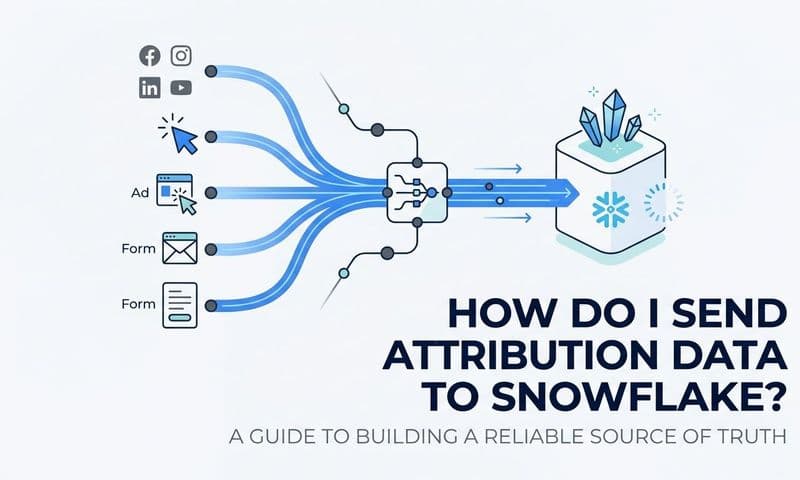
Integration Requirements: The technical reality is that your analytics stack only works if data flows seamlessly between systems. Your ad platforms need to send click and impression data. Your website needs to fire conversion events. Your CRM needs to report when leads become customers and how much revenue they generate.
APIs and webhooks make these connections possible. When someone fills out a lead form, that event should flow into your CRM, trigger a conversion event in your analytics platform, and sync back to your ad platforms to optimize their algorithms.
The goal is a single source of truth—one place where you can see complete customer journeys, accurate attribution, and reliable performance metrics across every channel. Without proper integration, you're making decisions based on incomplete or conflicting data.
From Data to Decisions: Turning Analytics Into Action
Having data means nothing if it doesn't change what you do. The real value of market research analytics comes from turning insights into action.
Metrics That Actually Matter: Most marketing dashboards are cluttered with vanity metrics—numbers that look impressive but don't connect to business outcomes. Impressions, reach, and engagement rates feel good to report, but they don't pay the bills.
Focus on metrics tied directly to revenue. Customer acquisition cost tells you what you're paying for each new customer. Customer lifetime value shows what each customer is worth. The ratio between these two determines if your marketing is profitable or burning cash.
Conversion rate by channel reveals which traffic sources bring qualified buyers versus tire-kickers. Return on ad spend shows which campaigns generate positive returns and which ones need to be paused immediately. Leveraging marketing analytics software for revenue tracking ensures you're measuring what truly matters.
The discipline is saying no to tracking everything and yes to tracking what matters. If a metric doesn't inform a decision, stop reporting it.
Actionable Dashboards: The best dashboards don't just display numbers—they surface insights and flag issues that need attention. Instead of showing you spent $50,000 on ads this month, an actionable dashboard shows that your cost per acquisition increased 40% compared to last month, with the spike concentrated in one specific campaign that needs immediate attention.
Design dashboards around decisions, not data. If you review budget allocation weekly, your dashboard should clearly show which channels are outperforming and which are underperforming against your target metrics. A well-designed multi-channel marketing analytics dashboard makes these comparisons effortless.
Visual hierarchy matters. The most critical insights should be immediately obvious—color-coding, trend indicators, and anomaly alerts help you spot problems and opportunities at a glance.
Real-Time Optimization Loops: Traditional analytics meant waiting until the end of a campaign to see what worked. Modern analytics enables continuous optimization while campaigns are running.
Establish feedback loops that automatically adjust based on performance. If your analytics show that a specific audience segment converts at twice your target rate, your system should automatically increase budget allocation to that segment without waiting for your weekly review.
This is where AI-powered recommendations become valuable. Instead of manually analyzing data to identify optimization opportunities, AI can surface insights like "increasing budget on Campaign A by 30% while decreasing Campaign B by 20% would improve overall ROAS by 15%." Discover how AI marketing analytics drives results through automated optimization.
The shift from post-mortem analysis to real-time optimization can dramatically improve campaign performance. You're not just learning what worked—you're actively improving results while campaigns run.
Common Analytics Pitfalls and How to Avoid Them
Even sophisticated marketers fall into predictable analytics traps. Recognizing these pitfalls helps you avoid wasting time and budget on misleading data.
Data Silos: This happens when your marketing team, sales team, and product team all work from different data sets. Marketing reports 500 leads generated. Sales says they only received 350 qualified leads. Product data shows 200 trial signups. Nobody agrees on what's actually happening.
Data silos create conflicting narratives and prevent you from seeing the complete customer journey. The solution is establishing a single source of truth that all teams reference. When everyone works from the same data, you can have productive conversations about what to optimize instead of arguing about whose numbers are correct.
Attribution Blind Spots: The challenge of tracking cross-device and cross-channel journeys has intensified dramatically. iOS privacy changes block traditional tracking pixels. Third-party cookies are disappearing. Customers switch between devices constantly—they see your ad on mobile but convert on desktop days later.
These blind spots cause severe misattribution. Last-click attribution might credit a retargeting ad for a conversion, completely ignoring the Facebook campaign that introduced the customer to your brand two weeks earlier. Understanding common attribution challenges in marketing analytics helps you implement solutions proactively.
Server-side tracking helps bypass browser-based limitations. First-party data strategies reduce reliance on third-party cookies. Multi-touch attribution models distribute credit more fairly across the actual customer journey instead of oversimplifying to a single touchpoint.
Analysis Paralysis: There's always more data you could collect, more segments you could analyze, more tests you could run. But at some point, you have enough information to make a confident decision.
Analysis paralysis happens when teams keep analyzing instead of acting. They want perfect certainty before making changes, so they keep gathering data while competitors move faster.
The solution is establishing decision thresholds upfront. Define how much data you need to reach statistical significance, what confidence level you require, and what timeline you're working within. When you hit those thresholds, make the decision and move forward.
Remember that doing nothing is also a decision—and usually the worst one. Making a good decision quickly beats making a perfect decision slowly.
Putting Analytics to Work: A Practical Framework
Theory means nothing without execution. Here's a practical framework for implementing market research analytics that actually drives results.
Start With Business Questions: Don't start by collecting data and hoping to find insights. Start with the specific business questions you need analytics to answer. Which marketing channels have the best ROI? Which customer segments have the highest lifetime value? What's causing our conversion rate to decline?
Business questions define what data you need to collect and how you need to analyze it. This prevents the common trap of collecting massive amounts of data that never gets used because it doesn't answer questions that matter.
Frame questions in terms of decisions. "Should we increase budget on Google Ads or Facebook?" is a question that drives action. "How many impressions did our display ads get?" is just trivia.
Establish Baseline Metrics: Before launching new campaigns or making significant changes, document your current performance. What's your current customer acquisition cost? What's your conversion rate by channel? What's your average order value?
Baselines give you a reference point to measure improvement. Without them, you can't tell if changes actually made things better or if natural fluctuations explain the difference.
Track baselines over time to account for seasonality. Your conversion rates in December might naturally differ from July—understanding these patterns prevents you from overreacting to normal variations.
Build Iterative Testing Processes: The most effective analytics approaches treat marketing as continuous experimentation. You form hypotheses, test them, measure results, and iterate based on what you learn.
This might mean testing different audience segments to see which converts best. Or testing various landing page designs to optimize conversion rates. Or testing different attribution windows to understand your actual customer journey length. Learning how to leverage analytics for marketing strategy ensures your testing efforts align with broader business goals.
Document what you test and what you learn. Failed tests are valuable—they tell you what doesn't work, preventing you from wasting budget on similar approaches later. Successful tests become the foundation for scaling what works.
The framework creates a virtuous cycle: analytics reveals opportunities, you test improvements, results inform your next iteration. Over time, this compounds into significant performance gains.
The Competitive Edge of Connected Data
Market research analytics isn't about collecting more data—it's about connecting the right data to drive confident marketing decisions. The competitive advantage belongs to marketers who can see clearly which channels and campaigns actually generate revenue, not just clicks and impressions.
This clarity becomes increasingly valuable as marketing gets more complex. You're managing campaigns across more platforms, reaching customers across more devices, and navigating privacy changes that make tracking harder. The marketers who master attribution and analytics can move faster and optimize smarter than competitors flying blind.
The good news? AI and automation are making sophisticated analytics accessible to marketing teams of all sizes. You don't need a data science team to benefit from predictive modeling, anomaly detection, and automated optimization recommendations. Modern attribution platforms handle the technical complexity, surfacing insights you can act on immediately.
What matters most is having complete visibility into your customer journey—from first ad impression through final purchase and beyond. When you can track every touchpoint, attribute revenue accurately, and optimize based on real performance data, you stop guessing and start scaling what works.
Ready to elevate your marketing game with precision and confidence? Discover how Cometly's AI-driven recommendations can transform your ad strategy—Get your free demo today and start capturing every touchpoint to maximize your conversions.