You've run the campaigns, analyzed the dashboards, and made budget decisions based on gut feeling mixed with whatever data you could piece together. But when your CMO asks "How do you know that's working?" or a stakeholder questions your channel mix, you need more than intuition—you need proven analytical skills backed by industry recognition.
Marketing analytics skills have become essential for digital marketers who want to make data-driven decisions and prove campaign ROI. A marketing analytics certification validates your ability to collect, analyze, and act on marketing data—skills that employers increasingly demand.
Whether you're looking to advance your career, transition into a more data-focused role, or simply become more effective at optimizing ad spend, earning a certification provides structured learning and industry recognition.
This guide walks you through the entire certification journey, from choosing the right program to applying your new skills in real-world campaigns. By the end, you'll have a clear roadmap to earning your certification and using it to drive measurable marketing results.
Step 1: Assess Your Current Skill Level and Career Goals
Before diving into any certification program, you need an honest assessment of where you stand today. Think about your last campaign report—did you confidently explain which channels drove conversions, or did you stick to surface metrics like clicks and impressions?
Start by evaluating your existing knowledge across key areas. Can you explain the difference between first-click and last-click attribution? Do you understand how to set up conversion tracking across multiple platforms? Can you interpret data to make budget allocation decisions?
Write down specific examples of analytics work you've done. If you've built dashboards, analyzed customer journeys, or optimized campaigns based on performance data, you're already ahead. If these tasks feel unfamiliar or overwhelming, you'll need foundational training before tackling certification.
Now define what you want to achieve. Are you aiming for a promotion that requires proven analytics skills? Looking to increase your salary by demonstrating measurable expertise? Or do you simply want to stop second-guessing your campaign decisions?
Be specific about your goals. "Get better at analytics" is vague. "Earn certification to qualify for Senior Marketing Manager roles requiring data analysis skills" gives you a clear target.
Next, identify the gaps between your current abilities and certification requirements. Review sample exam questions or curriculum outlines from programs you're considering. Which topics feel comfortable? Which ones make you realize you need more study time?
Consider whether you need foundational training first. If terms like "attribution window" or "conversion path" are unfamiliar, you might benefit from introductory courses before pursuing certification. Many free resources can build your baseline knowledge without formal enrollment.
This assessment isn't about feeling discouraged—it's about creating a realistic plan. Understanding your starting point helps you choose the right certification program and estimate how much preparation time you'll need.
Step 2: Research and Choose the Right Certification Program
Not all marketing analytics certifications carry the same weight or cover the same material. Your choice should align with your career goals, budget, and the specific skills employers in your target market value most.
The Google Analytics Individual Qualification remains one of the most recognized free certifications. It focuses heavily on GA4, teaching you how to track user behavior, set up conversion events, and interpret standard reports. The curriculum emphasizes web analytics and user journey analysis, making it ideal if you work primarily with website data.
HubSpot offers a free Marketing Analytics Certification that takes an inbound marketing perspective. It covers attribution, campaign analysis, and reporting within the HubSpot ecosystem. This certification works well if you're in B2B marketing or work with companies using HubSpot's platform.
Meta Blueprint certifications are paid programs focused on advertising analytics across Facebook and Instagram. They teach you how to measure ad performance, optimize campaigns, and understand the Meta attribution model. Choose this if social advertising is central to your role.
University programs from institutions like Cornell and MIT offer comprehensive certifications that combine marketing strategy with advanced analytics. These programs cost significantly more but provide deeper theoretical foundations and carry academic credibility. They're worth considering if you're making a major career transition or need credentials that stand out in competitive markets.
When evaluating programs, consider these factors beyond just the name recognition. Look at the time commitment—some certifications require 20 hours of study while others demand 100+ hours. Check whether the program is self-paced or follows a fixed schedule.
Examine the curriculum depth. Does it cover just basic reporting, or does it include advanced topics like multi-touch attribution, statistical analysis, and cross-platform measurement? Programs that teach you to think critically about data—not just run reports—deliver more long-term value.
Research industry recognition in your specific market. A Google Analytics certification might be standard in some industries while a specialized program carries more weight in others. Check job postings for roles you want—which certifications do they mention?
Consider the practical application. Programs that require you to work with real data and build actual reports teach more than those focused purely on theory. Look for certifications that include hands-on projects or case studies.
Budget matters, but don't let cost be your only deciding factor. A free certification that doesn't teach what you need wastes time. A paid program that opens career doors or increases your earning potential pays for itself quickly.
Check prerequisites carefully. Some programs assume you already understand basic marketing concepts or have experience with specific tools. Starting a program you're not prepared for leads to frustration and wasted effort.
Step 3: Build Your Foundation with Hands-On Practice
Reading about marketing analytics and actually doing it are completely different experiences. Before you sit for any certification exam, you need hands-on practice with real tools and real data.
Start by setting up practice environments using free tools. Create a Google Analytics 4 property for a personal website or blog. If you don't have one, set up a simple site using free platforms just to generate data you can analyze. The goal isn't building a business—it's creating a sandbox where you can experiment without consequences.
Connect demo accounts from major ad platforms. Most platforms offer test accounts or demo data you can explore. Facebook Ads Manager, Google Ads, and LinkedIn Campaign Manager all provide ways to see real campaign structures and reporting interfaces without spending money.
Work with actual campaign data whenever possible. If you're currently running campaigns at work, use that data for practice. If not, ask colleagues if you can analyze their campaigns, or find publicly shared case studies with real numbers you can work through.
Focus on understanding attribution models through hands-on comparison. Set up the same conversion event using different attribution windows and models. Watch how the numbers change. This practical exercise teaches you more about attribution than any textbook explanation.
Practice connecting data sources the way you'll need to in real campaigns. Link your website to Google Analytics. Connect ad platforms to see how traffic flows from ads to conversions. Set up UTM parameters and track them through to conversion events.
The technical setup matters because certification exams often include scenario-based questions. You'll need to troubleshoot tracking issues, interpret data discrepancies, and recommend solutions. You can't do that without having worked through these challenges yourself.
Document your learning as you go. When you discover why conversion numbers differ between platforms, write down the explanation. When you figure out how to set up a specific type of tracking, save your process. These notes become invaluable exam prep materials.
Create reference materials that work for you. Some people build spreadsheets with formulas and calculations. Others create visual diagrams of how data flows between systems. Build whatever helps you understand and remember the concepts.
Don't skip this hands-on phase to rush into studying. Marketers who pass certification exams but can't apply the knowledge in real campaigns waste their time and their employer's trust. The practical experience makes everything else click into place.
Step 4: Create a Study Plan and Master Core Concepts
Certification exams cover a lot of ground, and trying to cram everything the week before test day rarely works. You need a structured study plan that breaks the material into manageable chunks and ensures you master core concepts before moving to advanced topics.
Start by reviewing the official certification curriculum. Most programs provide detailed outlines showing exactly what topics the exam covers and how heavily each area is weighted. Use this as your roadmap.
Break down the curriculum into weekly study blocks. If you're preparing over two months, you might dedicate Week 1 to conversion tracking fundamentals, Week 2 to attribution models, Week 3 to data interpretation, and so on. Adjust the timeline based on your schedule and the program's scope.
Focus extra time on high-weight topics. Certification exams aren't evenly distributed across all subjects. If attribution modeling represents 30% of exam questions while data visualization is only 10%, allocate your study time accordingly.
Master these core concepts that appear across virtually all marketing analytics certifications. Attribution modeling is fundamental—understand first-click, last-click, linear, time-decay, and position-based models. Know when each model makes sense and how they affect campaign evaluation.
Conversion tracking requires deep understanding. Learn how to set up tracking pixels, configure conversion events, troubleshoot tracking issues, and verify data accuracy. Exams often include scenario questions where you diagnose why conversions aren't recording properly.
Data interpretation separates good analysts from great ones. Practice looking at campaign data and drawing actionable conclusions. What does a high click-through rate but low conversion rate tell you? Understanding how data analytics can improve marketing strategy helps you answer these questions confidently.
Use official study materials as your primary resource. Certification programs provide recommended reading, video courses, and practice modules. These materials are designed specifically for the exam, so they cover exactly what you need to know.
Supplement with additional resources when you need deeper explanation. If the official materials explain attribution models but you still don't fully grasp them, find alternative explanations through industry blogs, YouTube tutorials, or marketing analytics books.
Join study groups or online communities focused on your certification. Other candidates often share study tips, practice questions, and explanations that clarify confusing topics. The accountability of a study group also keeps you on track.
Schedule regular review sessions. Don't just move linearly through material—circle back to earlier topics to reinforce your memory. Spaced repetition helps concepts stick better than cramming.
Step 5: Take Practice Exams and Identify Weak Areas
You've studied the material and feel reasonably confident. Now it's time to test that confidence with practice exams that reveal exactly where you stand.
Complete official practice tests under realistic conditions. Set a timer matching the actual exam duration. Eliminate distractions. Don't look up answers or reference materials. Treat each practice exam like the real thing.
Most certification programs provide official practice tests that mirror the actual exam format and difficulty. Take these seriously—they're your best predictor of exam readiness.
After completing each practice exam, analyze your results thoroughly. Don't just glance at your score and move on. Review every incorrect answer to understand why you got it wrong.
Categorize your mistakes. Did you misunderstand the question? Lack knowledge about that specific topic? Make a careless error? Each type of mistake requires a different fix.
Identify patterns in your weak areas. If you consistently miss questions about attribution windows or struggle with data interpretation scenarios, you've found your focus areas for additional study.
Create targeted study sessions around these weak spots. If attribution modeling trips you up, spend a dedicated session working through attribution examples and case studies. If you struggle with technical setup questions, go back to hands-on practice.
Take multiple practice exams over several weeks. Your first practice test establishes a baseline. Subsequent tests show whether your additional study is working. You should see steady score improvement as you address weak areas.
Aim for consistent scores above the passing threshold before scheduling your actual exam. If the passing score is 80% and you're scoring 82-85% on practice tests, you're cutting it close. Target 90%+ on practice exams to give yourself a comfortable margin.
Pay attention to question types that challenge you. Some exams include scenario-based questions requiring you to analyze a situation and recommend solutions. Others focus on definition recall or process sequences. Practice the question formats that appear on your specific certification.
Don't schedule your exam until practice tests consistently show you're ready. The pressure to meet an arbitrary deadline often leads to taking the exam before you're prepared, which means paying retake fees and dealing with the frustration of failure.
Step 6: Schedule and Pass Your Certification Exam
You're consistently scoring well on practice exams and feel confident in your knowledge. Now it's time to schedule the real thing and execute your test-taking strategy.
Choose your exam timing strategically. Consider your energy levels throughout the day—if you're sharpest in the morning, schedule an early exam. Avoid times when you're typically tired or distracted.
Give yourself a buffer between scheduling and exam day. Don't book the exam for tomorrow. Allow at least a few days for final review and mental preparation. But don't schedule too far out either—momentum matters.
Prepare your testing environment in advance. If you're taking an online proctored exam, test your internet connection, webcam, and microphone ahead of time. Ensure you have a quiet, well-lit space free from interruptions.
Gather required materials the night before. Most exams require government-issued ID. Some allow scratch paper and calculators while others provide digital tools. Know exactly what's permitted and have everything ready.
Get proper rest the night before your exam. Pulling an all-night study session rarely helps and usually hurts your performance. Your brain needs to be sharp, not exhausted.
During the exam, read each question carefully before looking at answer options. Many test-takers rush through questions and miss key details. Understanding what's actually being asked prevents careless mistakes.
Manage your time strategically. If the exam has 100 questions and 120 minutes, you have just over a minute per question. Don't spend five minutes agonizing over one difficult question while rushing through easier ones.
Flag difficult questions and move on. Most exam platforms let you mark questions for review. If you're stuck, flag it and continue. Answer all the questions you know confidently first, then return to challenging ones with remaining time.
Trust your preparation. Second-guessing yourself and changing answers usually leads to switching from correct to incorrect responses. Your first instinct, backed by solid study, is usually right.
Know the retake policy before test day. Most certifications allow retakes, but policies vary on waiting periods and fees. Understanding this reduces test-day anxiety—you know you have options if needed.
Step 7: Apply Your Certification Skills to Real Campaigns
Passing the exam is an achievement, but the real value comes from applying what you've learned to improve actual campaign performance. The most successful certified marketers don't frame their certification and move on—they immediately put their knowledge to work.
Start by implementing proper tracking across all your marketing channels. Use your new understanding of conversion tracking to audit existing setup. Are all conversion events firing correctly? Is attribution data flowing properly from ads to analytics?
Fix tracking gaps you identify. Many campaigns run with incomplete or inaccurate tracking, which means decisions get made on flawed data. Your certification taught you how to identify and resolve these issues—now do it.
Use analytics tools alongside attribution platforms to build a complete view of customer journeys. Google Analytics shows you website behavior, but you need marketing attribution analytics to understand how multiple touchpoints work together to drive conversions.
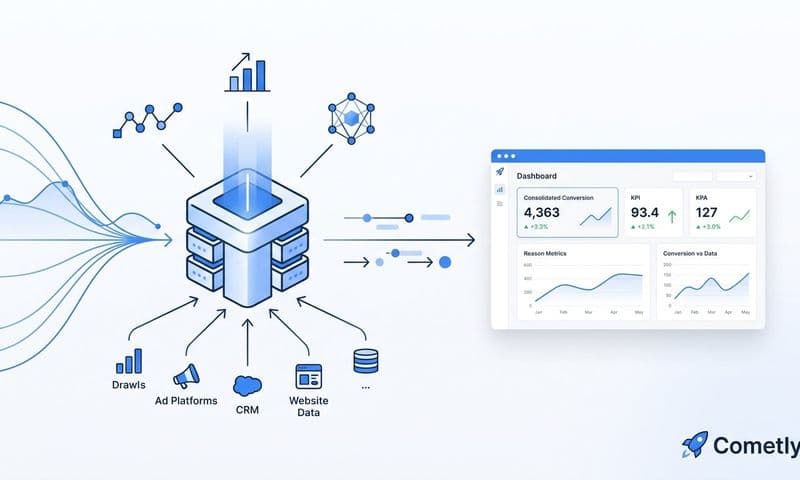
Tools that connect ad platforms, CRM systems, and website data provide the enriched view you learned about in certification coursework. When you can see the full customer journey—from first ad click through multiple touchpoints to final conversion—you make smarter optimization decisions.
Build dashboards and reports that demonstrate ROI to stakeholders. Your certification taught you which metrics matter and how to present data clearly. Understanding marketing analytics and reporting helps you create outputs that show not just what happened, but why it happened and what to do next.
Move beyond vanity metrics. Clicks and impressions don't prove value. Use your analytical skills to connect marketing activity to revenue, customer acquisition cost, and lifetime value. This is what executives care about.
Apply different attribution models to understand which channels deserve credit. Don't rely solely on last-click attribution that ignores the customer journey. Compare models and use insights to adjust budget allocation.
Continue learning as platforms evolve. Marketing analytics isn't static—new capabilities emerge, privacy regulations change, and measurement approaches improve. Staying current with the future of marketing analytics requires ongoing education beyond your initial certification.
Share your knowledge with team members. Help colleagues understand attribution concepts and improve their analytical skills. The more your team operates from accurate data and sound analysis, the better your collective results.
Your Next Steps to Certification Success
Earning your marketing analytics certification is an investment that pays dividends throughout your career. You've now got a clear path: assess your starting point, choose the right program, build hands-on skills, study strategically, and apply what you learn to real campaigns.
The most successful certified marketers don't stop at passing the exam—they continuously apply their knowledge to improve campaign performance and prove marketing ROI. They use their analytical skills to question assumptions, test hypotheses, and make data-driven decisions that move business metrics.
As you put your certification to work, tools that provide accurate attribution data become essential for validating what you've learned. When you can track every touchpoint from initial awareness through conversion, you gain the complete picture needed to optimize effectively.
Start with Step 1 today. Take an honest look at your current skills and define what you want to achieve. Whether you're pursuing Google Analytics certification, a university program, or specialized platform credentials, the journey begins with clear goals and committed action.
Your certification will open doors, but your ability to apply those skills in real-world scenarios determines your long-term success. The combination of proven expertise and practical application makes you invaluable to any marketing team.
Ready to elevate your marketing game with precision and confidence? Discover how Cometly's AI-driven recommendations can transform your ad strategy—Get your free demo today and start capturing every touchpoint to maximize your conversions.