

Picture this: A customer sees your Instagram ad for running shoes while scrolling during lunch. Later that day, they visit your website from their laptop to check reviews. The next morning, they receive your abandoned cart email. On Saturday, they stop by your physical store to try on the shoes but don't buy. Finally, two days later, they Google your brand name and complete the purchase online. Which marketing channel gets credit for that sale?
If you're using last-click attribution, Google Search wins everything. The Instagram ad that started the journey? Zero credit. The email that brought them back? Ignored. The store visit that built confidence? Invisible in your analytics.
This is the reality of modern retail. Today's customers interact with brands across six or more touchpoints before making a purchase, weaving between digital ads, social media, email, physical stores, mobile apps, and online marketplaces. Without proper attribution, you're essentially flying blind, unable to determine which channels actually drive revenue versus which simply assist along the way.
The stakes are high. Misattribute your conversions, and you'll starve the channels that build awareness while over-investing in bottom-funnel tactics that only capture demand you've already created elsewhere. You'll miss opportunities to scale what's working and waste budget on what isn't.
This guide will demystify omnichannel attribution for retail marketers. We'll explore why traditional tracking fails in multi-channel environments, examine the attribution models that actually work for retail, show you how to connect online and offline touchpoints, and provide a framework for turning attribution data into smarter budget decisions. Let's dive in.
Why Traditional Tracking Fails Modern Retail
Traditional analytics were built for a simpler time when customers stayed on one device and conversions happened in a single session. That world no longer exists.
The modern retail customer journey is fragmented across channels that don't naturally talk to each other. A customer might discover your brand through a Facebook ad on their phone, research products on your website from their work computer, receive promotional emails, visit your physical store to see products in person, browse your mobile app while commuting, and finally convert through a Google search on their tablet. Each of these touchpoints lives in a different data silo.
Your Facebook Ads Manager sees the initial click. Google Analytics tracks website sessions but can't connect them to the same person across devices. Your email platform knows about opens and clicks but has no visibility into what happens afterward. Your point-of-sale system records in-store visits as completely separate events. Without a unified view, you're looking at disconnected fragments of the customer journey, not the complete story.
Last-click attribution makes this problem worse by dramatically overvaluing bottom-funnel channels. When you give 100% of the credit to the final touchpoint before conversion, you're essentially saying that everything else in the customer journey was worthless. This creates a dangerous feedback loop where you keep investing in channels that capture existing demand while neglecting the awareness and consideration touchpoints that actually created that demand in the first place. Retailers managing marketing attribution for multiple ad platforms face this challenge constantly.
Think about it: If someone searches for your brand name and converts, should Google Search really get all the credit? Or should some credit go to the Instagram ad that introduced them to your brand, the email that reminded them you exist, and the store visit that let them experience your products firsthand?
Privacy changes have made cross-device and cross-platform tracking exponentially harder. iOS 14.5's App Tracking Transparency framework means that most iPhone users now opt out of tracking, creating blind spots in your customer journey data. Cookie deprecation means browser-based tracking is becoming less reliable. Third-party data sources that marketers relied on for years are disappearing.
Without server-side tracking solutions, you're missing significant portions of the conversion path. Browser-based pixels can't track users who switch devices, clear cookies, or use privacy-focused browsers. They can't connect online browsing to offline purchases. They struggle with iOS users who've disabled tracking.
The result? Incomplete data leading to incomplete insights leading to suboptimal decisions about where to invest your marketing budget.
Attribution Models That Work for Retail
Not all attribution models are created equal, and the right choice depends on your specific retail scenario. Let's break down the models that actually make sense for omnichannel retail environments.
Multi-Touch Attribution: The Foundation
Multi-touch attribution distributes credit across all touchpoints in the customer journey rather than giving everything to a single interaction. This approach acknowledges that conversions rarely happen because of one magic moment, they happen because of a series of interactions that build awareness, consideration, and confidence. Our multi-touch marketing attribution platform complete guide covers this methodology in depth.
Linear attribution gives equal credit to every touchpoint. If a customer had five interactions before converting, each gets 20% of the credit. This model works well when you want a simple, unbiased view of channel contribution and when your customer journey tends to be relatively short and straightforward.
Time-decay attribution assigns more credit to touchpoints closer to the conversion. The logic is that recent interactions have more influence on the purchase decision than earlier ones. This model makes sense for retail businesses with longer consideration cycles where the final touchpoints genuinely do carry more weight in the decision process.
Position-based attribution, sometimes called U-shaped attribution, gives more credit to the first and last touchpoints while distributing the remainder across middle interactions. Typically, you might allocate 40% to the first touch, 40% to the last touch, and split the remaining 20% among everything in between. This model works well when you value both customer acquisition and conversion equally.
Data-Driven Attribution: The Advanced Approach
Data-driven attribution uses machine learning to analyze your actual conversion patterns and assign credit based on statistical impact rather than predetermined rules. The algorithm looks at customers who converted versus those who didn't, identifies which touchpoints correlate with higher conversion rates, and allocates credit accordingly.
This approach is powerful because it's customized to your specific business. If your data shows that customers who visit your physical store are 3x more likely to convert online later, the model will assign appropriate credit to store visits. If email proves to be a weak influencer in your customer journeys, it receives less credit.
The challenge with data-driven attribution is that it requires substantial conversion volume to work effectively. You need enough data for the machine learning algorithms to identify meaningful patterns. Many platforms recommend at least 400 conversions per month as a minimum threshold.
Choosing Your Model
The right attribution model depends on three key factors. First, consider your sales cycle length. Shorter cycles with fewer touchpoints can work well with simpler models like linear attribution. Longer, more complex journeys benefit from data-driven approaches that can handle nuance.
Second, think about your channel mix. If you're heavily invested in awareness channels like display advertising and social media, you'll want a model that gives credit to upper-funnel touchpoints. If you focus primarily on bottom-funnel tactics, time-decay might make more sense.
Third, clarify your strategic priorities. Are you focused on acquiring new customers or maximizing lifetime value from existing ones? New customer acquisition benefits from models that credit first-touch interactions, while retention-focused strategies might emphasize recent touchpoints.
Many sophisticated retailers don't choose just one model. They compare multiple attribution views side-by-side to understand how different perspectives change the story their data tells.
Connecting Online and Offline Touchpoints
The biggest challenge in omnichannel attribution is bridging the gap between digital interactions and physical world events. Here's how leading retailers are solving this problem.
Unified Customer Identity Through CRM Integration
The foundation of omnichannel attribution is connecting anonymous website visitors to known customers who convert in-store, over the phone, or through other offline channels. This requires robust customer identity resolution.
When someone fills out a form on your website, subscribes to your email list, or creates an account, you capture identifying information. Your attribution platform should connect this known identity to their previous anonymous browsing sessions, ad clicks, and digital touchpoints. Later, when that same person makes an in-store purchase using their loyalty card or provides their email address at checkout, you can tie the offline conversion back to their complete digital journey.
CRM integration makes this possible by creating a single customer record that spans all channels. Every touchpoint, whether digital or physical, gets associated with the same customer profile. This unified view lets you see that the person who clicked your Facebook ad last week is the same person who just bought $200 worth of products in your store today. Businesses with multiple locations especially benefit from understanding marketing attribution for multi-location businesses.
Server-Side Tracking Captures What Browsers Miss
Server-side tracking processes conversion events on your server rather than relying solely on browser-based pixels and cookies. This approach captures data that browser-based tracking misses, including cross-device journeys, iOS users who've disabled tracking, and customers who clear cookies or use privacy-focused browsers.
When a conversion happens, your server sends the event data directly to your attribution platform and ad networks. This server-to-server communication isn't subject to the same privacy restrictions and technical limitations that affect browser-based tracking. You get more complete data about who converted and how they got there.
Server-side tracking is particularly valuable for connecting online marketing to offline conversions. When someone makes an in-store purchase, your point-of-sale system can trigger a server-side conversion event that includes their customer ID. Your attribution platform matches that ID to their digital journey history, and suddenly you can see exactly which ads, emails, and website visits led to that physical store purchase.
Creating Measurable Bridges Between Channels
Smart retailers use several tactics to create trackable connections between digital marketing and offline conversions. QR codes in digital ads that customers scan in-store provide a direct link between the ad impression and the store visit. You can track which ads drove the most in-store traffic and correlate that with purchase data.
Unique promo codes work similarly. When you include a specific discount code in an email campaign or social media ad, and customers use that code for in-store purchases, you've created a measurable attribution path. The code acts as a tracking mechanism that connects the digital touchpoint to the offline conversion.
Loyalty program data offers rich attribution insights. When customers use their loyalty cards or app at checkout, you can connect their purchase history to their digital engagement history. You can see which email campaigns drive the most repeat purchases, which ads attract the highest-value loyalty members, and how digital engagement correlates with in-store spending patterns.
The key is building attribution into your customer experience from the start, not trying to bolt it on afterward. Every customer interaction should include some mechanism for connecting it to the broader journey.
Building Your Attribution Technology Stack
Effective omnichannel attribution requires the right technology foundation. Here's what you need and how the pieces fit together.
The Centralized Data Platform
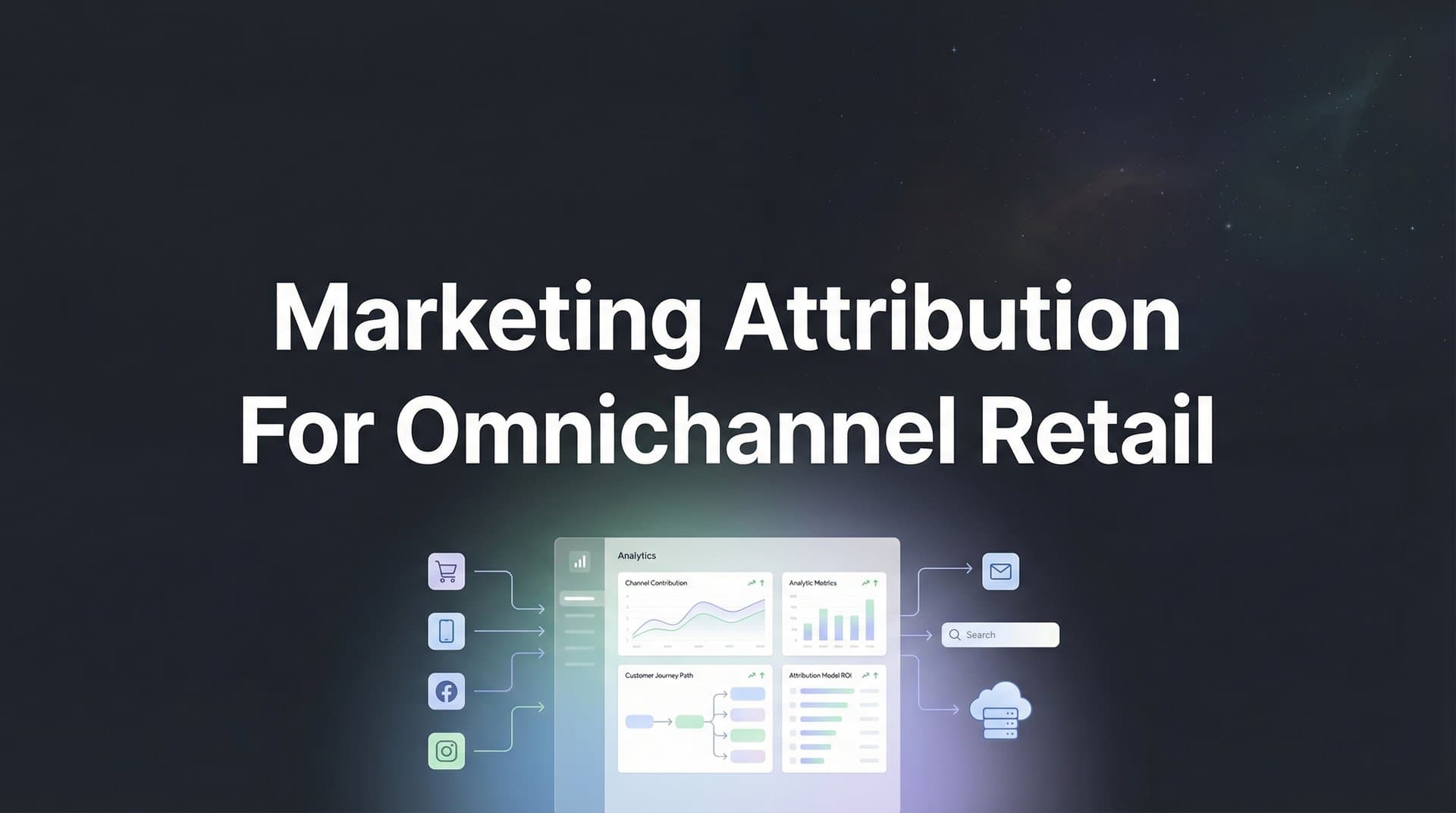
At the core of your attribution stack sits a centralized platform that ingests data from every channel where customers interact with your brand. This includes your ad platforms like Facebook, Instagram, Google Ads, and TikTok. It includes your website analytics, email marketing tools, and SMS platforms. It connects to your CRM system, your point-of-sale systems, and your e-commerce platform. If customers interact with it, your attribution platform needs data from it.
The platform's job is to normalize this data into a consistent format, resolve customer identities across touchpoints, and build a unified view of each customer journey. Without this centralization, you're stuck with fragmented data that can't tell you the complete story. Effective marketing attribution platforms with revenue tracking capabilities make this centralization possible.
Look for platforms that offer pre-built integrations with the tools you already use. The easier it is to connect your existing tech stack, the faster you can start generating attribution insights. Manual data exports and CSV uploads might work for a proof of concept, but they're not sustainable for ongoing attribution analysis.
Real-Time Data Processing
Real-time data processing enables rapid optimization decisions rather than waiting days or weeks for reports to populate. When you can see attribution data updating in real time, you can make immediate adjustments to underperforming campaigns, scale winning strategies faster, and respond to market changes as they happen.
Batch processing, where data updates once daily or weekly, creates a lag between what's happening and what you can see. In fast-moving retail environments, especially during peak seasons or promotional periods, that lag can cost you significant revenue. Real-time visibility means you can catch problems early and capitalize on opportunities while they're still hot.
This capability is particularly valuable for testing and iteration. When you launch a new campaign or try a different creative approach, real-time attribution data lets you assess performance quickly and make informed decisions about whether to scale, pause, or adjust.
Conversion Sync Capabilities
Modern attribution platforms don't just collect data, they also send enriched conversion data back to your ad platforms. This conversion sync improves the algorithms that power Facebook's ad delivery, Google's Smart Bidding, and similar automated optimization systems.
When ad platforms receive more accurate, complete conversion data, their machine learning models make better decisions about who to target and how much to bid. You're essentially feeding their AI better information, which leads to better performance.
For example, if your attribution platform knows that a customer who clicked a Facebook ad eventually converted in-store three days later, it can send that conversion event back to Facebook. Facebook's algorithm learns that the ad was effective even though the conversion didn't happen immediately online. Over time, this feedback loop improves targeting and reduces your cost per acquisition.
Look for platforms that support server-side conversion sync with all your major ad channels. The more complete the feedback loop, the better your automated optimization becomes.
Turning Attribution Insights Into Budget Decisions
Attribution data is only valuable if you actually use it to make better marketing decisions. Here's how to translate insights into action.
Identify Undervalued Assist Channels
Start by comparing last-click attribution to multi-touch attribution for each of your marketing channels. Channels that show significantly more value under multi-touch models are your undervalued assist channels, the ones that contribute to conversions but receive no credit under traditional tracking.
Display advertising, upper-funnel social media campaigns, and content marketing often fall into this category. They introduce customers to your brand and start the consideration process, but customers rarely convert immediately after these interactions. Last-click attribution makes these channels look worthless, while multi-touch attribution reveals their true contribution. Understanding performance marketing attribution helps teams identify these hidden value drivers.
Once you've identified these undervalued channels, test increased investment. If your attribution data shows that customers who see your display ads are more likely to convert later through other channels, try expanding your display budget and measure the impact on overall conversion volume, not just direct conversions from display.
Reallocate Budget From Diminishing Returns
Attribution insights help you spot channels where you've hit diminishing returns. When a channel's cost per acquisition starts climbing while its attributed conversion value stays flat or declines, you're probably over-investing.
This often happens with branded search campaigns. At some point, you're bidding on your own brand name against minimal competition, paying for clicks from customers who would have found you anyway. Attribution analysis can reveal when branded search is capturing demand rather than creating it, signaling an opportunity to reduce spend.
Take the budget you free up from diminishing-return channels and redeploy it to channels with untapped potential. Look for channels showing strong efficiency metrics but limited scale, places where you could profitably spend more if you had the budget.
Create Attribution-Informed Feedback Loops
The most sophisticated retailers use attribution data to inform not just budget allocation but also creative strategy, audience targeting, and channel mix on an ongoing basis. Implementing attribution reporting for marketing teams ensures these insights reach the right decision-makers.
Analyze which creative messages and formats show up most frequently in converting customer journeys. If attribution data reveals that customers who see video ads are more likely to convert than those who see static images, that insight should inform your creative production priorities.
Use attribution insights to refine audience targeting. If certain demographic segments or interest groups show higher conversion rates across multiple touchpoints, prioritize reaching more people who match those profiles. If other segments consistently appear in non-converting journeys, consider excluding them or reducing bids.
Build regular attribution reviews into your marketing calendar. Monthly or quarterly deep dives into attribution data help you spot trends, identify emerging opportunities, and course-correct before small problems become expensive mistakes.
The goal is to create a continuous improvement cycle where attribution data flows into strategy, strategy drives execution, execution generates new data, and the cycle repeats with increasingly refined insights each time.
Moving Forward With Confidence
Effective omnichannel attribution transforms marketing from guesswork into a data-driven discipline. Instead of wondering which channels drive revenue, you know. Instead of making budget decisions based on incomplete last-click data, you optimize based on the complete customer journey.
The retailers gaining competitive advantage today are those who can see the full picture: which touchpoints introduce new customers to their brand, which interactions build consideration and trust, and which final touches convert interest into purchases. They understand that attribution isn't about giving credit where it's due for accounting purposes, it's about understanding cause and effect so you can do more of what works and less of what doesn't.
As marketing becomes increasingly complex and customer journeys span more channels than ever, the gap between retailers with sophisticated attribution and those flying blind will only widen. The good news is that the technology to solve this problem exists today. You don't need to build custom solutions or hire a team of data scientists.
AI-powered attribution recommendations are becoming essential for scaling campaigns with confidence. Instead of manually analyzing attribution reports and making educated guesses about optimization opportunities, modern platforms can surface insights automatically and suggest specific actions to improve performance.
The question isn't whether you need better attribution. If you're running marketing campaigns across multiple channels, you do. The question is whether you'll implement it before your competitors do.
Ready to elevate your marketing game with precision and confidence? Discover how Cometly's AI-driven recommendations can transform your ad strategy. Get your free demo today and start capturing every touchpoint to maximize your conversions.


