Picture this: It's Monday morning, and you're staring at a dozen browser tabs—Meta Ads Manager, Google Analytics, LinkedIn Campaign Manager, your CRM dashboard. You've got a stakeholder meeting in two hours, and you need to pull together a performance report that answers one seemingly simple question: "Which of our marketing channels is actually driving revenue?"
What should take minutes stretches into hours. You're copying numbers from one platform, pasting them into spreadsheets, manually calculating ROI, cross-referencing CRM data, and praying you didn't transpose any digits. By the time you finish, the data is already outdated, and you've spent your entire morning on data entry instead of actually optimizing campaigns.
This is the reality for countless marketing teams today. But it doesn't have to be. Marketing performance reporting automation transforms this tedious, error-prone process into a streamlined operation that delivers real-time insights without the manual grunt work. In this guide, you'll discover what automation truly entails, why it's become essential for modern marketing teams, and exactly how to implement it effectively in your organization.
The Manual Reporting Trap (And Why It's Costing You More Than Time)
Let's talk about what manual reporting actually costs your business. Sure, there's the obvious time investment—many marketing teams spend 10-15 hours per week just compiling reports. But that's only the surface-level problem.
The real cost is opportunity. Every hour your best marketers spend copying and pasting data is an hour they're not spending on strategic thinking, creative development, or campaign optimization. You're essentially paying your highest-skilled team members to do work that software could handle in seconds. That's like hiring a master chef and having them spend half their day washing dishes.
Then there's the decision-making lag. In today's fast-moving digital landscape, a campaign can burn through thousands of dollars in a single day. But if your reporting process takes three days to compile and deliver insights, you're making decisions based on information that's already obsolete. Your competitors who can see and act on performance data in real time have a massive advantage. Implementing real-time marketing performance monitoring eliminates this dangerous delay.
Human error compounds these problems. When you're manually transferring data between platforms, mistakes are inevitable. A misplaced decimal point, a copied cell that includes the wrong date range, or a simple typo can lead to completely wrong conclusions about campaign performance. And unlike automated systems that apply consistent logic every time, manual processes vary depending on who's doing the reporting and how rushed they are.
The fragmentation problem makes everything worse. Your paid social data lives in Meta. Your search data is in Google Ads. Your website analytics are in Google Analytics. Your lead data is in your CRM. Your email metrics are in your ESP. Each platform has different metric definitions, attribution windows, and reporting interfaces. Bringing all this together manually isn't just time-consuming—it's nearly impossible to do consistently and accurately.
This fragmentation creates what we call "reporting bottlenecks." Instead of insights flowing freely to decision-makers, they get stuck in the compilation process. By the time leadership sees a report, the marketing team has already moved on to new campaigns, making it difficult to have meaningful conversations about what's working and what needs to change. A unified marketing reporting solution solves this by consolidating all your data sources into one accessible view.
Core Components of an Automated Reporting System
An effective automated reporting system isn't just one tool—it's an integrated stack of capabilities working together. Think of it like a well-designed assembly line, where each component handles a specific function, and the whole system delivers finished insights without manual intervention.
The foundation is your data integration layer. This is what connects all your disparate marketing platforms into a unified data source. Instead of logging into five different dashboards to see performance, the integration layer pulls data from Meta, Google, LinkedIn, TikTok, your CRM, your website analytics, and any other tools in your stack. It normalizes the data so that a "conversion" means the same thing across all platforms, and it syncs continuously so you're always looking at current information.
Server-side tracking has become essential here, especially as browser-based tracking becomes less reliable due to privacy changes and ad blockers. Server-side solutions capture data directly from your servers rather than relying on cookies or pixels that users can block. This means more complete, accurate data feeding into your reporting system.
Next comes attribution modeling—the brain of your automated system. This is what answers the critical question: "Which touchpoints actually contributed to this conversion?" Attribution modeling automatically assigns credit across the customer journey, whether you're using first-touch, last-touch, linear, time-decay, or more sophisticated multi-touch models. The key word is "automatically"—once configured, it applies consistent logic to every conversion without requiring manual analysis. Understanding performance marketing attribution is essential for configuring these models correctly.
Multi-touch attribution is particularly powerful because it captures the reality of modern customer journeys. A B2B buyer might discover you through a LinkedIn ad, research you via organic search, attend a webinar, receive nurture emails, and finally convert after clicking a retargeting ad. Single-touch models miss this complexity, but automated multi-touch attribution tracks and credits every interaction appropriately.
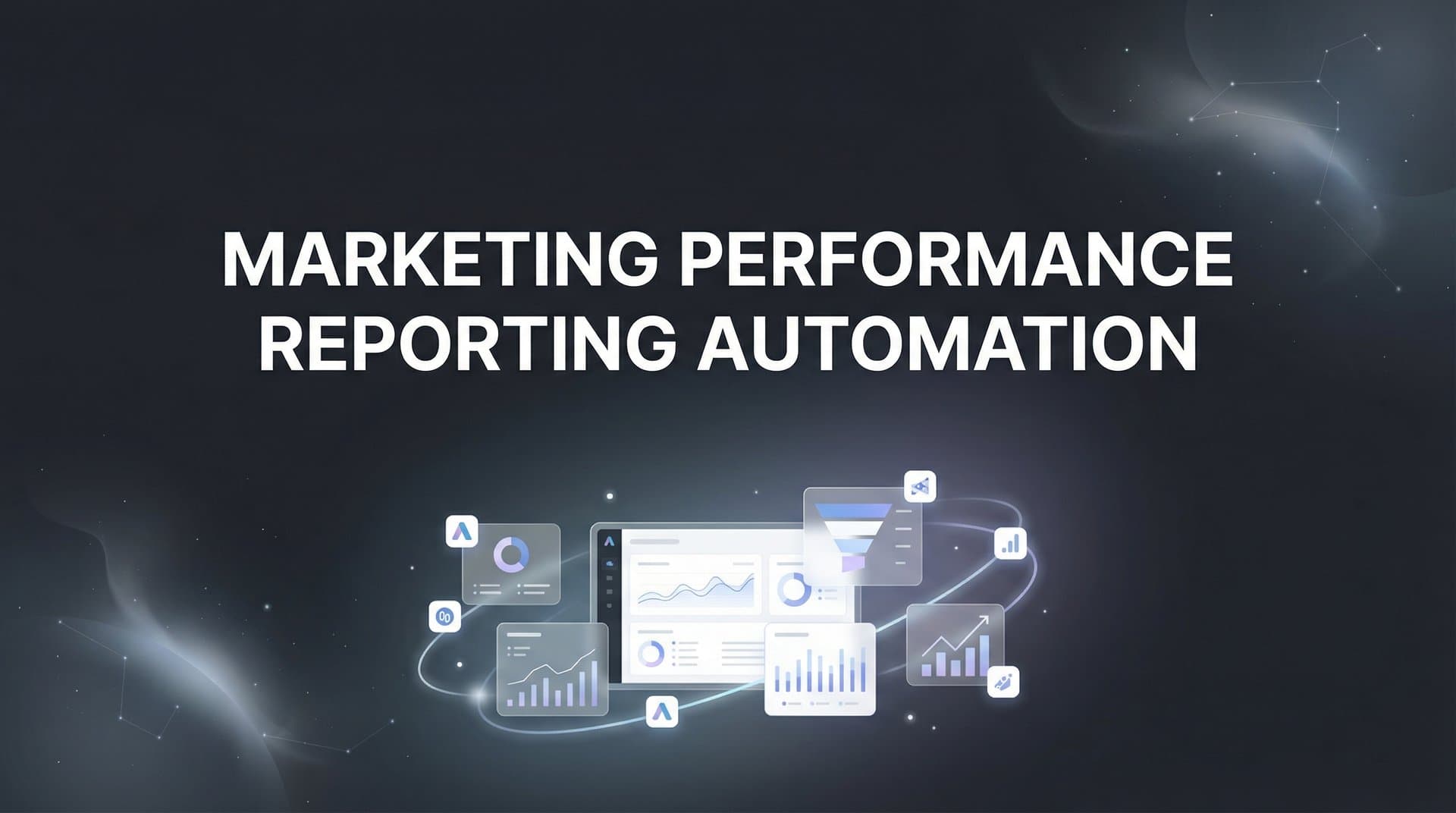
The visualization and delivery layer is what makes insights accessible. Real-time dashboards update automatically as new data comes in, showing current performance without anyone needing to refresh or rebuild reports. These dashboards can be customized for different audiences—executives might see high-level ROI and revenue trends, while campaign managers see granular performance by ad set and creative. Following marketing performance dashboard best practices ensures your visualizations drive action rather than confusion.
Scheduled reports take this further by automatically delivering insights to stakeholders on whatever cadence makes sense—daily campaign summaries, weekly performance reviews, monthly executive reports. The system generates and sends these without any manual intervention, ensuring everyone stays informed without anyone needing to spend time creating reports.
Smart alert systems add another layer of value by proactively notifying you when something requires attention. If a campaign's cost per acquisition suddenly spikes, if a key conversion rate drops below threshold, or if an unusual traffic pattern emerges, the system alerts you immediately rather than waiting for you to discover it in your next scheduled report review.
From Raw Data to Revenue Insights: How Automation Transforms Reporting
Here's where automation becomes truly transformative: it shifts your focus from data collection to revenue understanding. Manual reporting typically gets stuck at the surface level—clicks, impressions, cost per click. These metrics matter, but they don't directly answer the question that leadership actually cares about: "What's driving revenue?"
Automated systems connect marketing activity directly to revenue outcomes. When your reporting automation integrates with your CRM and tracks the complete customer journey, you can see exactly which campaigns, channels, and even specific ads are generating qualified leads, opportunities, and closed deals. This isn't something you calculate once and update manually—it updates continuously as deals progress through your pipeline.
The shift from vanity metrics to revenue attribution changes how you evaluate performance. Instead of celebrating a campaign that generated 10,000 clicks, you can see that those clicks generated 50 leads, 12 opportunities, and 3 closed deals worth a specific dollar amount. Suddenly you're having very different conversations about what "good performance" looks like. Mastering marketing attribution reporting is the key to unlocking these revenue-focused insights.
Cross-channel comparison becomes genuinely meaningful when automation handles the data normalization. Comparing Meta to Google manually is frustrating because they report metrics differently and attribute conversions differently. Automated systems apply consistent attribution logic across all channels, letting you make true apples-to-apples comparisons about which platforms deliver the best ROI for your business. Learning how to measure cross-channel marketing performance effectively requires this kind of standardized approach.
This is where you discover insights that manual reporting would never surface. You might find that LinkedIn has a higher cost per click than Meta, but LinkedIn-sourced leads close at three times the rate and have twice the average deal size. Without automation connecting marketing touchpoints to revenue outcomes, you'd likely cut the LinkedIn budget based on surface-level metrics—and lose your most valuable channel.
AI-powered features add another dimension by automatically identifying patterns and anomalies that humans might miss. Machine learning algorithms can detect when a campaign's performance deviates from expected patterns, when certain audience segments suddenly become more or less responsive, or when external factors like seasonality are impacting results. These insights surface automatically in your dashboards rather than requiring someone to manually analyze trends. The rise of AI marketing automation has made these capabilities accessible to teams of all sizes.
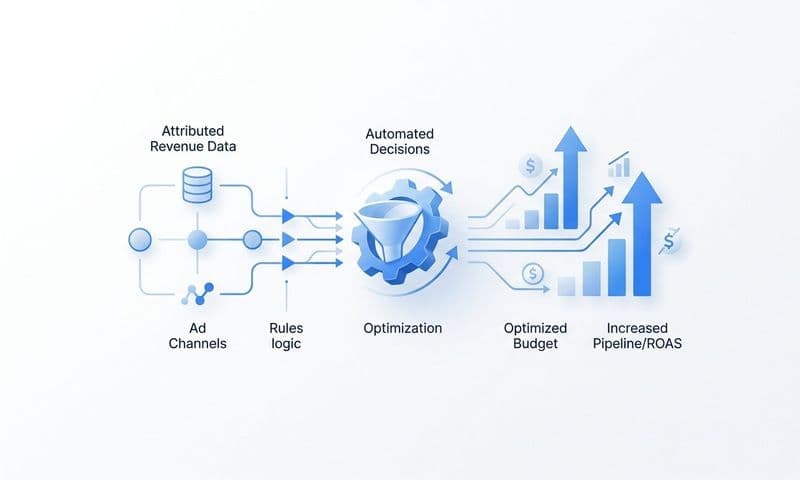
Some advanced platforms go beyond just reporting what happened to recommending what you should do next. By analyzing historical performance data and current trends, AI can suggest budget reallocation opportunities, identify underperforming ad creatives that should be paused, or highlight high-performing audience segments worth scaling. These recommendations appear automatically in your reporting interface, turning passive dashboards into active optimization tools.
Building Your Automation Stack: Essential Capabilities to Prioritize
Not all automation solutions are created equal. When evaluating platforms or building your stack, certain capabilities separate basic reporting tools from truly transformative systems. Let's break down what to prioritize.
Server-side tracking should be non-negotiable in today's privacy-first landscape. iOS updates have made browser-based pixel tracking increasingly unreliable, with some estimates suggesting 30-40% of conversion events go untracked when relying solely on client-side methods. Server-side tracking captures this data directly from your servers, giving you a complete picture of campaign performance even as browser restrictions tighten. This isn't just about having better reports—it's about having accurate data to make decisions on.
The conversion sync capability that comes with server-side tracking is equally critical. This feeds your enriched, server-side conversion data back to ad platforms like Meta and Google via their Conversion APIs. Why does this matter? Because ad platform algorithms optimize based on the conversion data they receive. If they're only seeing 60% of your actual conversions due to iOS limitations, they're optimizing on incomplete information. Conversion sync solves this, helping ad platforms' AI make better targeting and bidding decisions.
Multi-touch attribution is what separates sophisticated marketing automation analytics from basic reporting. In complex B2B sales cycles or high-consideration B2C purchases, customers interact with your brand multiple times before converting. First-touch attribution only credits the initial touchpoint. Last-touch only credits the final click. Multi-touch attribution captures the full journey, showing how different channels work together to drive conversions. This reveals insights like "LinkedIn drives initial awareness, but Google search captures high-intent traffic" that single-touch models completely miss.
Look for platforms that offer multiple attribution models and let you compare them side by side. Different models answer different questions. First-touch shows what's driving new audience discovery. Last-touch shows what's closing deals. Linear attribution shows which channels are consistently present throughout the journey. The ability to view your data through different attribution lenses gives you a more complete understanding of what's working.
Real-time data processing is essential for modern marketing velocity. Batch processing that updates reports once daily might have been acceptable five years ago, but today's campaigns require faster feedback loops. Real-time systems let you see performance as it happens, enabling you to pause underperforming campaigns before they waste budget or scale winners while they're hot. This speed advantage compounds over time—teams that can act on data faster consistently outperform those working with delayed insights.
CRM integration transforms marketing reporting from activity tracking to revenue attribution. When your reporting system connects to Salesforce, HubSpot, or your CRM of choice, it can track leads from first touch through closed deal. This reveals metrics like marketing-sourced revenue, cost per opportunity, and customer acquisition cost by channel—the numbers that actually matter to your CFO and CEO. Without this integration, you're stuck reporting on leads without knowing which ones actually generate revenue.
Implementation Roadmap: From Manual Chaos to Automated Clarity
Implementing reporting automation isn't a flip-the-switch moment—it's a strategic rollout that requires planning. Here's how to approach it in a way that delivers quick wins while building toward comprehensive automation.
Start with an honest audit of your current reporting workflow. Map out exactly how reports get created today: which platforms you pull data from, how long each step takes, where errors tend to occur, and what questions stakeholders actually need answered. This audit often reveals surprising insights—you might discover you're spending hours generating reports that nobody reads, or that the metrics you're tracking don't align with what leadership actually cares about.
Identify your highest-impact opportunities for automation. These are typically your most time-consuming reporting tasks or the ones where delayed insights are costing you the most. For many teams, this means starting with paid advertising performance across major platforms like Meta and Google. Exploring paid advertising reporting automation tools can help you identify the right solution for your specific needs. These channels typically represent significant budget, change rapidly, and benefit most from real-time visibility. Automating this reporting first delivers immediate time savings and faster optimization decisions.
Take a phased rollout approach rather than trying to automate everything at once. Phase one might focus on connecting your top two or three ad platforms and building automated dashboards that replace your most frequent manual reports. Phase two adds CRM integration to enable revenue attribution. Phase three expands to include email marketing, organic channels, and other touchpoints. This approach lets your team learn the system gradually and prove ROI before expanding scope.
Stakeholder alignment is crucial and often overlooked. Before building automated reports, have conversations with the people who will use them. What decisions do they need to make? What metrics do they actually care about? How often do they need updates? You might discover that your CMO doesn't need daily campaign details but does want weekly revenue attribution summaries. Your campaign managers need real-time performance data but don't care about high-level trends. Designing reports around actual needs rather than what's easy to automate ensures adoption and value.
Data quality deserves special attention during implementation. Automation amplifies whatever you feed into it—if your tracking is inconsistent or your conversion definitions vary across platforms, automation will surface these problems rather than solve them. Before automating, ensure you have clean, consistent tracking in place. This might mean implementing standardized UTM parameters, ensuring your CRM fields are properly configured, or fixing broken conversion tracking. The time invested here pays dividends once automation is running.
Training and change management matter more than many teams expect. Even the best automated reporting system won't deliver value if your team doesn't know how to use it or doesn't trust the data. Plan for training sessions, create documentation, and give people time to get comfortable with new dashboards and workflows. Address skepticism directly—some team members might resist automation because they're worried about job security or because they don't trust "black box" systems. Show them how automation can streamline marketing efforts and free them to do more strategic work rather than replacing them.
Measuring Success: KPIs for Your Reporting Automation Initiative
How do you know if your reporting automation is actually working? Track these specific metrics to quantify the impact.
Time-to-insight is your primary efficiency metric. Before automation, how long did it take to answer a performance question like "What's our cost per qualified lead by channel this month?" After automation, how long does it take? For many teams, this shifts from hours or days to seconds. Track this for your most common questions and watch the time savings compound. A question that took three hours to answer manually but now takes 30 seconds represents a 360x improvement—and that's time your team can redirect toward optimization and strategy.
Decision velocity measures how quickly you can act on insights. Count how long it takes from identifying a performance issue to implementing a solution. Before automation, you might review performance weekly and make changes days later. With real-time dashboards and automated alerts, you can spot problems and fix them within hours. This faster feedback loop directly impacts campaign performance—underperforming campaigns get paused before wasting significant budget, and winning campaigns get scaled while they're still hot.
Reporting time investment is straightforward to measure. How many hours per week does your team spend on manual reporting tasks? Track this before and after automation implementation. Most teams see 70-90% reductions in time spent on data compilation and report generation. For a marketing team of five people, reducing reporting time from 10 hours to 2 hours per person per week frees up 40 hours weekly—essentially adding a full-time employee's worth of capacity without hiring.
Data accuracy improvements are harder to quantify but critically important. One way to measure this is by tracking how often decisions get reversed due to incorrect data. Before automation, you might discover that campaign performance numbers were wrong after the fact, leading to misguided optimization decisions. Automated systems with consistent data pipelines and validation rules dramatically reduce these errors. You can also compare automated reports against manual spot-checks to verify accuracy.
Budget allocation effectiveness shows the downstream impact of better reporting. When you can accurately attribute revenue to specific channels and campaigns, you make better decisions about where to invest. Track metrics like revenue per marketing dollar by channel over time. Teams with accurate attribution typically see 15-30% improvements in overall marketing ROI as they shift budget toward truly high-performing channels rather than those that simply look good on surface-level metrics. Focusing on marketing performance improvement becomes much easier when you have reliable data guiding your decisions.
Stakeholder satisfaction matters too, even if it's qualitative. Are executives getting the insights they need to make strategic decisions? Are campaign managers able to optimize more effectively? Are cross-functional partners like sales able to see how marketing contributes to pipeline? Regular check-ins with report consumers help ensure your automated system is delivering actual value rather than just generating dashboards nobody uses.
Putting It All Together
Marketing performance reporting automation isn't about replacing marketers—it's about freeing them from data drudgery so they can focus on what they do best: strategy, creativity, and optimization. When your team spends hours each week copying numbers between platforms, they're not doing marketing—they're doing data entry. Automation returns that time to them.
The best automation solutions do more than just compile data faster. They capture every touchpoint in the customer journey, from initial ad click through CRM events to closed revenue. They reveal which channels and campaigns are truly driving results, not just which ones look good on surface-level metrics. They feed enriched conversion data back to ad platforms, helping algorithms optimize more effectively. And they surface insights proactively rather than waiting for someone to dig through dashboards.
Think about how your team currently spends their time. If you're still pulling together reports manually, you're playing a game your competitors have moved beyond. They're making decisions in hours that take you days. They're optimizing campaigns in real time while you're still compiling last week's data. They're attributing revenue accurately while you're guessing based on last-click metrics.
The question isn't whether to automate your marketing performance reporting—it's how quickly you can implement it. Every week you wait is another week of wasted time, missed optimization opportunities, and decisions made on incomplete data. Start with an honest assessment of your current reporting investment. How many hours does your team spend on manual reporting? What decisions are you making slowly or incorrectly due to fragmented data? What would it mean for your business if you could see real-time, accurate attribution across all your marketing touchpoints?
Ready to elevate your marketing game with precision and confidence? Discover how Cometly's AI-driven recommendations can transform your ad strategy—Get your free demo today and start capturing every touchpoint to maximize your conversions.