You're spending thousands on ads across Meta, Google, LinkedIn, and maybe a few other channels. Your CRM shows deals closing. Your analytics dashboard shows traffic. But when your CEO asks which marketing investments actually drive revenue, you're piecing together fragments from five different platforms, hoping your answer sounds confident.
This is the attribution reporting gap that costs companies millions in misallocated budget every year.
Without clear attribution reports, you're making decisions in the dark. That "high-performing" Facebook campaign? It might be getting credit for conversions that actually started with your SEO content three weeks earlier. That LinkedIn campaign you're about to cut? It could be the critical mid-journey touchpoint that pushes prospects toward conversion, even though it never gets the final click.
The problem isn't lack of data—it's lack of connected, actionable insights. Most marketing teams fall into one of two traps: either drowning in dashboards that show everything but clarify nothing, or relying on oversimplified last-click reports that tell a dangerously incomplete story.
Here's what changes when you build attribution reports that actually work: You stop arguing about which channel "deserves" budget and start seeing which combinations of touchpoints drive real revenue. You catch underperforming campaigns before they burn through your quarterly budget. You identify the hidden assists that make your conversion campaigns possible.
This guide walks you through building marketing attribution reports that connect every marketing activity to revenue outcomes. You'll learn how to audit your tracking foundation, choose attribution models that match your actual sales cycle, and create reports that stakeholders use to make confident decisions—not just review in meetings and forget.
Whether you're reporting to a CMO who demands ROI clarity or optimizing campaigns yourself, these steps will transform scattered data into a clear picture of what's actually driving results.
Step 1: Audit Your Current Tracking Infrastructure
Before you can build meaningful attribution reports, you need to know what you're actually tracking—and more importantly, what you're missing. Most marketing teams discover they're losing 30-40% of their customer journey data simply because they never mapped where their tracking breaks down.
Start by listing every platform where you're running marketing activities: Facebook Ads, Google Ads, LinkedIn, email marketing tools, your website analytics, and your CRM. Now comes the uncomfortable part—document every place where data doesn't flow between these systems.
Common gaps include: ad clicks that never make it to your analytics because of iOS privacy restrictions, form submissions that reach your CRM but never connect back to the original ad campaign, phone calls from ads that get logged as "direct" traffic, and email nurture sequences where you lose track of the original source that brought someone into your funnel. Understanding marketing attribution for phone calls is essential for capturing these often-missed conversions.
Next, audit your UTM parameter strategy. Pull up your last 50 campaigns and check for consistency. Are you using "utm_source=facebook" in some campaigns and "utm_source=fb" in others? Is your naming convention consistent enough that you can actually group campaigns meaningfully? Inconsistent UTM parameters are the silent killer of attribution reporting—they fragment your data so badly that even perfect tracking can't save you.
Pay special attention to server-side tracking capabilities. With iOS privacy changes blocking a significant portion of cookie-based tracking, client-side tracking alone misses critical conversion data. Check whether your current setup can track conversions that happen after someone closes your website, returns days later from a different device, or converts through a channel that doesn't support traditional tracking pixels.
Document your offline conversion tracking too. If you're B2B with a sales team, how do closed deals get attributed back to marketing touchpoints? If you have phone sales, are those conversions making it into your attribution data? If you run events or trade shows, can you connect attendees back to their original marketing source? A comprehensive attribution marketing tracking approach addresses all these scenarios.
Your success indicator for this step: a complete spreadsheet showing every marketing touchpoint you're currently tracking, every gap where data gets lost, and every place where attribution is breaking down. This inventory becomes your roadmap for the tracking improvements you'll need to make before your attribution reports can be truly reliable.
Step 2: Define Your Conversion Events and Revenue Milestones
Not all conversions are created equal, but most attribution reports treat them that way. The difference between a newsletter signup and a $50,000 deal close is obvious, yet many marketers lump them together under generic "conversion" tracking. This step fixes that.
Start by mapping your complete conversion hierarchy. At the top are your macro-conversions—the events that directly generate revenue or qualified pipeline. For e-commerce, that's purchases. For B2B SaaS, it's typically closed deals or sometimes qualified opportunities. These are your north star metrics.
Below those sit your micro-conversions—the meaningful steps toward revenue that don't immediately generate it. Think demo requests, free trial signups, contact form submissions, content downloads from high-intent pages, or consultation bookings. These matter because they're leading indicators and often represent critical touchpoints in your attribution model.
Now assign revenue values to each conversion type. For macro-conversions, this is straightforward—use actual transaction values or average deal sizes. For micro-conversions, calculate the statistical value based on conversion rates. If 20% of demo requests turn into $10,000 customers, each demo request has a statistical value of $2,000. These values let you calculate true ROI across all your marketing touchpoints, not just the final conversion step. Implementing marketing revenue attribution ensures every conversion connects back to its true source.
For B2B teams, connect your CRM pipeline stages to marketing attribution. When a lead moves from Marketing Qualified Lead to Sales Qualified Lead to Opportunity to Closed Won, each stage represents a conversion event worth tracking. This connection is crucial—without it, your attribution reports will show marketing's impact ending at lead generation, missing the entire revenue outcome.
Set up conversion tracking that captures the full journey, not just the last click. This means implementing tracking that persists across sessions and devices. When someone clicks your Facebook ad today, visits from organic search tomorrow, and converts via direct traffic next week, your tracking should connect all three touchpoints to that final conversion.
Consider time-delayed conversions too. If you're B2B with a 90-day sales cycle, conversions happening today might be attributed to marketing activities from three months ago. Your conversion tracking needs to maintain that historical connection, not just credit whatever channel happened to be active when someone finally converted.
Your success indicator: a documented conversion hierarchy with clear revenue values assigned to each event type, and tracking implementation that connects these conversions back to every marketing touchpoint that influenced them. This foundation makes everything else in your attribution reporting possible.
Step 3: Select Attribution Models That Match Your Sales Cycle
Here's the truth about attribution models: there's no single "correct" model, and anyone who tells you otherwise is oversimplifying. The right attribution approach depends entirely on your sales cycle, customer journey complexity, and what decisions you're trying to make.
First-touch attribution gives all credit to the initial touchpoint that brought someone into your funnel. This model makes sense when you're evaluating top-of-funnel awareness campaigns or trying to understand which channels are best at introducing new prospects to your brand. If you're running brand awareness campaigns on YouTube or sponsoring podcasts, first-touch attribution shows their impact even though these channels rarely get the final click.
Last-touch attribution does the opposite—it credits whatever touchpoint happened immediately before conversion. This model works for direct response campaigns where you're optimizing for immediate conversions. If you're running Google Search ads targeting high-intent keywords, last-touch attribution accurately reflects their role in closing ready-to-buy prospects.
For a deeper dive into this space, see our AI UGC ad maker guide.
The problem? Most customer journeys don't fit neatly into "awareness" or "conversion" boxes. Someone might discover you through organic content, engage with a Facebook retargeting ad, attend a webinar, read comparison articles, and finally convert through a Google Search ad. Which touchpoint "deserves" credit? Understanding the types of marketing attribution models helps you navigate this complexity.
This is where multi-touch attribution becomes essential. Linear attribution splits credit equally across all touchpoints. Time-decay attribution gives more credit to recent interactions, reflecting the reality that touchpoints closer to conversion often have more influence. Position-based attribution (also called U-shaped) gives extra credit to the first and last touchpoints while distributing remaining credit to middle interactions.
For complex B2B sales cycles, multi-touch attribution in marketing isn't optional—it's the only way to see reality. When deals take 60-90 days to close and involve a dozen touchpoints across multiple decision-makers, last-touch attribution would systematically undervalue every channel except the final one. You'd end up cutting the very campaigns that make your conversion campaigns possible.
The smartest approach? Run multiple attribution models simultaneously. Compare last-touch data (showing which channels close deals) against first-touch data (showing which channels start relationships) and multi-touch data (showing the complete journey). The patterns that emerge across all three models are your most reliable insights.
Consider your specific use case too. If you're e-commerce with short consideration periods, simpler models might suffice. If you're enterprise B2B where a single sale might involve content downloads, multiple demo requests, sales calls, and a six-month evaluation period, you need sophisticated multi-touch attribution that can handle that complexity. The best marketing attribution tools for B2B SaaS companies are designed specifically for these longer sales cycles.
If you're evaluating vendors, our Facebook ads companies breakdown can help.
Your success indicator for this step: clearly documented primary and secondary attribution models with specific rationale for why each fits your business. You should be able to explain to your team why you're using these models and what questions each one helps answer. This clarity prevents the common trap of switching models whenever results don't match expectations.
Step 4: Build Your Core Attribution Report Structure
Now you're ready to build the actual reports. The key is creating a layered structure that serves different audiences and decisions—from executives who need strategic summaries to campaign managers who need granular optimization data.
We compare the leading options in our AI campaign manager roundup.
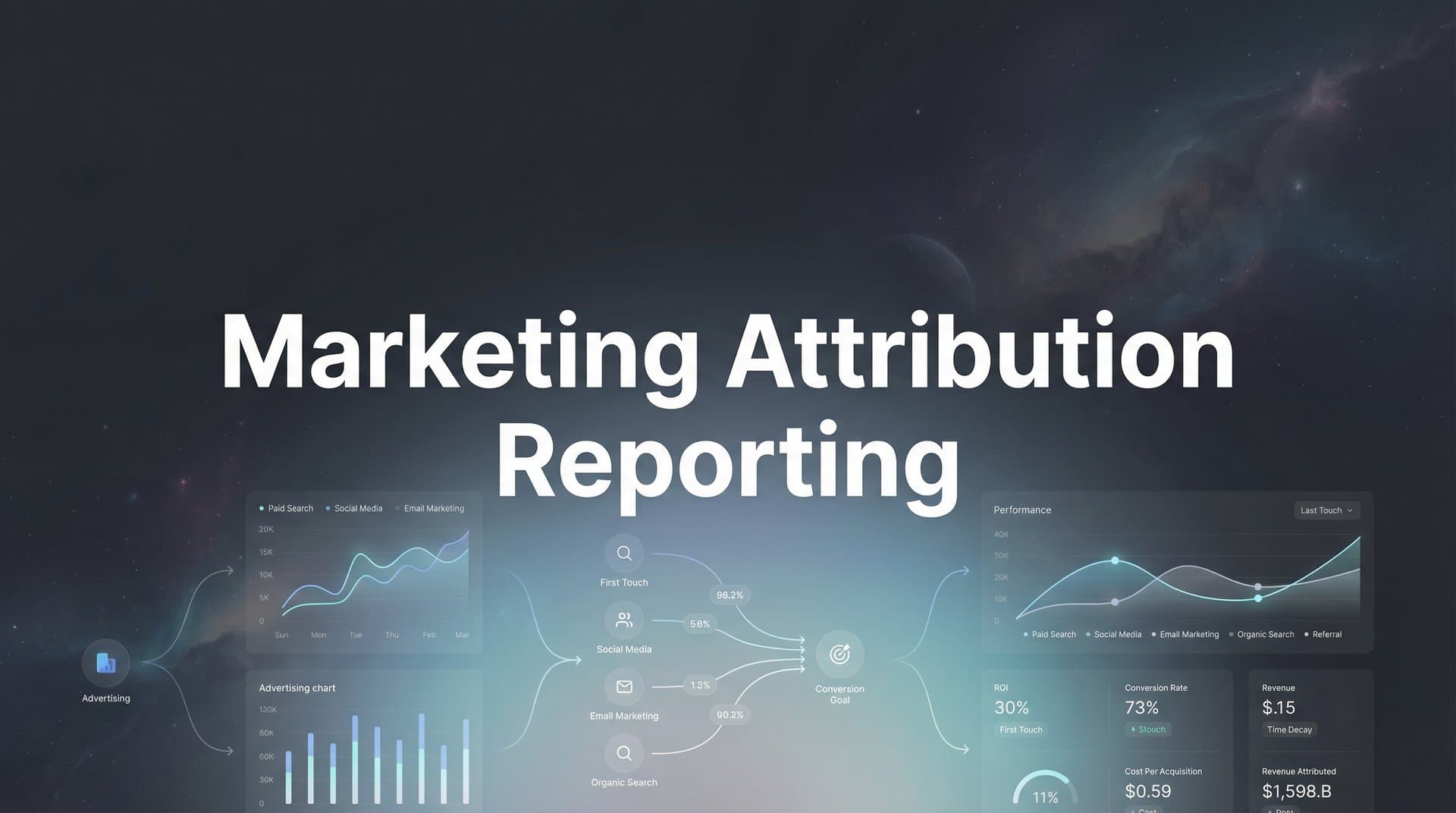
Start with your channel-level overview report. This should show each marketing channel with its total attributed revenue, return on ad spend (ROAS), cost per acquisition, and total conversions. Include both direct conversions (where the channel got final credit) and assisted conversions (where it influenced but didn't close). This dual view prevents you from cutting channels that play crucial mid-journey roles.
Your channel report should answer: Which channels are generating positive ROI? Which channels are losing money? Which channels assist more than they close? Are there channels where you should increase investment based on strong performance? Implementing cross channel attribution gives you visibility into how channels work together to drive conversions.
Next, build campaign-level drill-downs within each channel. If your channel report shows Facebook is generating strong ROAS, your campaign report should reveal which specific Facebook campaigns are driving those results. Break down by campaign objective, audience segment, and creative approach. This granularity is where optimization happens—you're not just increasing "Facebook budget," you're scaling the specific campaigns that work.
Include time-to-conversion metrics in your reports. How long does it typically take from first touch to conversion? How many touchpoints happen on average? This data shapes realistic expectations and helps you avoid prematurely judging campaign performance. If your average customer journey is 45 days, you can't evaluate a campaign's true impact after two weeks.
Add a touchpoint sequence report that shows common journey patterns. You might discover that most conversions follow a pattern like: Organic Search → Facebook Ad → Email → Direct → Google Search → Conversion. Understanding these patterns helps you build more effective full-funnel strategies rather than optimizing channels in isolation.
Create comparison views that let you analyze performance across different attribution models side-by-side. A channel might look mediocre in last-touch attribution but prove essential in multi-touch attribution. These discrepancies reveal channels that play supporting roles in your conversion ecosystem.
Build audience segment reports if you serve multiple customer types. B2B SaaS companies often find that attribution patterns differ dramatically between small business customers (shorter cycles, fewer touchpoints) and enterprise customers (longer cycles, many touchpoints). Lumping these together obscures important insights.
Your success indicator: a report template that lets you move from high-level channel performance down to specific campaign details, with clear visibility into both direct and assisted conversions. Anyone reviewing these reports should be able to answer both "what's working?" and "why is it working?"
Step 5: Add Context That Makes Data Actionable
Raw attribution data tells you what happened. Context tells you what to do about it. This step transforms your reports from interesting dashboards into decision-making tools.
Start with period-over-period comparisons. Show this month's performance against last month, this quarter against last quarter, and this year against last year. Trends matter more than snapshots. A channel with declining ROAS might indicate creative fatigue, increased competition, or seasonal changes. A channel with improving efficiency might suggest you've found product-market fit with a new audience segment.
Add week-over-week views for campaigns you're actively optimizing. Waiting for monthly reports means you're burning budget on underperforming campaigns for weeks before catching them. Daily or weekly trend lines let you spot problems early and double down on winners while they're hot.
Include benchmarks so stakeholders understand what "good" looks like. If your Facebook ROAS is 3.2x, is that excellent or concerning? It depends entirely on your industry, average order value, and margin structure. Add benchmarks like your historical average, your target threshold, and if available, industry standards. Context turns numbers into insights. The best marketing attribution analytics platforms make these comparisons easy to visualize.
Segment your reports by meaningful business dimensions. Break down performance by product line, geographic region, new versus returning customers, or device type. You might discover that your overall channel performance masks dramatic differences—like mobile traffic converting poorly while desktop traffic is highly profitable, or one product line generating all your positive ROI while another drains resources.
Create executive summaries that highlight the three to five most important findings from each report. Busy stakeholders don't have time to dig through dashboards. Your summary should answer: What's working better than expected? What's underperforming and why? What opportunities should we pursue? What problems need immediate attention?
Add annotations to your reports explaining anomalies. If you see a sudden spike or drop, note the cause: "Campaign budget increased 50% on March 15" or "Competitor launched promotion causing CPC increase." Without this context, people waste time investigating explained variations or miss real problems hidden among expected fluctuations.
Include recommendations based on the data. Don't just show that LinkedIn has a 5.5x ROAS while Facebook has a 2.1x ROAS—recommend the specific action: "Shift $10K monthly budget from Facebook prospecting to LinkedIn to improve blended ROAS." Make it easy for decision-makers to act on your insights.
Your success indicator: reports that answer "so what?" not just "what happened?" Anyone reading your attribution reports should immediately understand what's working, what's not, and what they should do differently. If your reports require a separate meeting to explain, they're not contextual enough.
Step 6: Establish Your Reporting Cadence and Distribution
The best attribution reports are useless if they reach the wrong people at the wrong time. This final step ensures your reports actually drive decisions rather than gathering digital dust.
Set up automated daily reports for campaign managers making tactical optimization decisions. These should focus on active campaign performance, budget pacing, and immediate red flags like sudden CPA spikes or disappearing conversions. Daily reports don't need comprehensive attribution analysis—they need actionable alerts that prevent small problems from becoming expensive ones.
Create weekly tactical reports for marketing team leads who oversee multiple campaigns. These should include performance trends, week-over-week comparisons, and early signals about what's working or declining. Weekly cadence is fast enough to catch issues but slow enough to show meaningful patterns rather than random daily fluctuations.
Build monthly strategic reports for leadership focused on trends, budget allocation, and strategic recommendations. These reports should zoom out from daily noise to show clear patterns: which channels are improving, which are declining, where you should invest more, and what you should test next. Include your full multi-touch attribution analysis here since strategic decisions benefit from the complete picture. A dedicated marketing campaign attribution platform can automate much of this reporting workflow.
Develop real-time dashboards for monitoring active campaigns and making quick optimization decisions. When you're running time-sensitive promotions or testing new channels, you need live data, not reports that arrive hours or days later. Real-time dashboards should focus on the metrics that trigger immediate action: conversion rate, cost per acquisition, and budget burn rate.
Define clear ownership for each report type. Who's responsible for reviewing daily campaign alerts? Who analyzes weekly trends and makes optimization recommendations? Who presents monthly strategic findings to leadership? Without clear ownership, reports become background noise that everyone assumes someone else is monitoring.
Establish expected actions for each report audience. Campaign managers should adjust bids and budgets based on daily reports. Marketing leads should reallocate resources based on weekly trends. Leadership should make strategic channel decisions based on monthly attribution analysis. When everyone knows what they're supposed to do with the data, reports drive action instead of just documentation.
Your success indicator: a documented reporting schedule showing report type, frequency, audience, delivery method, and expected actions. Test your system for a month and refine based on feedback. Are daily reports too noisy? Are monthly reports too slow to catch problems? Adjust until your reporting cadence matches your decision-making rhythm.
Putting It All Together
You now have a complete framework for building marketing attribution reports that actually drive decisions. Here's your implementation checklist:
Tracking audit complete with all gaps identified and prioritized for fixing. Every marketing touchpoint mapped, UTM parameters standardized, and server-side tracking evaluated.
Conversion events defined with revenue values assigned. Clear hierarchy from micro-conversions to macro-conversions, with tracking that connects conversions back to every influencing touchpoint.
Attribution models selected based on your specific sales cycle. Primary and secondary models chosen with clear rationale, ready to provide multiple perspectives on the same data.
Core report structure built with channel, campaign, and touchpoint views. Layered reporting that serves both strategic decision-makers and tactical optimizers.
Contextual elements added including comparisons, benchmarks, and recommendations. Reports that answer "so what?" and guide specific actions.
Reporting cadence established with clear ownership and expected actions. Daily tactical reports, weekly trend analysis, monthly strategic summaries, and real-time dashboards all serving their specific purposes.
The goal of attribution reporting isn't perfect data—it's better decisions. You'll never have 100% tracking accuracy or attribution models that capture every nuance of customer behavior. That's okay. What matters is having significantly better visibility than you had before, and using that visibility to make incrementally better decisions about where to invest your marketing budget. Many teams encounter common marketing attribution challenges along the way—knowing how to fix them keeps your reporting accurate.
Start with the tracking audit this week. You can't build reliable attribution reports on a broken tracking foundation. Once you've identified your gaps, prioritize fixing the ones that lose the most data or impact your highest-value conversions.
Build your reporting framework incrementally. Start with basic channel-level reports and add sophistication as your tracking improves and your team gets comfortable with attribution concepts. Perfect is the enemy of done—a simple attribution report you actually use beats a sophisticated one you never finish building.
As you refine your attribution approach over the coming months, you'll move from asking "what happened?" to confidently answering "where should we invest next?" You'll catch underperforming campaigns before they burn through quarterly budgets. You'll identify the hidden assists that make your conversion campaigns possible. You'll stop arguing about which channel "deserves" credit and start seeing which combinations of touchpoints drive real revenue.
Tools like Cometly can accelerate this entire process by connecting your ad platforms, CRM, and website tracking in one place. Instead of manually stitching together data from five different sources, you get the complete customer journey view these reports require—with AI-powered recommendations that highlight exactly where to optimize. From capturing every touchpoint to feeding better conversion data back to your ad platforms, the right attribution infrastructure turns this framework from a weeks-long project into something you can implement in days.
Ready to elevate your marketing game with precision and confidence? Discover how Cometly's AI-driven recommendations can transform your ad strategy—Get your free demo today and start capturing every touchpoint to maximize your conversions.