You've launched campaigns across Google Ads, Meta, LinkedIn, and email. Traffic is flowing. Conversions are happening. But when you look at your analytics, every platform claims credit for the same sale. Google says it drove the conversion. Meta's dashboard shows the same customer as their win. Your email platform takes credit too. Meanwhile, you're staring at three different "sources of truth" and no clear answer about where to actually invest your next dollar.
This is the attribution problem that costs marketers millions in misallocated budget every year. The reality? Your customers interact with an average of six to eight touchpoints before they convert. They see your Facebook ad on Monday, search your brand on Wednesday, click an email on Friday, and finally convert through a Google ad on Saturday. But if you're only looking at last-click attribution, you're giving Google 100% of the credit while Facebook, organic search, and email get nothing.
Multi-channel attribution models solve this by distributing credit across the entire customer journey. They reveal which channels truly drive awareness, which ones nurture consideration, and which ones close the deal. This guide will walk you through every major attribution model, show you how to match them to your marketing goals, and give you a clear path to implementation. By the end, you'll know exactly how to stop guessing and start scaling with confidence.
The Attribution Problem Every Marketer Faces
Single-touch attribution treats every conversion like it happened in a vacuum. Last-click attribution hands all the credit to whatever channel closed the deal, completely ignoring the awareness campaign that introduced your brand or the retargeting ad that kept you top of mind. First-click does the opposite—it celebrates the initial touchpoint but dismisses everything that happened afterward.
Here's why this matters more than ever: today's buyers don't follow linear paths. They bounce between devices, platforms, and channels. Someone might discover your product through an Instagram ad on their phone during lunch, research it on their laptop that evening via organic search, read comparison articles over the next few days, then finally convert through a branded Google search on their tablet a week later.
If you're using last-click attribution, you're dramatically overvaluing branded search and direct traffic while starving the top-of-funnel channels that actually introduced prospects to your brand. You might cut budget from Facebook because it "doesn't convert," when in reality it's the channel driving initial awareness for 60% of your customers. Understanding the difference between single source attribution and multi-touch attribution is essential for avoiding these costly mistakes.
The financial impact is real. Misattribution leads to three costly mistakes: you underfund channels that drive valuable early touchpoints, you overspend on bottom-funnel channels that simply capture existing demand, and you miss opportunities to optimize the middle of your funnel where prospects move from consideration to decision.
Think about it this way: if you only measured basketball players by who scored the final basket, you'd completely miss the value of assists, rebounds, and defensive plays. Marketing works the same way. Every touchpoint plays a role, and understanding that role is how you build campaigns that scale profitably instead of burning through budget on channels that get credit they don't deserve.
Breaking Down the Core Attribution Models
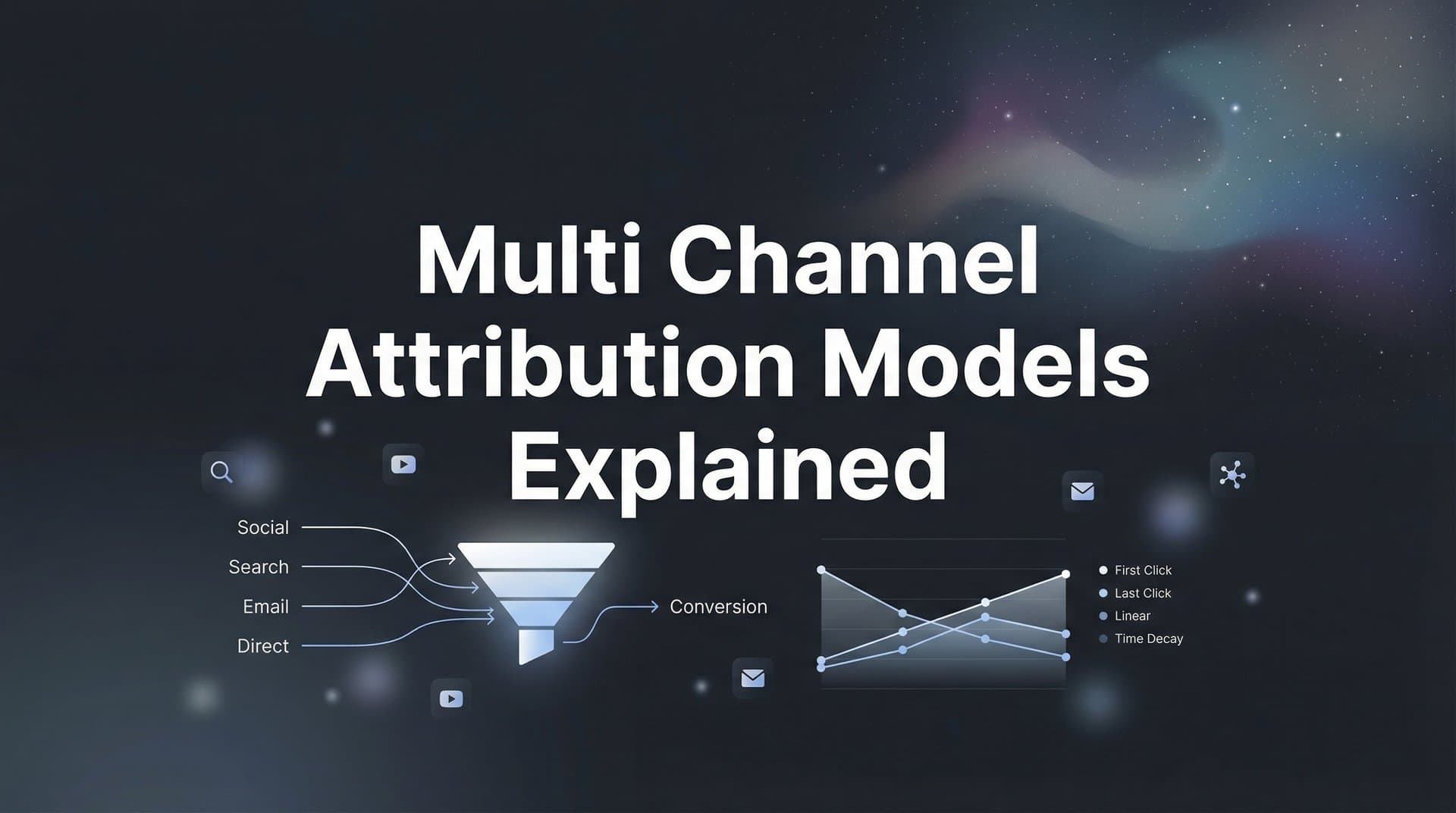
Let's start with the simplest approaches. First-click attribution gives 100% of the credit to whatever channel introduced the customer to your brand. If someone first discovered you through a Facebook ad, Facebook gets full credit—even if they later interacted with five other touchpoints before converting. This model works well if you're primarily focused on measuring awareness and top-of-funnel performance, but it completely ignores the nurture and conversion phases.
Last-click attribution does the opposite. It assigns all credit to the final touchpoint before conversion. If a customer's last interaction was clicking a Google ad, Google gets 100% of the credit. This is the default model in most analytics platforms because it's simple and it aligns with how ad platforms naturally report conversions. The problem? It systematically undervalues every channel except the ones that capture existing demand. For a deeper dive into all available options, explore our marketing attribution models complete guide.
Now we get to multi-touch models, which distribute credit across multiple touchpoints. Linear attribution is the most straightforward: it splits credit evenly across every interaction. If a customer touched five channels before converting, each channel gets 20% of the credit. This approach acknowledges that multiple touchpoints matter, but it assumes they all matter equally—which often isn't true.
Time-decay attribution recognizes that touchpoints closer to conversion typically have more influence. It assigns increasing credit as you move toward the final interaction. A touchpoint that happened seven days before conversion might get 10% credit, while one that happened yesterday gets 40%. This model works well for campaigns with defined sales cycles where recent interactions genuinely drive decision-making.
Position-based attribution, often called U-shaped, takes a different approach. It typically assigns 40% credit to the first touchpoint, 40% to the last touchpoint, and splits the remaining 20% among everything in between. The logic? The first interaction introduces your brand, the last interaction closes the deal, and the middle touchpoints play supporting roles. This model resonates with marketers who see clear value in both awareness and conversion moments. You can learn more about the various types of attribution marketing models to determine which fits your needs.
Then there's data-driven attribution, which uses machine learning to analyze thousands of conversion paths and determine which touchpoints actually increase conversion probability. Instead of following predetermined rules, algorithmic models compare paths that converted against paths that didn't, identifying which channels and sequences genuinely move the needle. If the data shows that customers who interact with both Facebook and email are 3x more likely to convert than those who only see one, the model adjusts credit accordingly.
Data-driven models require significant conversion volume to work effectively—you need enough data for the algorithm to identify meaningful patterns. But when you have that volume, they provide the most accurate view of true channel contribution because they're based on your actual customer behavior, not generic assumptions about how marketing should work.
Matching Models to Your Marketing Goals
Choosing the right attribution model isn't about finding the "best" one—it's about aligning measurement with what you're actually trying to accomplish. Different campaign objectives require different lenses for evaluating success.
If you're running brand awareness campaigns, first-touch or position-based models reveal value that last-click attribution completely misses. When your goal is introducing your brand to new audiences, you need to measure which channels successfully initiate customer relationships. First-touch shows you exactly that. Position-based gives awareness channels substantial credit while still acknowledging the channels that eventually close the deal. Both approaches prevent you from killing top-of-funnel campaigns that look "unproductive" under last-click but are actually filling your pipeline.
For performance and conversion-focused campaigns, time-decay or data-driven models provide clearer ROI insights. Time-decay makes sense when you're running campaigns with defined consideration periods—if you know prospects typically convert within 14 days of first interaction, a model that emphasizes recent touchpoints aligns with actual buyer behavior. Understanding multi-channel attribution for ROI helps you connect these models directly to revenue outcomes.
Data-driven attribution shines here if you have the conversion volume to support it. It reveals which specific channel combinations drive the highest conversion rates. You might discover that prospects who interact with both paid search and email convert at twice the rate of those who only see paid search, which tells you exactly where to allocate incremental budget.
When you're running full-funnel strategies that span awareness, consideration, and conversion, you face a choice: use multiple models to evaluate different objectives, or implement data-driven attribution to get a holistic view. Many sophisticated marketers do both—they'll use position-based models to evaluate top-of-funnel performance while simultaneously using data-driven models to guide overall budget allocation.
Here's a practical approach: if you're spending heavily on awareness channels like display, social, and video, start with position-based attribution to ensure those channels get appropriate credit. If you're primarily focused on capturing and converting existing demand through search and retargeting, time-decay makes more sense. And if you're running integrated campaigns across multiple channels with sufficient conversion volume, data-driven attribution provides the most accurate foundation for optimization decisions. Review these multi-channel attribution best practices to ensure you're implementing correctly.
The key is matching the model to your actual strategy. Don't default to last-click just because it's simple. Choose the model that accurately reflects how your marketing actually works and what you're trying to measure.
Implementing Multi-Channel Attribution: Practical Steps
Attribution models only work if you're capturing accurate data across every channel. That starts with consistent UTM parameters on every campaign link. Your UTM structure should clearly identify source, medium, and campaign for every piece of traffic. Without this foundation, you're trying to attribute conversions to channels you can't even properly identify.
Pixel implementation comes next. You need tracking pixels from your ad platforms properly installed on your website, firing on the right pages and events. But here's where many marketers hit a wall: browser-based pixel tracking has become increasingly unreliable. iOS privacy changes, cookie restrictions, and ad blockers mean you're missing 20-30% of conversions when you rely solely on client-side tracking.
This is why server-side tracking has become essential for accurate attribution. Instead of relying on browser cookies that users can block or that expire quickly, server-side tracking captures conversion data directly from your server and sends it to ad platforms. You get more complete data, better match rates, and attribution that actually reflects reality instead of just the conversions that made it through browser restrictions.
Connecting your data sources is where attribution becomes powerful. Your ad platforms, CRM, and website analytics need to feed into a unified view. When someone clicks a Facebook ad, fills out a lead form, receives email nurture, and eventually converts, you need a system that connects all those dots to the same person. This typically requires a customer data platform or multi-channel attribution platform that can unify identities across platforms.
Cross-device tracking remains one of the biggest implementation challenges. Your prospect might click an ad on mobile, research on desktop, and convert on tablet. Without cross-device identity resolution, those look like three different people, and your attribution falls apart. Solutions include requiring login across devices, using deterministic matching where possible, and implementing probabilistic matching algorithms that identify likely matches based on behavioral patterns.
Cookie limitations compound this challenge. Third-party cookies are disappearing, and even first-party cookies have limited lifespans. Your attribution window might be set to 30 days, but if cookies expire after seven days, you're only capturing a fraction of the actual customer journey. Server-side tracking, first-party data collection, and CRM integration help fill these gaps. Effective attribution tracking for multiple campaigns requires addressing all of these technical considerations.
Start with what you can control: implement clean UTM structures, deploy server-side tracking for your most important conversion events, and ensure your CRM captures source data for every lead. Then work toward unified data—connecting your ad platforms to your CRM so you can see which campaigns drive not just leads, but qualified leads that actually close.
Turning Attribution Insights Into Action
Once you have attribution data flowing, the real work begins: using those insights to make better decisions. Start by understanding the difference between channels that assist and channels that convert. Assist channels introduce prospects to your brand or keep you top of mind during consideration. Conversion channels capture existing demand and close deals.
Look at your attribution reports and identify channels with high assist rates but low last-click conversions. These are often your awareness and consideration channels—display ads, social media, content marketing. They're creating value, but last-click attribution gives them zero credit. If you're using a multi-touch model, you'll see their true contribution. A channel might only close 5% of deals but assist on 40% of conversions. That's a channel you should fund, not cut. Understanding channel attribution in digital marketing revenue tracking helps you connect these insights to actual business outcomes.
Now look at channels with high last-click rates but low assist rates. Branded search typically fits here. It gets tremendous last-click credit because people search your brand name right before converting. But those people already knew about you—they discovered you through other channels. Branded search is valuable for capturing demand, but it's not creating it. Understanding this distinction prevents you from dramatically overfunding bottom-funnel channels while starving the channels that actually build your pipeline.
Budget reallocation should follow these insights. If your attribution data shows that prospects who interact with both paid social and email convert at 3x the rate of those who only see one channel, you have a clear directive: invest in reaching prospects across both channels. If time-decay attribution reveals that webinar attendance significantly increases conversion probability, allocate more budget to webinar promotion. Following best practices for multi-channel campaign analysis ensures you're interpreting this data correctly.
Here's where attribution becomes truly powerful: feeding enriched conversion data back to ad platforms. When you send accurate, complete conversion data to Meta, Google, and LinkedIn, their algorithms get better at identifying and targeting high-value prospects. Instead of optimizing based on incomplete browser-based data, they optimize based on actual conversions tracked server-side and matched to your CRM.
This creates a compounding advantage. Better data leads to better targeting, which leads to higher-quality traffic, which leads to more conversions, which feeds even better data back to the algorithms. Marketers who implement this feedback loop consistently see improved ROAS as ad platforms learn to identify their best customers more accurately.
The action loop looks like this: analyze attribution data to understand true channel contribution, reallocate budget from over-credited to under-credited channels, feed enriched conversion data back to ad platforms to improve targeting, then measure the impact and refine further. This isn't a one-time optimization—it's a continuous process of learning and improving based on increasingly accurate data.
Building Confidence in Your Marketing Decisions
Multi-channel attribution transforms marketing from guesswork into science. Instead of wondering which channels actually drive revenue, you know. Instead of arguing about budget allocation based on opinions, you make decisions based on data. Instead of crediting channels that simply captured existing demand, you properly value the channels that created that demand in the first place.
The model you choose matters less than choosing a model that aligns with your strategy and implementing it consistently. Position-based attribution works brilliantly for full-funnel campaigns. Time-decay fits defined sales cycles. Data-driven attribution provides the most accurate view when you have sufficient conversion volume. The worst choice is sticking with last-click attribution and pretending it tells the whole story.
Implementation requires investment in proper tracking infrastructure, but that investment pays dividends in every optimization decision you make afterward. Server-side tracking, unified data, and cross-device identity resolution aren't nice-to-haves—they're foundational requirements for attribution that reflects reality.
The ultimate goal isn't perfect attribution—it's confident decision-making. When you understand which channels drive awareness, which ones nurture consideration, and which ones close deals, you can scale campaigns profitably instead of blindly increasing spend and hoping for the best. You can defend budget allocations with data instead of intuition. You can identify underperforming channels and fix them instead of cutting them prematurely.
Ready to elevate your marketing game with precision and confidence? Discover how Cometly's AI-driven recommendations can transform your ad strategy—Get your free demo today and start capturing every touchpoint to maximize your conversions.