
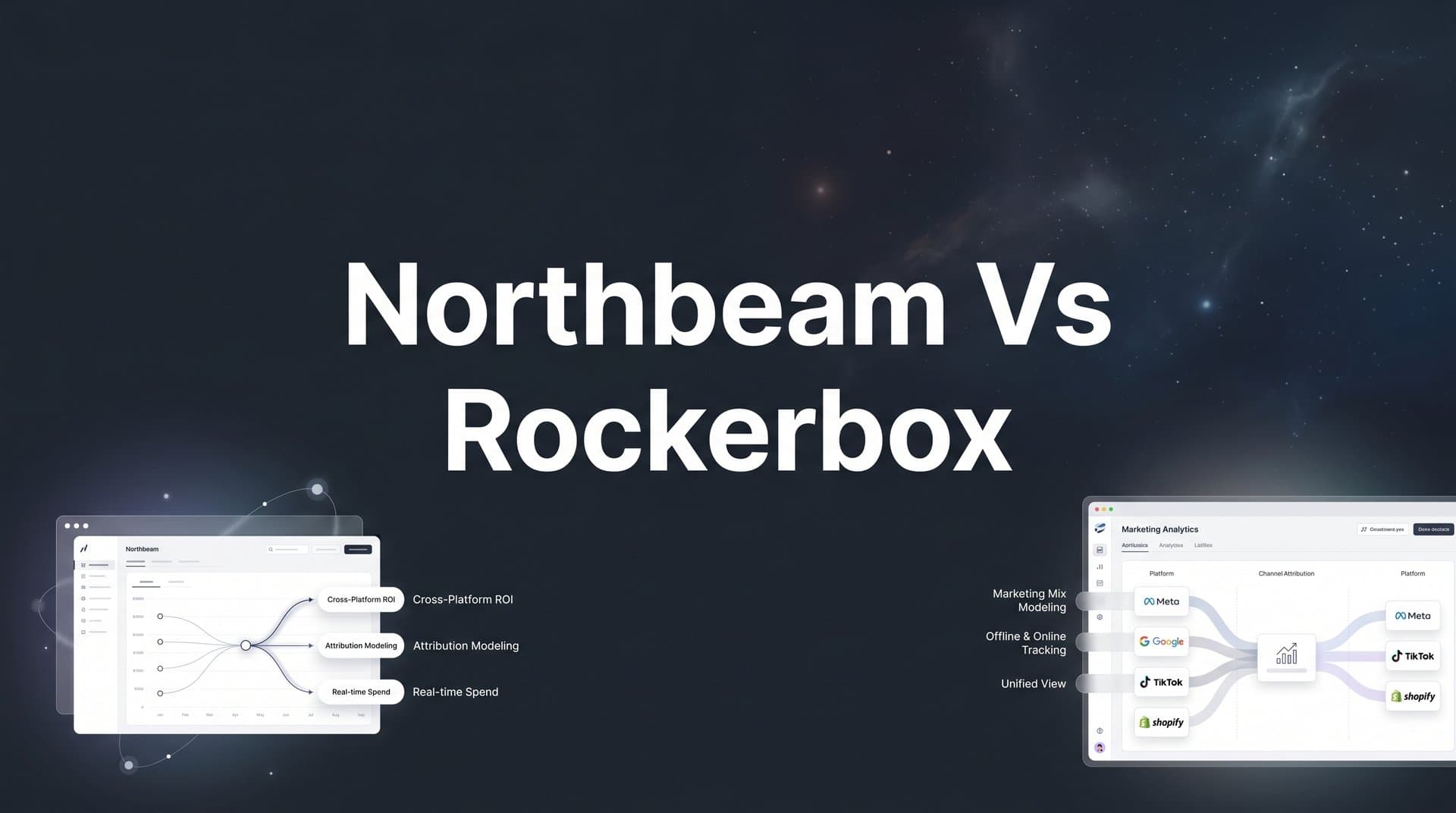
Choosing between Northbeam and Rockerbox can feel overwhelming when both platforms promise accurate attribution and better marketing insights. The reality is that each platform has distinct strengths suited to different business needs, team structures, and growth stages. This guide cuts through the marketing noise to give you practical strategies for evaluating these attribution solutions against your specific requirements. Whether you are scaling an ecommerce brand, managing multi-channel campaigns, or trying to prove ROI to stakeholders, these seven strategies will help you make a confident, data-driven decision that aligns with your marketing goals and budget.
1. Map Your Attribution Complexity Before Comparing Features
The Challenge It Solves
Most marketing teams jump straight into platform demos without understanding their own attribution requirements. You end up comparing features you don't need while overlooking capabilities that are critical to your business. This backwards approach leads to expensive mismatches between what you buy and what you actually use.
Without a clear map of your attribution complexity, you can't ask the right questions during platform evaluations. You might select a platform based on impressive dashboards when what you really need is deeper integration with your CRM or specific attribution model support.
The Strategy Explained
Before you schedule a single demo, document your complete customer journey and current touchpoint landscape. Map every channel where prospects interact with your brand, from first touch through conversion and beyond. Include paid channels like Meta and Google Ads, organic touchpoints like SEO and email, and offline interactions if applicable.
Create a visual representation of your typical customer journey, noting how many touchpoints prospects typically encounter before converting. Identify which channels are most critical to your business model and which attribution questions you need answered most urgently. This exercise reveals your true requirements rather than letting platform sales teams define them for you.
Implementation Steps
1. Audit all marketing channels currently in use and document average touchpoints per conversion in your analytics platform
2. Interview sales and customer success teams to understand offline touchpoints and longer-term conversion patterns not visible in your current tracking
3. Create a prioritized list of attribution questions you need answered, such as "Which ad creative drives the highest lifetime value customers?" or "How much credit should our email nurture sequences receive?"
4. Document your current tech stack including ad platforms, CRM, email tools, and analytics solutions that need to integrate with your attribution platform
Pro Tips
Focus on the complexity of your actual customer journey, not the complexity you wish you had. If most customers convert after two or three touchpoints, you don't need an enterprise-level platform built for 20-touchpoint journeys. Conversely, if you run multi-channel campaigns with long sales cycles, a simple last-click solution will leave you blind to what's really working. Understanding the different types of attribution models can help you determine which approach fits your business.
2. Evaluate Data Integration Depth, Not Just Platform Count
The Challenge It Solves
Attribution platforms love to advertise how many integrations they support, but quantity doesn't equal quality. A platform might claim integration with 50 tools while only offering surface-level connections that don't capture the data you need. This creates gaps in your attribution model that undermine the entire system.
Surface-level integrations often miss critical conversion events, attribution parameters, or revenue data. You end up with incomplete customer journeys and attribution models that systematically undervalue certain channels because the data simply isn't flowing properly.
The Strategy Explained
Test how deeply each platform integrates with your specific tech stack, not just whether an integration exists. Request technical documentation showing exactly what data points each integration captures. Ask about bidirectional data flow, especially for ad platforms where you want to send conversion data back to improve targeting and optimization.
Focus particularly on your most important tools. If you run significant spend on Meta and Google Ads, those integrations need to be bulletproof. If your CRM holds critical revenue and customer lifetime value data, that connection needs to capture every relevant field.
Implementation Steps
1. List your five most critical marketing and sales tools, then request detailed integration specifications from both Northbeam and Rockerbox for each one
2. Ask specific questions about data capture: Does the integration pull revenue data? Can it attribute offline conversions? Does it capture custom event parameters you've configured?
3. Request a technical walkthrough of the integration setup process and ongoing data validation procedures to ensure data quality remains high
4. Test server-side tracking capabilities if you're dealing with iOS traffic limitations or privacy-focused audiences where client-side tracking falls short. Platforms offering accurate tracking for iOS users have become essential in today's privacy-first landscape.
Pro Tips
Server-side tracking has become increasingly important as privacy changes limit browser-based tracking accuracy. Platforms that rely primarily on client-side tracking will systematically underreport conversions from iOS users and privacy-conscious audiences. Make sure your chosen platform offers robust server-side tracking that connects directly to your ad platforms and CRM.
3. Compare Attribution Models Against Your Sales Cycle
The Challenge It Solves
Different attribution models tell fundamentally different stories about which channels drive revenue. If you choose a platform that only supports models mismatched to your sales cycle, you'll make optimization decisions based on incomplete or misleading data. A platform optimized for ecommerce impulse purchases won't serve a B2B company with 90-day sales cycles.
Many businesses default to whatever attribution model their current analytics platform offers without questioning whether it actually reflects their customer journey. This leads to systematic underinvestment in channels that play crucial roles in longer conversion paths.
The Strategy Explained
Match attribution methodology to your actual customer journey characteristics. Companies with short sales cycles and few touchpoints can often work with simpler models like first-click or last-click attribution. Businesses with longer consideration periods and multiple touchpoints need multi-touch attribution models that credit various stages of the journey.
Evaluate which specific attribution models each platform supports and how flexible they are. Some platforms offer multiple model options, letting you compare how different methodologies affect channel performance. This flexibility helps you understand which channels drive awareness versus which close deals. When comparing options, reviewing a Northbeam competitor analysis can reveal important differences in model support.
Implementation Steps
1. Calculate your average sales cycle length and typical number of touchpoints before conversion using your current analytics data
2. Request demonstrations of how Northbeam and Rockerbox handle multi-touch attribution for journeys similar to yours, including which models they support
3. Ask about model customization options if standard models don't fit your business, such as position-based or time-decay models with custom weighting
4. Evaluate whether the platform lets you compare multiple attribution models side-by-side to understand how methodology affects channel performance analysis
Pro Tips
Multi-touch attribution models generally provide more complete pictures than last-click models for businesses with longer sales cycles. If your customers typically interact with your brand multiple times before converting, a last-click model will systematically overvalue bottom-funnel channels while ignoring the awareness and consideration channels that made that final click possible.
4. Stress-Test Reporting for Stakeholder Needs
The Challenge It Solves
Attribution platforms generate mountains of data, but data without usable reporting is just noise. Different stakeholders need different views into attribution data. Your CEO wants high-level ROI summaries, your CFO needs detailed cost analysis, and your media buyers need granular campaign performance breakdowns. A platform that can't serve all these audiences creates reporting bottlenecks.
Standard dashboards rarely match your specific reporting requirements. You end up spending hours each week manually pulling data into spreadsheets or creating custom reports because the platform's native reporting doesn't answer your stakeholders' actual questions.
The Strategy Explained
Test reporting capabilities against your real stakeholder requirements before committing to a platform. Bring actual reporting requests from your CEO, CFO, and marketing team to demo calls. Ask the sales team to build those specific reports in real-time using demo data. This reveals whether the platform's reporting flexibility matches your needs or whether you'll be fighting the system constantly.
Evaluate both dashboard customization and data export capabilities. Sometimes you need beautiful executive dashboards, other times you need raw data exports for deeper analysis. The best platforms offer both without forcing you to choose between visual appeal and analytical depth. Learning to extract actionable data from your attribution platform is essential for driving real business decisions.
Implementation Steps
1. Collect the five most common reporting requests you receive from executives, finance teams, and marketing stakeholders
2. During platform demos, ask the sales team to recreate these exact reports using their system, noting how many clicks it takes and whether customization is required
3. Test dashboard sharing and permission controls to ensure different stakeholders can access appropriate data without overwhelming them with unnecessary detail
4. Evaluate mobile reporting capabilities if stakeholders need to access attribution data outside the office or during travel
Pro Tips
The easiest way to identify reporting gaps is to ask "Can you show me X?" during demos rather than accepting whatever standard dashboards they present. Sales teams love showing their best-looking dashboards, but those might not answer your actual business questions. Force them to demonstrate the platform's flexibility with your specific use cases.
5. Calculate Total Cost of Ownership Beyond Subscription Fees
The Challenge It Solves
Subscription pricing is just the starting point for attribution platform costs. Implementation fees, training requirements, ongoing support, and potential consulting needs can double or triple your actual investment. Many teams budget only for the monthly subscription, then get blindsided by additional costs that strain marketing budgets and delay ROI.
Hidden costs often include data engineering support for custom integrations, additional user seats as your team grows, premium support tiers for faster response times, and professional services for complex implementations. These expenses add up quickly and can make an apparently affordable platform surprisingly expensive.
The Strategy Explained
Build a complete 12-month cost model that includes every potential expense associated with each platform. Request detailed pricing for implementation, training, support tiers, additional user seats, and any usage-based fees. Factor in internal costs like engineering time for integration work and opportunity cost of time spent learning the new system.
Compare total cost of ownership rather than just subscription fees. A platform with higher monthly costs but included implementation and unlimited support might actually be cheaper than a lower-priced option that nickel-and-dimes you for every service. Exploring Rockerbox alternative pricing options can help you understand the full range of costs across different solutions.
Implementation Steps
1. Request complete pricing documentation including implementation fees, training costs, support tier pricing, and any usage-based charges from both platforms
2. Estimate internal costs by calculating engineering hours needed for integration work and team hours required for training and adoption
3. Project growth-related costs by modeling how pricing changes as you add users, increase tracked events, or expand to additional marketing channels
4. Build a spreadsheet comparing total 12-month costs including subscription, implementation, training, support, and internal resource allocation
Pro Tips
When evaluating attribution platforms, total cost of ownership often exceeds subscription fees due to implementation and training requirements. Ask specifically about costs that kick in after the initial contract period. Some platforms offer attractive first-year pricing that jumps significantly upon renewal, or they charge separately for features that should be included in the base platform.
6. Assess Ad Platform Feedback Loop Capabilities
The Challenge It Solves
Accurate attribution data is valuable, but feeding that data back to your ad platforms creates exponential value. Ad platform algorithms optimize better when they receive complete, accurate conversion data. If your attribution platform can't sync enriched conversion events back to Meta, Google, and other networks, you're only solving half the problem.
Most attribution platforms excel at showing you what happened but fail at helping ad platforms optimize future performance. This means you gain insights but can't easily act on them. You end up manually adjusting campaigns based on attribution data rather than letting the platforms optimize automatically with better information.
The Strategy Explained
Evaluate conversion sync features that send enriched event data back to your ad platforms. This bidirectional data flow helps ad platform algorithms understand which audiences and creative actually drive valuable conversions, improving targeting and optimization over time. Look for platforms that can send server-side conversion events to bypass tracking limitations from iOS and privacy changes.
Test how each platform handles conversion value data and custom event parameters. The more detailed the conversion data you send back to ad platforms, the better their algorithms can optimize for high-value customers rather than just conversion volume. An accurate ad attribution platform should excel at this bidirectional data flow.
Implementation Steps
1. Ask how each platform sends conversion data back to Meta, Google Ads, and other networks you use, specifically requesting technical details about server-side event implementation
2. Evaluate whether the platform can send custom conversion values and parameters that help ad platforms optimize for customer lifetime value rather than just initial purchase value
3. Request case examples of how conversion sync has improved ad platform performance for similar businesses, focusing on ROAS improvements and targeting accuracy gains
4. Test the setup process for conversion sync during trial periods to understand technical complexity and ongoing maintenance requirements
Pro Tips
Server-side conversion sync has become critical as browser-based tracking becomes less reliable. Platforms that only offer client-side tracking will send incomplete conversion data back to your ad networks, undermining optimization. Make sure your chosen platform offers robust server-side tracking that feeds complete conversion data to ad platforms regardless of browser restrictions or privacy settings.
7. Consider a Third Option That Combines the Best of Both
The Challenge It Solves
Limiting your evaluation to just Northbeam and Rockerbox might mean missing a platform that better fits your needs. The attribution technology landscape has evolved rapidly, with newer platforms combining comprehensive tracking, AI-powered insights, and conversion optimization features that older solutions lack. Expanding your evaluation ensures you don't settle for a platform that solves some problems while creating new ones.
Many teams assume the two most-discussed platforms must be the best options, but market buzz doesn't always correlate with the right fit for your specific business. A less-hyped platform might offer better integration with your tech stack, more flexible pricing, or features specifically designed for your industry.
The Strategy Explained
Expand your platform evaluation to include alternatives that might combine the strengths of both Northbeam and Rockerbox while addressing their limitations. Look for platforms that offer comprehensive touchpoint tracking, flexible attribution models, and strong ad platform integration. Modern attribution solutions increasingly incorporate AI-powered recommendations that go beyond data visualization to suggest specific optimization actions. Reviewing the best attribution software tools available can help you identify options you might have overlooked.
Consider platforms like Cometly that capture every touchpoint from ad clicks to CRM events, providing AI a complete view of customer journeys. These platforms connect every touchpoint to conversions so you can see which sources actually drive revenue, not just traffic or clicks. AI-powered features can identify high-performing ads and campaigns across every channel, then help you scale with confidence based on actual attribution data.
Implementation Steps
1. Research attribution platforms beyond Northbeam and Rockerbox, focusing on solutions that offer comprehensive tracking, AI-powered insights, and conversion sync capabilities
2. Evaluate platforms that send enriched, conversion-ready events back to Meta, Google, and other ad networks to improve targeting, optimization, and ad ROI
3. Compare how different platforms handle the complete attribution workflow from data capture through analysis to optimization recommendations and ad platform feedback
4. Test platforms that offer AI-driven recommendations rather than just data visualization, helping you identify optimization opportunities you might miss in manual analysis
Pro Tips
AI-powered attribution tools are becoming more common as teams seek automated optimization recommendations rather than just data visualization. Look for platforms that don't just show you attribution data but actively suggest which campaigns to scale, which audiences to target, and which creative to prioritize based on complete customer journey analysis. This transforms attribution from a reporting exercise into an active optimization engine.
Making Your Final Decision
Choosing between Northbeam and Rockerbox requires more than comparing feature lists. Start by mapping your attribution complexity and integration needs. Then stress-test reporting capabilities and calculate true costs including implementation, training, and ongoing support.
 9 Best Attribution Tools for Facebook Advertisers in 2026
 8 Best Warehouse Attribution Solutions for E-commerce in 2026
Most importantly, evaluate how well each platform feeds data back to your ad networks for better optimization. Attribution platforms that only show you what happened without helping ad platforms optimize future performance solve only half the equation. Look for solutions that offer bidirectional data flow, sending enriched conversion events back to improve targeting and campaign performance.
If neither platform fully meets your needs, consider alternatives like Cometly that combine comprehensive touchpoint tracking, AI-powered recommendations, and conversion sync capabilities. Cometly captures every touchpoint from ad clicks to CRM events, providing AI a complete, enriched view of every customer journey. The platform connects every touchpoint to conversions so you can see which sources actually convert, not just which generate clicks or impressions.
With AI-driven recommendations, you can identify high-performing ads and campaigns across every ad channel, then scale with confidence based on complete attribution data. Cometly also sends enriched, conversion-ready events back to Meta, Google, and other networks, improving targeting, optimization, and ad ROI by giving ad platform algorithms better data to work with.
Ready to elevate your marketing game with precision and confidence? Discover how Cometly's AI-driven recommendations can transform your ad strategy. Get your free demo today and start capturing every touchpoint to maximize your conversions.