Most ad platforms tell you a reassuring story. A lead clicks your Google ad, fills out a form, and the platform marks it as a conversion. Campaign successful. Budget justified. But if you sell anything with a real sales cycle, you know that story is incomplete.
The actual conversion happens later. Maybe a sales rep follows up three days after the form fill. Maybe the prospect comes in for a demo two weeks later. Maybe they sign a contract over the phone a month after that. None of those moments show up in your ad dashboard. The platform never learns what actually happened after the click.
This creates a real problem. Your ad algorithms optimize toward whatever signals they receive. If the only signal they get is "form submitted," they optimize for form submissions. They have no idea that half those form fills never answered a follow-up call, while a different campaign generated fewer leads but closed at a much higher rate. Without that context, your budget allocation is essentially a guess dressed up in data.
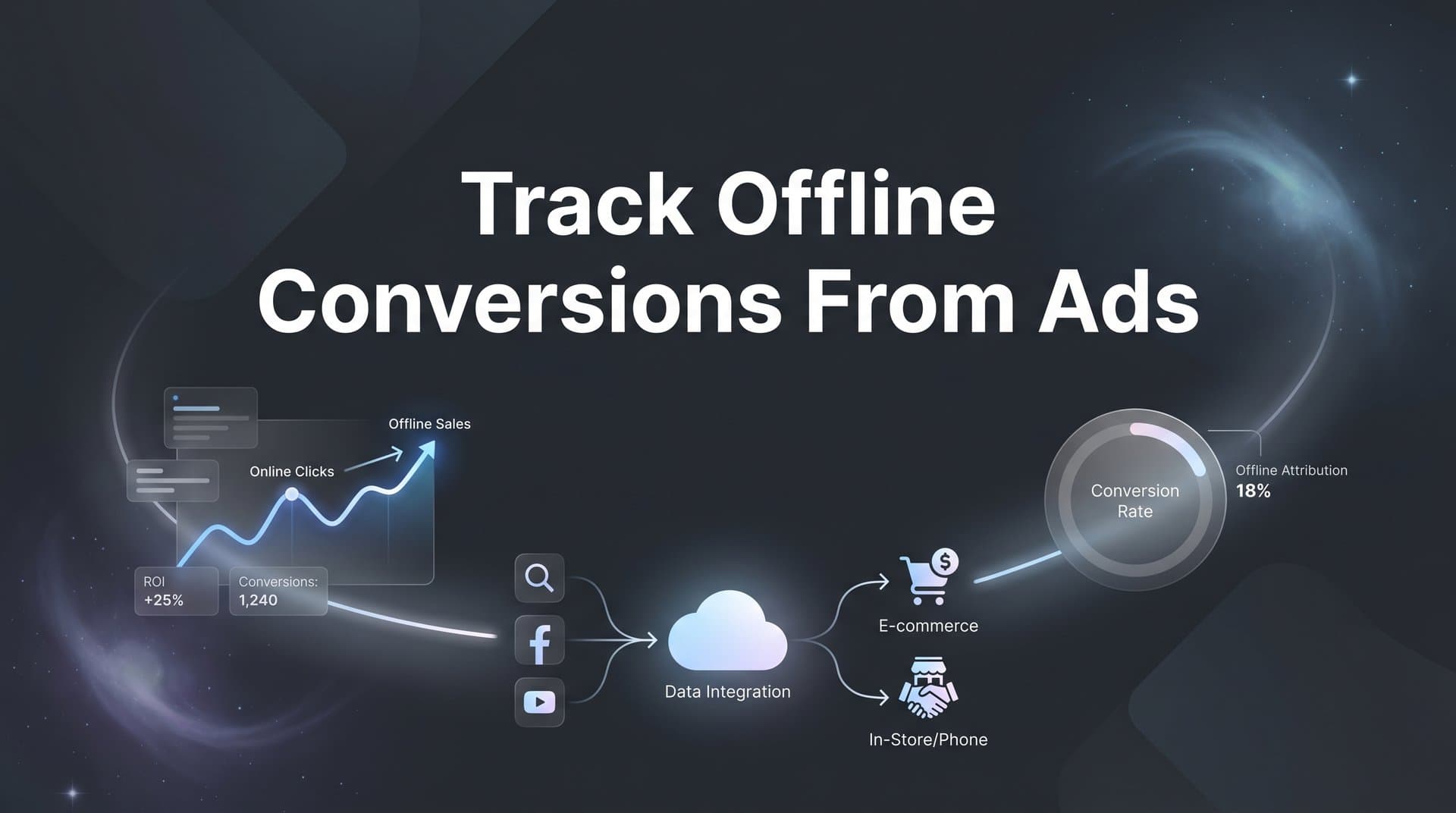
Learning how to track offline conversions from ads fixes this. It creates a closed loop between your ad platforms and your actual revenue, connecting what happens in your CRM and sales process back to the original ad click that started the journey. When your ad platforms receive real conversion signals tied to real revenue, their machine learning improves, your reporting becomes honest, and your budget decisions get sharper.
This guide walks you through exactly how to build that system. You will define the right conversion events, capture the identifiers that link clicks to customers, connect your CRM to your attribution setup, sync data back to ad platforms, validate your accuracy, and use the resulting data to make smarter spend decisions. Each step builds on the last, so by the time you finish, you will have a working framework rather than a collection of disconnected tactics.
Let's get into it.
Step 1: Define Your Offline Conversion Events and Assign Values
Before you configure a single integration, you need to get clear on what you are actually trying to track. This sounds obvious, but it is the step most teams skip, and it causes problems downstream.
Start by mapping out every meaningful offline action in your sales funnel. Think about the moments that genuinely signal buying intent or revenue. Common examples include a qualified lead being marked in your CRM, a sales call booked, a proposal sent, a contract signed, or an in-store purchase completed. Each of these represents a different stage of commitment, and each one tells a different story about lead quality. If you are new to the concept, our guide on what are offline conversions provides a helpful foundation.
Not all of these events need to be tracked as conversions. In fact, tracking too many events creates noise that confuses ad platform algorithms and muddies your reporting. The goal is to identify two to four high-signal events that your marketing and sales teams agree are genuine indicators of buying intent or revenue. For many B2B businesses, "qualified opportunity created" and "deal closed won" are the two most valuable signals. For retail or service businesses, it might be "appointment booked" and "in-store purchase."
Once you have your shortlist, assign a monetary value to each event. This is what allows ad platforms to optimize toward revenue rather than just activity. Use your average deal size for closed conversions. For earlier funnel events like qualified leads or proposals, use a weighted value based on your typical close rate and average deal size. If your average deal is worth a certain amount and you close one in five qualified leads, your qualified lead conversion value would be one-fifth of that deal value.
These values do not need to be perfect. They need to be consistent and agreed upon by both your marketing and sales teams. Document them clearly, including the definition of each event (what exactly triggers it in your CRM), the assigned value, and who is responsible for ensuring that event gets recorded accurately.
Common pitfall: Disagreements between marketing and sales about what counts as a "qualified lead" will corrupt your data. Align on definitions before you build anything technical.
Success indicator: You have a written document listing two to four offline conversion events with clear trigger definitions, assigned dollar values, and sign-off from both your marketing and sales teams.
Step 2: Capture Click Identifiers That Link Ads to Leads
Every time someone clicks a Google ad, Google appends a unique identifier to the URL called a GCLID, short for Google Click Identifier. Meta does the same thing with FBCLID. These identifiers are the thread that connects a specific ad click to everything that happens afterward, including an offline conversion weeks later.
The challenge is that most forms and CRMs do not capture these identifiers by default. When a lead submits a form, the GCLID sitting in the URL often disappears into the void. To track offline conversions, you need to capture that identifier at the moment of form submission and store it alongside the lead record in your CRM. This is especially critical for businesses focused on tracking conversions for lead generation, where the gap between click and sale can be significant.
Here is how to set this up. First, make sure auto-tagging is enabled in your Google Ads account. This is what causes Google to append the GCLID to your ad destination URLs automatically. For Meta, FBCLID is added automatically when someone clicks a Meta ad, so no extra configuration is needed on the platform side.
Next, add hidden fields to your landing page forms. A hidden field is a form field that the user never sees, but it captures data from the URL and submits it along with the rest of the form. You will add hidden fields for GCLID, FBCLID, and any UTM parameters you use. When someone arrives on your landing page from an ad, the hidden fields automatically populate with the click identifiers from the URL. When they submit the form, those values get passed along with their name, email, and other contact information.
Most form builders support hidden fields natively. You can populate them using JavaScript that reads the URL parameters and inserts the values. If you use a CRM with a native form builder, check whether it has built-in support for capturing UTM parameters and click IDs, as many modern CRMs do.
The final piece is making sure your CRM stores these identifiers as fields on the contact or lead record. Create custom fields in your CRM for GCLID and FBCLID if they do not already exist. Then map your form hidden fields to those CRM fields so the data flows through automatically.
Important timing note: Google's GCLID has a 90-day attribution window. If a lead converts offline more than 90 days after clicking the ad, the GCLID will no longer be valid for import. For businesses with longer sales cycles, this is a real constraint worth planning around.
Tip: Test your setup by submitting a test form after clicking through from a Google Ads preview or a test ad. Check the resulting CRM record to confirm the GCLID populated correctly in the custom field.
Success indicator: Every new lead created from an ad click has a GCLID or FBCLID stored in their CRM record. Spot-check ten recent leads to verify.
Step 3: Connect Your CRM and Sales Tools to Your Attribution Platform
You now have click identifiers stored in your CRM. The next step is making sure that when a lead progresses through your sales funnel, those offline events flow automatically into your attribution system with the right data attached.
The goal here is automation. Manually exporting CRM data and uploading it to an attribution platform is error-prone and time-consuming. You want a system where a sales rep marks a deal as closed in the CRM, and that event automatically appears in your attribution reports with the correct campaign, ad set, and ad credited. The ability to track leads to revenue depends entirely on this connection working reliably.
Start by reviewing the integration options between your CRM and your attribution platform. Most major CRMs like Salesforce, HubSpot, and Pipedrive offer native integrations or webhook functionality that can push data to external systems when specific events occur. A webhook is essentially an automatic notification: when something changes in your CRM (a deal stage updates, a contact status changes), the CRM sends that data to a specified URL in real time.
Configure your webhooks or native integrations to trigger on the conversion events you defined in Step 1. For example, set up a trigger that fires when a deal moves to "Closed Won" in your pipeline. That trigger should push the deal data to your attribution platform, including the deal value, the conversion date, and critically, the GCLID or FBCLID stored on the associated contact record.
This is where data field mapping becomes important. Your CRM and your attribution platform need to speak the same language. Make sure the following fields align correctly between systems: the click identifier (GCLID or FBCLID), the conversion event name (matching exactly what you defined in Step 1), the conversion value, the conversion timestamp, and any relevant contact or deal identifiers.
Cometly is built specifically for this kind of integration. It connects your ad platforms, CRM, and website data to track the entire customer journey in real time, capturing every touchpoint from the initial ad click through to CRM events like closed deals. Rather than manually stitching together data from multiple sources, Cometly provides a unified view of the customer journey with attribution already mapped.
Success indicator: Trigger a test conversion in your CRM (move a test deal to closed) and confirm it appears in your attribution platform within a few minutes with the correct ad source, conversion value, and timestamp attached.
Step 4: Sync Offline Conversion Data Back to Your Ad Platforms
Capturing offline conversion data in your attribution platform is valuable for your own reporting. But to truly close the loop and improve your ad performance, you need to send that data back to Google Ads and Meta so their algorithms can learn from it.
There are two approaches to doing this: manual CSV uploads and automated server-side syncing.
Manual CSV uploads work for smaller businesses or teams just getting started. Google Ads allows you to upload a CSV file containing offline conversion data. The file needs specific fields: the GCLID, the conversion action name (which must match a conversion action you have already created in Google Ads), the conversion time, and optionally the conversion value and currency. Meta offers similar functionality through its Conversions API, which can accept offline event data in a structured format.
Automated server-side syncing is the better approach for any business at scale. Instead of manually preparing and uploading files, your attribution platform sends conversion data directly to ad platforms via API whenever a qualifying event occurs. This happens server-to-server, meaning it does not rely on browser cookies or JavaScript tags that can be blocked or broken by privacy settings. Learn more about how server-side tracking for ads works and why it is becoming the industry standard.
This distinction matters more than ever. Apple's App Tracking Transparency changes, introduced with iOS 14.5, significantly reduced the reliability of browser-based conversion tracking for mobile users. Third-party cookie deprecation has added further pressure. If you have been affected by these changes, our guide on tracking paid ads after the iOS update covers the specific workarounds in detail. Server-side tracking bypasses these limitations entirely because the data travels directly between servers, not through a user's browser.
Cometly's Conversion Sync handles this automatically. It sends enriched, conversion-ready events back to Meta, Google, and other ad platforms, feeding their machine learning algorithms with accurate offline conversion signals. When these platforms receive real revenue data tied to specific clicks, they can optimize bidding and targeting toward users who are more likely to generate actual closed deals, not just form fills.
Formatting tip for manual uploads: Time zones are a common source of upload failures. Make sure your conversion timestamps are formatted in the correct time zone for your ad account, and that your date format matches exactly what the platform expects. Always validate a small batch of ten to twenty records before uploading your full dataset.
Success indicator: Your Google Ads and Meta dashboards show offline conversions attributed to specific campaigns, ad sets, and individual ads. You can see cost-per-offline-conversion alongside your other metrics.
Step 5: Validate Your Data and Fix Tracking Gaps
Setting up offline conversion tracking is only half the work. Validating that it is working correctly is what separates teams that trust their data from teams that just hope their data is right.
Start with a manual validation test. Take ten to twenty known closed deals from your CRM, deals where you know the original lead source. Check whether each of those deals appears correctly in your attribution platform with the right campaign credited. Then check whether those same conversions appear in your ad platform dashboards. This exercise will quickly surface any systematic gaps in your setup.
Pay close attention to your match rate. Your match rate is the percentage of offline conversions that are successfully matched back to an ad click using a GCLID or FBCLID. A low match rate means a large portion of your offline conversions cannot be attributed to a specific ad, which limits the value of the whole system. Match rates above 80% are a reasonable target for most setups.
Common reasons for low match rates include leads who came through organic search or direct traffic (no click ID to capture), form submissions where the hidden field failed to populate, click IDs that expired before the offline conversion was uploaded, and CRM records where the click ID field was not mapped correctly. Spending money on ads that cannot be properly attributed is essentially wasted ad budget on untracked conversions, which is why fixing these gaps is so important.
Other issues to watch for include duplicate conversions (the same deal being counted twice due to multiple CRM triggers), delayed CRM updates that push conversion data past the upload window, and mismatched conversion event names between your CRM integration and your ad platform conversion actions.
Set up a regular audit cadence, weekly or biweekly, to review match rates and conversion counts. Compare the number of offline conversions in your CRM against what appears in your attribution reports. Significant discrepancies signal a tracking gap that needs investigation.
Success indicator: Your match rate is consistently above 80%, and the conversion counts in your attribution platform align closely with what your CRM shows for the same time period.
Step 6: Analyze Attribution Data and Optimize Your Ad Spend
Here is where all the setup work pays off. With offline conversions flowing into your attribution system and back to your ad platforms, you can finally answer the question that actually matters: which campaigns are generating real revenue?
Start by comparing cost-per-acquisition and return on ad spend across your campaigns using offline conversion data rather than lead volume. You will likely find that the rankings look different from what your in-platform reporting suggested. A campaign that generated a high volume of cheap leads may have a poor offline close rate, making its true cost-per-acquisition much higher than it appeared. This is a common scenario explored in our article on why ads show conversions but no sales. Meanwhile, a campaign with fewer, more expensive leads may be closing at a significantly better rate.
This is the insight that changes budget allocation decisions. Shift spend away from campaigns that generate volume without revenue, and toward campaigns with strong offline conversion performance. These decisions are now grounded in actual revenue data rather than proxy metrics.
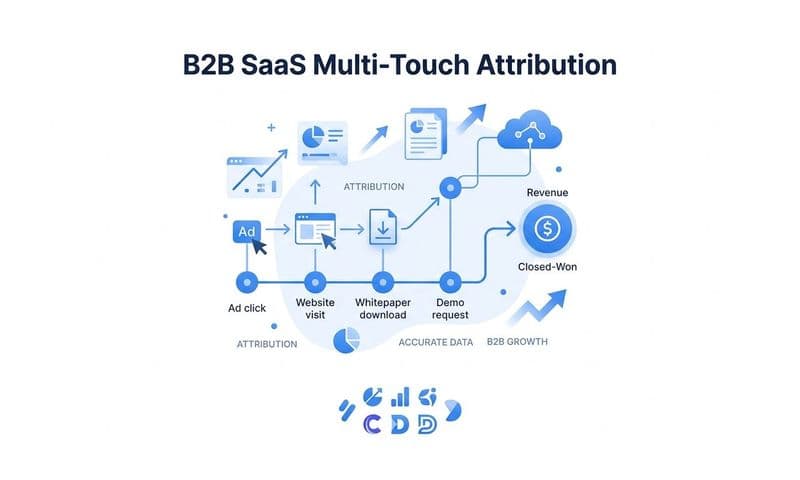
Next, use multi-touch attribution to understand the full customer journey. Many B2B sales cycles involve multiple touchpoints over weeks or months. A prospect might click a LinkedIn ad, later search for your brand on Google, then convert after a retargeting ad on Meta. Single-touch models like first-click or last-click attribution give all the credit to one interaction and ignore the rest. Multi-touch models distribute credit across the journey, giving you a more complete picture of which channels assist versus which ones close. For a deeper dive into this challenge, see our guide on tracking conversions across multiple touchpoints.
Cometly's AI analyzes performance across every ad channel to identify high-performing ads and provide optimization recommendations. Rather than manually sifting through campaign data to find patterns, you get clear signals about where to scale and where to pull back, based on the full customer journey including offline conversion data.
Take time to evaluate different attribution models and see how they change your view of performance. First-touch attribution highlights what is driving awareness and new pipeline. Last-touch shows what is closing deals. Data-driven attribution, available in platforms like Google Ads, uses machine learning to assign credit based on actual conversion patterns. The right model depends on your sales cycle and what decisions you are trying to inform.
Success indicator: You can confidently answer "which ad campaign generated the most revenue last month" using verified offline conversion data, and you have made at least one budget reallocation decision based on that data.
Putting It All Together: Your Offline Conversion Tracking Checklist
Tracking offline conversions from ads is one of the highest-leverage improvements a marketing team can make. It transforms your ad reporting from a surface-level view of clicks and form fills into an accurate picture of what actually drives revenue.
Here is a quick-reference checklist of the six steps covered in this guide:
1. Define and value your offline conversion events. Identify two to four high-signal events in your sales funnel, assign monetary values, and align your marketing and sales teams on the definitions.
2. Capture click identifiers on every form submission. Enable auto-tagging in Google Ads, add hidden fields to your forms for GCLID and FBCLID, and store those identifiers on every lead record in your CRM.
3. Connect your CRM to your attribution platform. Use webhooks or native integrations to push deal stage changes and closed-won events automatically, with the correct click identifier and revenue data attached.
4. Sync offline conversions back to ad platforms via server-side tracking. Use automated server-side syncing rather than manual uploads wherever possible, especially given the ongoing impact of iOS privacy changes and cookie restrictions.
5. Validate data accuracy and fix gaps regularly. Run manual validation tests, monitor your match rates, and set up a recurring audit to catch tracking drift before it corrupts your reporting.
6. Analyze true ROAS and optimize spend based on real revenue. Use offline conversion data to compare campaign performance by actual revenue, apply multi-touch attribution to understand the full journey, and reallocate budget accordingly.
This is not a set-it-and-forget-it process. Sales cycles evolve, new campaigns launch, CRM configurations change, and tracking needs ongoing attention to stay accurate. The businesses that get the most value from offline conversion tracking are the ones that treat it as a living system, not a one-time project.
Cometly helps marketers and agencies automate this entire workflow. It connects your ad platforms, CRM, and website data in one place, captures every touchpoint from ad click to closed deal, and feeds enriched conversion data back to your ad platforms to improve their optimization. Instead of manually managing uploads and debugging mismatched fields, you get a clear, accurate view of which ads are driving revenue.
If you are ready to stop optimizing toward form fills and start optimizing toward actual closed revenue, Get your free demo and see how Cometly makes offline conversion tracking straightforward, accurate, and scalable.