

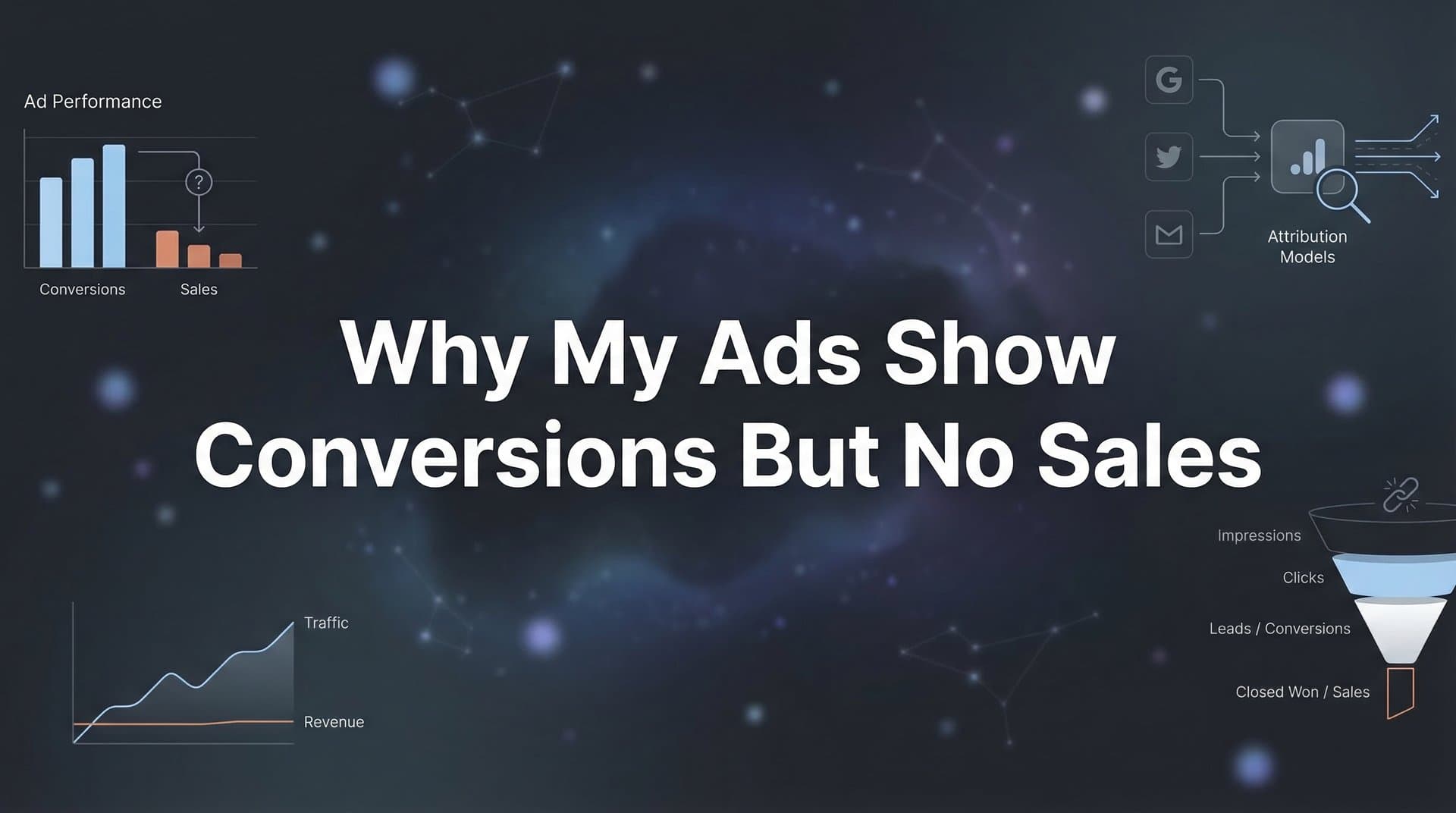
You refresh your Meta Ads dashboard for the third time this morning. Fifty conversions this week. The numbers look good—green arrows, rising graphs, everything a marketer wants to see. Then your sales manager walks over with a different story: zero new deals closed. Not a single one.
This disconnect isn't just frustrating—it's expensive. You're making budget decisions based on conversion data that doesn't match reality. Your ad platforms are telling you one story while your bank account tells another.
Welcome to the attribution gap: the space between what your ad platforms report and what actually drives revenue. Understanding why this happens is the first step toward fixing it. Let's diagnose what's really going on with your conversion tracking.
What Your Ad Platforms Are Actually Counting as Conversions
Here's the uncomfortable truth: when Facebook or Google reports a "conversion," they might not be talking about a sale. They're often counting something entirely different.
Ad platforms define conversions broadly because they're designed to optimize for whatever action you tell them matters. Click a "Learn More" button? That can be a conversion. Start filling out a form but abandon it? Conversion. Land on a pricing page and immediately bounce? Still counts as a conversion if that's what you configured.
The attribution window problem: Most ad platforms use attribution windows that stretch days or even weeks. Meta's default is 7 days for clicks and 1 day for views. This means if someone clicked your ad a week ago and then converted today through an entirely different channel—maybe they Googled your brand name or clicked an organic social post—Meta still claims credit for that conversion. Understanding attribution window best practices is essential to interpreting your data correctly.
Think of it like a basketball player claiming an assist because they passed the ball to someone in the first quarter, and that person eventually scored in the fourth quarter after ten other passes. The connection exists, but it's tenuous at best.
Then there's the duplicate counting issue. The same customer journey often triggers conversions across multiple platforms. Someone clicks your Google ad, then sees your Facebook retargeting, then converts. Both platforms claim credit. You see two conversions in your dashboards, but you only got one actual customer.
This isn't necessarily fraud or error—it's how these systems are designed to work. Each platform operates in its own silo, tracking what it can see without full visibility into the customer's complete journey. The result? Inflated conversion counts that don't reflect business reality.
The Real Reasons Your Conversions Don't Match Your Sales
Let's dig into the specific culprits creating this conversion-sales disconnect. Understanding these issues will help you identify which problems are affecting your campaigns.
Misconfigured Conversion Events: This is the most common issue. Your conversion tracking is firing on the wrong actions. Maybe you set up a "lead" conversion that triggers when someone lands on your contact page—not when they actually submit the form. Or your "purchase" event fires when someone adds to cart rather than completes checkout. These micro-actions feel like progress, but they're not revenue. Your ad platforms optimize for these low-intent actions, driving more traffic that never converts to actual sales. If you're experiencing this, you may want to investigate why your conversions aren't tracking properly.
Bot Traffic and Click Fraud: Not every click comes from a real human with purchase intent. Automated bots, click farms, and competitors clicking your ads all register as legitimate traffic in your analytics. These fake interactions can trigger conversion events without any possibility of generating revenue. The sophistication of bot traffic has increased significantly, with many bots now capable of mimicking human behavior patterns like scrolling, mouse movements, and even form interactions.
Modeled Conversions Post-iOS 14: Since Apple's privacy changes, ad platforms can't track iOS users as effectively. When they can't measure directly, they estimate. These "modeled" or "estimated" conversions use statistical modeling to guess what probably happened based on patterns from users they can track. Sometimes these estimates are accurate. Often they're not. You're making budget decisions based on educated guesses rather than actual measurement. This is a major reason Facebook ads stopped working after iOS 14 for many advertisers.
Cross-Device Journey Blindness: Your customer clicks your ad on their iPhone during their morning commute. They research on their work laptop at lunch. They finally purchase on their home computer that evening. To your tracking system, this looks like three different people. The mobile ad gets credit for a conversion that never completed. The desktop purchase appears as direct traffic with no ad attribution. One customer, three disconnected data points.
View-Through Attribution Claiming False Credit: View-through conversions credit an ad when someone saw it but didn't click, then later converted. The problem? People see hundreds of ads daily. Just because someone glanced at your ad while scrolling Instagram doesn't mean that ad influenced their purchase decision three days later. View-through attribution often claims credit for conversions that would have happened anyway, inflating your reported performance while your actual ROI remains unchanged.
How to Audit What's Really Happening With Your Tracking
Stop trusting your dashboards blindly. It's time to verify what's actually being tracked and when. This audit process reveals where your conversion tracking diverges from reality.
Start by documenting every conversion event currently active in your ad accounts. Open Meta Events Manager, Google Ads conversion tracking, and any other platforms you're running. Write down what each event is supposed to measure and when it should fire. You'd be surprised how many marketers discover events they forgot they set up or don't fully understand.
Next, become your own customer. Go through your entire conversion funnel as if you're a prospect. Click your ads. Navigate your landing pages. Fill out forms. Complete purchases if possible. While you do this, have your Events Manager or Google Tag Assistant open in another window. Watch which events fire and when.
This is where you'll catch the problems. You'll see "Purchase" events firing when you only added something to cart. You'll notice "Lead" conversions triggering before you even clicked the submit button. These misconfigurations explain why your conversion counts don't match your sales reality. Many advertisers find their paid ads are underreporting conversions due to these exact issues.
The CRM comparison test: Pull your ad platform conversion data for the past 30 days. Now pull your CRM data for the same period—actual leads entered, deals created, revenue generated. Compare them side by side. The numbers should be close. If your ad platforms report 200 conversions but your CRM shows 50 new leads, you've got a serious tracking problem.
Look for patterns in the discrepancy. Are certain campaigns or ad sets showing particularly large gaps between reported conversions and actual results? This indicates where your tracking is most broken. Focus your fixes there first.
Test your tracking under different conditions. Use different devices—desktop, mobile, tablet. Try different browsers. Use incognito mode. Clear your cookies between tests. Modern tracking often breaks under specific conditions, and you need to know where your blind spots are.
Connecting Your Ad Data to Actual Revenue
The conversion-sales gap exists because most marketers rely on client-side tracking that only captures part of the story. Bridging this gap requires a more comprehensive approach to measurement.
Why server-side tracking changes everything: Traditional pixel tracking runs in the user's browser. Ad blockers can block it. Privacy settings can disable it. Browser limitations can break it. Server-side tracking bypasses all of this by sending conversion data directly from your server to ad platforms. When someone completes a purchase on your site, your server confirms it happened and reports it to Meta, Google, and other platforms. No browser involvement means no browser-based tracking failures.
This isn't just about capturing more conversions—it's about capturing the right conversions. Server-side tracking connects to your actual transaction database, so it only reports conversions that genuinely occurred. No phantom conversions from abandoned carts. No duplicate counting from multiple pixels firing. Just verified, revenue-generating actions. Learning how to attribute sales to marketing properly starts with this foundation.
CRM integration for end-to-end visibility: Your CRM knows what actually happened. It knows which leads came in, which ones qualified, which ones closed, and how much revenue they generated. Connecting your ad platforms to your CRM creates a feedback loop that grounds your marketing data in business reality.
When a lead enters your CRM, that information flows back to the ad platform that sourced it. When that lead becomes an opportunity, the ad platform learns which campaigns generate qualified prospects. When the deal closes, the platform sees the actual revenue impact of its ads. This complete picture enables optimization based on revenue, not just clicks or form submissions. For Salesforce users, marketing attribution integration can transform your reporting accuracy.
Multi-touch attribution reveals the full journey: Single-touch attribution models credit one touchpoint—usually the last click or first click. But modern customer journeys involve multiple interactions across channels. Someone might discover you through a Facebook ad, research through Google search, engage with your content, then convert through a retargeting campaign. Which ad deserves credit?
Multi-touch attribution distributes credit across all the touchpoints that influenced the conversion. This shows you which combinations of channels and campaigns work together to drive revenue. You stop over-crediting bottom-funnel retargeting and start recognizing the value of top-funnel awareness campaigns that initiate customer relationships. Understanding marketing attribution models helps you choose the right approach for your business.
Creating One Reliable Dashboard for All Your Marketing Data
Platform-reported metrics are useful, but they shouldn't be your only source of truth. Building unified attribution means creating a single system that connects every touchpoint from initial ad click to final revenue.
The problem with living in individual ad platforms is that each one optimizes for its own success, not your business success. Meta wants you to spend more on Meta. Google wants you to spend more on Google. Neither cares if the other platform actually drove the conversion. A unified attribution system sits above these platforms, collecting data from all of them and reconciling it against what actually happened in your business. This is why understanding the differences between Facebook and Google ads attribution matters so much.
This unified view reveals insights impossible to see when analyzing platforms in isolation. You might discover that Google Search ads rarely convert on their own, but they dramatically improve the conversion rate of Facebook retargeting campaigns. Or that LinkedIn ads generate few direct conversions but significantly shorten the sales cycle for deals that close. These cross-channel effects only become visible when you analyze the complete customer journey.
Feeding better data back to ad platforms: Here's where attribution becomes a competitive advantage. When you send accurate, verified conversion data back to Meta and Google, their algorithms get smarter. They learn which types of users actually generate revenue, not just which ones click or fill out forms. This improves targeting, reduces wasted spend, and drives better results over time.
This feedback loop is particularly powerful for optimizing toward revenue rather than leads. Instead of telling Facebook to find more people who fill out forms, you tell it to find more people who become paying customers. The algorithm adjusts accordingly, shifting budget toward audiences and creatives that drive actual business outcomes.
Dashboards that show what matters: Your attribution dashboard should answer the questions that impact business decisions. Which campaigns drive the highest-value customers? What's the true cost per acquisition when you account for the entire customer journey? How long does it typically take from first ad click to closed deal? Which channels assist conversions versus which ones close them? A unified dashboard for marketing and sales attribution brings all these insights together.
These insights transform how you allocate budget. Instead of shifting money toward whatever platform reports the most conversions, you invest based on verified revenue impact. You stop cutting budgets on channels that look inefficient in isolation but play crucial roles in the broader customer journey.
Moving Forward With Confidence
The gap between your reported conversions and actual sales isn't a mystery you have to live with—it's a solvable problem with clear diagnostic steps and proven solutions.
Start with the audit. Verify what your conversion events are actually tracking. Test your funnel as a user. Compare platform data against CRM reality. These simple steps reveal where your tracking diverges from truth.
Then bridge the gap. Implement server-side tracking to capture conversions that browser-based pixels miss. Connect your ad platforms to your CRM so every touchpoint links to real business outcomes. Use multi-touch attribution to understand which combinations of channels and campaigns actually drive revenue.
The marketers who win aren't the ones with the most sophisticated ad strategies—they're the ones with the most accurate data. When you know exactly which ads drive revenue, you can scale with confidence instead of guessing based on inflated conversion counts.
Your attribution system should capture every touchpoint, connect ad clicks to revenue, and feed accurate data back to ad platforms for better optimization. That's not a nice-to-have capability—it's essential infrastructure for modern marketing.
Ready to elevate your marketing game with precision and confidence? Discover how Cometly's AI-driven recommendations can transform your ad strategy—Get your free demo today and start capturing every touchpoint to maximize your conversions.



