You checked your Facebook Ads Manager one morning in late April 2021, and something felt off. Your campaigns looked the same. Your budgets hadn't changed. But the numbers staring back at you told a different story.
ROAS that consistently hit 4x suddenly dropped to 2x. Conversions you knew were happening—because you could see them in your CRM—simply weren't showing up in Facebook's dashboard. Campaigns that printed money for months now looked unprofitable, and you had no idea whether to scale them or kill them.
You weren't alone. Across the digital marketing world, thousands of advertisers watched their Facebook ad performance become a mystery overnight. The culprit? iOS 14.5 and a privacy update that fundamentally broke the tracking infrastructure Facebook ads had relied on for years. This wasn't a temporary glitch or a platform bug. It was a structural shift that made the old playbook obsolete.
The frustrating part wasn't just that performance dropped—it was that you couldn't trust your data anymore. Were your ads actually underperforming, or were conversions happening that Facebook simply couldn't see? Should you increase budgets or cut them? The confidence you once had in your marketing decisions evaporated, replaced by guesswork and uncertainty.
This article breaks down exactly what happened when iOS 14 rolled out, why it crippled Facebook's tracking engine, and most importantly—how to restore accurate measurement and campaign performance in a privacy-first world. Because here's the reality: Facebook ads still work. But the way you track, measure, and optimize them has fundamentally changed.
The Privacy Update That Rewrote Digital Advertising
Apple's iOS 14.5 update introduced App Tracking Transparency (ATT), a feature that sounds simple but triggered seismic consequences across the advertising industry. Every app on an iPhone now had to explicitly ask users for permission before tracking their activity across other companies' apps and websites.
Picture opening Instagram and seeing a prompt: "Allow Instagram to track your activity across other companies' apps and websites?" Most users, understandably, tapped "Ask App Not to Track." Industry observations suggested opt-in rates remained low, with the majority of iOS users declining tracking when given the choice.
For Facebook, this was catastrophic. Their entire advertising infrastructure was built on cross-app and cross-site tracking—following users from Facebook to your website, from Instagram to your checkout page, from Messenger to your landing page. That's how they knew which ads drove conversions, which audiences responded best, and how to optimize campaigns automatically.
The Facebook Pixel, that small piece of code installed on millions of websites, relied on browser cookies and cross-site tracking to function. When a user clicked your ad, visited your site, and made a purchase, the pixel tracked that entire journey and reported it back to Facebook. The platform's machine learning algorithms used this data to find more people likely to convert and automatically optimize your campaigns.
ATT severed those connections. When users opted out of tracking, Facebook could no longer follow their journey across apps and websites. The pixel could still fire on your website, but it couldn't reliably connect that activity back to the user who clicked your ad on Instagram. The tracking chain broke. Understanding what iOS 14 changed about digital advertising is essential for any marketer navigating this new landscape.
Facebook responded with Aggregated Event Measurement, a privacy-compliant framework that limited what advertisers could track. Attribution windows shrank from 28-day click and 7-day view down to just 7-day click and 1-day view. Advertisers were restricted to optimizing for only eight conversion events per domain, forcing difficult choices about which actions to prioritize.
The data signals that powered Facebook's advertising machine—detailed user behavior, precise conversion tracking, comprehensive attribution—suddenly became sparse and incomplete. For many advertisers, it felt like trying to drive at night with the headlights dimmed to 20% brightness. You could still move forward, but you couldn't see where you were going.
When Machine Learning Loses Its Fuel
Facebook's advertising platform isn't just a place to show ads—it's a sophisticated machine learning system that gets smarter with every conversion it tracks. Feed it quality data, and it finds your ideal customers with impressive precision. Starve it of data, and it stumbles.
iOS 14 created a data famine. When a significant portion of iOS users opted out of tracking, Facebook's algorithms lost visibility into a massive chunk of conversion activity. The machine learning models that once optimized campaigns automatically were now making decisions based on incomplete information.
Think of it like training an AI to recognize faces, but only showing it half of each face. It might still work, but the accuracy drops dramatically. Facebook's algorithms were suddenly blind to conversions happening among opted-out iOS users—which represented a substantial portion of many advertisers' customer base.
Audience targeting suffered immediately. Facebook's Lookalike Audiences, once a reliable way to find new customers who resembled your best buyers, became less effective. The source data feeding those models was incomplete. If Facebook couldn't track opted-out users who converted, it couldn't accurately identify the characteristics that made them likely to buy.
Campaign optimization became erratic. Facebook's algorithm might test two ad variations, but if conversions from opted-out iOS users weren't being tracked, the "winning" ad might actually be the worse performer. You'd scale the wrong creative, waste budget, and wonder why results didn't improve. This is why Facebook ads optimization with quality data has become more critical than ever.
The attribution gap created a particularly insidious problem. Conversions were still happening—customers were still buying your products after clicking your ads. But Facebook wasn't seeing many of those conversions, so it couldn't credit them back to the right campaigns, ad sets, or creatives. Your dashboards showed declining performance while your actual revenue remained steady or even grew.
This wasn't just about missing data points. It was about making optimization decisions based on a fundamentally distorted picture of reality. Facebook's algorithm was trying to improve performance using metrics that no longer reflected actual results. Garbage in, garbage out—except the garbage was invisible.
The Decision-Making Crisis That Followed
The real damage from iOS 14 wasn't just technical—it was psychological. Marketers lost confidence in their ability to make informed decisions about their ad spend.
Picture this scenario: You're running a campaign that's been delivering a consistent 5x ROAS for months. After iOS 14, Facebook suddenly reports it's only generating 2.5x ROAS. But when you check your actual sales data, revenue hasn't dropped. Your Shopify dashboard, your payment processor, your CRM—they all show steady or growing sales from the same traffic sources.
What do you do? Do you trust Facebook's reported metrics and kill a campaign that might actually be performing well? Or do you ignore the data Facebook shows you and operate on gut feeling?
Many marketers chose the first option. They looked at declining reported ROAS, assumed their campaigns were underperforming, and shut down ads that were actually driving profitable conversions. They killed winners because the tracking said they were losers. These Facebook ads reporting discrepancies became one of the most frustrating challenges for advertisers.
Budget allocation became a guessing game. When you can't accurately see which campaigns drive revenue, you can't confidently shift budget toward top performers. Some advertisers spread budgets evenly across campaigns, hoping to avoid over-investing in underperformers. Others dramatically reduced overall spend, afraid of wasting money on ads they couldn't properly measure.
The confidence crisis ran deeper than individual campaign decisions. Marketing teams that once had clear visibility into their funnel metrics—cost per lead, lead-to-customer conversion rate, customer acquisition cost—suddenly found those numbers unreliable. If Facebook wasn't tracking all conversions, how could you trust any of the funnel metrics it reported?
This uncertainty affected strategic decisions beyond day-to-day optimization. Should you invest more in Facebook ads or diversify to other channels? Should you hire another media buyer or focus on creative production? When your foundational metrics are questionable, every strategic decision becomes harder to justify.
The teams that survived this period best were those who stopped relying solely on Facebook's reported metrics. They cross-referenced ad platform data with their CRM, their payment processor, their analytics tools. They built attribution models that tracked the full customer journey, not just what Facebook could see. They recognized that the problem wasn't that Facebook ads stopped working—it was that Facebook's measurement stopped working.
Server-Side Tracking: Bypassing the Browser Bottleneck
The fundamental problem with Facebook's pixel is where it lives: in the browser. Browser-based tracking is subject to cookie restrictions, privacy settings, ad blockers, and now iOS App Tracking Transparency. Every time Apple or browser makers tighten privacy controls, pixel tracking stops working reliably.
Server-side tracking solves this by moving conversion tracking from the browser to your server. Instead of relying on the Facebook pixel to fire in a user's browser and send data to Facebook, your server sends conversion data directly to Facebook's servers. No browser restrictions. No cookie dependencies. No iOS opt-outs blocking the signal.
Facebook's implementation of server-side tracking is called the Conversions API (CAPI). It's not a replacement for the pixel—it's a complementary system that captures conversions the pixel misses. Think of it as a backup tracking system that operates independently of browser limitations.
Here's how it works in practice: A user clicks your Facebook ad on their iPhone. They've opted out of tracking via ATT. They visit your website, browse products, and make a purchase. The Facebook pixel fires, but because they've opted out, it can't reliably connect that conversion back to the ad click.
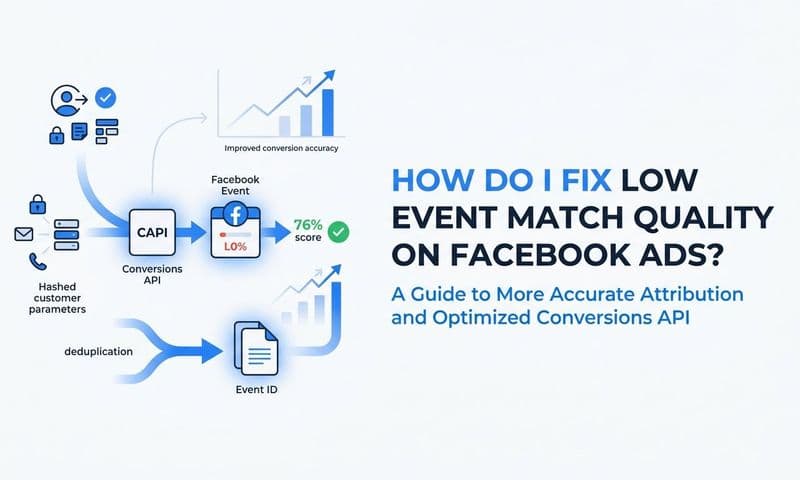
With CAPI implemented, your server detects the purchase and sends that conversion event directly to Facebook's server. It includes key information: the conversion value, the product purchased, the user's hashed email address (which Facebook can match to their account), and a browser identifier that helps connect it to the ad click. Facebook receives the conversion data and can properly attribute it to your campaign. Learning how to sync conversion data to Facebook Ads is now essential for accurate reporting.
The difference is dramatic. Advertisers who implement proper server-side tracking typically see conversion reporting increase substantially—not because they're generating more conversions, but because they're finally seeing the conversions that were always happening but going untracked.
This improved data quality has a cascading effect. When Facebook's algorithm receives more complete conversion data, it can optimize more effectively. It learns which audiences actually convert, which creatives drive action, which placements perform best. The machine learning model gets better fuel, so it delivers better results.
Server-side tracking also enables conversion enrichment. You can send Facebook additional data about conversions that the pixel can't capture—customer lifetime value, subscription tier, product category, whether it's a first-time or repeat purchase. This enriched data helps Facebook's algorithm optimize not just for any conversion, but for high-value conversions.
CAPI isn't optional anymore—it's foundational infrastructure for running Facebook ads effectively. The platform's reporting and optimization capabilities depend on receiving complete conversion data. Server-side tracking is how you provide that data in a privacy-first world where browser-based tracking is increasingly limited.
Building Complete Attribution Across Every Touchpoint
Server-side tracking solves the data collection problem, but it doesn't solve the attribution problem. Facebook's algorithm still operates within its own walled garden, only seeing interactions that happen on its platforms. It can't see the Google ad someone clicked last week, the email they opened yesterday, or the organic search that brought them to your site three days ago.
Real customer journeys are messy. Someone might see your Facebook ad on Monday, click a Google ad on Wednesday, visit directly on Thursday, and convert on Friday after opening your email. Facebook wants to credit that conversion to the Monday ad. Google wants to credit it to the Wednesday ad. Your email platform claims credit for the Friday email. Who's right?
They all are—and none of them are. That customer needed multiple touchpoints before they were ready to buy. Single-touch attribution models that credit only the first or last interaction miss the complexity of how marketing actually works. You need multi-touch attribution that assigns appropriate credit to every touchpoint in the customer journey. Understanding the Facebook ads attribution model is just the starting point for comprehensive measurement.
This requires connecting data across your entire marketing stack. Your ad platforms, website analytics, CRM, email system, and payment processor all hold pieces of the customer journey puzzle. When you unify that data, you can see the complete path from first impression to final purchase.
Cometly captures every touchpoint from ad clicks to CRM events, providing our AI a complete, enriched view of every customer journey. Instead of relying on Facebook's limited view or Google's isolated perspective, you see how all your marketing channels work together to drive conversions.
This comprehensive tracking reveals insights that individual platforms can't provide. You might discover that Facebook ads are excellent at generating first touches, but Google ads close the deal. Or that customers who interact with both Facebook and email convert at twice the rate of those who only see one channel. These insights let you allocate budget more intelligently across channels.
Multi-touch attribution also solves the iOS 14 measurement problem from a different angle. Even if Facebook can't track an iOS user's conversion through the pixel, your attribution system can still connect that conversion back to the Facebook ad they clicked—because it's tracking the journey through multiple data sources, not just browser cookies. This approach directly addresses the Facebook ads attribution issues that have plagued advertisers since the iOS update.
The strategic advantage goes beyond accurate measurement. When you feed enriched conversion data back to ad platforms through their APIs, you improve their optimization algorithms. Facebook's machine learning gets better data about which users convert, helping it find more high-value customers. You're not just measuring better—you're making your campaigns perform better.
Cometly connects every touchpoint to conversions so you can see which sources actually convert, then sends enriched, conversion-ready events back to Meta, Google, and more—improving targeting, optimization, and ad ROI. This closed-loop system turns attribution from a reporting exercise into a performance optimization tool.
Your Recovery Roadmap: From Blind to Data-Driven
Understanding what broke is valuable. Knowing how to fix it is essential. Here's your practical roadmap for restoring Facebook ad performance and measurement accuracy in the post-iOS 14 landscape.
Step 1: Implement Server-Side Tracking Immediately
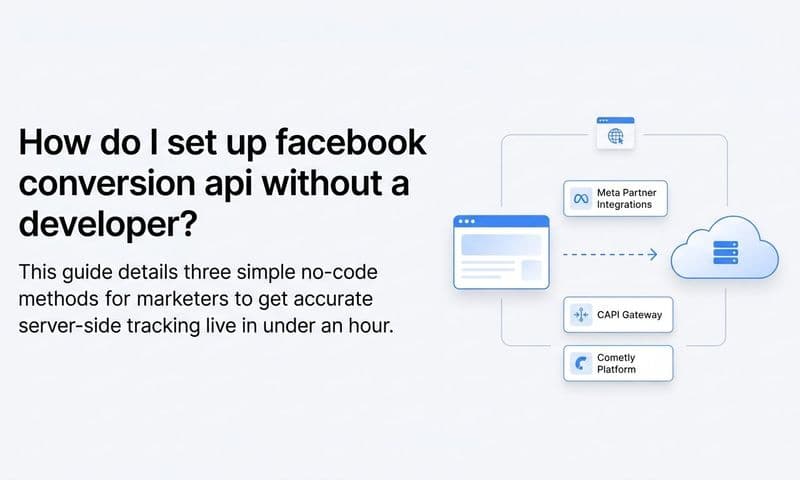
Set up Facebook's Conversions API if you haven't already. This isn't optional—it's foundational infrastructure. Work with your development team or use a platform that handles CAPI implementation for you. Ensure conversion events are firing from your server and reaching Facebook's API, not just relying on the pixel. Finding the best tracking solution for Facebook Ads should be your first priority.
Verify that your CAPI implementation is working correctly. Check the Events Manager in Facebook to confirm that server events are being received and matched to users. Look for improvements in your reported conversion numbers—if you're doing it right, you should see an increase in tracked conversions as CAPI captures events the pixel missed.
Step 2: Integrate Your CRM and First-Party Data
Connect your customer database to your advertising workflow. Upload customer lists to Facebook to create Custom Audiences based on actual purchase behavior, not just pixel data. Use these audiences for retargeting and as seeds for Lookalike Audiences.
Capture email addresses and other first-party identifiers whenever possible. The more first-party data you collect, the better you can match conversions back to ad interactions—even when browser tracking fails. This data becomes increasingly valuable as third-party tracking continues to deteriorate.
Step 3: Deploy Comprehensive Attribution Tracking
Implement an attribution system that tracks the complete customer journey across all marketing channels. Don't rely solely on Facebook's self-reported attribution or last-click models that oversimplify reality. Use multi-touch attribution to understand how different touchpoints contribute to conversions.
Cometly's AI identifies high-performing ads and campaigns across every ad channel, helping you scale with confidence based on actual performance, not incomplete platform reporting. This visibility lets you make budget decisions based on true ROAS, not the distorted metrics individual platforms report.
Step 4: Enrich Your Conversion Data
Send more than just basic conversion events back to Facebook. Include customer lifetime value, product categories, subscription tiers, and other business-relevant data. This enriched information helps Facebook's algorithm optimize for conversions that matter most to your business, not just any conversion. Implementing conversion sync for Facebook Ads ensures your platform receives the complete picture.
The more context you provide about which conversions are valuable, the better Facebook can find similar high-value customers. This is especially important for businesses with varying customer values—optimizing for any purchase is very different from optimizing for high-LTV purchases.
Step 5: Rebuild Campaign Confidence Through Testing
Start with controlled tests to validate that your new tracking infrastructure is working. Run campaigns with clear conversion goals and cross-reference results across multiple data sources—your attribution platform, your payment processor, your CRM. When the numbers align, you'll know your measurement is accurate.
Use this validated data to make scaling decisions with confidence. The fear that paralyzed many marketers after iOS 14—not knowing whether to trust the data—disappears when you have multiple sources confirming the same story about campaign performance. Once you've restored measurement accuracy, you can learn how to scale Facebook Ads profitably again.
The New Competitive Advantage in Digital Advertising
iOS 14 didn't kill Facebook ads. It killed lazy measurement. The advertisers who struggled most were those who relied entirely on Facebook's self-reported metrics without verifying them against reality. The ones who thrived were those who built robust measurement infrastructure that worked regardless of browser restrictions or privacy updates.
Here's the counterintuitive truth: the privacy changes that disrupted Facebook advertising actually created opportunity for marketers willing to adapt. While competitors scaled back spend or operated blind, advertisers with proper server-side tracking and attribution systems gained a significant edge. They could measure accurately, optimize confidently, and scale profitably while others hesitated. Implementing post-iOS 14 Facebook advertising strategies separates successful advertisers from those still struggling.
The foundation for success in privacy-first advertising isn't complicated, but it does require infrastructure that most advertisers neglected before iOS 14 forced their hand. Server-side tracking captures conversions that browser-based pixels miss. Multi-touch attribution reveals the true customer journey across channels. Enriched conversion data fed back to ad platforms improves their optimization algorithms.
This isn't just about recovering what was lost—it's about building better marketing systems than existed before. When you capture every touchpoint from ad click to CRM event, you gain insights that were never available from Facebook's pixel alone. When you know what's really driving revenue across all channels, you make smarter budget decisions than competitors still flying blind.
The marketers winning in this new landscape aren't those with the biggest budgets or the most creative ads. They're the ones who invested in measurement infrastructure that provides accurate data regardless of platform limitations. They feed better data to ad platforms, which improves targeting and optimization. They identify true performance across channels, which enables confident scaling decisions.
Ready to elevate your marketing game with precision and confidence? Discover how Cometly's AI-driven recommendations can transform your ad strategy—Get your free demo today and start capturing every touchpoint to maximize your conversions.