Most marketers know they should use data to optimize their Facebook ads, but few have a systematic approach that actually works. They check Ads Manager metrics, make some adjustments, and hope for the best.
The problem? Facebook's native reporting only tells part of the story.
You're seeing clicks and platform-reported conversions, but missing the complete picture of which ads actually drive revenue. That disconnect between what Facebook reports and what actually happens in your business creates a blind spot that costs you thousands in wasted ad spend.
Think about it: Facebook might show 50 conversions from a campaign, but when you check your CRM, only 12 of those people actually became paying customers. Meanwhile, another campaign with fewer reported conversions might be generating higher-value customers that stick around longer. Without connecting these dots, you're optimizing in the dark.
This guide walks you through a proven, data-driven optimization framework that connects every touchpoint—from ad click to closed deal. You'll learn how to set up proper tracking infrastructure, identify the metrics that actually matter for your business, and make optimization decisions based on real revenue data rather than vanity metrics.
By the end, you'll have a repeatable system for continuously improving your Facebook ad performance using accurate, actionable data. No more guessing. No more relying on incomplete platform metrics. Just clear visibility into what's working and what needs to change.
Step 1: Audit Your Current Tracking Setup for Data Gaps
Before you can optimize with data, you need to understand what data you're actually capturing—and more importantly, what you're missing.
Start by opening your Facebook Ads Manager and pulling up last month's conversion data. Now open your CRM and look at the actual customers who came through during that same period. Do the numbers match? For most marketers, they don't.
This discrepancy reveals your tracking gaps, and those gaps are costing you optimization opportunities every single day.
Check Your Facebook Pixel Implementation: Navigate to Events Manager and verify that your pixel is firing correctly on all critical conversion events. Don't just check if it's installed—confirm that it's capturing form submissions, purchases, sign-ups, and any other actions that matter to your business. Use the Facebook Pixel Helper Chrome extension to see exactly which events fire on each page.
Identify iOS Attribution Gaps: Since iOS 14.5 introduced App Tracking Transparency, browser-based tracking has become significantly less reliable. Many conversions from iOS users simply aren't being captured by your pixel. Check your traffic sources—if a substantial portion comes from iOS devices, you're likely missing a large chunk of your conversion data. Understanding these Facebook ads attribution issues is essential for accurate reporting.
Evaluate Cross-Device Tracking: Does your tracking connect the dots when someone clicks your ad on mobile but converts on desktop three days later? Most standard pixel implementations don't handle this well. Review your customer journey data to see how often people switch devices before converting.
Audit Offline Conversion Tracking: If you have a sales team that closes deals over the phone, or if customers complete purchases in physical locations, those conversions need to flow back into your Facebook data. Check whether you're currently capturing and reporting these offline events back to Facebook.
Test Your Attribution Window: Facebook's default attribution window might not match your actual sales cycle. If you're in B2B with a 30-day sales cycle, but Facebook only attributes conversions within 7 days of ad click, you're missing the majority of your results.
Document every gap you find. Create a simple spreadsheet with three columns: "What We're Tracking," "What We're Missing," and "Business Impact." This becomes your roadmap for the improvements you'll make in the next steps.
The goal isn't perfection—it's visibility. Once you can see where your data breaks down, you can fix it systematically.
Step 2: Implement Server-Side Tracking for Accurate Attribution
Browser-based tracking alone no longer cuts it. Between iOS privacy features, ad blockers, and cookie restrictions, your Facebook Pixel is missing a significant portion of your actual conversions.
Server-side tracking solves this by sending conversion data directly from your server to Facebook, bypassing all the browser-level obstacles that block traditional pixel tracking.
Here's why this matters: when someone converts on your site, their browser might block the pixel from firing, but your server still processes that transaction. Server-side tracking captures that conversion and reports it back to Facebook, giving you complete data even when browser tracking fails.
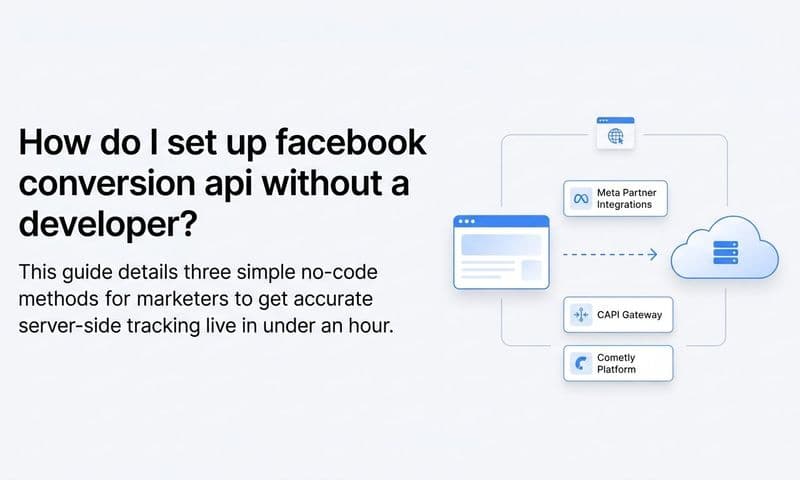
Set Up Facebook's Conversions API: This is Meta's official server-side tracking solution. It works alongside your pixel (not as a replacement) to capture events that browser-based tracking misses. You'll need developer resources to implement this, as it requires server-side code that sends events to Facebook when conversions happen.
The technical setup involves generating an access token in Events Manager, configuring your server to send event data to Facebook's API endpoint, and ensuring you're passing the necessary parameters like event name, timestamp, and user data for matching.
Connect Your CRM to Your Ad Tracking: This is where optimization gets powerful. When you connect your CRM data to your ad tracking, you can see which Facebook ads led to closed deals, not just form fills. Set up a system that tracks the original ad click through your entire sales funnel—from first touch to final purchase.
Many marketing teams use attribution platforms that automatically connect CRM data back to ad sources. Learning how to sync conversion data to Facebook ads creates a complete view of the customer journey without requiring manual data matching.
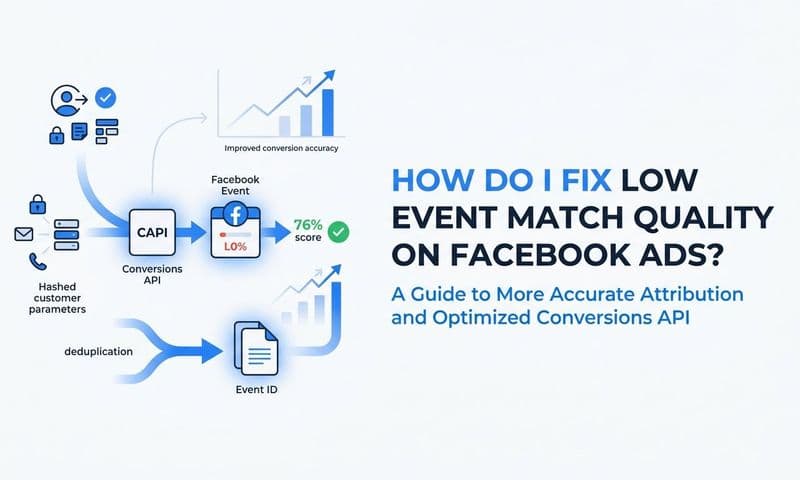
Implement Event Matching: For server-side tracking to work effectively, Facebook needs to match your server events to the same users who clicked your ads. Send as many matching parameters as possible: email, phone number, IP address, user agent, and Facebook click ID (fbclid). The more data points you provide, the more accurately Facebook can attribute conversions.
Verify Your Implementation: Use Facebook's Test Events tool in Events Manager to confirm your server-side events are firing correctly. Send a test conversion through your system and watch it appear in real-time. Check that all the necessary parameters are being passed and that events are being matched to users.
Once server-side tracking is live, you'll immediately notice more accurate conversion data. The gap between what Facebook reports and what actually happens in your business will shrink dramatically. This accurate data becomes the foundation for every optimization decision you make moving forward.
Step 3: Define Your True North Metrics Beyond Platform Reporting
Facebook's Ads Manager shows you dozens of metrics, but most of them don't actually tell you whether your ads are profitable. CTR looks impressive until you realize those clicks aren't converting. CPC seems low until you calculate how much you're actually paying per customer.
The metrics that matter are the ones directly tied to business outcomes—revenue, profit, customer lifetime value, and actual return on ad spend.
Calculate True Cost Per Acquisition: Don't rely on Facebook's reported CPA. Instead, divide your total ad spend by the number of actual customers who came through and paid you money. This is your real cost per acquisition. If you spent $5,000 and acquired 25 paying customers, your true CPA is $200—regardless of what Facebook reports.
For businesses with longer sales cycles, use multi-touch attribution to understand how Facebook ads contribute to conversions that happen weeks after the initial click. A first-touch model shows which ads started customer journeys. A last-touch model shows which ads closed deals. A linear or time-decay model distributes credit across all touchpoints.
Identify Revenue-Correlated Events: Not all conversion events are created equal. Some actions strongly predict future revenue, while others are just vanity metrics. Analyze your historical data to find which events correlate most strongly with paying customers.
For example, you might discover that people who watch a product demo video are 3x more likely to become customers than those who just download a PDF. Or that form submissions from certain industries convert to revenue at much higher rates. These insights help you optimize for the right actions.
Set Up Revenue-Based Dashboards: Create a dashboard that shows real ROAS, not Facebook-reported ROAS. Connect your ad spend data to your actual revenue data from your CRM or payment processor. Measuring Facebook ads ROI accurately means calculating ROAS as (Revenue Generated / Ad Spend) × 100.
If you spent $10,000 on ads and those ads generated $35,000 in revenue, your real ROAS is 3.5x. This number might be very different from what Facebook reports, especially if you have a longer sales cycle or if Facebook's attribution window doesn't capture your full customer journey.
Track Customer Quality Metrics: Two campaigns might both deliver customers at similar acquisition costs, but if one brings in customers who spend twice as much and stick around three times longer, it's clearly the better campaign. Track metrics like average order value, customer lifetime value, and retention rate by ad source.
Build a simple table that shows each campaign's performance across these deeper metrics. You'll often find that campaigns with slightly higher CPAs actually deliver much better customers—and therefore much better overall ROI.
Step 4: Analyze Campaign Performance Using Revenue-Based Data
Now that you have complete tracking and clear metrics, it's time to analyze what's actually working. This is where you'll find the optimization opportunities that transform campaign performance.
Open your attribution dashboard and compare Facebook's reported conversions against your actual CRM data for each campaign. Understanding Facebook ads reporting discrepancies will reveal which campaigns are overperforming or underperforming relative to what Facebook thinks.
Identify Hidden Winners: Some campaigns generate fewer conversions within Facebook's attribution window but drive significant revenue over longer timeframes. These are your hidden winners—campaigns that Facebook's algorithm might be undervaluing and underfunding.
Look for campaigns with strong first-touch attribution but weaker last-touch attribution. These campaigns are excellent at starting customer journeys, even if they don't get credit for closing deals. They deserve more budget, not less.
Spot False Positives: Other campaigns might show impressive conversion numbers in Ads Manager but fail to generate actual revenue. These are optimizing for easy conversions (like email sign-ups from people who never engage) rather than valuable customers.
Compare the quality of leads from each campaign. If Campaign A delivers 100 conversions but only 5 become customers, while Campaign B delivers 40 conversions with 15 customers, Campaign B is the clear winner—even though it has fewer total conversions.
Analyze Audience Segments: Break down performance by audience type. Which segments drive the highest-value customers? You might discover that lookalike audiences based on high-value customers outperform broader interest-based targeting. Or that remarketing to people who viewed specific product pages converts at 5x the rate of cold traffic.
Create a performance matrix that shows each audience segment's cost per acquisition, average order value, and customer lifetime value. This reveals which audiences deserve more investment and which should be paused or refined.
Evaluate Creative Performance: Don't just look at which ads get the most clicks or engagement. Analyze which creative approaches drive actual purchases. You might find that educational content outperforms promotional content for your audience, or that testimonial-based ads convert better than feature-focused ads.
Tag your ads by creative approach (testimonial, educational, promotional, problem-focused, solution-focused) and compare conversion rates and customer quality across these categories. The patterns you discover will guide your creative strategy moving forward.
Review Placement Performance: Facebook automatically distributes your ads across placements, but not all placements perform equally. Check whether feed placements drive better customers than Stories, or whether Instagram outperforms Facebook for your specific audience. Adjust your placement strategy based on actual revenue data, not just cost per click.
Step 5: Optimize Campaigns Based on Complete Attribution Data
Analysis without action is just interesting data. Now you'll use your insights to make concrete optimization decisions that improve performance.
Start with the biggest lever: budget allocation. Your complete Facebook ads attribution data shows which campaigns actually drive revenue, so shift budget away from underperformers and toward proven winners.
Reallocate Budget to Revenue-Driving Campaigns: Increase spending on campaigns that show strong real ROAS, even if their Facebook-reported metrics look average. These are the campaigns that are actually growing your business. Conversely, reduce or pause campaigns that generate clicks and conversions but fail to produce paying customers.
Make budget changes gradually—increase or decrease by 20-30% at a time and monitor the impact over several days before making further adjustments. Dramatic budget changes can disrupt Facebook's algorithm and temporarily hurt performance.
Refine Audience Targeting: Use your customer quality data to create more focused audience segments. If customers from certain demographics, interests, or behaviors have higher lifetime value, build lookalike audiences specifically from those high-value customers.
Exclude audience segments that consistently deliver low-quality leads. If your data shows that certain interests or behaviors correlate with high bounce rates or low conversion rates, add them as exclusions to prevent wasting budget on unlikely prospects.
Adjust Attribution Windows: Set your attribution window to match your actual sales cycle. If most customers convert within 14 days of first click, use a 14-day attribution window. If your B2B sales cycle typically runs 30-45 days, extend your attribution window accordingly.
This ensures Facebook's algorithm optimizes for the full customer journey rather than just immediate conversions. It also gives you more accurate performance data for making optimization decisions.
Optimize Creative Based on Revenue Data: Double down on creative approaches that drive actual purchases. If testimonial ads consistently deliver higher-quality customers than feature-focused ads, create more testimonial content. If educational videos outperform static images, shift more creative resources toward video production.
Test new creative variations based on what you've learned about your best customers. If high-value customers respond to specific pain points or benefits, feature those prominently in your ad copy and visuals.
Fine-Tune Bidding Strategy: If you're using value optimization, ensure you're sending accurate purchase values back to Facebook. The platform's algorithm performs better when it knows which conversions are worth $50 versus $500. Mastering Facebook conversion optimization requires setting caps based on your actual acceptable CPA, not Facebook's estimated costs.
Step 6: Feed Better Conversion Data Back to Facebook's Algorithm
Facebook's algorithm is only as good as the data you give it. When you send enriched, accurate conversion data back to Facebook, the platform can optimize more effectively for the customers you actually want.
This creates a virtuous cycle: better data leads to better optimization, which leads to better customers, which generates more data to improve optimization further.
Set Up Conversion Syncing: Use your server-side tracking to send detailed conversion data back to Facebook, including purchase values, product categories, and customer attributes. Implementing conversion sync for Facebook ads gives Facebook's algorithm much richer signals about what constitutes a valuable conversion.
When Facebook knows that certain types of conversions are worth more, it can actively find more people likely to complete those high-value actions. This is far more effective than optimizing for generic "conversions" without value differentiation.
Send Offline Conversion Data: If you have a sales team that closes deals after the initial online conversion, report those offline conversions back to Facebook. This teaches the algorithm which online actions lead to actual sales, even when those sales happen days or weeks later through different channels.
Upload offline conversion data regularly—weekly or even daily if you have high volume. The more current your data, the faster Facebook can learn and optimize. Include as many matching parameters as possible (email, phone, transaction ID) to ensure accurate attribution.
Use Customer Lifetime Value Data: If you can calculate customer lifetime value, send that data back to Facebook as a conversion value. This allows the algorithm to optimize not just for customers, but for high-value customers who will generate the most revenue over time.
Create custom conversion events for high-value actions like subscription renewals, repeat purchases, or upgrades. When Facebook sees which initial ad clicks lead to these valuable long-term behaviors, it can find more people likely to exhibit similar patterns.
Monitor Algorithm Performance Over Time: Track how your campaign performance changes as you feed better data back to Facebook. You should see improvements in customer quality, conversion rates, and ROAS as the algorithm learns from your enriched conversion data.
Compare metrics before and after implementing enhanced conversion tracking. Many businesses see significant improvements in ad efficiency within 2-4 weeks as Facebook's algorithm adapts to the better data quality.
The key is consistency. Keep your conversion data flowing back to Facebook continuously, and the platform will keep getting better at finding your ideal customers.
Putting It All Together: Your Data-Driven Optimization System
Data-driven Facebook ads optimization isn't about checking more metrics—it's about checking the right metrics and connecting them to real business outcomes.
You now have a complete framework for optimizing Facebook ads based on accurate, revenue-focused data rather than incomplete platform metrics. This systematic approach eliminates guesswork and replaces it with clear visibility into what's actually working.
Here's your quick implementation checklist:
Audit your tracking for gaps: Identify where your current setup is missing conversions, especially post-click attribution and cross-device journeys. Document these gaps so you know exactly what needs fixing.
Implement server-side tracking: Set up Facebook's Conversions API to capture conversions that browser-based pixels miss due to iOS restrictions, ad blockers, and cookie limitations. Following best practices to improve Facebook ads tracking dramatically improves data accuracy.
Define metrics tied to actual revenue: Move beyond CTR and CPC to track true cost per acquisition, real ROAS, and customer lifetime value. These metrics reflect business outcomes, not just engagement.
Analyze performance using complete attribution data: Compare Facebook's reported conversions against your actual CRM data to find hidden winners and false positives. This reveals where to reallocate budget for maximum impact.
Optimize based on real ROAS: Shift budget to campaigns with proven revenue impact, refine audience targeting based on customer quality data, and adjust creative strategy using insights about what drives actual purchases. Once you've mastered these fundamentals, you can learn how to scale Facebook ads profitably.
Feed enriched conversion data back to Facebook: Send detailed conversion information including values, offline sales, and customer lifetime value back to Facebook. This improves the algorithm's ability to find your best customers.
Start with Step 1 today: open your CRM and compare last month's closed deals against what Facebook reported as conversions. The gap you find will show you exactly how much optimization opportunity you're missing.
That discrepancy represents wasted ad spend, missed opportunities, and campaigns being optimized for the wrong goals. Close that gap, and your Facebook ads performance will transform.
Ready to elevate your marketing game with precision and confidence? Discover how Cometly's AI-driven recommendations can transform your ad strategy—Get your free demo today and start capturing every touchpoint to maximize your conversions.