
You're staring at your ad dashboard, and the numbers look solid. Click-through rates are healthy. Cost per click is reasonable. Traffic is flowing. But when you check your actual revenue against what you've spent, something doesn't add up.
The disconnect is real, and it's costing you more than you think.
Here's what's happening: conversions are occurring—real sales, qualified leads, actual revenue—but they're never making it back to your ad platforms. These untracked conversions create a silent leak in your marketing budget, one that compounds over time as your campaigns optimize toward incomplete data. When Facebook, Google, and other platforms can't see the full picture of what's working, they make decisions based on partial information. They pause campaigns that are actually driving revenue. They scale campaigns that only appear successful. And with every optimization cycle, the problem gets worse.
This isn't a minor reporting issue. It's a fundamental breakdown in the feedback loop that powers modern digital advertising. When your tracking infrastructure can't connect ad clicks to actual business outcomes, you're essentially flying blind while your competitors who've solved this problem pull further ahead.
In this guide, we'll walk through how to identify tracking gaps in your campaigns, understand why traditional methods are failing in today's privacy-focused landscape, and implement solutions that give you complete visibility into what's really driving revenue. Because once you can see the full customer journey, you can finally allocate budget with confidence instead of guesswork.
The Invisible Gap Between Ad Clicks and Actual Revenue
Untracked conversions are sales, leads, or valuable actions that happen because of your ads but never get attributed back to the campaigns that drove them. They're invisible to your ad platforms, which means they're invisible to the algorithms deciding where to spend your money.
Think about a customer who clicks your Facebook ad on their iPhone during their morning commute. They browse your site but don't convert immediately. Later that evening, they remember your brand, search for it on their laptop, and make a purchase. Facebook never sees that conversion. Google Search gets the credit. But neither platform understands the full story of how that customer actually found you.
This scenario plays out thousands of times across your campaigns, and it's not just about cross-device journeys. iOS privacy updates since 2021 have fundamentally changed the tracking landscape. When users opt out of tracking—and the majority do—traditional browser pixels can't follow their journey from ad click to conversion. Safari's Intelligent Tracking Prevention and Firefox's Enhanced Tracking Protection actively block many tracking mechanisms. Even Chrome is phasing out third-party cookies.
The result? Your ad platforms are making optimization decisions with fragments of data rather than the complete picture. Understanding how poor tracking wastes ad budget is the first step toward fixing this problem.
Cookie blocking alone can hide a significant portion of your conversions. When someone uses privacy-focused browsers or ad blockers, your tracking pixels simply don't fire. The conversion happens, your bank account grows, but your ad platform never receives the signal. It's like trying to navigate with a map that's missing half the roads.
Then there are delayed conversions. Someone might click your ad today but not convert until next week after receiving your email sequence, talking to sales, or conducting more research. By the time they purchase, the tracking cookie has expired or been cleared. The revenue is real, but the attribution is lost.
Here's where it gets dangerous: this incomplete data creates a feedback loop. Ad platforms use conversion data to train their machine learning algorithms. When they only see partial conversions, they optimize toward the wrong signals. They target audiences that appear to convert well but are actually just easier to track. They undervalue campaigns reaching privacy-conscious users who convert at higher rates but are harder to measure. Every optimization cycle based on incomplete data takes you further from optimal performance.
How Tracking Gaps Lead to Budget Misallocation
Incomplete conversion data doesn't just hide your results. It actively sabotages your decision-making.
Consider what happens when a high-performing campaign appears to underperform in your dashboard. You're running ads targeting a premium audience segment. These users take longer to convert, often research across multiple devices, and frequently use Safari with tracking prevention enabled. The campaign is actually driving significant revenue, but your ad platform only sees a fraction of the conversions.
Based on the incomplete data, the campaign looks like it has a terrible return on ad spend. You reduce budget or pause it entirely. Meanwhile, your actual best-performing campaign just got killed because the tracking couldn't keep up with the customer journey. This is a classic example of wasted ad budget from wrong attribution.
The opposite problem is equally costly. You're scaling a campaign that shows strong conversion numbers in your ad dashboard. The platform reports healthy ROAS, so you keep increasing spend. But when you dig into your actual revenue data, those conversions aren't materializing into proportional sales. What happened? The campaign might be getting credit for conversions it didn't actually drive, or it's attracting customers who convert but quickly refund, or the attributed conversions are low-value actions while your untracked high-value conversions come from elsewhere.
You're pouring budget into what looks like a winner based on platform data, but your bank account tells a different story.
These misallocations compound because ad platform algorithms learn from the data you feed them. When Facebook's algorithm receives incomplete conversion signals, it builds audience models based on partial information. It identifies patterns among the users it can track while missing the characteristics of your best customers who happen to be harder to track. Over time, the algorithm becomes increasingly confident in targeting the wrong people.
The same principle applies to Google's automated bidding strategies. When Smart Bidding optimizes toward incomplete conversion data, it adjusts bids based on a skewed understanding of which clicks are valuable. It might lower bids for search terms that actually drive high-value conversions but happen to attract privacy-conscious users. It might raise bids for terms that show tracked conversions but miss the untracked refunds that follow.
This creates a vicious cycle: incomplete data leads to poor optimization, which leads to worse targeting, which leads to lower actual performance, which makes the incomplete data even more misleading. Breaking this cycle requires addressing the root cause—the tracking gaps themselves.
Spotting the Warning Signs in Your Own Campaigns
How do you know if untracked conversions are draining your budget? The symptoms are often hiding in plain sight once you know what to look for.
Start by comparing your ad platform conversion reports against your actual revenue data. Pull up your Meta Ads Manager or Google Ads conversion numbers for the past month. Now check your Stripe dashboard, Shopify analytics, or CRM reports for the same period. If you're seeing significant discrepancies—especially if actual revenue substantially exceeds what ad platforms are reporting—you've found your first red flag.
Many marketers discover that their CRM shows twice as many qualified leads as their ad platforms report. Or their payment processor records thousands more in revenue than the sum of all platform-attributed conversions. That gap represents conversions happening in the dark, invisible to the systems making your budget decisions. Learning how to identify wasted ad budget can help you quantify these losses.
Look for campaigns with strong engagement metrics but mysteriously weak conversion attribution. High click-through rates indicate your ads are compelling and reaching interested audiences. If those clicks aren't translating into proportional conversions in your ad dashboard but you're seeing business results, the conversions are likely happening—they're just not being tracked.
Pay special attention to campaigns targeting mobile users, particularly iOS users. Since App Tracking Transparency launched, iOS conversion tracking has become notoriously incomplete. If you're running mobile-focused campaigns that show poor performance despite strong engagement, tracking gaps are the likely culprit.
Check your conversion lag reports if your platform provides them. These show how long it takes from ad click to conversion. If you see a significant portion of conversions happening days or weeks after the initial click, you're likely missing even more conversions that occur beyond your attribution window. Someone who clicks your ad today might not convert until next month, long after the tracking cookie has expired.
Another telling sign: inconsistent performance across similar audience segments. If one audience shows dramatically different conversion rates despite similar engagement patterns, tracking discrepancies might be the explanation rather than actual performance differences. Privacy-conscious users and those using tracking prevention tools might convert just as well but remain invisible in your reports.
Run this simple test: take your total ad spend for the past quarter and divide it by your platform-reported conversions to get your reported cost per acquisition. Now divide that same ad spend by your actual conversions from your CRM or revenue system. If the real cost per acquisition is significantly lower, you're making budget decisions based on inflated costs that don't reflect reality.
Why Traditional Tracking Methods Fall Short
The tracking infrastructure that powered digital advertising for years is fundamentally breaking down. Understanding why helps explain why so many marketers are bleeding budget through untracked conversions.
Traditional pixel-based tracking relies on JavaScript code that fires in a user's browser when they visit your website. This pixel drops a cookie to identify the user and track their journey from ad click to conversion. It's a client-side approach, meaning everything depends on the user's browser cooperating.
That cooperation is increasingly rare. Safari's Intelligent Tracking Prevention limits how long cookies persist and blocks many third-party tracking scripts entirely. Firefox's Enhanced Tracking Protection does the same. Browser extensions like ad blockers prevent tracking pixels from firing at all. And users themselves are more privacy-aware, regularly clearing cookies or browsing in private mode. If you're struggling with these changes, understanding how to track conversions without cookies is essential.
The result is that pixel-based tracking, which once captured the majority of conversions, now misses substantial portions of your customer journey. The data you're basing decisions on represents an incomplete and potentially biased sample of your actual performance.
Platform-native attribution creates its own set of blind spots. When you rely solely on Facebook's attribution or Google's conversion tracking, you only see the conversions those platforms choose to credit themselves with. Facebook uses a last-click attribution model within its ecosystem but can't see what happens across other channels. Google does the same. Neither platform can show you the full cross-channel journey that led to a conversion.
This creates a problem when customers interact with multiple touchpoints before converting. Someone might see your Facebook ad, later click a Google search ad, then convert after receiving your email. Each platform will try to claim credit for that conversion based on its own limited view. You might see the same conversion counted three times across three platforms, or you might see it counted zero times if tracking failed at each step. This is why many marketers can't track conversions across multiple platforms effectively.
The attribution window problem compounds these issues. Most platforms use a 7-day or 28-day attribution window, meaning they only credit conversions that happen within that timeframe after an ad click. But complex B2B sales cycles or high-consideration purchases often take longer. Someone researching enterprise software might click your ad in January, nurture through your content for months, and finally convert in April. That conversion happens because of your ad, but it falls outside the attribution window and goes untracked.
Cookie lifespan limitations create similar gaps. Even when a cookie successfully tracks a user initially, browsers now limit how long those cookies persist. Safari caps cookie lifespan at seven days for many tracking scenarios. If someone clicks your ad, browses your site, but doesn't convert until two weeks later, the cookie is gone. The conversion is untracked.
These aren't edge cases. They're increasingly common scenarios affecting a growing percentage of your conversions. Relying on traditional tracking methods in 2026 means accepting that a substantial portion of your performance will remain invisible, and your budget decisions will be based on incomplete information.
Building a Complete Picture of Your Customer Journey
Solving the untracked conversion problem requires moving beyond browser-based tracking to infrastructure that captures the full customer journey regardless of cookies, device switching, or privacy settings.
Server-side tracking fundamentally changes how conversion data flows. Instead of relying on JavaScript pixels firing in a user's browser, server-side tracking sends conversion data directly from your servers to ad platforms. When someone converts on your website, your server records that conversion and transmits the information to Facebook, Google, and other platforms through their APIs.
This approach bypasses many browser limitations. Ad blockers can't prevent your server from sending data. Safari's tracking prevention doesn't apply to server-to-server communication. Cookie restrictions become irrelevant because you're not depending on browser cookies to maintain user identity across sessions. Learning how to sync conversions to ad platforms through server-side methods is crucial for accurate attribution.
The key is establishing reliable user identification that persists across devices and sessions. When someone clicks your ad, you capture not just a cookie but also their email address, phone number, or other identifying information once they provide it through a form submission or account creation. Your server maintains this identity and can attribute future conversions even if the original tracking cookie is long gone.
This is where connecting your ad platforms directly to your CRM becomes powerful. Your CRM knows when leads convert to customers, when customers make repeat purchases, and what the lifetime value of each customer segment looks like. By feeding this information back to your ad platforms, you give their algorithms visibility into outcomes that matter for your business, not just the initial conversion that pixel tracking might catch.
Someone might fill out a lead form tracked by your pixel, but the real value happens weeks later when they become a paying customer. Traditional tracking stops at the form submission. CRM-connected attribution follows the journey all the way to revenue and beyond, showing which ad campaigns drive not just leads but customers who actually stick around and generate profit.
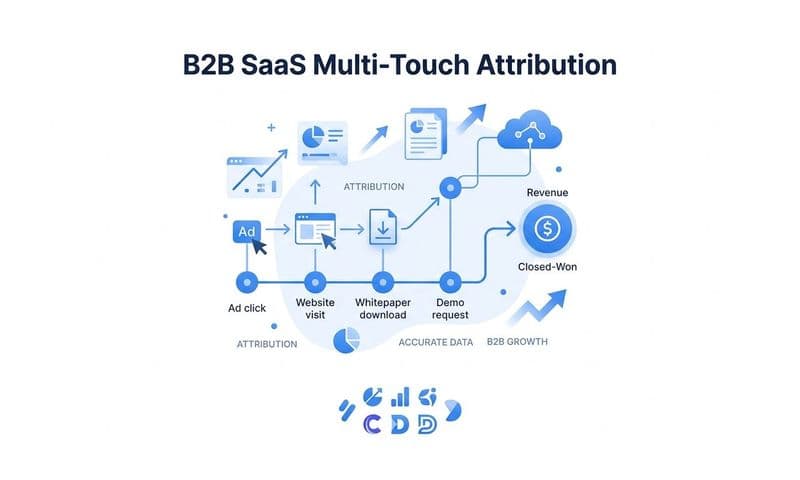
Multi-touch attribution takes this further by revealing how different touchpoints work together to drive conversions. Instead of crediting only the last ad click before conversion, multi-touch attribution shows the entire sequence of interactions that influenced the decision. Understanding how to track conversions across channels enables this holistic view.
You might discover that Facebook ads are excellent at introducing new customers to your brand, but those customers rarely convert immediately. Instead, they later click Google search ads or return through organic search before purchasing. Single-touch attribution would credit only that final Google click, leading you to potentially cut Facebook budget that's actually playing a crucial awareness role. Multi-touch attribution reveals the full story, showing how both channels contribute to the outcome.
This complete view enables smarter budget allocation across channels. Instead of treating each platform in isolation, you can see how they work together and fund the entire customer journey appropriately. You might increase spend on upper-funnel awareness campaigns that don't directly drive conversions but significantly boost the performance of your retargeting and search campaigns.
The technical implementation requires connecting your website, CRM, and ad platforms through a unified tracking infrastructure. Modern attribution platforms handle this by collecting conversion data from all sources, matching it to the customer journey, and distributing accurate conversion events back to each ad platform through their conversion APIs.
Turning Accurate Data Into Smarter Ad Spend
Complete conversion tracking isn't just about better reporting. It's about feeding ad platform algorithms the accurate data they need to optimize effectively on your behalf.
When you send comprehensive conversion data back to Facebook through the Conversions API or to Google through enhanced conversions, their machine learning systems can finally see which ad impressions and clicks actually drive valuable outcomes. This creates a virtuous cycle: better data leads to better optimization, which leads to improved targeting, which leads to higher returns on ad spend.
Facebook's algorithm, for example, uses conversion data to build lookalike audiences and optimize ad delivery. When it only sees partial conversions, it builds models based on incomplete patterns. Feed it complete conversion data, and suddenly it can identify the true characteristics of your best customers. It stops targeting people who are easy to track and starts targeting people who actually convert and generate revenue.
The same principle applies to Google's Smart Bidding. Automated bidding strategies like Target ROAS or Maximize Conversions rely entirely on the conversion data you provide. Give them incomplete data, and they optimize toward the wrong goal. Give them accurate, comprehensive conversion data, and they can adjust bids with precision, raising them for searches likely to drive valuable conversions and lowering them for low-value traffic. This is where allocating marketing budget based on data becomes transformative.
This improved optimization compounds over time. In the first few weeks after implementing complete tracking, you might see modest improvements as algorithms adjust to the new data. But over months, as the machine learning systems fully retrain on accurate signals, performance improvements can become substantial. Campaigns that were underperforming due to incomplete data suddenly scale profitably. Audiences that looked mediocre reveal themselves as high-value segments.
Accurate conversion tracking also enables confident budget scaling. When you can trust your data, you can increase spend on winning campaigns without the nagging uncertainty that your reports might be misleading. You know which campaigns actually drive revenue because you've connected ad clicks all the way to bank deposits. This confidence lets you move faster than competitors who are still questioning whether their data reflects reality.
The visibility extends beyond immediate conversions to customer lifetime value. When your tracking infrastructure connects ad campaigns to long-term customer outcomes, you can optimize for metrics that matter beyond the first purchase. You might discover that customers from certain campaigns have higher retention rates or make more repeat purchases, even if their initial cost per acquisition looks higher. This insight lets you bid more aggressively for high-lifetime-value customers while reducing spend on campaigns that drive cheap conversions but poor long-term outcomes. Implementing automated ad budget optimization can help you act on these insights at scale.
Consider how this changes your approach to campaign testing. With incomplete tracking, you might run a test, see mediocre results, and kill it before it has a chance to prove itself. With complete tracking, you can see the full impact including delayed conversions and cross-device journeys. Tests that would have been prematurely ended get the runway they need to demonstrate their true value.
The competitive advantage here is real. While other marketers make decisions based on partial data and wonder why their campaigns underperform, you're operating with complete visibility. You know exactly what's working, why it's working, and how to scale it. That clarity translates directly into more efficient budget allocation and higher returns.
Reclaiming Your Marketing ROI
Wasted ad budget on untracked conversions isn't an inevitable cost of doing business in the privacy-focused advertising landscape. It's a solvable problem that separates marketers who scale profitably from those who constantly question whether their campaigns are actually working.
The solution starts with recognizing that traditional pixel-based tracking is fundamentally incomplete in 2026. Browser restrictions, privacy updates, and cookie limitations mean that relying solely on client-side tracking leaves substantial portions of your customer journey invisible. Those invisible conversions represent both lost visibility and misallocated budget as ad platforms optimize toward partial data.
Addressing this requires implementing server-side tracking infrastructure that bypasses browser limitations and maintains accurate user identity across devices and sessions. It means connecting your ad platforms directly to your CRM so conversion data flows from first click through to actual revenue and beyond. And it requires adopting multi-touch attribution that reveals how different touchpoints work together rather than crediting only the last interaction before conversion.
Once this infrastructure is in place, the benefits compound. Ad platform algorithms receive accurate conversion signals and optimize toward real business outcomes instead of tracking artifacts. You gain the confidence to scale winning campaigns because you trust the data showing they're actually driving revenue. And you stop wasting budget on campaigns that only appear successful due to misattributed conversions or tracking errors.
The marketers and agencies who solve this problem first gain a significant edge. While competitors struggle with incomplete data and hesitate to scale because they can't trust their reports, you're making decisions based on complete visibility into what's actually working. That advantage grows over time as your ad platform algorithms, trained on accurate data, pull further ahead of competitors optimizing toward partial signals.
Ready to elevate your marketing game with precision and confidence? Discover how Cometly's AI-driven recommendations can transform your ad strategy. Get your free demo today and start capturing every touchpoint to maximize your conversions.