You launch a paid social campaign. The ads look great. Early engagement numbers seem promising. But when you check your actual sales data, something does not add up. The platform dashboard claims 50 conversions, but your CRM shows only 32 new customers from that campaign. Which number is real?
This disconnect happens more often than most marketers want to admit. Between iOS privacy updates blocking tracking pixels, customers switching devices mid-journey, and the weeks-long gap between someone clicking your ad and actually making a purchase, the data you see in your ad platform often tells an incomplete story.
The result? You make budget decisions based on flawed information. You might cut spending on campaigns that actually drive revenue, or double down on ads that generate clicks but never convert to sales.
Accurate tracking is not about perfection. It is about getting close enough to reality that your decisions actually improve performance instead of sabotaging it. When you can trace a customer journey from first ad click through to final purchase, you gain the clarity needed to scale what works and eliminate what does not.
This guide walks you through a systematic approach to building tracking that captures the complete picture. You will learn how to identify where your current setup loses data, implement consistent tracking across platforms, capture conversions that pixels miss, connect ad clicks to actual revenue, understand multi-touch customer journeys, and feed better signals back to ad platforms so their algorithms optimize more effectively.
Whether you run campaigns on Meta, LinkedIn, TikTok, or across multiple platforms simultaneously, these steps will help you move from guessing to knowing what actually drives results.
Step 1: Audit Your Current Tracking Setup and Identify Gaps
Before you fix anything, you need to understand exactly where your tracking breaks down. Start by reviewing every pixel and tracking tag currently installed across your paid social campaigns. Check Meta Pixel, LinkedIn Insight Tag, TikTok Pixel, and any other platform-specific tracking codes running on your site.
Open your platform dashboards and compare the conversion numbers they report against what actually happened in your business. Pull your CRM data or sales records for the same time period. If Meta says you got 75 conversions but your CRM shows 52 new customers from paid social, you have a 23-conversion gap that needs explanation.
These discrepancies usually stem from predictable sources. iOS privacy settings block a significant portion of browser-based tracking. Customers who start their journey on mobile but convert on desktop often go untracked. Long sales cycles mean someone might click your ad today but not purchase until three weeks later, after the cookie expires. Ad blockers prevent pixels from firing entirely.
Document each gap you discover. Create a simple spreadsheet that lists the platform, the reported conversions, the actual conversions from your internal data, and the percentage difference. This paid advertising tracking gaps analysis becomes your roadmap for improvement.
Pay special attention to post-iOS 14.5 performance. Many advertisers noticed their Meta tracking accuracy dropped substantially after Apple introduced App Tracking Transparency. If your Facebook campaigns suddenly seemed less effective in 2021, the issue was likely measurement, not performance.
Check your landing pages and conversion points. Use browser developer tools to verify that tracking pixels fire when someone completes an action. Test the full conversion flow yourself. Fill out a form, make a test purchase, or complete whatever action counts as a conversion. Then check whether that event appeared in your platform dashboard.
Look for cross-device journey breaks. If someone clicks your LinkedIn ad on their phone during their commute, then comes home and converts on their laptop that evening, does your tracking connect those two events? Most browser-based pixels cannot.
The goal here is not to achieve perfect tracking immediately. The goal is to understand the current state clearly enough that you can prioritize which gaps to fix first. A 10% discrepancy might be acceptable. A 40% gap means you are making decisions based on severely incomplete information.
Step 2: Implement UTM Parameters and Naming Conventions
Consistent UTM parameters form the foundation of accurate cross-platform tracking. Without them, you cannot reliably attribute conversions back to specific campaigns, ad sets, or individual ads. The challenge is not understanding what UTMs are but actually implementing them consistently across every campaign you launch.
We compare the leading options in our Shopify image ad generator roundup.
Start by creating a UTM structure that captures the information you need for analysis. At minimum, you need source (the platform), medium (the ad type), and campaign (the specific campaign name). Most marketers also add content (for ad set or ad variation) and term (for targeting details).
Here is where most teams fail: they let different people create UTMs without a standard format. One person uses "facebook" as the source while another uses "meta" or "fb". Campaign names become inconsistent. Six months later, your analytics are a mess of duplicate entries and impossible-to-parse data.
Build a naming convention document that everyone follows. Define exactly how to format each parameter. Use lowercase consistently. Decide whether you will use underscores or hyphens as separators. Specify how to handle special characters and spaces.
Example Structure: For a Meta campaign promoting a webinar, your UTM might look like: utm_source=meta&utm_medium=paid_social&utm_campaign=q2_webinar_launch&utm_content=carousel_ad_v2&utm_term=marketing_managers
Set up a UTM management system. This could be as simple as a shared spreadsheet where team members generate UTMs, or you might use a dedicated UTM builder tool. A marketing campaign tracking spreadsheet helps prevent ad hoc UTM creation that breaks your naming conventions.
Test your UTMs before launching campaigns. Click your own ad links and verify the parameters pass through correctly to your landing page. Check your analytics platform to confirm the UTM data appears as expected. Some content management systems or redirect tools strip UTM parameters, breaking your tracking without warning.
Pay special attention to form submissions and multi-step conversion paths. If someone clicks your ad, lands on your page with UTMs intact, then fills out a form, those UTM values need to pass through to your CRM or database. Many form builders lose this data unless you specifically configure hidden fields to capture it.
Create templates for common campaign types. If you run similar campaigns repeatedly, build UTM templates that maintain consistency while allowing customization for specific details. This speeds up campaign setup while reducing errors.
Document your UTM structure and train everyone who creates campaigns. New team members, freelancers, and agency partners all need to follow the same conventions. A single campaign with inconsistent UTMs can pollute your reporting and make accurate attribution impossible.
Step 3: Set Up Server-Side Tracking to Capture Lost Data
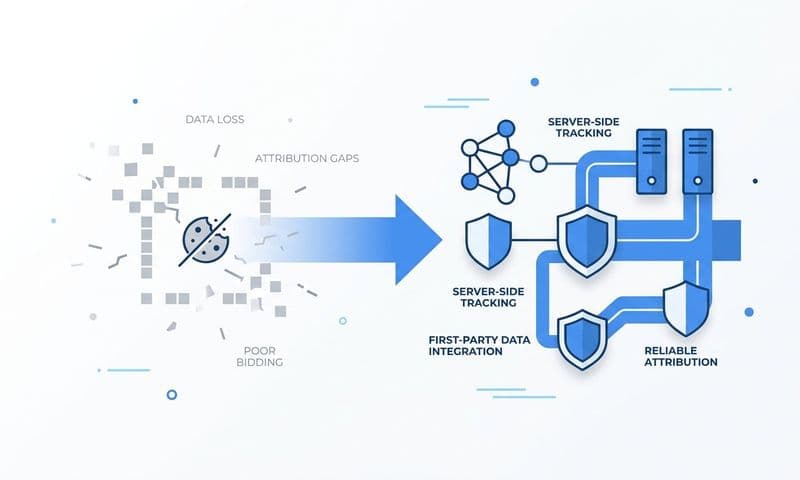
Browser-based pixels have become increasingly unreliable. Ad blockers remove them entirely. Privacy-focused browsers block third-party cookies by default. iOS users who opt out of tracking never trigger pixel events. The result is that a substantial portion of your actual conversions go completely untracked.
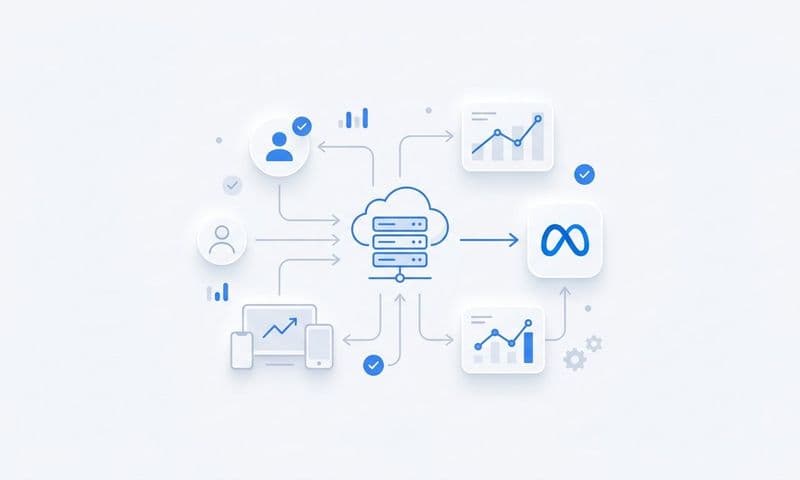
Server-side tracking solves this by sending conversion events directly from your server to ad platforms, bypassing browser limitations entirely. Instead of relying on JavaScript that runs in someone's browser, your server communicates conversion data after the fact, based on what actually happened in your database or CRM.
Think of it this way: Browser-based tracking asks the customer's device to tell the ad platform about the conversion. Server-side tracking has your business systems tell the ad platform directly. One depends on the customer's browser cooperating. The other does not.
To implement server-side tracking, you need to connect your backend systems to your ad platforms. For Meta, this means setting up the Conversions API. For Google, you use server-side tagging through Google Tag Manager. LinkedIn, TikTok, and other platforms offer similar server-side solutions.
Start by identifying where conversion data lives in your systems. If you run an e-commerce site, purchases get recorded in your order database. If you are B2B, leads enter your CRM. You need to send events from these systems to your ad platforms whenever a conversion happens.
The technical implementation typically involves API calls. When someone completes a purchase or becomes a lead, your system makes an API request to the ad platform, sending details about that conversion along with identifiers that help the platform match it back to the original ad click.
Those identifiers matter tremendously. You need to capture and store information like the click ID, user IP address, user agent string, and email address (hashed for privacy) when someone first clicks your ad. Then, when they convert later, you send those identifiers along with the conversion event so the platform can attribute it correctly. Understanding first party data tracking for ads is essential for this process.
Test your server-side implementation thoroughly. Create test conversions and verify they appear in your ad platform's events manager. Check that the data matches what you expect. Confirm that both browser-based pixels and server-side events fire for conversions, giving you redundancy and better data coverage.
Monitor your event match quality. Ad platforms provide diagnostics showing how well they can match your server-side events back to users. Low match rates mean you need to send better identifiers. High match rates confirm your implementation is working correctly.
Server-side tracking does not replace pixel-based tracking entirely. The best approach uses both. Pixels capture immediate interactions and help with remarketing. Server-side events ensure you never lose conversion data, even when pixels fail. Together, they provide the most complete picture of campaign performance.
The technical complexity varies depending on your platform and technical resources. E-commerce platforms like Shopify offer plugins that simplify server-side setup. Custom-built sites might require developer work to implement properly. Either way, the improvement in tracking accuracy makes the effort worthwhile.
Step 4: Connect Your Ad Platforms to Your Revenue Data
Tracking clicks and form fills is useful, but what you really need to know is which campaigns drive actual revenue. That requires connecting your ad platforms to the systems where revenue data lives, typically your CRM or sales database.
Start by mapping the complete customer journey. Someone clicks your LinkedIn ad. They fill out a form on your landing page. That lead enters your CRM. Your sales team qualifies them. Weeks later, they become a paying customer. Each step generates data in different systems, and you need to connect those dots.
Most CRMs can integrate with marketing analytics platforms to pass data back and forth. The integration sends information about which marketing source generated each lead, then updates that record when the lead converts to a customer. This creates a complete view from first touch to closed revenue.
Configure your conversion values to reflect real revenue, not just lead counts. If you run e-commerce, send the actual purchase amount with each conversion event. For B2B, you might use average deal size or assign different values based on lead quality indicators. The right marketing analytics software for revenue tracking makes this process significantly easier.
This revenue data transforms how you evaluate campaign performance. Instead of optimizing for cost per lead, you can optimize for cost per dollar of revenue. A campaign that generates expensive leads might actually deliver the best ROI if those leads close at higher rates or larger deal sizes.
Set up your tracking to capture the time lag between first click and final purchase. Many businesses have sales cycles that span weeks or months. If you only look at immediate conversions, you will consistently undervalue campaigns that start long-term customer relationships.
Create a system for tracing test conversions through your entire setup. Run a test campaign with a small budget. Click the ad yourself using a unique email address. Complete the conversion. Then track that test record through each system to verify data flows correctly from ad click to CRM entry to final revenue attribution.
Pay attention to data hygiene in your CRM. If your sales team does not consistently log source information, or if they overwrite marketing attribution data, your revenue tracking breaks down. Train your team on why accurate source tracking matters and establish processes that preserve this data.
For businesses with offline conversions, like phone sales or in-person purchases, you need additional tracking mechanisms. Call tracking numbers can connect phone leads back to specific campaigns. Review this marketing attribution for phone calls tracking guide to capture these conversions accurately.
The goal is creating a closed-loop system where you can trace every dollar of revenue back to the marketing source that initiated the customer relationship. This level of visibility enables confident budget decisions based on actual ROI, not proxy metrics.
Step 5: Configure Multi-Touch Attribution for Complex Journeys
Most customers do not convert the first time they see your ad. They might click a Facebook ad, visit your site, leave, see a retargeting ad on Instagram, click again, sign up for your email list, receive a few emails, then finally make a purchase after clicking a link in your newsletter. Which touchpoint gets credit for that conversion?
Last-click attribution gives all credit to the final touchpoint before conversion. In the example above, the email would get 100% credit, while the Facebook and Instagram ads that started the journey get nothing. This systematically undervalues awareness and consideration campaigns.
First-click attribution does the opposite, giving all credit to the first touchpoint. This overvalues top-of-funnel campaigns while ignoring the nurturing required to actually close the sale.
Multi-touch attribution distributes credit across all touchpoints in the customer journey. Different models distribute credit differently. Linear attribution splits credit evenly. Time-decay gives more credit to recent touchpoints. Position-based models emphasize first and last touch while still crediting middle interactions.
Choose an attribution model that matches your typical sales cycle. For e-commerce with short consideration periods, time-decay attribution often works well. For B2B with long sales cycles and multiple stakeholders, position-based models can better reflect how awareness, consideration, and decision-stage content all contribute. A robust campaign attribution tracking system helps implement these models effectively.
Set up your tracking system to capture all touchpoints, not just the ones your ad platforms see. This means tracking organic search visits, direct traffic, email clicks, social media engagement, and any other way prospects interact with your brand before converting.
The technical implementation requires a system that can track users across sessions and devices, storing each touchpoint they encounter. When a conversion happens, the system looks back at all previous touchpoints for that user and distributes credit according to your chosen attribution model.
Compare different attribution models side by side. Look at the same campaign performance through last-click, first-click, and multi-touch lenses. You will often discover that channels you thought were underperforming actually play crucial roles in the customer journey, just not as the final touchpoint.
Use attribution insights to inform budget allocation decisions. If your analysis shows that awareness campaigns on TikTok consistently appear early in high-value customer journeys, even though they rarely get last-click credit, that is a signal to maintain or increase investment in that channel.
Remember that attribution models are frameworks for understanding, not absolute truth. No model perfectly captures the complex reality of how marketing influences purchase decisions. The goal is getting closer to reality than last-click attribution alone provides.
Review and adjust your attribution model as your business evolves. A company with a three-day sales cycle needs different attribution than one with a three-month cycle. As your customer journey changes, your attribution approach should adapt accordingly.
Step 6: Feed Better Data Back to Ad Platform Algorithms
Ad platforms use machine learning to optimize your campaigns. They learn which audiences convert, which creative performs best, and how to bid more effectively. But the quality of their optimization depends entirely on the quality of conversion data you feed them.
When you only send pixel-based conversion data, platforms learn from incomplete information. They miss conversions that pixels miss. They optimize toward proxy metrics instead of actual revenue. The result is algorithms that get smarter at driving the wrong outcomes.
Conversion sync solves this by sending your enriched, server-side conversion data back to ad platforms. Instead of just telling Meta that someone converted, you send the actual revenue value, the customer lifetime value prediction, or other enriched data that helps the platform understand which conversions matter most.
This creates a feedback loop that improves targeting over time. When you send high-quality conversion signals, the platform's algorithm learns to identify similar users who are likely to become valuable customers. It stops wasting impressions on users who might click but never convert.
Set up your conversion sync to send events with accurate conversion values. If someone purchases $500 worth of products, send that $500 value, not just a binary "conversion happened" signal. This allows the platform to optimize for revenue, not just conversion count. Following best practices for tracking conversions accurately ensures your data quality remains high.
For B2B businesses, you might send lead quality scores or predicted deal values. If your sales team rates leads, send those ratings back to the ad platform. Over time, the algorithm learns to generate higher-quality leads, not just more leads.
Monitor campaign performance as the algorithms learn from better data. You might see initial fluctuations as the system adjusts, but over weeks, you should notice improved efficiency. Cost per acquisition might decrease, or the quality of conversions might increase, even if volume stays similar.
The improvement happens because ad platforms can make better decisions when they have better information. If the algorithm knows that users who engage with carousel ads convert at higher values than those who click single-image ads, it can automatically shift budget toward the better-performing format.
Keep feeding the algorithm updated information. As you learn more about which customers generate the most value, update your conversion values accordingly. The platforms adapt quickly to new signals, continuously refining their targeting and bidding strategies. Learn more about tracking paid social conversions to maximize this feedback loop.
Putting It All Together
Accurate tracking transforms paid social from a guessing game into a data-driven growth engine. When you can see exactly which campaigns drive real results, you make better decisions. You scale what works. You cut what does not. You stop wasting budget on vanity metrics that look good in dashboards but never translate to revenue.
The process you just learned gives you that clarity. By auditing your current setup, you identify where tracking breaks down. Implementing consistent UTM parameters creates the foundation for cross-platform attribution. Server-side tracking captures conversions that browser-based pixels miss. Connecting your CRM reveals which campaigns actually drive revenue. Multi-touch attribution shows how different touchpoints work together in complex customer journeys. Feeding enriched data back to ad platforms improves algorithmic optimization over time.
None of these steps require perfection. Start where you are. If your tracking currently misses 40% of conversions, getting that down to 20% represents massive improvement. If you only track last-click attribution today, adding first-touch visibility doubles your understanding of campaign performance.
Here is your implementation checklist: Complete a tracking gap analysis comparing platform-reported conversions against actual sales data. Standardize UTM parameters across all campaigns with a documented naming convention. Set up server-side tracking to capture conversions that pixels miss due to privacy settings and ad blockers. Connect your CRM to your tracking system so you can tie ad clicks to actual revenue. Configure multi-touch attribution to understand complex customer journeys. Sync enriched conversion data back to ad platforms to improve algorithmic targeting and optimization.
Start with step one today. Block time this week to audit your current tracking setup. Document the gaps. Then work through each subsequent step systematically. The entire process might take several weeks to implement fully, but each step delivers immediate value.
Within a month, you will have visibility into campaign performance that most marketers never achieve. You will know which ads drive revenue, not just clicks. You will understand how different channels work together. You will make budget decisions based on data you can trust.
That clarity is what separates marketers who scale profitably from those who burn budget hoping something works. When you know what drives results, you can do more of it with confidence.
Ready to elevate your marketing game with precision and confidence? Discover how Cometly's AI-driven recommendations can transform your ad strategy. Get your free demo today and start capturing every touchpoint to maximize your conversions.