
You've invested thousands into Facebook ads, Google campaigns, and LinkedIn outreach. Your dashboard shows conversions happening. But when your CEO asks which channel actually drives revenue, you freeze. Was it the Facebook ad they clicked last week? The Google search they did yesterday? Or that LinkedIn post they engaged with three months ago?
This isn't just an uncomfortable question—it's the fundamental challenge of modern marketing attribution. And here's the reality: most marketers are still using last-click attribution simply because it's the default setting in their analytics platform. It's clean, simple, and completely misleading for any business with a multi-step customer journey.
The attribution landscape is shifting rapidly. While last-click remains the most commonly used approach due to its simplicity and widespread availability, sophisticated marketers are increasingly adopting multi-touch and data-driven models that reveal the full story of how customers actually convert. Understanding these approaches—and knowing when to use each one—is no longer optional if you want to make intelligent budget decisions.
The Reigning Champion: Why Last-Click Still Dominates
Last-click attribution operates on a brutally simple principle: whichever touchpoint a customer interacted with immediately before converting gets 100% of the credit. If someone clicks your Google ad and purchases within the session, Google gets full credit. If they click a Facebook ad instead, Facebook wins the attribution lottery.
This model became the default standard for a straightforward reason—it's easy to implement and even easier to understand. Every major advertising platform from Google Ads to Facebook Ads Manager uses last-click as their native attribution model. When you log into your ad dashboard and see conversion numbers, you're almost certainly looking at last-click data unless you've specifically configured something different.
The appeal goes beyond simplicity. Last-click attribution creates clear winners and losers in your marketing mix. Your monthly performance report shows definitive numbers: this campaign drove 47 conversions, that one drove 12. Budget allocation decisions feel straightforward when you can point to a single source for each conversion.
For businesses with simple, single-session sales cycles, last-click can actually work reasonably well. If you're selling impulse-buy products where customers typically see one ad and purchase immediately, the last touchpoint probably does deserve most of the credit. The model aligns with reality when the customer journey is genuinely short and linear.
But here's the critical flaw that makes last-click increasingly problematic: it systematically ignores every touchpoint that influenced the buyer before that final click. That prospect who saw your brand awareness campaign on Facebook three weeks ago, visited your website twice, downloaded your guide, received five nurture emails, and then finally clicked a Google search ad? Last-click gives Google 100% of the credit and your Facebook campaign exactly zero. Understanding what attribution means in marketing helps reveal why this single-touch approach falls short.
This creates a dangerous feedback loop. Your reports tell you Google search converts while Facebook awareness campaigns don't. So you shift budget away from Facebook and into Google search. Your overall conversion volume drops because you've stopped feeding the top of your funnel. The data told you a story, but it was the wrong story.
Think of it like a basketball game where only the player who scores the final basket gets credit for the entire team's points. The assists, the defensive plays, the screens that created the opportunity—all invisible in the final stats. That's last-click attribution in a nutshell.
Single-Touch vs. Multi-Touch: The Fundamental Divide
Attribution models fall into two fundamental categories, and understanding this divide is essential for making sense of your options.
Single-touch attribution models assign 100% of conversion credit to one touchpoint in the customer journey. Last-click is the most common, but first-click attribution also falls into this category—it gives all credit to whichever channel first introduced the customer to your brand. First-click makes sense when your primary goal is understanding which channels are best at generating new awareness and starting customer relationships.
For businesses with genuinely simple sales cycles, single-touch models can provide useful insights without overwhelming complexity. If you're running a single-channel direct response campaign where customers typically convert in one session, tracking that final click gives you actionable data. E-commerce brands selling low-consideration products often find single-touch attribution sufficient for their needs.
Multi-touch attribution (MTA) represents a completely different philosophy. Instead of awarding all credit to one touchpoint, MTA distributes credit across every interaction a customer had with your brand before converting. The specific distribution varies depending on which multi-touch model you choose, but the core principle remains constant: multiple marketing efforts contributed to this conversion, and your attribution should reflect that reality. For a deeper dive, explore what multi-touch attribution in marketing really involves.
The case for multi-touch attribution becomes overwhelming when you examine typical B2B customer journeys. A prospect might see your LinkedIn ad, visit your website, leave, return through organic search, download a whitepaper, receive email nurture sequences, attend a webinar, request a demo, and finally convert weeks later. Which touchpoint deserves credit? The honest answer is: all of them played a role.
Companies with longer sales cycles—typically anything beyond a few days—almost always benefit from multi-touch attribution. SaaS businesses, B2B services, high-ticket e-commerce, and any company with a considered purchase process need to see the full journey to make intelligent marketing decisions. When your average sales cycle spans weeks or months, last-click attribution isn't just incomplete—it's actively misleading.
The challenge with multi-touch models is that they require more sophisticated tracking infrastructure. You need to capture and connect every touchpoint across the entire customer journey, which means implementing tracking that goes beyond basic cookie-based analytics. As browser restrictions and privacy regulations limit traditional tracking methods, this technical requirement has become increasingly complex.
Breaking Down the Most Common Multi-Touch Models
Once you've decided that multi-touch attribution makes sense for your business, you face a new question: how should you distribute credit across touchpoints? Several standard models have emerged, each with different logic about which interactions matter most. Understanding the types of attribution models in digital marketing will help you choose wisely.
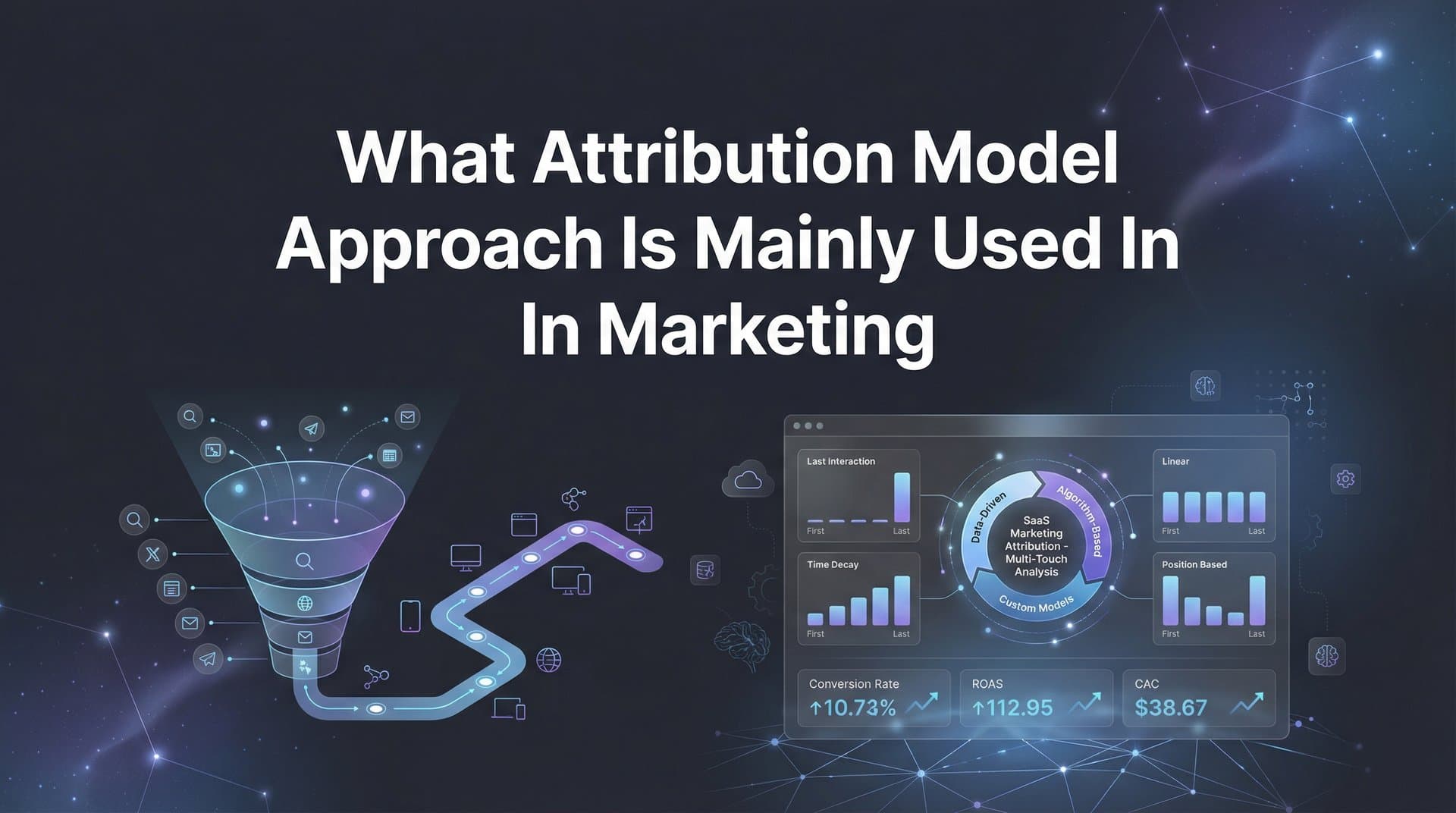
Linear Attribution: This model takes the most egalitarian approach—every touchpoint in the customer journey receives equal credit. If a customer had five interactions with your brand before converting, each interaction gets 20% attribution. The appeal is fairness and simplicity. No touchpoint is privileged over others, which can be valuable when you're trying to understand the full scope of your marketing ecosystem without making assumptions about which stages matter most.
Linear attribution works well when you genuinely believe all touchpoints contribute roughly equally, or when you're still learning about your customer journey and don't want to bias your data with assumptions. The downside? It probably doesn't reflect reality. That first awareness touchpoint likely didn't contribute as much as the demo request that happened right before purchase. Treating them equally can obscure important patterns in your conversion path. Some teams leverage linear model marketing attribution software to implement this approach effectively.
Time-Decay Attribution: This model operates on the assumption that touchpoints closer to the conversion moment had more influence on the decision. It assigns progressively more credit to interactions as they approach the final conversion, with the last touchpoint receiving the most credit (though not 100% like last-click).
Time-decay makes intuitive sense for many businesses. The email campaign that landed in their inbox yesterday probably influenced the purchase decision more than the blog post they read six weeks ago. This model particularly suits businesses with defined sales cycles where momentum builds over time. If your sales process involves progressive qualification and nurturing, time-decay attribution can reveal which late-stage tactics are most effective at closing deals.
The limitation of time-decay is that it can undervalue the importance of initial awareness and consideration-stage content. That first touchpoint that introduced the customer to your brand created all subsequent opportunities, even if it happened months ago. Time-decay gives it minimal credit, potentially leading you to underinvest in top-of-funnel marketing.
Position-Based (U-Shaped) Attribution: This model tries to split the difference by recognizing that both the first and last touchpoints play special roles. Typically, it assigns 40% of credit to the first interaction (which introduced the customer to your brand), 40% to the last interaction (which directly preceded the conversion), and distributes the remaining 20% among all middle touchpoints.
Position-based attribution reflects the reality that customer journeys have critical moments at both ends. The first touch creates awareness and starts the relationship. The last touch often represents the final convincing factor that triggers action. Everything in between nurtures and develops the relationship but may not be quite as pivotal.
This model works exceptionally well for businesses that invest heavily in both brand awareness campaigns and direct response conversion tactics. If you're running top-of-funnel content marketing alongside bottom-of-funnel retargeting and search campaigns, U-shaped attribution helps you see the value of both strategies without completely discounting the nurture journey in between.
Data-Driven Attribution: The Modern Standard
All the models we've discussed so far share a common characteristic: they use predetermined rules to distribute credit. Linear always splits equally. Time-decay always favors recent touchpoints. Position-based always emphasizes first and last. But what if your actual customer conversion patterns don't match these arbitrary rules?
Data-driven attribution represents a fundamentally different approach. Instead of applying a fixed formula, these models use machine learning algorithms to analyze your actual conversion data and determine which touchpoints statistically correlate most strongly with conversions. The algorithm looks at thousands of customer journeys—both those that converted and those that didn't—and identifies which interactions actually make a difference.
Here's how it works in practice: the algorithm notices that customers who engage with your webinar content convert at significantly higher rates than those who don't, even when controlling for other factors. It assigns more attribution credit to webinar touchpoints because the data shows they genuinely influence outcomes. Meanwhile, it might discover that a particular ad campaign generates lots of clicks but those clicks don't actually correlate with eventual conversions—so that touchpoint receives less credit despite high engagement. Learn more about how machine learning can be used in marketing attribution to understand the mechanics behind these models.
Major platforms have embraced data-driven attribution as the future of marketing measurement. Google transitioned Google Analytics 4 to use data-driven attribution as the default model, replacing last-click. Facebook offers data-driven attribution for advertisers with sufficient conversion volume. This industry shift signals a clear direction: algorithmic attribution based on actual performance patterns rather than arbitrary rules.
The advantages are compelling. Data-driven models adapt to your specific business reality rather than forcing your data into a predetermined framework. They can reveal surprising insights about which touchpoints actually drive conversions versus which just correlate with customers who were already likely to convert. As your marketing mix evolves, the model continuously learns and adjusts its attribution logic.
But data-driven attribution comes with important requirements and limitations. These models need substantial conversion volume to identify statistically meaningful patterns—typically hundreds of conversions at minimum, though more is better. If you're a small business with limited conversion data, algorithmic models may not have enough information to generate reliable insights.
You also need complete, accurate tracking across all customer touchpoints. Data-driven attribution is only as good as the data you feed it. If your tracking has gaps—missing touchpoints, broken attribution connections, or incomplete journey data—the algorithm will draw conclusions from incomplete information. This is where server-side tracking becomes crucial, as it captures more complete data than traditional browser-based tracking methods that are increasingly limited by privacy restrictions.
Matching Your Attribution Model to Your Marketing Reality
Choosing the right attribution model isn't about finding the "correct" answer—it's about matching your measurement approach to your specific business context and goals. Several factors should guide your decision. Understanding the importance of attribution models in marketing provides essential context for this choice.
Sales Cycle Length: If customers typically convert within a single session or day, single-touch attribution may suffice. Once your sales cycle extends beyond a few days, multi-touch becomes essential. For cycles spanning weeks or months, data-driven or position-based models usually provide the most useful insights.
Number of Touchpoints: Businesses with simple customer journeys—one or two interactions before conversion—don't need complex attribution models. But if your average customer interacts with your brand five, ten, or fifteen times before converting, you need attribution that acknowledges this complexity. The more touchpoints in your typical journey, the more critical multi-touch attribution becomes.
Channel Diversity: Running campaigns across multiple platforms—Facebook, Google, LinkedIn, email, organic content, events—creates attribution challenges that single-touch models can't handle. Multi-channel marketing almost always requires multi-touch attribution to understand how channels work together rather than competing for last-click credit. Implementing cross-channel marketing attribution software can help unify these insights.
Business Goals: What decisions are you trying to make with attribution data? If you're optimizing budget allocation across channels, you need attribution that shows the true value of each channel throughout the journey. If you're trying to understand which content types drive conversions, you need models that credit content interactions appropriately. Let your business questions guide your model selection.
Here's a perspective that sophisticated marketers increasingly adopt: don't choose just one attribution model. Compare multiple models side-by-side to gain different insights into your marketing performance. Last-click shows you which channels are good at closing. First-click reveals which channels excel at generating awareness. Multi-touch models show the full journey. Looking at all three perspectives together gives you a more complete picture than any single model alone.
The most critical factor in attribution success isn't which model you choose—it's whether you're connecting attribution data to actual revenue outcomes. Conversion tracking is useful, but marketing revenue attribution is transformative. Two campaigns might generate the same number of conversions, but if one consistently attracts higher-value customers with better lifetime value, that should influence your budget decisions. Make sure your attribution approach tracks not just who converted, but what revenue they generated.
Putting It All Together: Building an Attribution Strategy That Works
Let's bring this full circle. Last-click attribution remains the most commonly used model in marketing, primarily because it's the default in most platforms and requires minimal setup. But as we've explored throughout this article, common doesn't mean optimal.
The marketing industry is clearly moving toward more sophisticated approaches. Multi-touch attribution models that acknowledge the full customer journey are becoming standard practice for businesses with complex sales cycles. Data-driven attribution that uses machine learning to identify what actually drives conversions represents the cutting edge of marketing measurement.
Your specific situation should guide your approach. Small businesses with simple, single-session sales cycles may find that last-click provides sufficient insights without overwhelming complexity. But if you're running multi-channel campaigns, targeting B2B buyers, or working with longer consideration cycles, you need attribution models that reflect how customers actually make decisions. B2B companies especially benefit from exploring the best marketing attribution tools for B2B SaaS companies.
Here's what matters most: before you worry about which attribution model to use, make sure you have complete, accurate tracking across all customer touchpoints. The most sophisticated attribution model in the world is useless if it's working with incomplete data. Invest in tracking infrastructure that captures every interaction—from initial ad clicks through website visits, form submissions, email engagement, and final conversions.
Server-side tracking has become increasingly important as browser restrictions and privacy regulations limit traditional cookie-based methods. You need tracking that works reliably across devices, respects user privacy, and connects all the dots in your customer journey. Without this foundation, any attribution model will give you partial answers at best.
Start by evaluating your current attribution setup. What model are you using today? Is it giving you the insights you need to make confident budget decisions? Are there gaps in your customer journey that your current tracking doesn't capture? These questions will reveal whether you need to evolve your attribution approach.
The goal isn't perfection—it's progress. Moving from last-click to any multi-touch model represents a significant improvement in understanding your marketing performance. Adding data-driven attribution when you have sufficient conversion volume takes you even further. The key is matching your measurement sophistication to your business complexity.
Ready to elevate your marketing game with precision and confidence? Discover how Cometly's AI-driven recommendations can transform your ad strategy—Get your free demo today and start capturing every touchpoint to maximize your conversions.