Every dollar you spend on ads should be traceable to a result. Yet many marketing teams find themselves making budget decisions based on incomplete or conflicting data. One platform says a campaign drove 40 conversions, another says 12, and your CRM tells a completely different story.
The root cause is almost always the same: conversion tracking that was never set up properly in the first place.
Inaccurate conversion tracking leads to misallocated budgets, poor optimization signals fed back to ad platforms, and a fundamental inability to answer the question every stakeholder asks: what is actually working? When your data is broken, your campaigns optimize toward the wrong goals, your best channels get underfunded, and your worst performers keep burning budget.
This guide walks you through the complete process of setting up accurate conversion tracking from the ground up. You will learn how to audit your current setup, define the right conversion events, implement server-side tracking for reliable data collection, connect your ad platforms and CRM into a unified system, validate that your data is accurate, and then use that clean data to optimize campaigns with confidence.
Whether you are running ads on Meta, Google, TikTok, or multiple platforms simultaneously, these steps apply universally. By the end, you will have a tracking infrastructure that captures every meaningful touchpoint, attributes revenue to the right sources, and feeds better data back to ad platform algorithms so they can find more of your best customers.
Let's get your tracking right.
Step 1: Audit Your Current Tracking Infrastructure
Before you build anything new, you need to understand what you are working with. Most ad accounts accumulate tracking code over time: pixels added by different team members, tags installed for campaigns that no longer run, and conversion events that were set up years ago and never revisited. The result is a tangled mess that produces unreliable data.
Start by creating a tracking inventory spreadsheet. List every pixel, tag, and conversion event currently active across your entire stack. For each item, document the platform it belongs to, where it fires on your site or funnel, what it is supposed to measure, and whether it is still relevant to your current business goals. This single document will become your tracking bible.
Next, look for the most common signs of broken tracking:
Duplicate conversions: The same event fires multiple times for a single user action, inflating your conversion counts and sending bad signals to ad platform algorithms.
Missing events: Key actions in your funnel, such as form submissions or checkout completions, are not being captured at all, leaving gaps in your attribution data.
Platform-to-CRM discrepancies: Your ad platforms report significantly more conversions than your CRM records, which usually indicates that pixel fires are not tied to actual business outcomes. Understanding why conversion tracking numbers are wrong is the first step toward fixing these gaps.
iOS and browser privacy gaps: Since Apple introduced App Tracking Transparency with iOS 14.5, client-side pixels have struggled to track conversions from iOS devices. Browsers like Safari and Firefox already block third-party cookies by default, and Google Chrome has been introducing Privacy Sandbox features that further limit browser-based tracking. If your setup relies entirely on client-side pixels, you are almost certainly missing a meaningful portion of your conversions.
Also check your tag manager for conflicts. Multiple tags firing the same event, outdated Google Tag Manager containers, and misconfigured triggers are among the most common sources of duplicate or missing data. Open your tag manager, review every active tag, and verify that each one serves a clear, current purpose.
Finally, cross-reference your pixel events against your actual business goals. If you set up a "newsletter signup" conversion event two years ago but email is no longer part of your acquisition strategy, that event is cluttering your data. A solid grasp of different conversion tracking methods will help you decide which events to keep and which to remove.
Success indicator: You have a completed tracking inventory document that shows every active pixel, tag, and event, its current status, and a clear list of identified gaps or redundancies that need to be addressed in the steps ahead.
Step 2: Define Your Conversion Events and Funnel Stages
Tracking everything is not a strategy. It is noise. When every button click and page scroll is treated as a conversion, the data becomes meaningless and your ad platforms have no idea what outcome you actually care about.
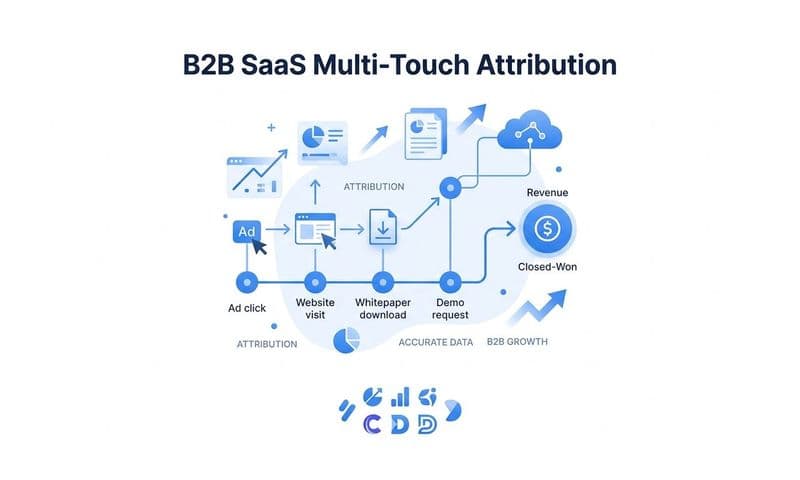
The goal of this step is to map your real customer journey and identify the three to six conversion events that matter most to your business. Start by drawing out the path from ad click to revenue. What does a prospect do between seeing your ad and becoming a paying customer? Every meaningful action in that journey is a candidate for a conversion event.
Divide your events into two categories:
Micro-conversions: These are early-stage signals that indicate interest or intent. Examples include page views of key content, add-to-cart actions, form starts, video views, or free trial signups. Micro-conversions help you understand funnel health and optimize for top-of-funnel engagement, but they should not be the primary signal you send back to ad platforms for bid optimization.
Macro-conversions: These are the outcomes that directly tie to revenue. Purchases, qualified lead form submissions, booked sales calls, and closed deals fall into this category. If you run a lead generation business, understanding how to properly handle conversions for lead generation is especially important for defining these events correctly.
Once you have your list, alignment becomes critical. A "lead" must mean the same thing across Meta Ads Manager, Google Ads, and your CRM. If Meta counts a lead as any form submission and your CRM only records qualified leads, you will never reconcile your data. Document a precise definition for each conversion event and make sure every platform and team member uses the same definition.
Conversion windows and attribution settings also need to be consistent. Meta Ads defaults to a 7-day click and 1-day view attribution window. Google Ads uses different default models. When you compare conversion counts across platforms without accounting for these differences, you are not comparing the same thing. Choose your attribution settings deliberately and document them so everyone on your team understands what the numbers represent.
Think of this conversion map as your single source of truth. It should be a living document that every team member, agency partner, and platform configuration references. When a new campaign launches or a new platform is added, the conversion map tells you exactly which events to track and how to define them.
Success indicator: You have a documented conversion map that defines each event, its role in the funnel (micro or macro), its precise definition, and the attribution window applied consistently across all platforms.
Step 3: Implement Server-Side Tracking for Reliable Data Collection
Here is the uncomfortable truth about browser-based tracking in 2026: it is no longer enough on its own. Client-side pixels rely on a user's browser to fire conversion data, and browsers have become increasingly hostile to that process.
Safari and Firefox block third-party cookies by default. Apple's App Tracking Transparency framework requires users to opt in to tracking on iOS devices, and the majority do not. Ad blockers prevent pixels from firing entirely for a significant portion of web users. The result is that if you rely solely on browser-based pixels, you are only seeing a fraction of your actual conversions. For a deeper dive into why this matters, explore why server-side tracking is more accurate than traditional pixel-based approaches.
Server-side tracking solves this problem by moving the data collection process off the user's browser and onto your server. Instead of a pixel firing in the browser and hoping it gets through, your server sends conversion data directly to ad platforms via their APIs. Meta's Conversions API, Google's Enhanced Conversions, and TikTok's Events API are all built for exactly this purpose, and each platform now recommends or requires server-side event transmission alongside traditional pixel tracking.
Here is how to set it up:
1. Choose your server-side tracking solution. You can configure server-side tracking natively through each ad platform's API, use a tag management system that supports server-side containers, or use a dedicated attribution platform like Cometly that handles the server-side infrastructure for you. Our server-side tracking setup guide walks through the technical details of each approach.
2. Connect your website or funnel platform to the server-side solution. This typically involves adding a snippet of code to your site or connecting via a native integration, then configuring which events you want to capture and what parameters to send with each event.
3. Map your data fields carefully. Server-side tracking is most powerful when you pass customer data like hashed email addresses, phone numbers, or order IDs alongside the conversion event. This allows ad platforms to match conversions to users more accurately, even when cookies are unavailable.
4. Run both client-side and server-side tracking in parallel initially. This lets you compare the two data streams and identify how many conversions were previously being missed by your pixel alone.
Cometly's server-side tracking is built to capture the conversion events that browser pixels miss. By routing data through the server layer, it gives you a more complete and accurate picture of campaign performance across all your ad channels, including the iOS conversions that most pixel-only setups lose entirely.
Success indicator: Server-side events are firing correctly and you can see conversion data arriving in your ad platforms through the API pathway. Compare the event counts to your previous pixel-only data. If server-side is capturing meaningfully more conversions, your setup is working.
Step 4: Connect Your Ad Platforms, CRM, and Attribution System
Even with server-side tracking in place, you still face a fundamental problem if your data lives in silos. Meta has its view of conversions. Google has its own. TikTok has another. And your CRM holds the ground truth about which leads actually became customers. None of these systems talk to each other by default, which means you are managing four different versions of reality.
The solution is a centralized attribution system that pulls all of these data sources together into a single, unified view of the customer journey.
Start by connecting each of your ad platforms to your attribution tool. This typically involves installing platform-specific integrations or connecting via API so that click and impression data from Meta, Google, TikTok, and any other active channels flows into one place. If you are running campaigns across multiple networks, learning the best practices for tracking conversions across multiple ad platforms will save you significant time and headaches.
The CRM integration is where things get genuinely powerful. Many conversion tracking setups capture the top of the funnel well but lose the thread once a lead enters the sales process. By connecting your CRM to your attribution system, you can tie downstream events like qualified lead status, sales call bookings, and closed-won deals back to the original ad click that started the journey. This is what allows you to move beyond "cost per lead" and start measuring "cost per closed deal" by channel and campaign.
When setting up these integrations, pay close attention to how each system identifies users. A consistent identifier, whether that is an email address, a customer ID, or a UTM-tagged URL, is what allows the attribution system to stitch touchpoints together across platforms and devices. Without a reliable identifier, multi-touch attribution breaks down. Proper UTM tracking and attribution setup is essential for maintaining this consistency.
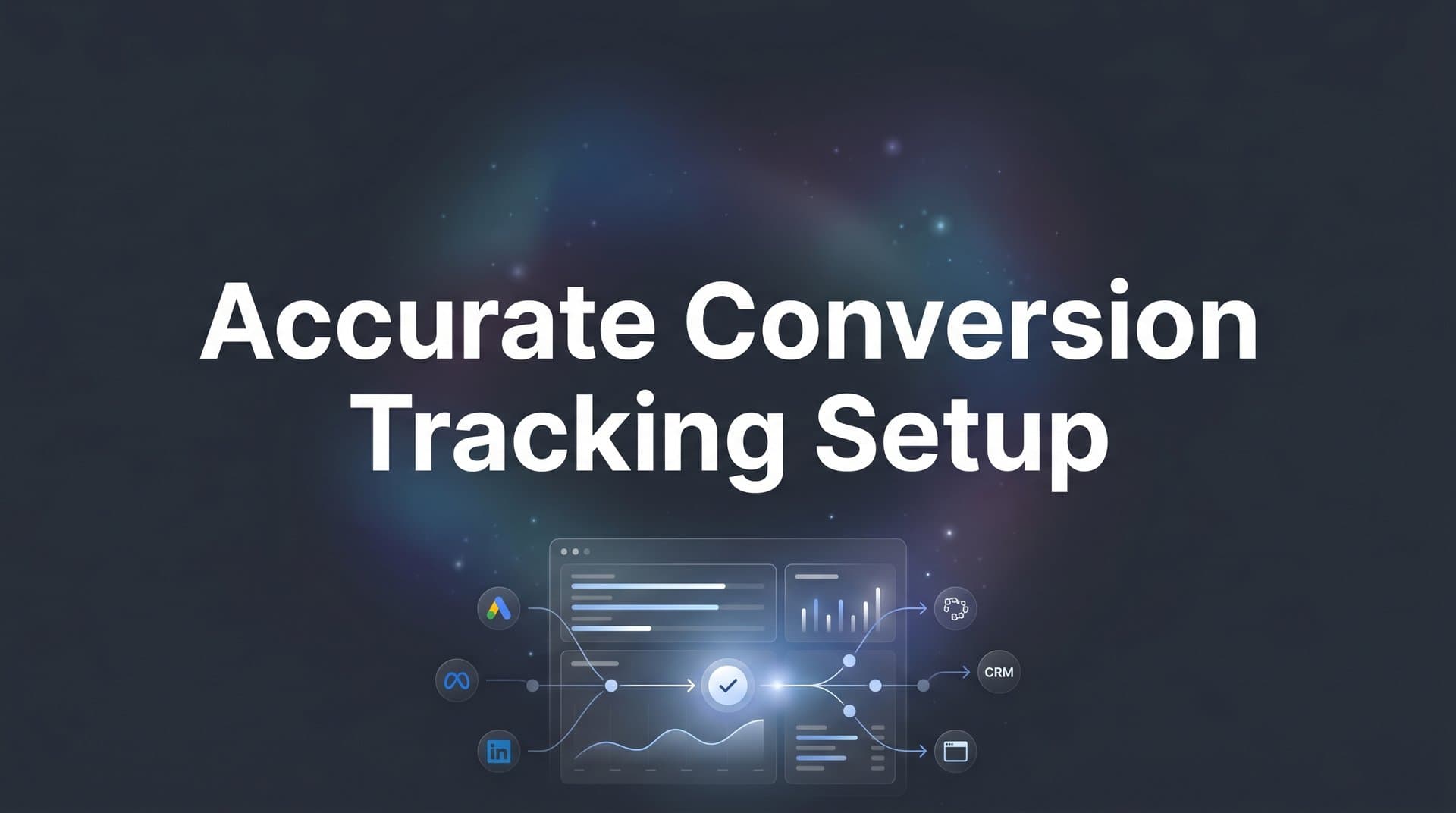
Cometly connects ad platforms, CRM data, and website behavior to track the entire customer journey in real time. Rather than toggling between Meta Ads Manager, Google Ads, and your CRM to piece together a picture, you get a single dashboard where every touchpoint from first ad click to closed revenue is visible and attributed to the correct source.
Success indicator: You can open a single dashboard and see the complete customer journey for any conversion, from the first ad impression or click through every subsequent touchpoint to the final outcome recorded in your CRM. Data is consistent across all connected platforms.
Step 5: Validate Your Data and Fix Discrepancies
Your tracking is live. Your platforms are connected. Now comes the step that most teams skip, and it is the step that determines whether all the work you just did actually produces reliable data: validation.
Run a structured validation test over a 7 to 14 day window. Compare conversion counts in your attribution tool against each ad platform's native reporting and your CRM records for the same time period. Do not expect perfect agreement across all three, but you should be able to explain any differences that exist.
Here are the most common discrepancies you will encounter and how to investigate them:
Time zone mismatches: If your attribution tool is set to UTC and your ad platform is set to your local time zone, conversion counts for any given day will not align. Standardize time zones across all platforms and tools before drawing any conclusions from your data.
Duplicate event firing: If a conversion event fires twice for the same user action, your counts will be inflated. Check your tag manager and server-side configuration to ensure deduplication logic is in place. Most server-side APIs support event deduplication using event IDs.
Conversion window differences: Meta's default 7-day click window means it will attribute conversions to an ad click that happened up to seven days ago. If Google Ads uses a different window, the same conversion may be counted in one platform but not the other. Make sure you understand the attribution window each platform is using when comparing numbers.
Cross-device tracking gaps: A user who clicks an ad on their phone and converts on their desktop may not be connected as the same person by client-side tracking alone. Server-side tracking with customer data matching helps close this gap significantly. For more on solving this specific challenge, see our guide on tracking conversions across devices.
UTM parameters are your best friend for tracing individual conversions from click to close. Every ad should have a properly structured UTM string that carries through to your CRM. When a conversion appears in your attribution tool, you should be able to pull the corresponding record in your CRM and verify that the source, medium, and campaign data matches.
Once you have resolved the discrepancies you find, set up ongoing monitoring. A simple weekly check comparing platform-reported conversions, attribution tool data, and CRM records will catch data drift before it becomes a major problem. Tracking setups degrade over time as websites are updated, new campaigns launch, and platforms change their APIs.
Success indicator: Conversion counts across your attribution tool, ad platforms, and CRM align within a reasonable margin that you can fully explain. You can trace individual conversions end to end using UTM parameters and unique identifiers.
Step 6: Sync Clean Conversion Data Back to Ad Platforms
Accurate tracking is only half the equation. What you do with that data determines whether your campaigns actually improve.
Ad platforms like Meta and Google use conversion signals to train their optimization algorithms. When you tell Meta to optimize for purchases, its algorithm studies the characteristics of users who converted and finds more people who look like them. The quality of that targeting depends entirely on the quality of the conversion data you feed back. Incomplete or inaccurate conversion signals teach the algorithm to optimize toward the wrong audience, which degrades your results over time.
This is why conversion sync matters so much. Once your tracking is clean and validated, you need to send those enriched conversion events back to each ad platform through their respective APIs. Understanding what conversion API tracking is and how it works will help you configure this feedback loop correctly.
Here is how to configure it:
1. Select which events to send back. Focus on your macro-conversions, the events that represent real business outcomes. Sending low-quality micro-conversion signals can confuse platform algorithms.
2. Map conversion values where possible. If you can assign a revenue value to each conversion, do it. Platforms that receive value-based conversion data can optimize for return on ad spend rather than just conversion volume, which typically produces better outcomes.
3. Configure the data pipeline to send events in as close to real time as possible. Delayed conversion signals are less useful for algorithm training than timely ones.
4. Include customer data parameters like hashed email addresses when available. This improves match rates and gives the platform more signal to work with when identifying your best customers.
Cometly's Conversion Sync is built specifically for this feedback loop. It feeds enriched, conversion-ready events back to Meta, Google, and other ad platforms so their AI can identify and target more of your highest-value customers. The result is better audience modeling, stronger lookalike performance, and more efficient bid optimization across every channel you run.
Success indicator: Your ad platforms are receiving accurate, timely conversion signals that reflect real business outcomes. You can verify event delivery through each platform's event manager or API diagnostics, and your campaign performance data shows the algorithm responding to the improved signals.
Your Accurate Tracking Checklist and What Comes Next
You now have a complete framework for building a tracking infrastructure that actually works. Before you move on, use this quick-reference checklist to confirm every piece is in place:
Audit complete: You have a tracking inventory document listing every pixel, tag, and conversion event, with identified gaps and redundancies noted.
Events defined: You have a documented conversion map with clear definitions for each micro and macro-conversion, consistent attribution windows, and alignment across all platforms and team members.
Server-side tracking live: Server-side events are firing correctly and capturing conversions that browser pixels miss, including iOS conversions and ad-blocked traffic.
Platforms connected: Your ad platforms, CRM, and attribution system are integrated into a single unified view of the customer journey from first click to closed revenue.
Data validated: You have run a comparison test, resolved discrepancies, and established a weekly monitoring routine to catch data drift early.
Conversion sync active: Clean, enriched conversion data is flowing back to Meta, Google, and your other ad platforms to improve algorithm training and targeting quality.
With accurate data in hand, you can start making decisions that actually reflect reality. Compare attribution models side by side: first-touch, last-touch, and multi-touch tell very different stories about which channels contribute to revenue. Multi-touch attribution, in particular, gives you a far more complete picture of how your campaigns work together across a customer journey that often spans multiple channels and multiple days.
Use AI-powered recommendations from tools like Cometly to identify your top-performing ads and campaigns across every channel, then scale what is working with the confidence that comes from knowing your data is accurate.
Revisit your tracking setup at least quarterly. Privacy changes, platform API updates, new campaign types, and evolving business goals all have the potential to introduce new gaps. A tracking setup that is accurate today may develop blind spots six months from now if left unattended.
The marketers who consistently outperform their benchmarks are not necessarily the ones with the biggest budgets. They are the ones who know exactly what their data means and make decisions accordingly. Accurate conversion tracking is the foundation that makes everything else possible.
Ready to build that foundation faster and with greater confidence? Get your free demo of Cometly today and see how AI-driven attribution can help you capture every touchpoint, understand what is really driving revenue, and scale your best campaigns with data you can actually trust.