You're running campaigns across Meta, Google, TikTok, and LinkedIn. Your dashboard shows conversions, but something feels off. The numbers don't quite match what you see in your CRM. You're manually exporting CSVs at the end of each week, trying to piece together which ads actually drove revenue. Meanwhile, your ad platforms are optimizing based on incomplete data, missing the full picture of what happens after someone clicks.
This is the reality for most marketers who rely solely on pixel-based tracking. Browser restrictions, iOS privacy changes, and ad blockers create blind spots that make it nearly impossible to see the complete customer journey. The solution? API integration.
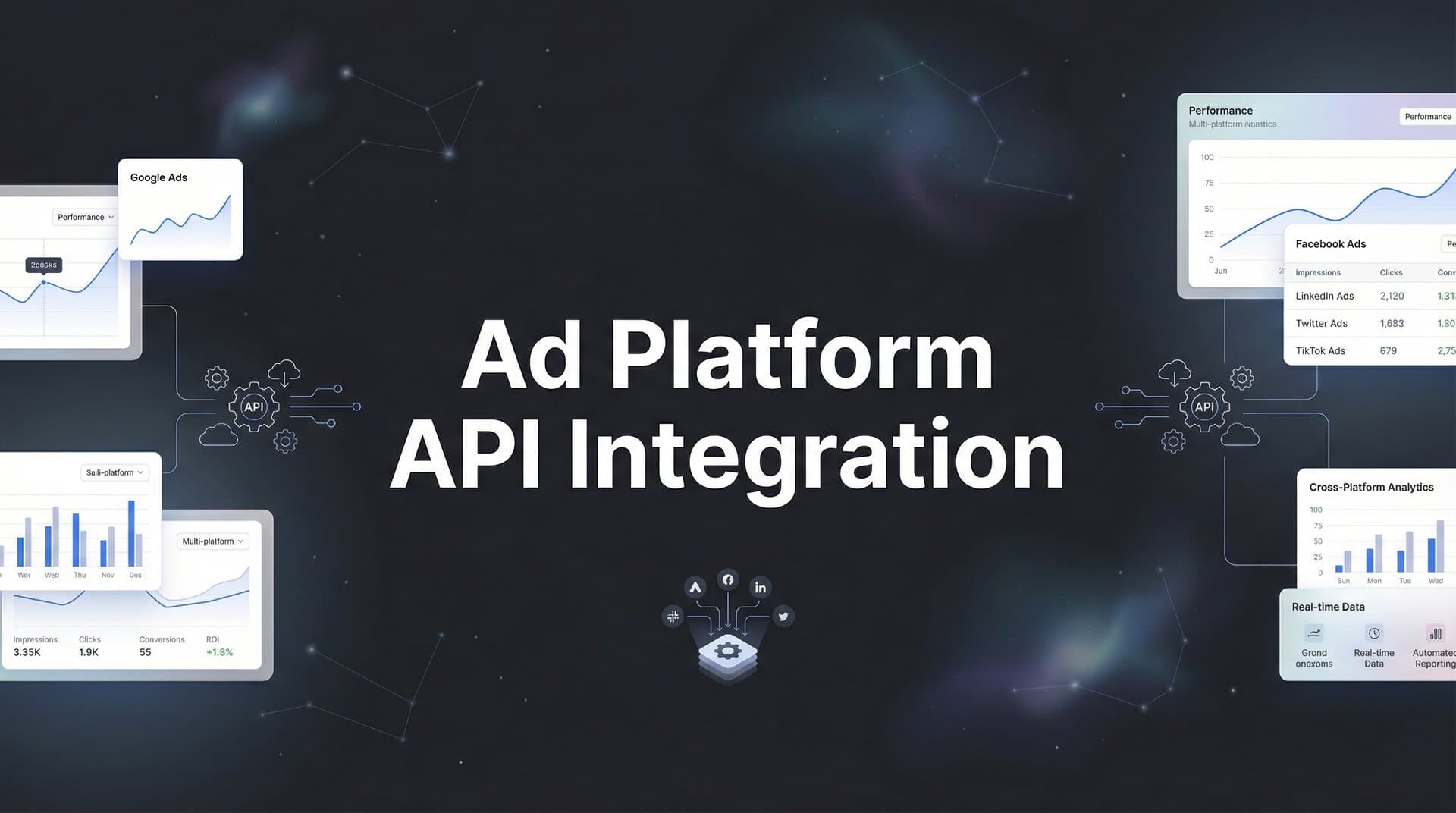
When you connect your ad platforms through their APIs, you unlock real-time data flow in both directions. You can pull campaign performance data automatically, and more importantly, you can send conversion events back to the platforms—enriched with revenue data, customer details, and attribution insights that help their algorithms optimize better. This isn't just about convenience. It's about giving your campaigns the fuel they need to perform.
This guide walks you through the complete process of setting up ad platform API integrations from start to finish. You'll learn how to obtain credentials, configure authentication, map your data correctly, and validate that everything works. Whether you're integrating one platform or five, you'll have a working system by the end.
Step 1: Gather Your API Credentials and Access Requirements
Before you can connect anything, you need the right keys to unlock each platform's API. Every ad platform has its own credential system, and getting this step right prevents headaches later.
For Meta's Marketing API, start in your Business Manager. Navigate to Business Settings, then System Users under the Users section. Create a system user—this gives you a token that doesn't expire like personal access tokens do. You'll need to assign this user to your ad accounts and grant specific permissions. At minimum, you need "ads_read" to pull campaign data and "ads_management" if you plan to make changes. If you're setting up the Conversions API for server-side tracking, add "business_management" permissions as well.
Google Ads API requires a developer token, which you request through your Google Ads Manager account. Go to Tools & Settings, then API Center under Setup. Request access—Google typically approves within a few business days. You'll also need OAuth 2.0 credentials from the Google Cloud Console. Create a new project, enable the Google Ads API, and generate OAuth client credentials. Save both the client ID and client secret somewhere secure.
TikTok's Marketing API access starts with applying for developer access through their TikTok for Business platform. You'll need a TikTok Ads Manager account and business verification. Once approved, you'll receive an App ID and Secret through the developer portal. TikTok also requires you to specify which ad accounts the integration can access.
LinkedIn's Marketing Developer Platform follows a similar pattern. Create an app in the LinkedIn Developers portal, request Marketing API access, and wait for approval. LinkedIn is particularly strict about use cases—be specific about what you're building and why. Once approved, you'll receive a Client ID and Client Secret.
Here's what makes this step critical: different permission levels give you different capabilities. Read-only access lets you pull performance data but won't let you send conversion events back. Read/write access enables full two-way communication. Plan for what you actually need to accomplish.
Store all credentials in a password manager or secure vault immediately. You'll need them accessible but protected. Create a simple spreadsheet documenting which credentials belong to which platform, what permissions they have, and when they were created. This becomes invaluable when troubleshooting later.
Step 2: Configure Your Integration Environment
Now that you have credentials, you need to decide how you're actually going to connect to these APIs. You have three main paths: build direct integrations yourself, use middleware tools, or leverage an attribution platform that handles the technical infrastructure.
Direct API integration gives you maximum control but requires significant development resources. You'll need to write code that handles authentication, manages rate limits, processes responses, and handles errors gracefully. This approach makes sense if you have specific custom requirements that off-the-shelf solutions can't meet. Most marketing teams, however, find this unnecessarily complex.
Middleware tools like Zapier or Make can connect some ad platforms to your systems, but they typically focus on simple data transfers rather than the bidirectional communication needed for proper attribution and optimization. They work for basic reporting but fall short for conversion tracking.
Attribution platforms like Cometly handle the entire API infrastructure for you. They maintain pre-built integrations with major ad platforms, manage authentication automatically, and provide interfaces for mapping your data without writing code. This is the fastest path to working integrations for most teams.
Regardless of which path you choose, you'll need to set up authentication. Most modern ad platforms use OAuth 2.0, which means you'll implement an authentication flow where users grant permission for your application to access their ad account data. This generates an access token that your system includes with every API request.
Here's what the OAuth flow looks like: your application redirects users to the ad platform's authorization page, they log in and grant permissions, the platform redirects back to your application with an authorization code, and your application exchanges that code for an access token. That token is what you'll use for actual API calls.
If you're sending conversion events back to ad platforms, you'll also need to set up webhook endpoints. These are URLs that receive real-time notifications when specific events happen—like when someone completes a purchase in your system. Your server needs to be able to receive these HTTP POST requests, validate them, and process the data. Following data integration best practices ensures your webhook infrastructure remains reliable and secure.
Before going live, test everything in sandbox mode. Meta offers a test environment where you can send events without affecting real ad accounts. Google Ads has a test account feature. Use these to verify your authentication works and your data flows correctly before connecting to production accounts with real ad spend.
Step 3: Map Your Data Fields and Conversion Events
This is where many integrations break down. You have data in your CRM, analytics platform, and website. Ad platforms expect data in their specific format with their specific field names. Getting this mapping right is critical for accurate attribution and optimization.
Start by identifying exactly which events and metrics you need to track. For pulling data from ad platforms, you typically want campaign performance metrics like impressions, clicks, spend, and platform-reported conversions. For pushing data back, you need conversion events with revenue values, customer identifiers, and attribution parameters.
Create a data mapping document that lists every field you're tracking and how it corresponds across systems. For example, your CRM might store "customer_email" while Meta's Conversions API expects "em" (hashed email). Google Ads wants "gclid" for click identification while Meta uses "fbclid" and TikTok uses "ttclid". Document these mappings explicitly.
Conversion events need consistent schemas across all platforms. When someone makes a purchase, you want to send the same core information everywhere: event name, timestamp, value, currency, and customer identifiers. But each platform has slightly different requirements for how this data should be formatted.
Meta's Conversions API expects events in this structure: event_name (like "Purchase"), event_time (Unix timestamp), user_data (hashed email, phone, address), custom_data (value, currency, content_ids), and event_source_url. Google's enhanced conversions want similar data but formatted differently. Your mapping needs to account for these variations. For a detailed walkthrough, our conversion API implementation tutorial covers the technical specifics.
Customer identifiers are particularly important. You need a way to match the person who clicked your ad with the person who eventually converted—even if that conversion happens days later or on a different device. This usually means tracking click IDs (gclid, fbclid, ttclid) when someone arrives at your site and associating those with customer records in your system.
UTM parameters provide another layer of attribution data. While click IDs are platform-specific, UTMs give you human-readable campaign information. Structure your UTM taxonomy consistently: utm_source for the platform, utm_medium for the ad type, utm_campaign for the campaign name, utm_content for the ad variation, and utm_term for keywords when relevant.
For server-side tracking, you'll also need to configure event schemas that include additional context: the user's IP address (for geographic attribution), user agent (for device attribution), and event ID (to prevent duplicate counting if the same event gets sent multiple times). These parameters help ad platforms match your server-side events with their click data.
Test your mapping with a few sample records before processing everything. Take a real conversion from your system, map it according to your documentation, and verify it produces valid payloads for each ad platform. This catches field mismatches early.
Step 4: Establish the API Connection and Authenticate
With credentials ready and data mapped, it's time to actually connect to the APIs and establish authenticated sessions. This is where theory meets practice.
For Meta's Marketing API, you'll make your first call to the Graph API to verify authentication. A simple test is to request basic information about your ad account. The endpoint looks like this: https://graph.facebook.com/v19.0/act_YOUR_AD_ACCOUNT_ID?fields=name,account_status&access_token=YOUR_ACCESS_TOKEN. If you get back account details, authentication works. If you see an error about permissions or invalid tokens, you need to revisit your credential setup.
Google Ads API authentication is a two-step process. First, you use your OAuth credentials to get an access token through the standard OAuth flow. Then you include that access token along with your developer token in the headers of every API request. Google's API also requires a customer ID (your Google Ads account number without dashes) to specify which account you're accessing.
Token refresh is critical for maintaining persistent connections. Access tokens expire—typically after an hour for OAuth tokens. Your integration needs to detect when a token is about to expire and automatically refresh it using the refresh token you received during initial authentication. Failing to implement this means your integration will break every time tokens expire.
System user tokens in Meta don't expire, which is why they're preferred for server-to-server integrations. If you're using personal access tokens instead, you'll need to refresh them every 60 days. Set calendar reminders or build automated alerts to prevent unexpected disconnections.
Rate limiting is another consideration you can't ignore. Meta's Marketing API allows approximately 200 calls per hour per ad account by default. Google Ads has daily operation limits that vary based on your access level—basic access gets 15,000 operations per day while standard access gets significantly more. TikTok and LinkedIn have similar restrictions.
Build rate limiting into your integration from the start. Track how many requests you're making and implement delays when approaching limits. Most API clients have built-in rate limiting features—use them. Getting rate limited means your integration stops working until the limit resets, which could be hours.
Error handling is equally important. APIs fail sometimes—networks have issues, platforms have outages, requests malform. Your integration should catch errors gracefully, log what went wrong, and retry with exponential backoff. Don't let a single failed request crash your entire data pipeline.
Verify successful authentication by pulling a small sample of data from each platform. Request yesterday's campaign performance metrics for one campaign. If data comes back correctly formatted, your connection works. If you get authentication errors, permission errors, or malformed responses, troubleshoot before proceeding.
Step 5: Test Data Flow and Validate Accuracy
Your APIs are connected, but that doesn't mean they're working correctly. Testing is how you catch issues before they affect real campaigns and real budgets.
Start with test conversions. If you're setting up server-side tracking, send a test purchase event through your integration. Use Meta's Events Manager Test Events tool to verify the event arrives with all the correct parameters. Check that the event name matches exactly, the value is formatted as a number, the currency code is correct, and customer data is properly hashed. Understanding what is CAPI match rate helps you evaluate how well your events are being matched to ad clicks.
Google Ads has similar testing tools in their conversion tracking interface. Send a test conversion and verify it appears in your conversion tracking dashboard. Pay attention to the timestamp—timezone mismatches are a common issue that can make conversions appear at the wrong time or even on the wrong day.
Compare API data against what you see in platform dashboards. Pull yesterday's metrics through the API and check them against the numbers shown in Meta Ads Manager or Google Ads. They should match exactly. If they don't, you're either requesting the wrong metrics, using incorrect date ranges, or pulling data at the wrong attribution level (campaign vs. ad set vs. ad). These ad platform reporting discrepancies are common and require systematic troubleshooting.
Watch for duplicate events. If you're sending conversions through both pixel tracking and server-side API, you need deduplication logic. Each event should include a unique event ID. When the same event arrives through multiple channels with the same ID, platforms count it only once. Without this, you'll inflate your conversion numbers and mess up your attribution.
Check for missing parameters. A conversion event without a value is useless for ROAS optimization. An event without customer identifiers can't be matched to the ad click. An event without a timestamp defaults to when it was received rather than when it actually happened. Review a sample of events to ensure all critical fields are populated.
Attribution discrepancies are normal to some degree, but large differences indicate problems. If your API is reporting 100 conversions but the platform dashboard shows 50, something is wrong. Common causes include incorrect attribution windows, events being sent outside the window, or click IDs not being captured properly.
Use platform debugging tools extensively. Meta's Events Manager shows you every event received, including warnings about missing or incorrect parameters. Google's Tag Assistant helps validate that conversion tracking is working. TikTok's Events Manager has similar diagnostic features. These tools catch issues your own testing might miss.
Run your integration for a few days in parallel with existing tracking before fully switching over. This gives you time to identify and fix issues without risking data loss. Compare results daily and investigate any significant discrepancies immediately.
Step 6: Monitor, Maintain, and Optimize Your Integration
APIs aren't set-it-and-forget-it. Platforms change their APIs, tokens expire, and data quality can degrade over time without active monitoring.
Set up alerts for connection failures immediately. You want to know within minutes if your integration stops working, not discover it days later when you notice missing data. Monitor for authentication errors, rate limit hits, and sudden drops in event volume. If you normally send 500 events per day and suddenly it drops to zero, something broke.
Schedule regular data quality audits. Once a week, spot-check that the data flowing through your integration matches source systems. Pull a sample of conversions from your CRM and verify they appear in ad platforms with correct values. This catches subtle issues like currency conversion problems or field mapping errors that might not trigger alerts but still corrupt your data.
Stay on top of API version updates. Meta deprecates old API versions regularly, typically giving six months' notice. Google Ads updates their API multiple times per year. Subscribe to developer newsletters and change logs for every platform you integrate with. When deprecation notices arrive, update your integration before the deadline.
Token management requires ongoing attention even with system users and refresh tokens. Audit your credentials quarterly to ensure everything is still valid and properly permissioned. Remove access for team members who no longer need it. Rotate secrets periodically as a security best practice.
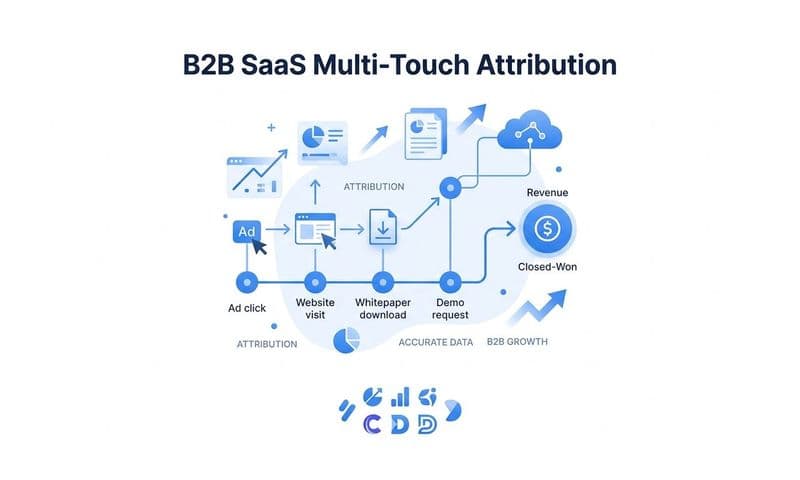
As your marketing sophistication grows, you'll want to leverage your integrated data for deeper insights. With accurate, real-time data flowing from all platforms, you can analyze multi-touch marketing attribution—seeing how different channels work together rather than in isolation. You can identify which campaigns drive customers with the highest lifetime value, not just the most conversions.
This is where AI-powered optimization becomes possible. When platforms receive enriched conversion data through APIs, their algorithms can optimize for actual revenue and customer quality rather than just conversion volume. Leveraging ad platform algorithm optimization strategies helps you maximize the value of your server-side data. Cometly takes this further by analyzing data across all your platforms simultaneously, identifying patterns and providing recommendations for budget allocation and campaign scaling that single-platform algorithms can't see.
Your Integration Checklist
You've walked through the complete process of setting up ad platform API integrations. Here's your quick-reference checklist to ensure nothing was missed:
Credentials gathered and secured in a password manager with documented permissions for each platform. Developer accounts created and business verification completed where required. System user tokens configured for Meta to avoid expiration issues.
Integration environment configured with proper authentication flows using OAuth 2.0. Webhook endpoints set up and tested for receiving real-time conversion data. Rate limiting implemented to prevent API throttling. Error handling and retry logic built in for resilience.
Data fields mapped comprehensively from your CRM to each ad platform's required format. Conversion event schemas defined with all necessary parameters including customer identifiers, values, and timestamps. UTM parameters and click IDs configured for proper attribution tracking.
API connections authenticated and verified with test requests to each platform. Token refresh mechanisms working to maintain persistent connections. Initial data pulls completed successfully and compared against platform dashboards for accuracy.
Test conversions sent and validated using platform debugging tools like Meta Events Manager and Google Tag Assistant. Deduplication logic implemented to prevent double-counting events. Attribution discrepancies investigated and resolved.
Monitoring alerts active for connection failures, rate limiting, and data anomalies. Regular audit schedule established for verifying ongoing data quality. Subscription to API change logs set up for staying current with platform updates.
With your API integrations running smoothly, you now have the foundation for accurate marketing attribution and data-driven optimization. You're capturing the complete customer journey from ad click to conversion, feeding enriched data back to ad platforms, and enabling their algorithms to optimize for what actually matters to your business. Implementing how to sync conversions to ad platforms correctly ensures your optimization signals reach each platform in real time.
The technical infrastructure is working, but managing it ongoing requires constant attention. Platforms update their APIs, your marketing stack evolves, and data quality needs regular validation. Many teams find that maintaining these integrations becomes a full-time job in itself. Effective cross platform tracking requires consistent monitoring across all your connected channels.
This is exactly why attribution platforms exist. Tools like Cometly handle the entire API integration infrastructure automatically—maintaining connections across Meta, Google, TikTok, LinkedIn, and more while you focus on strategy and scaling. Server-side tracking, conversion syncing, and multi-touch attribution work out of the box, giving you accurate data without the technical overhead.
Ready to elevate your marketing game with precision and confidence? Discover how Cometly's AI-driven recommendations can transform your ad strategy—Get your free demo today and start capturing every touchpoint to maximize your conversions.