Every marketer running paid campaigns right now is navigating the same uncomfortable tension. On one side, you need precise, reliable data to know which ads are driving revenue and where to allocate your budget. On the other side, a growing wave of privacy regulations and platform-level changes is actively restricting how that data gets collected, shared, and used.
The instinct for many teams is to treat these as opposing forces. Privacy compliance feels like it costs you data. Better data feels like it requires pushing privacy boundaries. But that framing is outdated, and it is costing marketers real money.
The reality in 2025 and 2026 is that the marketers who are winning are the ones who have rebuilt their tracking infrastructure around privacy-first principles. They are not sacrificing performance for compliance. They are using compliance as the foundation for cleaner, more reliable attribution data that actually improves campaign results.
This article walks through the key privacy regulations shaping digital advertising today, the real cost of getting tracking wrong, and the practical strategies that let you maintain full-funnel visibility while respecting user privacy. From server-side tracking to consent management to conversion sync, there is a clear path forward. Let's break it down.
How Privacy Regulations Are Reshaping Digital Advertising
The regulatory landscape affecting ad tracking has expanded significantly over the past several years, and it continues to grow. Understanding the key frameworks is the first step toward building a compliant tracking strategy.
GDPR (General Data Protection Regulation): The EU's flagship privacy law remains the strictest standard globally. It governs how personal data is collected, processed, and stored for anyone targeting users in the European Union. For advertisers, this means obtaining lawful consent before placing tracking cookies, honoring user rights to access and delete their data, and maintaining clear documentation of data processing practices.
CCPA and CPRA (California): California's Consumer Privacy Act, strengthened by the California Privacy Rights Act effective in 2023, gives California residents rights over their personal data including the right to opt out of the sale or sharing of their data. This directly affects retargeting, lookalike audience building, and cross-platform tracking for any business with California customers.
Emerging state and global laws: Beyond California, numerous US states have passed or are actively passing their own privacy legislation. Globally, countries across Asia-Pacific, Latin America, and beyond are enacting GDPR-inspired frameworks. The direction is clear: privacy regulation is expanding, not contracting.
Layered on top of the regulatory environment are platform-level changes that compound the challenge. Apple's App Tracking Transparency framework, introduced with iOS 14.5, requires explicit opt-in consent before apps can track users across other apps and websites. The result was a significant reduction in the signal available to mobile advertisers, particularly those running campaigns on Meta. Understanding tracking pixel limitations from privacy updates is essential for adapting to this new reality.
Google's Privacy Sandbox initiative is working to replace third-party cookies in Chrome with privacy-preserving alternatives. While the timeline has shifted multiple times, the direction of travel is clear: third-party cookies are on their way out, and advertisers who still rely on them heavily are building on an unstable foundation.
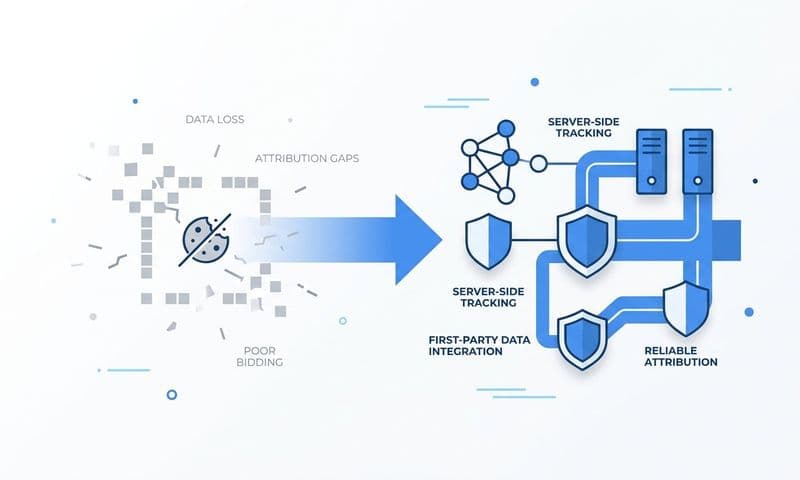
The practical impact for marketing teams is real. Pixel accuracy drops. Retargeting audiences shrink. Conversion data develops gaps. When your tracking misses conversions, your ad platform's algorithm sees a distorted picture of performance, which leads to poor optimization decisions, inflated reported CPAs, and budget allocated to channels or creatives that are not actually delivering results.
What Poor Ad Tracking Actually Costs You
It is tempting to treat ad tracking compliance as a legal and IT concern rather than a marketing performance issue. That is a costly mistake. The risks of getting it wrong fall into two distinct categories: legal exposure and performance degradation.
On the legal side, non-compliance with regulations like GDPR carries significant financial risk. Fines can reach a substantial percentage of annual global turnover for serious violations. Beyond financial penalties, enforcement actions create reputational damage that erodes consumer trust over time. For brands investing heavily in building customer relationships, that erosion has long-term revenue implications that dwarf any short-term tracking convenience.
CCPA and its state-level equivalents in the US add another layer of exposure. Businesses that collect, share, or sell personal data without proper disclosures or opt-out mechanisms face regulatory scrutiny and, in some cases, private right of action from consumers. The regulatory environment is not static: enforcement is increasing, and regulators are paying close attention to digital advertising practices specifically.
But the performance cost of broken tracking is equally serious, and it is often less visible. If you have ever wondered why your conversion tracking numbers are wrong, privacy-related data loss is often the culprit. Here is what happens when your tracking setup is incomplete or non-compliant.
Your ad platform algorithms rely on conversion signals to optimize delivery. Meta's algorithm, for example, needs conversion events to understand which users are most likely to convert and to find more of them. When iOS restrictions, ad blockers, or missing consent management cause conversion events to go unreported, the algorithm is flying partially blind. It optimizes toward the users it can see converting, not the full picture.
The result is higher CPAs, lower ROAS, and budget wasted on audiences and placements that look good on the surface but are not driving real business outcomes. You are essentially penalizing your own campaigns by operating with incomplete data.
The "ignore it and hope for the best" approach is particularly costly for teams running campaigns at scale. The larger your ad spend, the more every percentage point of data loss compounds into real dollar inefficiencies. A small tracking gap at $10,000 per month in spend becomes a serious optimization problem at $100,000 per month.
The good news is that addressing the compliance and the performance problem are the same project. When you build a tracking setup that collects clean, consented data and feeds it accurately to ad platforms, you solve both simultaneously.
Server-Side Tracking: The Privacy-First Foundation
Traditional pixel-based tracking works by placing JavaScript code in the user's browser. When a user visits your site or takes an action, the browser fires a request to a third-party server (like Meta or Google) containing event data. This approach has worked well for years, but it is increasingly vulnerable. For a deeper look at the differences, explore server-side tracking vs pixel tracking and how each approach handles modern privacy challenges.
Ad blockers prevent browser-based pixels from firing. Safari's Intelligent Tracking Prevention limits cookie lifespans. iOS restrictions reduce signal from mobile users. Browser privacy settings are becoming more restrictive by default. Each of these factors erodes the accuracy of client-side tracking, often silently and without any obvious alert in your reporting.
Server-side tracking works differently. Instead of the user's browser sending data directly to ad platforms, events are sent from your own server to a data collection endpoint, and then your server forwards the relevant data to the platforms. Because the data never has to pass through the user's browser environment, it is not affected by ad blockers, browser restrictions, or cookie limitations.
This architecture offers two major advantages for marketers navigating privacy regulations.
Improved data accuracy: Events that would have been dropped by browser-based restrictions are captured reliably. Your conversion data becomes more complete, which means your ad platform algorithms receive better signals and your attribution reporting reflects what is actually happening. Learn more about why server-side tracking is more accurate for attribution.
Greater control over data sharing: With server-side tracking, you decide exactly what data gets sent to which platforms. You can strip out personally identifiable information before forwarding events, apply hashing to sensitive fields, and ensure that only consented events are shared. This level of control is much harder to achieve with client-side pixels, where data is sent directly from the browser with less visibility into what is being transmitted.
Transitioning from pixel-only tracking to a server-side setup requires some technical groundwork. You will need a server-side event endpoint (often called a server-side tag manager or a first-party data endpoint), a way to capture events on your own server, and integrations with the ad platforms you use. When evaluating a tracking solution, look for one that supports server-side event feeds natively, integrates with your existing ad platforms, and provides clear controls over data handling and consent filtering.
Server-side tracking is not a magic fix for every privacy challenge, but it is the most resilient foundation available for accurate, privacy-compliant ad attribution in the current environment.
Building a Consent-First Attribution Strategy
Server-side tracking solves the technical data capture problem. But the consent layer is what makes your tracking strategy legally defensible and aligned with user expectations. These two elements work together.
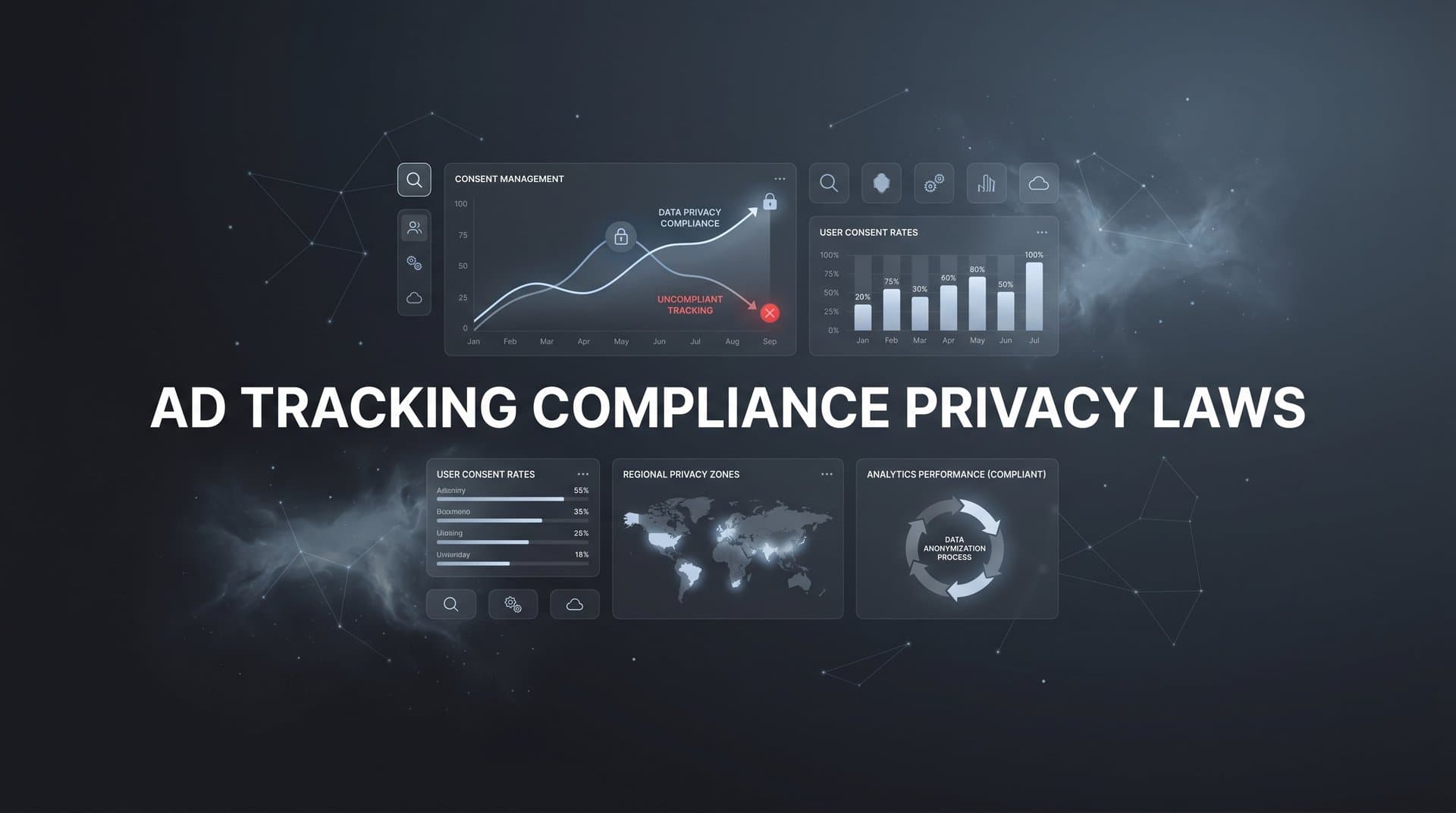
A consent management platform (CMP) sits at the entry point of your tracking setup. It presents users with clear choices about data collection, records their preferences, and communicates those preferences to your tracking infrastructure. The key requirement is that tracking only fires for users who have consented to it, and that consent records are maintained in case of regulatory inquiry.
Both Google and Meta have developed consent mode integrations that allow your tracking setup to respect user consent signals while still providing some modeling capability for non-consented users. Google's Consent Mode, for example, adjusts how Google tags behave based on the user's consent status, and uses conversion modeling to fill in gaps for users who have declined tracking. This means you do not lose all visibility into non-consented users; you get modeled estimates that help maintain optimization signal while respecting privacy choices.
First-party data is the other cornerstone of a consent-first attribution strategy. Understanding what first-party data tracking entails is critical for building a durable measurement framework. Because users have a direct relationship with your brand when they share this data, it is both more reliable and more durable than data derived from third-party cookies or cross-site tracking.
When your attribution model is built on first-party data rather than third-party cookie reliance, it becomes more resilient to platform changes, browser updates, and regulatory shifts. The data is yours, it is consented, and it reflects real interactions with your brand.
Multi-touch attribution models can still deliver full-funnel visibility in this environment. By stitching together first-party touchpoints across your own channels, including ad clicks, site visits, email interactions, and CRM events, you can map the complete customer journey without relying on cross-site tracking. Effective touchpoint attribution tracking connects all of these data sources to conversion outcomes, giving you a clear picture of which channels and campaigns are actually driving revenue.
Feeding Better Data Back to Ad Platforms the Right Way
One of the most powerful things you can do in a privacy-restricted environment is send better conversion data back to the ad platforms you use. This might sound counterintuitive given the privacy context, but it is entirely consistent with compliance when done correctly.
Meta's Conversions API and Google's Enhanced Conversions are server-side event feeds that allow you to send conversion data directly from your server to the platform, rather than relying on browser-based pixels. These integrations are actively encouraged by both platforms because they produce higher-quality signals for their optimization algorithms. A comprehensive server-side tracking setup guide can help you implement these feeds correctly from the start.
The key distinction is that you are sending consented, verified conversion events, not raw personal data. When a user completes a purchase and has consented to tracking, you send that conversion event server-side, hashed and anonymized according to platform requirements. The platform matches it against its user graph to improve targeting and optimization, without you having to share raw personal identifiers in a way that creates compliance risk.
The performance benefits of this approach are significant. Ad platform algorithms that receive complete, accurate conversion signals can optimize delivery more effectively. They find more users who look like your actual converters, reduce wasted impressions on low-intent audiences, and improve your cost per acquisition over time. You are essentially giving the algorithm better inputs, and better inputs produce better outputs.
To keep conversion data clean and compliant, follow these principles consistently.
Hash sensitive data: Before sending any user-identifiable information (like email addresses or phone numbers) to ad platforms for matching purposes, apply cryptographic hashing. Both Meta and Google specify the hashing requirements for their matching fields.
Only sync consented events: Your server-side setup should filter conversion events so that only events from users who have provided appropriate consent are forwarded to ad platforms. Non-consented events should not be included in your conversion sync.
Review data sharing agreements: Understand what data you are sharing with each platform, under what legal basis, and ensure your privacy policy accurately reflects those practices. This is both a compliance requirement and a good operational practice.
A Practical Compliance Checklist for Your Tracking Setup
Understanding the principles is one thing. Translating them into action is another. Here is a practical checklist that marketing teams can use to audit and improve their current setup.
Audit your current tracking implementation: Map every pixel, tag, and tracking script currently active on your site and in your apps. Identify which ones are client-side, which platforms they send data to, and whether they are firing in compliance with your consent management setup. Many teams are surprised by what they find in this audit. If you are unsure where to start, reviewing why your ad tracking may be inaccurate can help you identify common problem areas.
Implement or update your consent management platform: Ensure your CMP is correctly configured for the regions where you operate, that it accurately communicates consent signals to your tracking tags, and that consent records are being stored. If you are operating in the EU, your CMP setup needs to meet GDPR standards. If you have significant US traffic, ensure you are handling CCPA opt-out signals appropriately.
Transition to server-side tracking: Prioritize moving your key conversion events to a server-side setup. Start with your highest-value conversion actions (purchases, leads, sign-ups) and ensure they are being captured reliably regardless of browser restrictions or ad blockers.
Set up conversion sync with your ad platforms: Implement Meta's Conversions API and Google's Enhanced Conversions if you are running campaigns on those platforms. Ensure your event feeds are sending consented, hashed data and that your event match quality scores are at an acceptable level.
Review and document your data processing practices: Maintain clear records of what data you collect, how you process it, who you share it with, and the legal basis for each processing activity. This documentation is both a regulatory requirement under GDPR and a practical safeguard if you face regulatory inquiry.
Build flexibility into your infrastructure: Privacy regulations will continue to evolve. Rather than building a setup that is optimized for today's specific requirements and needs to be rebuilt with every regulatory change, invest in a flexible tracking infrastructure that can adapt. Exploring server-side tracking benefits explained can help you understand why this architecture is inherently more adaptable than hardcoded client-side pixels.
The mindset shift that makes all of this sustainable is treating privacy compliance not as a cost center or a constraint, but as a competitive advantage. Brands that handle user data responsibly build stronger consumer trust. Marketers who operate on clean, consented data produce more reliable insights. Teams that invest in resilient tracking infrastructure spend less time firefighting data gaps and more time making smart optimization decisions.
Moving Forward with Confidence
Privacy compliance and high-performance ad tracking are not opposing forces. They are two sides of the same coin when you build the right foundation.
The marketers who will thrive in the evolving privacy landscape are not the ones who find clever workarounds to extract more data. They are the ones who invest in server-side tracking, consent-first attribution strategies, and clean conversion sync setups that give ad platform algorithms exactly what they need to optimize effectively.
The result is better data, not less data. More reliable attribution, not less visibility. Stronger consumer trust, not weaker campaign performance.
Cometly is built for exactly this environment. It captures every touchpoint from ad clicks to CRM events through server-side tracking and first-party data collection, giving you a complete, enriched view of every customer journey. It connects those touchpoints to real revenue outcomes so you can see which channels and campaigns are actually driving results. And it syncs enriched, consented conversion events back to Meta, Google, and other platforms to feed their algorithms better data and improve your targeting, optimization, and ROAS.
Whether you are auditing your current setup, rebuilding your tracking infrastructure, or looking for a platform that handles the complexity of multi-touch attribution in a privacy-first world, Cometly gives you the tools to make confident, data-driven decisions at every stage.
Ready to build a compliant, high-performing attribution setup that captures every touchpoint and maximizes your conversions? Get your free demo today and see how Cometly can transform the way you track, analyze, and optimize your ad campaigns.