You're staring at your dashboard, and the numbers don't make sense. Meta Ads Manager shows 47 conversions from your latest campaign. Google Analytics reports 31. Your CRM says 22 deals closed this week. Which number do you trust when deciding whether to scale this campaign or kill it?
This isn't just frustrating—it's expensive. When your tracking data conflicts across platforms, every budget decision becomes a gamble. You might be pouring money into ads that don't actually convert, or worse, cutting budgets on campaigns that are secretly driving your best customers.
The truth is, ad tracking inaccuracy isn't a minor technical glitch. It's a systemic problem created by privacy changes, platform conflicts, and technical implementation issues that compound on each other. Understanding exactly why your tracking is broken is the first step toward fixing it—and regaining confidence in your marketing decisions.
The Privacy Revolution That Broke Traditional Tracking
The tracking landscape changed fundamentally in April 2021 when Apple released iOS 14.5. That update introduced App Tracking Transparency, which requires apps to ask permission before tracking users across other apps and websites. When given the choice, the vast majority of iPhone users tap "Ask App Not to Track."
Think about what that means for your Meta or TikTok campaigns. These platforms relied on tracking users as they browsed the web after clicking an ad. Now, when someone opts out, the platform loses visibility into whether that person ever converted. Your actual conversions are happening—customers are buying—but the ad platform can't see them anymore.
Browser-based privacy features have compounded this problem across all devices. Safari's Intelligent Tracking Prevention limits how long cookies can persist, often expiring them within 24 hours for cross-site tracking. Firefox's Enhanced Tracking Protection blocks tracking scripts by default. Chrome announced plans to deprecate third-party cookies entirely, though timelines continue shifting. Many advertisers are now exploring cookieless tracking methods to adapt to these changes.
The result? Significant portions of your conversion path are invisible to traditional pixel-based tracking. A user might click your ad on their iPhone, research your product over the next few days, then convert on their laptop—and your ad platform sees none of it because the tracking cookie expired or was blocked.
Then there are the legal frameworks that add another layer of complexity. GDPR in Europe and CCPA in California require explicit consent before tracking users. Those cookie consent banners you see everywhere? They create data gaps before tracking even begins. If a user rejects cookies or closes the banner without choosing, your tracking pixel never loads. You're flying blind from the first touchpoint.
This privacy revolution was necessary and consumer-friendly, but it fundamentally broke the tracking methods that digital advertising was built on. The old approach of dropping a pixel on your site and trusting it to capture everything no longer works in this new reality.
Platform Attribution Models: Why Your Numbers Never Match
Even when tracking does work, platforms can't agree on which ads deserve credit. Each platform uses different attribution windows and models, creating a mathematical impossibility where the sum of platform-reported conversions exceeds your actual total conversions.
Meta's default attribution window is 7 days after a click or 1 day after a view. Google Ads uses last-click attribution by default with a 30-day window. LinkedIn uses a 30-day click window. When the same customer interacts with ads across multiple platforms before converting, each platform claims full credit for that conversion.
Picture this scenario: A prospect sees your LinkedIn ad on Monday but doesn't click. Tuesday, they click a Meta ad and visit your site. Wednesday, they search your brand name and click a Google ad. Thursday, they convert. LinkedIn might count this as a view-through conversion. Meta definitely counts it as a click conversion. Google absolutely counts it as a conversion. You just got triple-counted for a single sale.
The attribution window problem creates another type of inaccuracy. Let's say someone clicks your Meta ad today, but life gets busy and they don't convert until 10 days later. That conversion falls outside Meta's 7-day click window, so it disappears from your reports entirely. The sale happened, but according to your ad platform, that campaign drove zero conversions. Understanding different attribution tracking methods helps you navigate these discrepancies.
Cross-device tracking gaps make this worse. A user scrolls Instagram on their phone during lunch, clicks your ad, browses your products, but decides to think about it. That evening, they sit down at their laptop, navigate directly to your site, and purchase. Most platforms can't connect these two sessions to the same person. The mobile ad that started the journey gets no credit. This is one of the most common cross-device user tracking challenges marketers face today.
This isn't a flaw in any single platform—it's an inherent limitation of how attribution works when platforms operate in isolation. Each one only sees the touchpoints that happen within its ecosystem, so each one tells you a partial story and calls it complete.
Technical Implementation Failures You Might Not Know About
Sometimes your tracking is inaccurate because it's simply not working correctly. Technical implementation issues are surprisingly common and often go unnoticed until you dig into the details.
Pixel firing failures are one of the most frequent culprits. Your conversion pixel is a piece of JavaScript that needs to load and execute when someone completes an action. If your checkout page loads slowly, users might navigate away before the pixel fires. If there's a JavaScript error elsewhere on the page, it can prevent your tracking code from executing at all. Issues with inaccurate Facebook pixel tracking are particularly common among advertisers.
Ad blockers present another significant challenge. A substantial portion of internet users run ad blocking software that prevents tracking pixels from loading entirely. From your perspective, these conversions appear to come from nowhere—no source, no campaign, just direct traffic that materialized out of thin air. In reality, these users clicked your ads, but the ad blocker stripped away the tracking.
UTM parameters are supposed to help you track campaign performance, but they're fragile. When you share a link with UTM parameters on social media, some platforms strip them out. Email clients might modify them. Redirect chains can drop them. If someone bookmarks your URL with parameters and returns later, those parameters persist and misattribute a future conversion to an old campaign.
Inconsistent UTM naming conventions create chaos in your reporting. If one campaign uses "utm_source=facebook" and another uses "utm_source=meta" and a third uses "utm_source=Facebook" (capital F), you've just split your Facebook traffic into three separate sources in your analytics. Multiply this across dozens of campaigns, and your data becomes nearly impossible to analyze.
Tag manager misconfigurations add another layer of potential failure. Maybe your conversion tag is set to fire on all pages instead of just the thank-you page, inflating your conversion count. Perhaps the trigger condition is too specific and misses some legitimate conversions. Variables might not be passing through correctly, so your conversion data lacks the campaign information needed to attribute it properly.
The worst part about technical failures? They're often silent. Unlike a broken website where you immediately see an error message, tracking failures happen invisibly in the background. Your campaigns keep running, conversions keep happening, but the data never makes it back to your ad platforms or analytics tools.
The Customer Journey Complexity Problem
Modern customer journeys are messy, non-linear, and far more complex than any single attribution model can capture. This complexity itself creates tracking inaccuracy because the tools we use were built for simpler paths to purchase.
Multi-touch reality means customers interact with your brand multiple times across multiple channels before converting. They might see a YouTube ad, click a Facebook ad, read your blog post from Google search, receive your email newsletter, and then finally convert after clicking a retargeting ad. Which touchpoint "caused" the conversion? The honest answer is all of them contributed, but most attribution models force you to assign credit to just one. Implementing proper touchpoint tracking analytics helps you understand the full picture.
Last-click attribution gives all credit to the final touchpoint, ignoring everything that came before. First-click attribution credits the initial interaction, disregarding the nurturing that happened afterward. Linear attribution splits credit equally, which sounds fair but doesn't reflect that some touchpoints are genuinely more influential than others. Each model tells a different story about which campaigns are working.
Long sales cycles in B2B make this problem acute. An enterprise prospect might click your LinkedIn ad in January, download a whitepaper, attend a webinar in February, request a demo in March, and finally sign a contract in April. That's a 90-day journey, but most attribution windows are 7 to 30 days. The LinkedIn ad that started everything falls completely outside the window and receives zero credit, even though it was the crucial first touchpoint.
Offline conversions create massive blind spots in digital tracking. When someone calls your sales team after seeing an ad, that conversion happens outside any tracking pixel. If they visit your physical store, fill out a paper form at an event, or close a deal through direct sales outreach, your digital tracking has no way to connect those revenue events back to the ads that influenced them. Proper marketing attribution for phone calls requires specialized tracking solutions.
The gap between marketing-qualified leads and closed revenue compounds the complexity. Your ad platform might correctly track that someone filled out a form, but what happens next is invisible to it. Did that lead get assigned to sales? Did they respond to follow-up? Did they eventually close as a customer? Without connecting your CRM data back to your ad data, you're measuring form fills instead of actual revenue—and those two things don't always correlate.
How to Diagnose Which Issues Are Affecting Your Tracking
Understanding that tracking inaccuracy exists is one thing. Identifying exactly which issues are sabotaging your data requires systematic diagnosis. Start by quantifying your tracking gap.
Compare your platform-reported conversions against your source of truth—usually your CRM, payment processor, or order management system. If Meta reports 50 conversions but your system shows 75 actual sales during the same period, you have a 33% tracking gap. That number tells you how severe your problem is and whether it's worth the effort to fix.
Look for patterns in where the discrepancies appear. Are mobile conversions underreported compared to desktop? That suggests iOS tracking limitations or mobile page speed issues. Is one campaign showing massive discrepancies while others are fairly accurate? That points to implementation problems specific to that campaign's landing page or tracking setup.
Test your pixel implementation using browser developer tools. Open your checkout page with the browser console active and watch for tracking events to fire. Most ad platforms offer debugging tools—Meta has the Pixel Helper extension, Google has Tag Assistant. These tools show you in real-time whether your pixels are loading, firing correctly, and sending the right data.
Check your UTM parameters by examining the URLs in your analytics platform. Look for inconsistencies, missing parameters, or values that don't match your campaign structure. If you see a significant amount of traffic categorized as direct or unattributed, that's a red flag that your parameters are being stripped somewhere in the journey.
Identify your biggest leaks by analyzing where in the funnel tracking breaks down most severely. Run a cohort analysis: take a group of users who clicked an ad on a specific day and follow their journey through your funnel. Where does the tracking connection break? Do they reach your site but not fire the page view event? Do they add to cart but the conversion event never registers? Pinpointing the exact step where tracking fails helps you prioritize fixes. Following best practices for tracking conversions accurately can help you identify and resolve these issues.
Review your attribution window settings across platforms. If you're running campaigns with longer consideration cycles, your default 7-day windows might be hiding significant delayed conversions. Extend the window temporarily and see if previously "unsuccessful" campaigns suddenly show conversions that happened outside the original timeframe.
Building a More Accurate Tracking Foundation
Once you understand what's broken, you can build a more resilient tracking infrastructure that works despite privacy limitations and technical challenges. The solution isn't a single fix—it's a combination of modern approaches that work together.
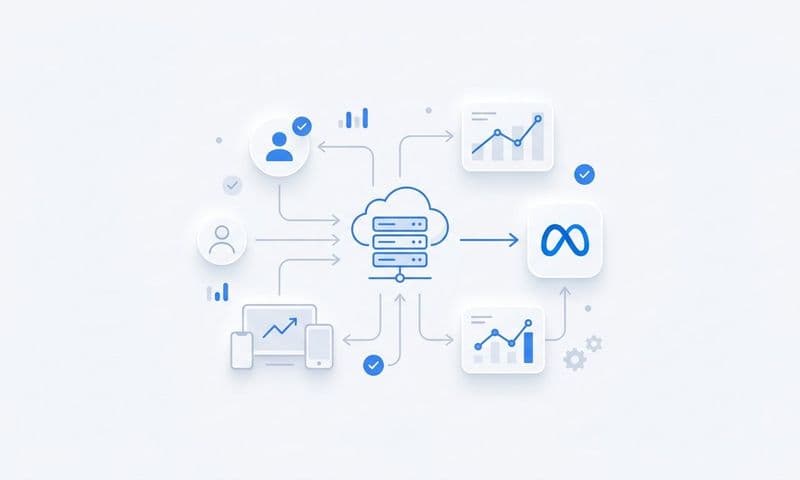
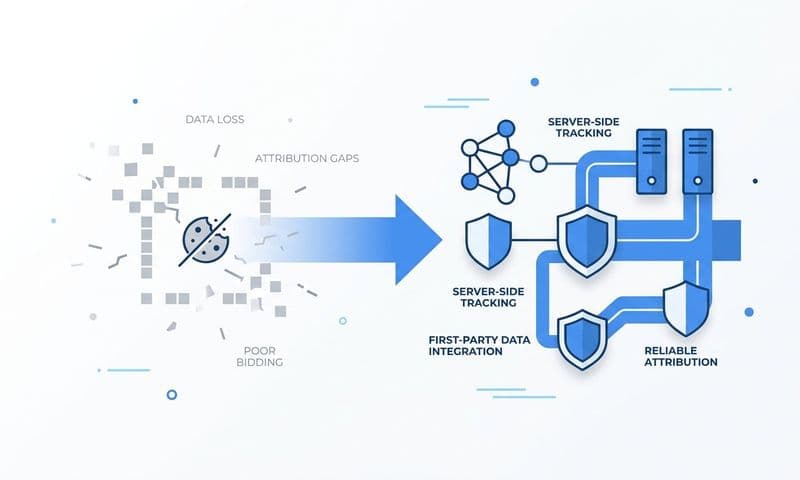
Server-side tracking represents a fundamental shift in how conversion data flows. Instead of relying on browser-based pixels that can be blocked or fail to load, server-side tracking sends conversion data directly from your server to ad platforms. When someone completes a purchase, your server immediately notifies Meta, Google, and other platforms about the conversion. This approach bypasses ad blockers, works regardless of browser privacy settings, and ensures conversion data gets delivered even if the user closed the tab immediately after purchasing. Learn more about why server-side tracking is more accurate than traditional methods.
First-party data strategies help maintain tracking continuity across the customer journey. Capture email addresses or phone numbers early—through newsletter signups, lead magnets, or account creation. Once you have this first-party identifier, you can track that user across devices and sessions even when cookies expire or get blocked. When they eventually convert, you can match their customer record back to their original ad interaction using the email address or phone number as the connecting thread. A proper first-party data tracking setup is essential for modern marketing.
Unified attribution platforms solve the multi-touch problem by connecting all touchpoints in one place. Instead of looking at Meta's dashboard, then Google's dashboard, then your CRM separately, a unified platform ingests data from all sources and reconstructs complete customer journeys. It can show you that a customer first clicked a LinkedIn ad, then a Google ad, then converted—and assign appropriate credit to each touchpoint based on configurable attribution models.
This is where Cometly's approach becomes valuable. By connecting your ad platforms, CRM, and website data, Cometly tracks the entire customer journey in real time. It captures every touchpoint—from initial ad clicks to CRM events—providing a complete, enriched view that individual platforms can't see in isolation. The platform's server-side tracking bypasses browser limitations, while its conversion sync feeds better data back to Meta, Google, and other ad platforms to improve their targeting and optimization.
Implement conversion value tracking, not just conversion counts. Knowing that a campaign drove 50 conversions is useful, but knowing it drove $75,000 in revenue is transformative. Track actual purchase amounts, customer lifetime value, or deal size so you can optimize toward revenue rather than just volume. This helps you identify which campaigns attract high-value customers versus which ones generate cheap leads that never close. The right attribution tracking tools make this level of insight possible.
Build redundancy into your tracking stack. Don't rely on a single pixel or tracking method. Use both client-side and server-side tracking. Implement multiple analytics platforms. Tag your campaigns consistently across all channels. When one method fails—and eventually something will fail—you have backup data to maintain continuity.
Moving Forward with Better Data
Inaccurate ad tracking isn't a single problem you can solve with one fix. It's a combination of privacy changes that limit what platforms can see, attribution conflicts that create double-counting, technical failures that prevent data from flowing correctly, and customer journey complexity that exceeds what simple models can capture.
The marketers who acknowledge this complexity and invest in better tracking infrastructure gain a significant competitive advantage. While competitors make budget decisions based on incomplete or conflicting data, you'll know with confidence which campaigns actually drive revenue. You'll scale the right initiatives and cut the right waste. You'll feed ad platform algorithms better conversion data, improving their targeting and optimization.
The cost of inaccurate tracking isn't just the frustration of conflicting numbers. It's the opportunity cost of misallocated budgets, the wasted spend on campaigns that don't work, and the missed revenue from campaigns you cut too early because you couldn't see their true impact. Fixing your tracking foundation is one of the highest-ROI investments you can make in your marketing stack.
Ready to elevate your marketing game with precision and confidence? Discover how Cometly's AI-driven recommendations can transform your ad strategy—Get your free demo today and start capturing every touchpoint to maximize your conversions.