If you've ever tried to budget for ad tracking, you know the feeling: you search for pricing, find vague tiers, and end up more confused than when you started. Vendors use terms like "events," "seats," and "ad spend thresholds" interchangeably, and the total cost of a proper setup rarely appears on any pricing page.
The frustration is real, but the urgency is even more real. Ad tracking is no longer a nice-to-have. In a landscape where Apple's App Tracking Transparency has reduced signal fidelity from mobile campaigns and third-party cookies are being phased out across browsers, the data your ad platforms report back to you is increasingly unreliable. Marketers running campaigns without a solid tracking foundation are essentially flying blind, making budget decisions based on incomplete or misleading numbers.
This article gives you a transparent, category-by-category breakdown of what ad tracking setup actually costs in 2026. No vague ranges, no upselling disguised as advice. Whether you're a solo marketer managing a modest ad budget or part of a team spending seven figures across multiple channels, understanding where the costs come from helps you build a setup that's both accurate and appropriately scoped.
The right tracking infrastructure depends on three variables: how much you're spending on ads, how many platforms you're running campaigns on, and how much of your decision-making relies on conversion data. Keep those in mind as we walk through every layer of the cost equation.
Why Every Dollar Spent on Tracking Pays for Itself
Before diving into costs, it's worth being direct about what happens when you skip proper tracking or rely on incomplete data. The cost of not tracking is real, and it compounds over time.
When your attribution data is inaccurate, you make budget decisions based on the wrong signals. Channels that appear to be underperforming might actually be driving assisted conversions you can't see. Channels that look strong might be getting credit for conversions they didn't actually cause. The result is misallocated spend, and at scale, that misallocation can be significant.
There's a second layer to this problem that's often underappreciated. When you send poor conversion signals back to Meta, Google, or TikTok, their algorithms optimize for the wrong outcomes. These platforms rely on the conversion data you feed them to decide who to show your ads to. Incomplete or delayed signals mean the algorithm is working with a distorted picture of your best customers, which degrades targeting quality over time. Understanding why ad tracking is inaccurate is the first step toward fixing these issues.
Accurate tracking solves both problems at once. When you connect ad clicks to actual revenue events, you can confidently scale what's working and cut what isn't. You stop guessing and start deciding. That shift in confidence has a direct impact on return on ad spend.
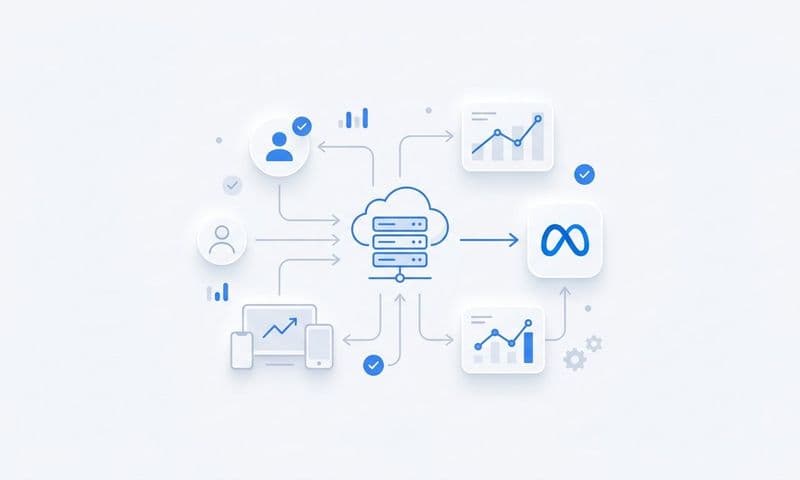
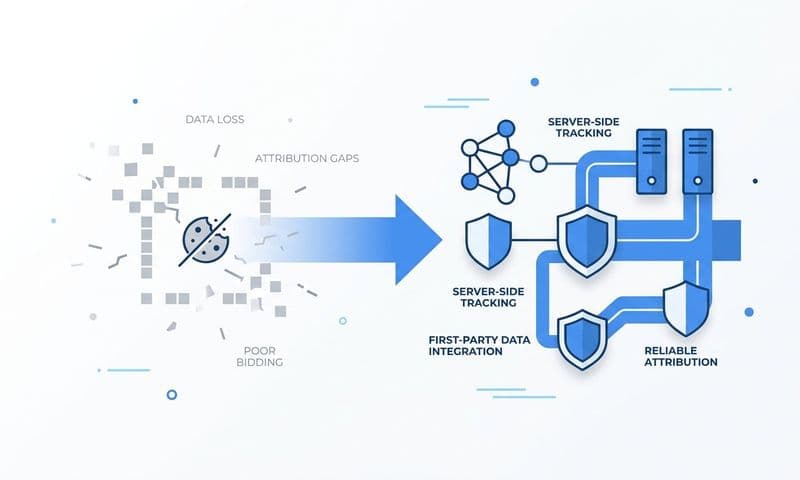
The shift from cookie-based tracking to server-side and first-party data solutions has also changed the cost equation for modern marketing teams. Browser-based pixels are increasingly blocked by ad blockers, iOS restrictions, and browser privacy settings. Server-side tracking, which processes conversion data on your own infrastructure before sending it to ad platforms, bypasses many of these limitations. It's more reliable, but it also introduces infrastructure and implementation costs that weren't part of the picture a few years ago.
Understanding this context matters because it explains why tracking budgets have grown for most teams. It's not that vendors are charging more arbitrarily. The underlying technical complexity of capturing accurate first-party data tracking in a privacy-first environment has genuinely increased. The teams that invest in solving this problem correctly tend to outperform those that don't.
Breaking Down the Core Cost Categories
Ad tracking setup costs fall into three broad categories. Each comes with its own pricing model, trade-offs, and decision points.
Native Platform Pixels (Free, With Limitations): Every major ad platform offers a free pixel or conversion tracking tag. Meta Pixel, Google Ads conversion tracking, TikTok Pixel, LinkedIn Insight Tag, and similar tools are designed to get you started quickly. They're free to implement and require minimal technical knowledge to install via a tag manager or direct code placement. If you're curious about the fundamentals, our guide on what a tracking pixel is and how it works covers the basics.
The catch is that native pixels are browser-based, which makes them vulnerable to signal loss from iOS privacy changes, browser-level tracking prevention, and ad blockers. Many advertisers find that their Meta or Google-reported conversions don't match what their CRM or backend data shows. This discrepancy isn't a minor rounding error. It can meaningfully skew your understanding of which campaigns are actually working.
Native pixels also create cross-platform blind spots. Each platform only reports on conversions it can attribute to itself, which means you have no unified view of the customer journey across channels. A customer who clicked a Google ad, then a Meta retargeting ad, and then converted through an email link will be claimed as a conversion by multiple platforms simultaneously.
Tag Management and Implementation Costs: Google Tag Manager is free and widely used to manage tracking scripts without requiring constant developer involvement. For straightforward setups involving a handful of pixels and standard conversion events, GTM keeps implementation costs low.
Server-side Google Tag Manager is a different story. Running a server-side GTM container requires cloud hosting, typically on Google Cloud Platform, AWS, or a similar provider. Hosting costs vary based on traffic volume, but teams should budget for ongoing monthly infrastructure costs that can range from modest to significant depending on event volume. Understanding the full picture of server-side tracking setup cost helps you plan more accurately.
Developer costs for custom implementations vary widely. A simple pixel installation might take a few hours of developer time. A full server-side setup with custom event schemas, CRM integrations, and cross-domain tracking can take days or weeks. If you're working with an agency, expect hourly rates that reflect the technical complexity involved.
Third-Party Attribution and Analytics Platforms: This is where the most meaningful variation in ad tracking setup costs occurs. Dedicated attribution platforms operate on SaaS subscription models, and pricing structures differ significantly across vendors. Some price by ad spend volume, others by number of tracked events per month, and others by the number of connected ad accounts or users.
Entry-level tiers designed for smaller teams or lower ad spend volumes tend to start in the range of a few hundred dollars per month. Mid-tier plans with more connected platforms, higher event limits, and advanced attribution models typically fall in the range of several hundred to a few thousand dollars per month. Enterprise tiers with dedicated support, custom integrations, and high event volumes can reach several thousand dollars monthly or more.
What each tier unlocks matters as much as the price. Lower tiers often limit you to last-click attribution and a small number of connected ad accounts. Higher tiers unlock multi-touch attribution models, server-side tracking capabilities, AI-driven recommendations, and deeper CRM integrations. Comparing revenue attribution tracking tools side by side can help you identify the right fit for your budget.
Hidden Expenses Most Teams Overlook
The subscription fee or implementation cost is rarely the full picture. Several categories of cost tend to catch teams off guard, particularly those building out tracking for the first time.
Technical Resource Costs: Even with user-friendly platforms, proper tracking setup requires technical involvement. Someone needs to place pixels correctly, configure custom events, connect your CRM, and verify that data is flowing accurately. If that work falls to an in-house developer, it competes with their other priorities and carries an opportunity cost. If you hire an agency or freelancer, rates for tracking specialists vary based on experience and project complexity.
CRM integrations deserve special attention here. Connecting your ad platforms to your CRM so that lead quality and revenue data flows back into your attribution system is one of the most valuable things you can do for tracking accuracy. It's also one of the more technically involved steps. Depending on your CRM and ad platforms, this can require custom API work, webhook configurations, or middleware tools, each of which adds to the implementation cost. A thorough attribution tracking setup guide can help you navigate these integration decisions.
Ongoing Maintenance and QA: Tracking is not a set-it-and-forget-it system. Platforms update their APIs, browser privacy settings change, new ad formats require new event configurations, and website updates can silently break existing tags. Without regular QA, you might be running campaigns for weeks or months on broken tracking without realizing it.
Ongoing maintenance is a real budget line item. Whether it's a monthly retainer with an agency, dedicated time from an in-house analyst, or a platform that includes monitoring and alerting, this cost needs to be planned for. Teams that treat tracking as a one-time setup project often find themselves troubleshooting data gaps at the worst possible moments, typically when they're trying to evaluate a campaign's performance and the data isn't there. Learning why conversion tracking numbers go wrong can help you anticipate these issues before they derail your reporting.
Opportunity Cost of Delayed or Inaccurate Data: This one is harder to quantify but arguably the most significant. Every week you run paid campaigns without accurate attribution is a week where budget decisions are based on incomplete information. If you're spending meaningfully on ads and allocating budget based on platform-reported data that's missing a significant portion of your conversions, the misallocation compounds quickly.
The opportunity cost of delayed tracking setup should be part of the investment calculus. Getting your tracking right sooner rather than later has a direct impact on how efficiently you can scale.
How Ad Spend Volume Shapes Your Tracking Budget
One of the most useful frameworks for deciding how much to invest in tracking is to match your tracking infrastructure to your ad spend volume. The appropriate setup at $5,000 per month looks very different from what you need at $500,000 per month.
Small Budgets (Under $10K/Month): At this level, free native tools can get you started. Meta Pixel, Google Ads conversion tracking, and Google Tag Manager provide a functional baseline for teams running campaigns on one or two platforms. The data won't be perfect, but the cost of a sophisticated attribution platform may not be justified yet.
The caveat is that small-budget marketers often outgrow native tools faster than they expect. Once you're running campaigns on three or more platforms, or once you're trying to understand which combination of touchpoints is driving your best customers, native pixels stop giving you the answers you need. The cross-platform blind spots become a real problem, and the lack of a unified attribution view makes optimization harder.
Mid-Range Budgets ($10K to $100K/Month): This is the range where dedicated attribution software moves from optional to essential. At $10,000 per month in ad spend, even a modest improvement in attribution accuracy can justify a subscription that costs a few hundred dollars monthly. The math gets more compelling as spend increases.
At this level, you're likely running campaigns across multiple platforms, testing different audience segments, and making regular budget allocation decisions. Without accurate multi-touch attribution, those decisions are based on fragmented, platform-reported data that each ad platform has an incentive to present favorably. A third-party attribution platform gives you a neutral, unified view that cuts through the noise.
Server-side tracking also becomes important at this spend level. Understanding the differences between server-side tracking vs pixel tracking helps you decide when to make the transition. The signal loss from browser-based pixels is significant enough to distort your data, and the cost of server-side infrastructure is easily justified by the improvement in data quality.
High-Volume Budgets ($100K+/Month): At this scale, enterprise-level tracking is a competitive necessity, not a luxury. The cost of misallocated spend at $100,000 per month or more dwarfs the cost of any attribution platform. Every percentage point of efficiency improvement translates directly to meaningful returns.
High-volume advertisers need server-side infrastructure, multi-touch attribution across the full customer journey, deep CRM integrations, and AI-driven optimization recommendations that can surface insights across large datasets. They also need reliability and support, because a tracking outage or data gap at this spend level has immediate financial consequences.
The tracking budget at this level should be viewed as a core part of the media investment, not a separate line item to minimize.
Choosing the Right Setup Without Overspending
The goal isn't to spend the most on tracking. It's to spend the right amount on the right infrastructure for your specific situation. Here's how to approach that decision without overcomplicating it.
Start With a Tracking Audit: Before evaluating any tools or platforms, get clear on where your current tracking breaks down. Which platforms are you running campaigns on? Where does your data stop flowing cleanly? What decisions are you unable to make today because you don't trust your attribution data? This audit doesn't need to be elaborate. Even a simple spreadsheet mapping your ad platforms, your conversion events, and where the data gaps exist will tell you a lot about what you actually need.
Prioritize Server-Side Tracking as Your Foundation: If you're serious about tracking accuracy in 2026, server-side and first-party data collection should be the foundation of your setup, not an add-on. Browser-based pixels will continue to lose signal as privacy settings tighten and iOS restrictions evolve. Our server-side tracking setup guide walks you through the process step by step. Building on a server-side foundation protects your data quality against these ongoing changes.
This doesn't mean you need to build custom infrastructure from scratch. Many modern attribution platforms include server-side tracking capabilities as part of their offering, which simplifies the technical lift significantly.
Look for Consolidation Over Point Solutions: One of the most common ways teams overspend on tracking is by accumulating multiple disconnected tools. A separate analytics platform, a separate attribution tool, a separate tag management solution, and a separate conversion syncing layer can add up quickly in both cost and complexity.
Platforms that consolidate attribution, analytics, and conversion syncing in one place reduce both the subscription cost and the integration overhead. When your attribution data, your analytics dashboard, and your conversion sync to ad platforms all live in the same system, you also get a more coherent view of your data. There's no reconciling numbers across tools or wondering why your attribution platform and your analytics platform are showing different conversion counts.
Match the Platform to Your Growth Trajectory: Consider not just where you are today but where you expect to be in 12 to 18 months. Migrating tracking platforms mid-growth is painful and introduces data continuity gaps. If you're on a clear growth trajectory, it often makes more sense to invest in a platform that can scale with you rather than starting with the cheapest option and upgrading later.
What a Modern Attribution Platform Delivers for the Investment
When you move beyond native pixels and free tools, what are you actually paying for? Understanding the specific capabilities that justify the investment helps you evaluate whether a platform is worth its price tag.
The most fundamental value is complete customer journey visibility. Native platform pixels only show you what happened within their own ecosystem. A modern attribution platform like Cometly captures every touchpoint from the first ad click through to CRM events and revenue, giving you a unified view of how customers actually move through your funnel. Exploring touchpoint attribution tracking in depth reveals why this cross-channel visibility matters so much for optimization.
Cometly connects your ad platforms, CRM, and website to track the entire customer journey in real time. Instead of piecing together data from multiple dashboards that each tell a different story, you get a single, accurate picture of what's driving revenue across all your channels. That clarity has direct implications for budget allocation: you can confidently scale what's working and stop funding what isn't.
Feeding enriched conversion data back to ad platforms is another capability that delivers measurable value. When you send high-quality, server-side conversion events back to Meta, Google, and other platforms, their algorithms have better data to work with. Better algorithmic inputs lead to better targeting, lower cost per acquisition, and more efficient use of your ad budget. This is one of the clearest examples of tracking investment paying for itself through improved ad performance.
AI-powered recommendations take this a step further. Rather than requiring you to manually analyze performance data across every campaign and channel, Cometly's AI identifies high-performing ads and surfaces optimization opportunities automatically. For teams managing complex multi-channel campaigns, this capability transforms tracking from a passive reporting function into an active driver of campaign performance.
The combination of accurate attribution, enriched conversion syncing, and AI-driven recommendations turns your tracking infrastructure from a cost center into a genuine competitive advantage. Teams that have this foundation in place make faster, more confident decisions, and that speed and confidence compounds over time.
Putting It All Together
Ad tracking setup costs are an investment in the quality of every decision you make with your ad budget. When you understand where the costs come from, you can build a setup that's appropriately scoped for your situation rather than overpaying for features you don't need or underpaying and leaving significant data gaps.
To recap the key categories: free native tools provide a starting point but have meaningful limitations in accuracy and cross-platform visibility. Tag management adds complexity and cost as you move to server-side infrastructure. Third-party attribution platforms vary widely in pricing and capability, with tiers that roughly correspond to ad spend volume and feature needs. Hidden costs in developer time, ongoing maintenance, and opportunity cost from bad data are real and should be budgeted for explicitly.
The right framework is simple: match your tracking investment to your ad spend volume, prioritize server-side and first-party data as your foundation, and look for platforms that consolidate attribution, analytics, and conversion syncing in one place.
If you're ready to stop guessing and start making confident, data-driven decisions across every ad channel, the next step is evaluating your current tracking setup honestly. Where are the gaps? What decisions can't you make today? What would accurate, unified attribution unlock for your team?
Ready to elevate your marketing game with precision and confidence? Discover how Cometly's AI-driven recommendations can transform your ad strategy. Get your free demo today and start capturing every touchpoint to maximize your conversions.