Every month, marketing teams pour thousands—sometimes millions—of dollars into paid advertising campaigns. They launch ads on Meta, Google, TikTok, LinkedIn, and a dozen other platforms. They watch dashboards light up with clicks, impressions, and conversions. Yet when leadership asks the fundamental question—"Which ads are actually driving revenue?"—most marketers can only offer educated guesses.
This isn't a failure of effort or intention. It's the natural consequence of managing campaigns across fragmented platforms that each claim credit for the same conversions. Your Google Ads dashboard shows one conversion number. Meta reports another. Your CRM tells a different story entirely. Meanwhile, you're making budget decisions based on incomplete pictures of what's actually working.
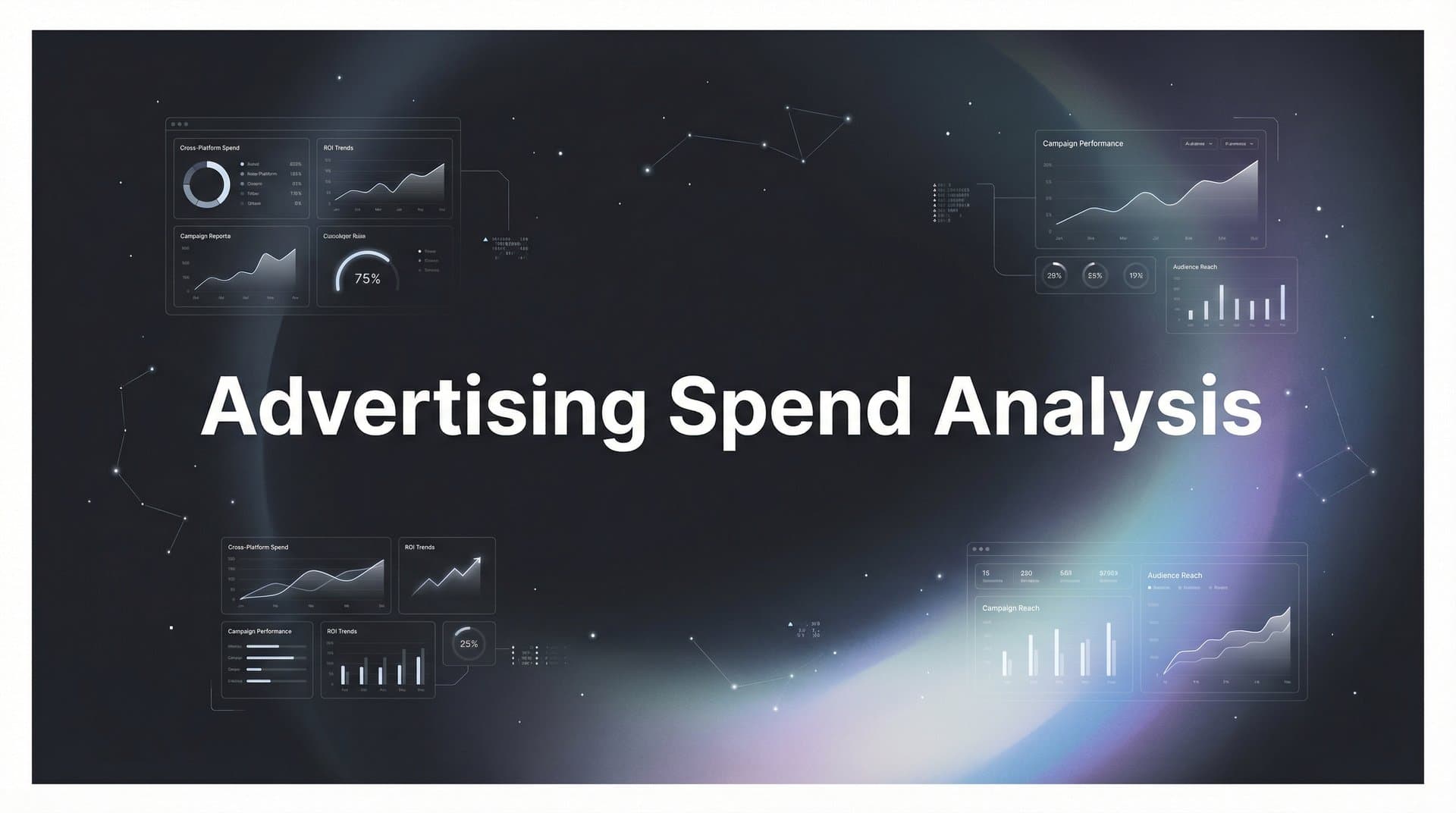
Advertising spend analysis changes this equation entirely. It's the discipline of connecting every dollar you invest to the outcomes it produces—across all platforms, throughout the entire customer journey. This isn't about generating more reports or staring at more dashboards. It's about building a unified view of performance that reveals which campaigns, channels, and creative approaches genuinely drive the results that matter to your business. When you can see the complete picture of how customers discover, engage with, and ultimately convert through your marketing efforts, you stop guessing and start making decisions backed by real intelligence.
Understanding What Spend Analysis Actually Means
Let's clear up a common misconception right away. Advertising spend analysis isn't the same thing as pulling a monthly report from your ad platforms. Those reports tell you what happened—how much you spent, how many clicks you got, what your cost per click was. Spend analysis goes several layers deeper. It examines the relationship between your investment and your actual business outcomes across every channel you use.
Think of it this way: basic reporting is like checking your bank statement to see where money went. Spend analysis is like having a financial advisor who shows you which investments are generating returns and which are draining resources without delivering value. The difference matters enormously when you're allocating significant budgets.
At its core, effective spend analysis connects three critical data points that most marketers struggle to unite. First, your advertising investment—every dollar spent across all platforms and campaigns. Second, the customer actions those dollars generate—not just clicks and impressions, but actual conversions, leads, and purchases. Third, the revenue those conversions ultimately produce for your business. When you can draw clear lines between these three elements, you unlock the ability to make genuinely intelligent decisions about where your next advertising dollar should go.
The metrics that drive meaningful spend analysis go beyond surface-level numbers. Return on ad spend shows you how much revenue each dollar of advertising generates. Customer acquisition cost reveals what you're actually paying to bring in each new customer. Cost per conversion tells you the efficiency of turning prospects into leads or buyers. But here's where it gets interesting: these metrics only become truly valuable when you can compare them across channels and understand how different touchpoints work together throughout the customer journey.
Platform-reported metrics create a fundamental problem that most marketers don't fully appreciate until they start digging deeper. Each advertising platform has a natural incentive to show its own performance in the best possible light. Meta's dashboard attributes conversions to Meta ads. Google's reporting credits Google campaigns. When you add up all the conversions each platform claims responsibility for, you often end up with more total conversions than actually occurred. This isn't deception—it's the inevitable result of siloed tracking systems that can't see the full customer journey.
The reality is that modern customers interact with multiple touchpoints before converting. Someone might first discover your brand through a Facebook ad, research your product on Google, click a retargeting ad on LinkedIn, and finally convert after receiving an email. Which channel deserves credit? Every platform that touched that customer will claim the conversion. Without unified tracking that connects these touchpoints into a single journey, you're making budget decisions based on inflated, overlapping data that doesn't reflect reality.
Building Your Cross-Platform Tracking Infrastructure
Before you can analyze advertising spend effectively, you need the right foundation. This means connecting all your data sources into a unified system that tracks the complete customer journey from first interaction to final conversion. Most marketing teams have the pieces scattered across different tools—ad platform dashboards here, Google Analytics there, CRM data somewhere else entirely. The challenge is bringing these fragments together.
Start by identifying every system that holds relevant data about your advertising performance and customer behavior. Your ad platforms obviously matter—Meta, Google, TikTok, LinkedIn, whatever channels you're actively running. Your website analytics platform captures visitor behavior and conversion events. Your CRM system tracks leads and closed deals. Your email marketing tool shows engagement with nurture campaigns. Each of these systems holds part of the story. The goal is creating a single source of truth that combines all these perspectives.
Modern attribution platforms solve this integration challenge by connecting directly to your ad accounts, analytics tools, and CRM systems through APIs. Instead of manually exporting data from each platform and trying to reconcile it in spreadsheets, you establish automated connections that continuously sync data into a centralized analytics environment. This isn't just about convenience—it's about accuracy. Manual data exports introduce lag, create opportunities for errors, and make it nearly impossible to maintain real-time visibility into performance.
Server-side tracking has become essential infrastructure for accurate spend analysis, especially as browser-based tracking faces increasing limitations. iOS privacy changes, browser cookie restrictions, and ad blockers all interfere with traditional pixel-based tracking. When a significant portion of your traffic can't be tracked through browser pixels, your conversion data becomes incomplete, and your spend analysis reflects only part of the picture.
Server-side tracking works differently. Instead of relying on browser pixels that can be blocked, it sends conversion data directly from your server to your analytics platform and ad networks. This approach captures more complete data, provides better accuracy, and ensures that ad platforms receive the conversion signals they need to optimize their algorithms effectively. For spend analysis purposes, this means you're working with reliable data rather than making decisions based on partial visibility.
Consistent naming conventions and UTM parameters might sound like tedious administrative details, but they're actually critical for meaningful analysis. When different team members create campaigns with inconsistent naming—one person uses "FB" for Facebook while another uses "Meta," or campaign names follow no standard structure—you end up with data chaos that makes cross-campaign analysis nearly impossible.
Establish clear standards for how campaigns, ad sets, and individual ads should be named. Use UTM parameters consistently across all channels to tag traffic sources, mediums, campaigns, and content variations. This discipline pays enormous dividends when you're trying to analyze performance patterns across hundreds of campaigns. You'll be able to quickly filter and compare performance by channel, campaign type, audience segment, or any other dimension that matters to your analysis.
Choosing Attribution Models That Reveal Reality
Attribution models determine how credit for conversions gets distributed across the multiple touchpoints in a customer journey. This might sound like an academic concern, but it dramatically affects which channels appear valuable in your spend analysis and where you decide to allocate budget. Different attribution approaches can make the same set of campaigns look either highly effective or completely wasteful.
First-touch attribution gives all credit to whatever channel first introduced a customer to your brand. If someone clicked a Facebook ad six weeks ago, then interacted with three other touchpoints before finally converting, Facebook gets 100% of the credit under first-touch attribution. This model appeals to marketers focused on top-of-funnel awareness and new customer acquisition. It reveals which channels are most effective at generating initial interest.
Last-touch attribution takes the opposite approach—all credit goes to the final touchpoint before conversion. If that same customer's last interaction was clicking a Google search ad before purchasing, Google gets full credit regardless of the Facebook ad that started the journey. Many ad platforms default to last-touch attribution because it tends to favor bottom-of-funnel channels like search and retargeting that capture customers ready to convert.
The problem with both single-touch models is that they ignore the reality of how modern customers actually make decisions. Complex purchases rarely happen because of a single interaction. Customers discover brands through awareness channels, research through educational content, compare options, and eventually convert after multiple touchpoints. Giving all credit to first or last touch creates a distorted picture that undervalues the channels in the middle.
Linear attribution distributes credit equally across all touchpoints in the customer journey. If someone interacted with five different marketing touchpoints before converting, each gets 20% of the credit. This approach recognizes that multiple channels contribute to conversions, but it assumes every touchpoint has equal influence—which often doesn't match reality. The initial awareness ad probably plays a different role than the final retargeting message.
Multi-touch attribution models attempt to assign credit more intelligently based on the actual influence of each touchpoint. Position-based models might give 40% credit to first touch, 40% to last touch, and distribute the remaining 20% among middle interactions. Time-decay models give more credit to touchpoints closer to conversion. Data-driven attribution uses machine learning to analyze thousands of customer journeys and determine which touchpoints genuinely drive conversion likelihood.
Choosing the right attribution model depends on your specific business context. Companies with short sales cycles and simple customer journeys might find last-touch attribution sufficient—if most customers convert within a day or two of first interaction, there aren't many middle touchpoints to consider. But businesses with longer sales cycles, higher-consideration purchases, or complex B2B journeys need multi-touch attribution to understand how different channels work together throughout weeks or months of customer research.
Your attribution lookback window matters as much as your model choice. A seven-day window only considers touchpoints from the week before conversion, potentially missing earlier interactions that influenced the decision. A 30-day or 90-day window captures more of the journey but might include touchpoints that had minimal influence. Match your lookback window to your typical sales cycle length—if most customers take 45 days to decide, a seven-day attribution window will systematically undervalue top-of-funnel channels.
Transforming Data Into Optimization Decisions
Once you have accurate, unified data and appropriate attribution in place, the real work of spend analysis begins. This is where you move from understanding what happened to making intelligent decisions about what to do next. The goal is identifying specific optimization opportunities that improve your return on ad spend.
Start by analyzing performance at multiple levels of granularity. Campaign-level analysis shows which broad initiatives are delivering results and which are consuming budget without adequate returns. Ad set analysis reveals which audience segments, placements, or bidding strategies perform best within successful campaigns. Creative-level analysis identifies which messages, images, and formats resonate most effectively with your target audience. You need visibility at all three levels because a campaign might show decent overall performance while containing several underperforming ad sets that are dragging down results.
Compare your spend distribution against your revenue contribution across channels. This often reveals surprising misalignments. You might discover that you're spending 40% of your budget on a channel that drives only 15% of your revenue, while another channel receives 20% of budget but generates 35% of revenue. These gaps represent clear reallocation opportunities—you're over-investing in low-efficiency channels and under-investing in high-performers.
Look beyond simple ROAS comparisons to understand efficiency at different spend levels. A channel might show strong ROAS at current budget levels but have limited scale potential—increasing spend doesn't proportionally increase returns because you've already reached most of the available audience. Another channel might show moderate ROAS but have significant room for efficient scaling. Understanding these dynamics helps you make smarter decisions about where incremental budget will generate the best returns.
Segment your analysis by customer value, not just conversion volume. A campaign that drives 100 conversions at $50 customer lifetime value delivers less total value than one generating 50 conversions at $200 LTV. Many marketers optimize primarily for conversion volume or cost per acquisition without considering that different campaigns attract customers with different long-term value. When you factor in customer lifetime value analysis, your optimization priorities often shift dramatically.
AI-powered analysis has become increasingly valuable for identifying patterns and opportunities that humans might miss in large datasets. When you're managing dozens of campaigns across multiple platforms, each with numerous ad sets and creative variations, the volume of data becomes overwhelming. AI can continuously analyze performance across all these variables, surface anomalies that deserve attention, and recommend specific optimization actions based on patterns it detects.
Modern attribution platforms use AI to provide recommendations like identifying underperforming ad sets that should be paused, suggesting budget reallocation between campaigns, flagging creative fatigue before performance declines significantly, and highlighting audience segments that show strong engagement but receive insufficient budget. These insights help you act on optimization opportunities faster than you could by manually analyzing reports.
Avoiding Analysis Mistakes That Waste Budget
Even with good tracking infrastructure and attribution models, many marketers make critical mistakes in how they analyze and act on their advertising spend data. These errors lead to budget waste and missed opportunities. Understanding common pitfalls helps you avoid them.
Over-relying on vanity metrics represents one of the most expensive mistakes in advertising spend analysis. Clicks, impressions, and engagement rates feel meaningful because they're easy to measure and show activity. But none of these metrics directly indicate business value. A campaign can generate thousands of clicks without producing a single qualified lead. High engagement might feel validating but means nothing if it doesn't lead to conversions and revenue.
Focus your analysis on metrics that connect to actual business outcomes. How many qualified leads did each campaign generate? What was the cost per lead? How many of those leads converted to customers? What revenue did those customers produce? These questions lead to insights that actually inform budget allocation decisions. Vanity metrics can play a supporting role in understanding the path to conversions, but they should never drive primary optimization decisions.
Analyzing channels in isolation creates a distorted view of performance because it ignores how channels work together throughout the customer journey. Your retargeting campaigns might show excellent ROAS, but they only work because other channels generated the initial awareness and interest. Cutting budget from top-of-funnel channels to invest more in high-performing retargeting would eventually starve your retargeting campaigns of new prospects to convert.
Think about channel performance in the context of the complete funnel. Awareness channels like social media ads and display campaigns might show lower direct ROAS because they're introducing your brand to cold audiences. But they feed prospects into your retargeting pools and search campaigns. Middle-funnel content and nurture campaigns might not get last-touch credit but play crucial roles in moving prospects toward conversion. Understanding these relationships through marketing funnel attribution analysis prevents you from over-optimizing for last-touch performance at the expense of earlier touchpoints that make those conversions possible.
Making decisions based on incomplete data windows or insufficient sample sizes leads to false conclusions and poor optimization choices. If you evaluate campaign performance after just three days, you're likely missing conversions that occur later in the attribution window. If you pause ad sets after spending just $100 because they haven't converted yet, you're not giving them enough time or budget to demonstrate real performance.
Establish minimum thresholds for making optimization decisions. Let campaigns run long enough to accumulate statistically significant data. Account for your full attribution window when evaluating performance—if you use 30-day attribution, don't judge yesterday's campaign performance based only on same-day conversions. Be especially cautious about making major decisions during seasonally atypical periods or immediately after launching new campaigns that need time to optimize.
Building Continuous Optimization Processes
Effective advertising spend analysis isn't a one-time project—it's an ongoing discipline that continuously improves your marketing efficiency. The most successful marketing teams establish regular analysis cadences that balance responsiveness with strategic thinking.
Daily monitoring focuses on immediate performance signals and potential problems. Check for significant budget pacing issues, technical tracking problems, or dramatic performance changes that need immediate attention. This isn't about making major strategic decisions daily, but rather ensuring your campaigns are running properly and catching obvious issues quickly.
Weekly deep-dives examine performance trends and identify tactical optimization opportunities. This is where you analyze which specific campaigns, ad sets, and creatives are over or underperforming. Make budget reallocation decisions, pause underperformers, scale winners, and test new variations. Weekly cadence provides enough data to identify real patterns without over-reacting to daily noise.
Monthly strategic reviews take a broader view of channel performance, attribution patterns, and overall marketing efficiency. Look at how your channel mix is evolving, whether your customer acquisition costs are trending in the right direction, and how well your marketing investment aligns with business goals. This is the right time for major budget reallocation decisions and strategic shifts in channel focus.
Feeding better conversion data back to ad platforms creates a powerful optimization loop that many marketers overlook. Ad platforms like Meta and Google use machine learning to optimize ad delivery based on conversion signals. When they receive incomplete or inaccurate conversion data due to tracking limitations, their algorithms optimize based on partial information. This leads to less efficient ad delivery and higher costs.
Server-side conversion tracking and Conversion APIs allow you to send enriched, accurate conversion data directly to ad platforms. This includes conversions that browser-based tracking might miss, plus additional context like conversion value, customer attributes, and downstream events that happen after initial conversion. When ad platforms receive this enhanced data, their algorithms can better identify which audiences and placements drive valuable conversions, leading to improved targeting and lower acquisition costs.
Create feedback loops between your analysis insights and campaign execution. When your spend analysis reveals that a particular audience segment converts at twice the rate of others, use that insight to create dedicated campaigns targeting that segment. When you discover that certain creative approaches drive higher-value customers, develop more creative in that direction. The goal is making your advertising continuously smarter based on what you learn from rigorous analysis.
Making Spend Analysis Your Competitive Advantage
The difference between marketing teams that thrive and those that struggle often comes down to data clarity. When you truly understand which ads and channels drive revenue—not just conversions, but actual business value—you make fundamentally better decisions about where to invest your next dollar. You stop spreading budget across channels based on assumptions or industry benchmarks and start concentrating resources where they deliver real returns for your specific business.
Effective advertising spend analysis isn't about drowning in more data or building more elaborate dashboards. It's about connecting the fragmented data you already have into a unified view that reveals the complete customer journey. It's about moving beyond platform-reported metrics that tell convenient stories toward attribution models that reflect how customers actually discover, evaluate, and choose your product. It's about building the infrastructure—cross-platform tracking, server-side data capture, consistent naming conventions—that makes accurate analysis possible in the first place.
The competitive advantage comes from the continuous improvement loop this creates. Better data leads to smarter optimization decisions. Those decisions improve your efficiency and lower your acquisition costs. The conversion data you feed back to ad platforms makes their algorithms more effective. This compounds over time—while competitors make budget decisions based on incomplete platform reports, you're systematically reallocating resources to proven winners and scaling what actually works.
Ready to elevate your marketing game with precision and confidence? Discover how Cometly's AI-driven recommendations can transform your ad strategy—Get your free demo today and start capturing every touchpoint to maximize your conversions.