

You're staring at your marketing dashboard. Three hundred conversions this month. Great news, right? Except you're running five different campaigns—Facebook ads, Google search, LinkedIn outreach, email sequences, and retargeting. Which one actually drove those sales? Your Facebook dashboard claims 180 conversions. Google Ads says 220. Your email platform reports 95. That's 495 conversions from 300 actual sales.
Sound familiar?
This isn't a tracking error. It's the attribution problem every marketer faces. When customers interact with multiple touchpoints before buying, every platform wants to take credit. Without a clear attribution model, you're flying blind—celebrating channels that might be getting undeserved credit while starving the ones actually driving revenue.
Attribution modeling solves this mystery. It's the framework that helps you understand which marketing touchpoints genuinely influence conversions and deserve your budget. This guide will walk you through attribution modeling in plain language, showing you not just what these models are, but how to use them to make smarter, more confident marketing decisions.
The Customer Journey Problem Every Marketer Faces
Here's what actually happens when someone becomes your customer. They see your Facebook ad on Monday morning during their coffee scroll. Interesting, but they're not ready to buy. Wednesday afternoon, they Google a problem your product solves and click your search ad. They browse your site for three minutes, then leave.
Friday evening, they receive your email newsletter with a case study. They click through and read two blog posts. The following Tuesday, they type your URL directly into their browser, navigate to your pricing page, and convert.
Now the question: which channel gets credit for that sale?
Traditional analytics would say "direct traffic" because that was the final touchpoint. But that customer never would have converted without discovering you on Facebook, researching via Google, and getting nurtured through email. Crediting only the last click is like only thanking the closer on a sales team while ignoring everyone who qualified and nurtured the lead.
This multi-touch journey isn't an exception—it's the norm. Modern customers research extensively before buying. They compare options, read reviews, consume content, and interact with brands across multiple devices and platforms before making a decision.
Without attribution modeling, you're forced into one of two bad positions. Either you over-credit the last interaction, which makes your awareness and consideration campaigns look worthless, or you spread your budget blindly across channels hoping something works.
The real cost of this guessing game? You might be doubling down on channels that look good in platform dashboards but aren't actually driving revenue. Or worse, you might be cutting effective awareness campaigns because they don't show direct conversions, not realizing they're essential to your customer journey. This multiple ad platforms attribution confusion is one of the biggest challenges marketers face today.
Think of it like judging a relay race by only watching the final runner. Sure, they crossed the finish line, but three other runners got the baton there. Attribution modeling is how you see the full race.
Breaking Down the Most Common Attribution Models
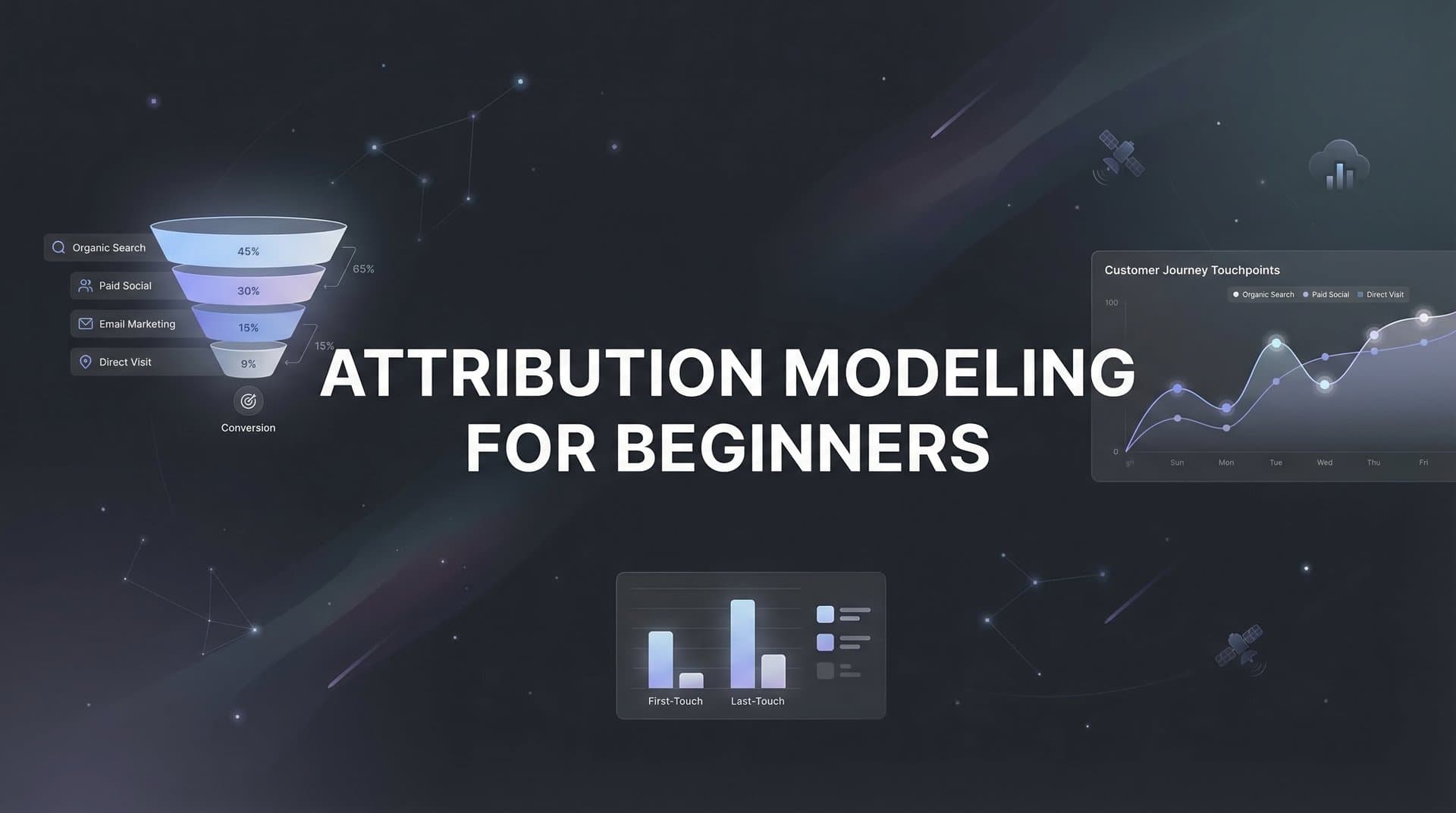
Attribution models are frameworks for distributing credit across the touchpoints in a customer journey. Each model tells a different story about what's driving conversions. Understanding these models helps you choose the right lens for analyzing your marketing performance.
First-Touch Attribution: This model gives 100% of the credit to the very first interaction that brought a visitor to your brand. If someone discovered you through a Facebook ad, then later converted through Google search and email, Facebook gets all the credit.
First-touch attribution answers the question: "Where are my customers coming from?" It's valuable for understanding which channels are best at generating awareness and bringing new prospects into your funnel. If you're focused on top-of-funnel growth and want to know which campaigns are most effective at discovery, first-touch gives you that clarity.
The limitation? It completely ignores everything that happened after that initial interaction. The nurturing email that addressed objections, the retargeting ad that brought them back, the search ad that captured their intent—none of that gets recognized.
Last-Touch Attribution: The opposite approach. This model gives 100% credit to the final touchpoint before conversion. It's the default in many analytics platforms because it's simple to implement and understand.
Last-touch attribution answers: "What finally convinced them to convert?" It's useful for understanding which channels are effective at closing deals and capturing high-intent prospects. If you're optimizing for immediate conversions and bottom-of-funnel performance, last-touch highlights your strongest closers.
The problem is that it's fundamentally misleading for most businesses. It makes awareness campaigns look ineffective because they rarely get credit for conversions that happen days or weeks later. You might see direct traffic and branded search dominating your conversions, but those channels only work because earlier touchpoints built awareness and interest.
Linear Attribution: This model takes a democratic approach—it splits credit equally across every touchpoint in the customer journey. If someone interacted with five different channels before converting, each channel gets 20% of the credit.
Linear attribution says: "Every interaction mattered equally." It's fair in the sense that it acknowledges the full journey, and it's simple to understand. You get a complete picture of all the channels contributing to conversions.
The weakness is that it lacks nuance. Not all touchpoints actually influence decisions equally. The Facebook ad someone scrolled past without clicking probably didn't have the same impact as the demo video they watched three times. Linear attribution treats them the same. For a deeper dive into how these models compare, check out this comparison of attribution models for marketers.
Time-Decay Attribution: This model recognizes that touchpoints closer to conversion typically have more influence on the final decision. It assigns increasing credit to interactions as they get closer to the conversion event.
A touchpoint that happened three weeks ago might get 5% credit, while an interaction from yesterday gets 40%. The exact decay rate varies, but the principle is consistent: recency matters.
Time-decay balances the journey perspective of linear attribution with the conversion focus of last-touch. It acknowledges that early awareness matters while recognizing that recent interactions often have stronger influence on purchasing decisions. For many businesses with moderate sales cycles, time-decay provides a realistic view of how different touchpoints contribute.
The challenge is determining the right decay rate. A business with a three-day purchase cycle needs a different decay curve than one with a three-month sales process.
Multi-Touch Attribution: Seeing the Complete Picture
Single-touch attribution models—whether first or last—share a fundamental flaw. They reduce complex customer journeys to a single moment. In doing so, they leave money on the table by making critical mid-funnel interactions invisible.
Our explainer on what is cost per share covers the fundamentals in more depth.
Here's what you miss with single-touch models. A prospect clicks your LinkedIn ad and visits your site. They don't convert, but they're now in your ecosystem. Three days later, they see your retargeting ad on Facebook, click through, and read a case study. Still not ready.
A week later, they Google your product category, click your search ad, and land on a comparison page. They browse but don't convert. Two days after that, they receive your email with a limited-time offer. They click, return to your site, and finally purchase.
With last-touch attribution, email gets 100% credit. You might conclude that email is your best channel and shift more budget there. But email only worked because LinkedIn created awareness, retargeting maintained interest, search captured intent, and email provided the final push. Remove any of those touchpoints, and the conversion might not happen.
Multi-touch attribution connects these dots. It tracks the complete journey from first interaction to final conversion, showing how different channels work together to drive revenue. This is especially crucial for B2B businesses and higher-ticket products where sales cycles involve numerous touchpoints over weeks or months. If you're evaluating solutions, this multi-touch attribution platforms comparison can help you find the right fit.
Let's trace a realistic B2B example. A marketing director sees your LinkedIn sponsored post about marketing attribution challenges. She clicks through and reads a blog post but doesn't fill out a form. Your retargeting pixel captures this visit.
Three days later, she's researching attribution solutions and Googles "marketing attribution software." Your search ad appears, she clicks, and explores your product pages. She downloads a comparison guide, entering your CRM as a lead.
Over the next two weeks, she receives three nurture emails with case studies and feature explanations. She clicks through to watch a product demo video. A week later, she searches your brand name directly, returns to your site, and books a demo.
After the demo, she goes dark for a week. Then she receives a personalized email from your sales team with a custom proposal. She clicks the link, reviews the proposal, and schedules a follow-up call where she commits to a purchase.
In this journey, nine distinct touchpoints contributed to the conversion: LinkedIn ad, blog visit, retargeting exposure, Google search ad, guide download, three email clicks, demo booking, and proposal email. A single-touch model would credit only LinkedIn or the final email, completely missing the orchestrated sequence that actually drove the decision.
Multi-touch attribution reveals this complete picture. You can see that LinkedIn is effective at reaching your target audience, search captures high-intent prospects, nurture emails build confidence, and sales follow-up closes deals. Each channel plays a specific role in the journey. Understanding marketing attribution for B2B companies is essential for tracking these complex buyer journeys.
This visibility transforms how you allocate budget. Instead of starving awareness channels because they don't show direct conversions, you can invest confidently knowing they're essential to starting journeys that convert later. You can identify which mid-funnel touchpoints are most effective at moving prospects forward and double down on those tactics.
Choosing the Right Model for Your Marketing Goals
There's no universally "best" attribution model. The right model depends on your business objectives, sales cycle length, and what questions you're trying to answer. Smart marketers use different models for different purposes.
If your primary goal is building brand awareness and growing your audience, first-touch attribution provides the clearest view. It shows you which channels are most effective at introducing new prospects to your brand. This is particularly valuable for businesses in growth mode who need to understand where their best new customers are coming from.
For businesses with very short sales cycles—think e-commerce impulse purchases or low-cost SaaS products—last-touch attribution can be surprisingly useful. When customers typically convert in a single session or within hours of discovery, the last touchpoint often is the most influential. Online retailers should explore attribution modeling for ecommerce to understand these rapid purchase paths.
Companies with moderate sales cycles (one to four weeks) often find time-decay attribution most insightful. It balances the importance of awareness with the reality that recent interactions tend to have stronger influence on conversion decisions.
For complex B2B sales or high-ticket products with long consideration periods, comparing multiple attribution models side-by-side becomes essential. You want to see first-touch data to understand awareness, time-decay to see the full journey, and last-touch to identify your strongest closers.
Here's a practical framework: use first-touch to evaluate top-of-funnel campaigns, time-decay or linear to assess overall channel performance, and last-touch to optimize conversion-focused campaigns. Looking at all three perspectives simultaneously prevents you from over-optimizing for any single metric. This approach is especially important when managing attribution tracking for multiple campaigns simultaneously.
Watch for these red flags that signal your current attribution approach is costing you money. If your analytics show direct traffic as your top converting source, you're likely missing the earlier touchpoints that built that awareness. If every ad platform claims more conversions than you actually received, you need proper deduplication through multi-touch attribution.
If you're cutting awareness campaigns because they don't show direct ROI, you might be dismantling the top of your funnel without realizing it. If you can't explain why certain channels perform well in platform dashboards but don't correlate with actual revenue growth, your attribution model isn't capturing the full picture.
The goal isn't to find one perfect model—it's to use attribution modeling as a lens for understanding how your marketing actually works. Different models reveal different insights. The most sophisticated marketers compare multiple models to build a complete understanding of their customer journey and make informed budget decisions based on that complete picture.
Getting Started: Your First Steps with Attribution
Implementing attribution modeling doesn't require a data science team or massive budget. Modern platforms have made attribution accessible to businesses of all sizes. Here's how to get started without getting overwhelmed.
The foundation of attribution is connecting your data sources. You need to track visitors across your website, link that tracking to your ad platforms, and connect conversions to actual revenue in your CRM or e-commerce system. This creates the complete journey that attribution models analyze.
Start by ensuring your website tracking is properly implemented. Whether you're using Google Analytics, a dedicated attribution platform, or another solution, you need consistent tracking across all pages. Set up conversion tracking for key actions—form submissions, purchases, demo bookings, whatever represents value for your business. Understanding the differences between Google Analytics vs attribution platforms will help you make the right choice for your needs.
Next, connect your ad platforms. This means implementing tracking pixels or conversion APIs for Facebook, Google Ads, LinkedIn, and any other paid channels you use. The goal is to capture when someone clicks an ad and what they do afterward on your site.
The critical piece most marketers miss is connecting these interactions to actual revenue outcomes. A lead form submission is useful data, but knowing which marketing touchpoints led to closed deals worth specific dollar amounts is transformational. This requires integrating your CRM or e-commerce platform with your attribution system. Platforms that offer marketing attribution platforms revenue tracking make this connection seamless.
Here's where beginners often go wrong. Many marketers rely solely on platform-reported data—checking Facebook Ads Manager for Facebook performance, Google Ads for search performance, and so on. The problem is that each platform uses last-touch attribution by default and can't see interactions with other platforms. This creates the inflated conversion counts we discussed earlier.
Another common mistake is ignoring cross-device journeys. A prospect might discover you on mobile, research on their laptop, and convert on a tablet. Without proper tracking infrastructure, these look like three different people. Modern attribution platforms use probabilistic matching and login data to connect these journeys. Solving these cross-platform attribution challenges is essential for accurate measurement.
Many beginners also underestimate the importance of server-side tracking. Browser-based tracking is increasingly limited by privacy features, ad blockers, and cookie restrictions. Server-side tracking captures data directly from your server to the attribution platform, bypassing these limitations and providing more accurate data.
The good news is that modern attribution platforms handle most of this complexity automatically. What used to require custom data warehouses and SQL queries can now be set up with a few integrations and some pixel implementation. Platforms like Cometly connect your ad accounts, website, and CRM through simple integrations, then automatically track the customer journey and apply multiple attribution models to your data.
Start simple. Connect your primary ad channel and your website. Track your most important conversion action. Once you see data flowing and can trace basic customer journeys, expand to additional channels and more sophisticated tracking. Attribution is a practice you build over time, not a switch you flip overnight.
Turning Attribution Insights Into Budget Decisions
Attribution data is only valuable if you actually use it to make better decisions. Here's how to read attribution reports and translate those insights into confident budget allocation.
When you first open an attribution report, look for discrepancies between models. If Facebook shows strong performance in first-touch attribution but weak performance in last-touch, it's an awareness channel—great at starting journeys but not closing them. That doesn't mean it's ineffective; it means you shouldn't judge it by conversion metrics alone. Using the best attribution tool for Facebook Ads helps you see beyond platform-reported metrics.
Conversely, if a channel shows weak first-touch performance but strong last-touch performance, it's capturing demand that other channels created. Branded search often fits this pattern. People search for your brand because they discovered you elsewhere. That's valuable, but it means you can't scale that channel beyond the awareness your other marketing creates.
Look for channels that perform consistently well across multiple attribution models. These are your workhorses—channels that contribute throughout the customer journey. They deserve sustained investment and optimization attention.
Pay attention to conversion paths—the sequences of touchpoints that lead to sales. You might discover that customers who interact with both content and ads convert at higher rates than those who only see ads. Or that webinar attendees who later see retargeting ads have exceptional conversion rates. These insights reveal opportunities to orchestrate more effective customer journeys.
Here's where attribution creates a powerful feedback loop with your ad platforms. When you feed accurate conversion data back to Facebook, Google, and other platforms, their algorithms get smarter about who to target. This is especially important as platform tracking becomes less accurate due to privacy changes.
Platforms like Cometly use server-side tracking to capture conversions that browser-based pixels miss, then sync those conversions back to your ad platforms through Conversion APIs. This enriched data helps ad platform algorithms optimize more effectively, improving your targeting and reducing your cost per acquisition over time. This approach is particularly valuable for attribution modeling for paid ads across multiple channels.
The confidence factor is crucial. When you truly understand which channels drive revenue, you can scale winning campaigns without fear. You're not guessing whether to increase your Facebook budget—you can see that Facebook-initiated journeys have generated $47,000 in revenue this quarter with a clear ROI.
Attribution also helps you make smarter cuts. Instead of slashing budgets blindly when you need to reduce spend, you can identify channels with the weakest contribution across multiple models and cut strategically. You preserve the marketing that's actually working while eliminating waste.
Start making attribution-informed decisions with small budget shifts. Move 10% of spend from a weak-performing channel to a strong one and watch the results. As you build confidence in your attribution data, you can make bolder moves—launching new channels, cutting underperformers, or doubling down on winners.
The goal is to transform marketing from an expense you hope works into an investment you can measure and optimize. Attribution modeling provides the visibility to make that transformation real.
Putting It All Together
Attribution modeling transforms marketing from guesswork into a data-driven practice. Instead of wondering which campaigns actually drive revenue, you can see the complete customer journey and understand how different touchpoints work together to generate conversions.
Remember that different attribution models answer different questions. First-touch shows you where customers discover your brand. Last-touch reveals which interactions close deals. Linear and time-decay models illuminate the full journey. Multi-touch attribution connects all the dots, showing you how your marketing channels orchestrate to drive revenue.
The right attribution approach for your business depends on your goals and sales cycle. Most growing businesses benefit from comparing multiple models side-by-side rather than relying on a single perspective. This comprehensive view prevents you from over-optimizing for one metric while missing the bigger picture.
Getting started is more accessible than ever. Modern attribution platforms handle the technical complexity of tracking customer journeys, connecting data sources, and applying multiple attribution models to your data. The key is to begin with your most important channels and conversion actions, then expand as you build confidence.
The real power of attribution comes when you use these insights to make better budget decisions. Understanding which channels truly drive revenue lets you scale confidently, cut strategically, and optimize your entire marketing mix based on actual performance rather than platform-reported metrics that often conflict.
Start by auditing your current attribution setup. Are you relying solely on last-click data from individual platforms? Are you missing mid-funnel interactions that contribute to conversions? Can you connect your marketing touchpoints to actual revenue in your CRM? Identifying these gaps is the first step toward better attribution.
Ready to elevate your marketing game with precision and confidence? Discover how Cometly's AI-driven recommendations can transform your ad strategy—Get your free demo today and start capturing every touchpoint to maximize your conversions.



