

You've finally convinced leadership that your marketing team needs proper attribution tracking. The budget conversation is next, and you're staring at a spreadsheet trying to figure out what this will actually cost. One vendor quotes $500 per month. Another says $2,000. A third won't give you a number until you schedule a sales call. Meanwhile, your colleague at another company warns you about "hidden costs" that tripled their initial budget.
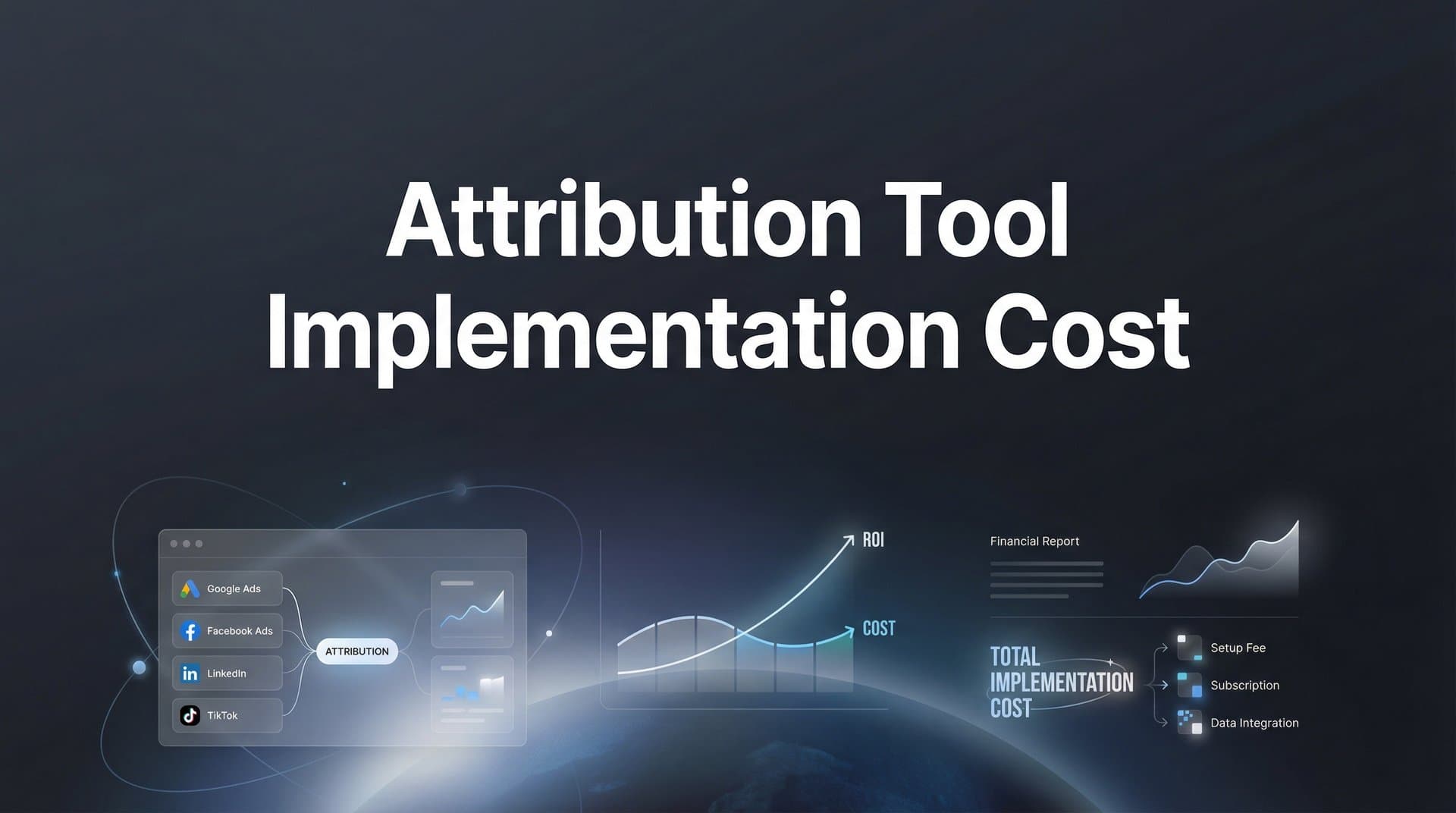
Here's the reality: attribution tool implementation cost isn't just the monthly subscription fee you see on a pricing page. It's the integration work that connects your ad platforms. It's the time your team spends learning a new system. It's the server infrastructure you might need to set up. It's the data cleanup required before anything works properly.
This guide breaks down every cost component you need to account for when budgeting for attribution software. You'll learn what to expect during implementation, how to calculate realistic ROI projections, and which budgeting strategies help marketing teams avoid the sticker shock that derails projects halfway through. By the end, you'll have a clear framework for evaluating total cost of ownership rather than getting caught off guard by expenses you didn't see coming.
Breaking Down the True Cost Components
The software licensing fee is the most visible cost, but it's structured differently across vendors. Some platforms charge flat monthly subscriptions regardless of team size or usage volume. Others use per-user pricing that scales as your marketing team grows. A third model ties pricing to tracked events, ad spend volume, or the number of conversions flowing through the system.
Flat subscription models offer predictable budgeting but may include feature limitations at lower tiers. Per-user pricing works well for smaller teams but can become expensive as you add specialists, agencies, or executives who need dashboard access. Usage-based pricing aligns costs with your business growth, though it requires careful monitoring to avoid surprise bills during high-traffic periods. Understanding attribution tool monthly cost structures helps you plan more effectively.
Integration costs represent the work required to connect your attribution tool to existing marketing infrastructure. Every ad platform, CRM system, and analytics tool needs a data connection. Some integrations happen through simple API connections that take minutes to configure. Others require custom development work, especially when connecting proprietary systems or older platforms without modern integration capabilities.
The number of integrations directly impacts implementation time and cost. Connecting Google Ads, Facebook Ads, and Google Analytics might take a few hours. Adding Salesforce, HubSpot, TikTok Ads, LinkedIn Ads, your e-commerce platform, and email marketing tool extends the timeline significantly. Each integration needs testing to ensure data flows correctly and attributes conversions to the right sources.
Data infrastructure requirements have grown more complex with the shift toward server-side tracking. Browser-based tracking faces increasing limitations from privacy features, ad blockers, and iOS restrictions. Server-side tracking solves these problems by capturing data directly from your servers before it reaches the browser, but it requires technical setup.
Setting up server-side tracking typically involves configuring cloud infrastructure, implementing tracking endpoints, and ensuring secure data transmission. Some attribution platforms handle this infrastructure for you, while others require your team to manage servers, maintain uptime, and handle scaling as traffic grows. The difference between managed and self-hosted solutions can represent thousands of dollars in ongoing infrastructure costs.
Consider whether your attribution tool requires dedicated technical resources for maintenance. Platforms with automated updates and managed infrastructure reduce ongoing costs. Solutions requiring manual configuration changes, custom code maintenance, or frequent troubleshooting create recurring expenses that persist long after initial implementation.
Hidden Expenses That Catch Teams Off Guard
Technical debt from legacy tracking systems creates unexpected costs during attribution tool implementation. Many marketing teams have accumulated years of tracking pixels, conversion tags, and analytics code across their website and landing pages. This legacy tracking often conflicts with new attribution systems, creating data discrepancies and measurement errors.
Cleaning up technical debt means auditing every tracking implementation, identifying conflicts, and systematically removing or updating outdated code. This work requires developer time and careful testing to ensure you don't break existing reporting while transitioning to the new system. Teams often underestimate this phase, discovering that their "quick implementation" requires weeks of cleanup work before accurate attribution becomes possible. Working with an attribution software implementation consultant can help navigate these challenges.
Migration challenges emerge when moving from one attribution model to another. Switching from last-click attribution to multi-touch models requires historical data mapping and baseline establishment. Your team needs to understand how metrics will change under the new model before making budget decisions based on the new data. This learning period represents both time investment and potential optimization delays.
Opportunity cost of delayed implementation affects campaign performance while you're still setting up attribution tracking. Every week without accurate attribution data means continuing to allocate budgets based on incomplete information. If your current tracking misattributes conversions or misses touchpoints entirely, you're potentially wasting ad spend on underperforming campaigns while underfunding your best performers.
The financial impact of this delay varies based on your ad spend volume. A company spending $50,000 monthly on paid advertising might waste $5,000 to $10,000 per month on misallocated budgets. Multiply that by a three-month implementation timeline, and the opportunity cost can exceed your annual attribution software investment. Faster implementation reduces this hidden expense.
Ongoing customization needs arise as your marketing strategy evolves. You launch new ad platforms, add sales channels, or restructure your conversion funnel. Each change requires attribution system updates to maintain accurate tracking. Some platforms charge for custom event setup, advanced reporting configurations, or integration with new tools.
Training costs extend beyond initial onboarding. As team members join or roles change, new people need to learn the attribution system. Creating internal documentation, running training sessions, and supporting users during the learning curve all represent time investments. Platforms with intuitive interfaces and strong educational resources reduce these recurring costs, while complex systems require ongoing training investments.
Factors That Influence Your Implementation Timeline
The number of ad platforms and data sources requiring connection directly determines implementation complexity. A straightforward setup connecting Google Ads and Facebook Ads to your website might take a few days. Adding LinkedIn Ads, TikTok Ads, Pinterest Ads, Twitter Ads, and programmatic display platforms extends the timeline significantly.
Each platform has unique integration requirements and data structures. Some provide robust APIs with comprehensive documentation. Others require manual configuration or custom development work. The more platforms you need to connect, the more testing required to ensure data accuracy across all sources. Budget extra time for troubleshooting integration issues and validating data consistency. A cross platform attribution tool can simplify this process considerably.
CRM and sales data integration adds another layer of complexity. Connecting your attribution tool to Salesforce, HubSpot, or custom CRM systems requires mapping fields, establishing data sync schedules, and ensuring lead and opportunity data flows correctly. B2B companies with longer sales cycles need attribution tracking that follows leads from initial ad click through multiple touchpoints to closed deals, sometimes spanning months.
Sales funnel complexity affects how many conversion events you need to track. E-commerce businesses might focus on product views, add-to-cart events, and purchases. SaaS companies track trial signups, product usage milestones, and subscription conversions. Lead generation businesses need form submissions, phone calls, and sales-qualified lead designations. Each conversion type requires configuration, testing, and validation.
Multi-step funnels with numerous touchpoints demand more sophisticated attribution setup. If your customer journey involves multiple website visits, content downloads, webinar attendance, email engagement, and sales conversations before conversion, your attribution system needs to capture and connect all these interactions. This complexity extends implementation time and may require custom event tracking.
Internal technical resources versus reliance on vendor support significantly impacts both timeline and cost. Teams with experienced developers and marketing technologists can handle much of the implementation work internally, reducing vendor service fees. Organizations without technical expertise need more hands-on support from the attribution platform provider or third-party consultants.
Vendor support quality varies dramatically across attribution platforms. Some offer dedicated implementation specialists who guide you through every step. Others provide documentation and expect self-service setup. Premium support tiers often cost extra but can compress implementation timelines by weeks or months. Evaluate whether faster implementation through professional services justifies the additional investment.
Consider your team's bandwidth for implementation work. Even with vendor support, someone internally needs to coordinate integrations, test data accuracy, and train team members. If your marketing and technical teams are already stretched thin, implementation will take longer unless you allocate dedicated resources or accept slower progress.
Calculating Expected ROI Before You Commit
Quantifying wasted ad spend from inaccurate attribution data starts with understanding your current measurement gaps. Many marketing teams rely on platform-reported conversions that miss cross-device journeys, ignore assisted touchpoints, or fail to track conversions happening offline. This incomplete picture leads to budget allocation decisions based on partial information.
Consider how much you're currently spending on channels you can't measure accurately. If you're running display ads, social media campaigns, or content marketing without clear conversion attribution, you're making budget decisions based on assumptions rather than data. Companies often discover that campaigns they thought were underperforming actually drive significant assisted conversions once proper attribution reveals the full customer journey. Implementing revenue attribution tracking tools helps quantify this impact.
The financial impact becomes clearer when you examine specific scenarios. Imagine you're spending $20,000 monthly on a channel that appears to generate few direct conversions. Without multi-touch attribution, you might cut that budget. Proper attribution might reveal that channel drives 40% of your assisted conversions, making it essential for customer acquisition despite low last-click attribution. The cost of making the wrong decision based on incomplete data can be substantial.
Measuring time savings from automated reporting and AI recommendations addresses the operational efficiency gains attribution tools provide. Marketing teams typically spend hours each week manually compiling reports from multiple platforms, building spreadsheets to compare performance, and analyzing data to identify optimization opportunities. This manual work is time-consuming and prone to errors.
Calculate how many hours your team currently spends on reporting and analysis. If two team members spend 10 hours weekly pulling data and creating reports, that's 80 hours monthly. At an average fully-loaded cost of $75 per hour for marketing professionals, you're spending $6,000 monthly on manual reporting work. Attribution tools that automate this process and provide AI-driven insights can recover most of this time investment.
AI-powered recommendations accelerate optimization decisions by surfacing insights that would take hours to discover manually. Instead of analyzing thousands of data points to identify underperforming ad sets or high-value audience segments, AI highlights opportunities immediately. This speed advantage means you can optimize campaigns in real-time rather than making weekly or monthly adjustments based on delayed analysis.
Projecting revenue gains from better budget allocation decisions requires estimating how much performance improves when you can accurately identify and scale your best-performing campaigns. Marketing teams with clear attribution data typically find that some campaigns deliver significantly better ROI than others, but this disparity remains hidden without proper measurement.
Consider a scenario where your current attribution approach shows similar performance across multiple campaigns, leading you to split budgets evenly. Accurate multi-touch attribution might reveal that one campaign drives 3x the conversion rate of another. Reallocating budget toward the higher-performing campaign could substantially increase overall conversions without increasing total ad spend.
The revenue impact compounds over time. Better attribution leads to better budget decisions, which improve campaign performance, which generates more revenue to reinvest in marketing. This compounding effect means that even modest improvements in conversion rates or customer acquisition costs can generate substantial ROI over a year. A 15% improvement in marketing efficiency on a $500,000 annual ad budget represents $75,000 in additional value, whether through increased conversions or reduced acquisition costs.
Building Your ROI Projection Model
Start by establishing baseline metrics for your current marketing performance. Document your cost per acquisition, conversion rates by channel, and overall marketing ROI. These baselines let you measure improvement after implementing attribution tracking. Be realistic about expected gains, as results vary based on how inaccurate your current attribution is and how effectively you act on new insights.
Factor in both hard cost savings and soft benefits when calculating ROI. Hard savings include reduced wasted ad spend, lower reporting labor costs, and improved conversion rates. Soft benefits include faster decision-making, better cross-team alignment around performance data, and reduced risk of major budget allocation mistakes. While harder to quantify, these benefits contribute real value to marketing operations.
Smart Budgeting Strategies for Marketing Teams
A phased implementation approach spreads costs over time and reduces risk by starting with your highest-impact integrations. Rather than connecting every platform and data source simultaneously, begin with the channels representing the largest portion of your ad spend. This strategy delivers value faster while limiting initial investment and allowing your team to learn the system before expanding.
Phase one might focus exclusively on your primary paid advertising channels: Google Ads and Meta platforms if those represent 70% of your ad spend. Get these integrations working perfectly, train your team on the attribution insights, and start optimizing based on accurate data. Once you've proven value and built confidence with the system, expand to additional platforms in subsequent phases. Many teams start by exploring a marketing attribution tool free trial to validate their approach.
This phased approach also helps with budget approval. Requesting a smaller initial investment is often easier than securing full funding upfront. You can demonstrate ROI from the first phase to justify expanding the implementation. If the attribution tool doesn't deliver expected value, you've limited your financial exposure rather than committing to a comprehensive implementation that proves disappointing.
Prioritizing integrations based on ad spend volume and impact ensures you focus technical resources where they matter most. A platform consuming 40% of your budget deserves integration priority over one receiving 2% of spending. This prioritization framework helps you make clear decisions about which integrations to tackle first and which can wait for later phases.
Consider both current spend and strategic importance when prioritizing. A newer channel might represent a small budget now but be central to your growth strategy. Prioritizing its integration early ensures you have attribution data as you scale investment. Conversely, legacy channels with declining budgets might not warrant immediate integration effort even if they historically received significant spend.
Building internal champions reduces training and adoption costs by creating team members who deeply understand the attribution system and can support their colleagues. Rather than relying entirely on vendor training or external consultants, invest in developing expertise within your organization. These champions become your go-to resources for questions, troubleshooting, and advanced use cases.
Identify team members who are analytically minded, technically capable, and enthusiastic about improving marketing measurement. Give them extra training time, involve them in implementation decisions, and empower them to become subject matter experts. These champions can then train other team members, reducing reliance on expensive vendor support or external training programs.
Internal champions also accelerate adoption by demonstrating practical use cases relevant to your specific business. Generic vendor training covers platform features, but your champions can show teammates exactly how to answer questions specific to your campaigns, products, and goals. This relevant, contextualized training drives faster adoption than abstract feature demonstrations.
Negotiating Vendor Contracts Strategically
Annual contracts typically offer better pricing than month-to-month subscriptions, but they also represent larger upfront commitments. Negotiate for quarterly payment terms on annual contracts to preserve cash flow while securing annual pricing. Many vendors accommodate this request, especially if it helps close the deal.
Ask about implementation credits or included professional services. Some attribution platforms offer setup assistance, integration support, or training hours as part of the contract. Others charge separately for these services. Understanding what's included versus what costs extra helps you budget accurately and negotiate better terms. Reviewing marketing attribution tool plans across vendors reveals significant differences in included services.
Request flexible user licensing that accommodates team growth without forcing immediate tier upgrades. You might need five users today but anticipate growing to eight users within six months. Contracts with built-in flexibility for adding users at prorated costs prevent you from either paying for unused licenses or facing surprise charges mid-contract.
Putting It All Together: Your Implementation Budget Checklist
When building your attribution tool implementation budget, account for these cost categories to avoid surprises. Software licensing fees vary by pricing model, so clarify whether you're paying per user, per event, or flat subscription rates. Confirm what features are included at each tier and whether critical capabilities require premium pricing.
Integration and setup costs include technical work connecting ad platforms, CRM systems, and analytics tools. Budget for both initial integration time and ongoing maintenance as you add platforms or update tracking. If you need server-side tracking infrastructure, include cloud hosting costs and technical resources for setup and management. A thorough marketing attribution tool evaluation helps identify these costs upfront.
Training and adoption expenses cover onboarding your team, creating internal documentation, and supporting users as they learn the system. Platforms with strong educational resources and intuitive interfaces reduce these costs. Complex systems require more extensive training investments and ongoing support.
Data cleanup and migration work addresses technical debt from legacy tracking systems. Budget time for auditing existing implementations, removing conflicting code, and ensuring data accuracy before relying on attribution insights for budget decisions. This preparation work prevents data quality issues that undermine confidence in the new system.
Ongoing customization and support needs arise as your marketing strategy evolves. New campaigns, additional platforms, and changing conversion goals all require attribution system updates. Clarify whether these updates are included in your subscription or billed separately.
Critical Questions to Ask Vendors Before Signing
What's included in the base subscription price versus premium add-ons? Understanding feature limitations at different tiers prevents discovering mid-implementation that critical capabilities cost extra. Ask specifically about advanced attribution models, custom reporting, API access, and integration limits. A detailed marketing attribution tools comparison can help you evaluate these differences systematically.
How long does typical implementation take for companies similar to ours? Vendor estimates based on comparable implementations provide realistic timeline expectations. Ask about factors that accelerate or delay implementation so you can plan accordingly.
What level of technical expertise does implementation require? Some platforms need dedicated developers for setup and maintenance. Others offer no-code implementations that marketing teams can handle independently. Understanding technical requirements helps you budget for appropriate resources.
What support is included, and what costs extra? Clarify whether you get dedicated implementation assistance, ongoing technical support, and training resources. Some vendors charge separately for premium support tiers that might be essential for successful implementation.
How does pricing scale as our business grows? Understanding how costs increase with more users, higher event volumes, or additional integrations helps you project long-term expenses. Avoid platforms with pricing structures that become prohibitively expensive as you scale.
Your Next Steps for Evaluation
Start by documenting your current marketing technology stack and identifying which platforms need attribution integration. List your ad platforms, CRM systems, analytics tools, and any custom systems requiring connection. This inventory clarifies implementation scope and helps vendors provide accurate quotes.
Calculate your current ad spend across all channels and estimate the cost of measurement gaps. Understanding how much you're spending without accurate attribution quantifies the problem you're solving and helps justify the investment in proper tracking.
Request detailed implementation plans from vendors showing timeline estimates, integration requirements, and cost breakdowns. Compare not just subscription prices but total cost of ownership including setup, training, and ongoing maintenance. The cheapest monthly subscription might cost more overall if implementation requires extensive professional services.
Making Attribution Investment Work for Your Marketing Team
Attribution tool implementation cost represents an investment in marketing clarity rather than a pure expense. The difference between making budget decisions based on accurate multi-touch attribution versus incomplete last-click data can mean the difference between scaling efficiently and wasting significant portions of your ad spend on underperforming campaigns.
Focus on total cost of ownership rather than subscription price alone. A platform with a higher monthly fee but streamlined integrations, minimal technical requirements, and strong automation might cost less overall than a cheaper solution requiring extensive implementation work and ongoing maintenance. Factor in both hard costs and opportunity costs when evaluating options.
The most successful implementations balance comprehensive attribution coverage with practical budget constraints. You don't need to connect every possible data source on day one. Start with your highest-impact integrations, prove value, and expand systematically. This approach manages costs while delivering meaningful improvements to marketing performance.
Ready to elevate your marketing game with precision and confidence? Discover how Cometly's AI-driven recommendations can transform your ad strategy. Our platform captures every touchpoint across your customer journey, from initial ad clicks to CRM events, providing the complete view your AI needs to optimize effectively. With streamlined integrations across major ad platforms and transparent pricing, you'll know exactly what you're getting without hidden implementation surprises. Get your free demo today and start capturing every touchpoint to maximize your conversions.


