If you run paid ads for a B2B SaaS company, you already know the frustration. You launch a campaign, watch the clicks roll in, and then try to figure out which of those clicks actually turned into demos, trials, or paying customers. The answer is almost never clear. Your ad platform says one thing, your CRM says another, and your gut says something else entirely.
The core problem is structural. B2B SaaS buyers do not behave like e-commerce shoppers. They research for weeks or months. They talk to colleagues. They read three comparison articles, watch a demo on YouTube, see a retargeting ad on LinkedIn, and then finally book a call. By the time they convert, they have touched your brand across a dozen different interactions on multiple devices. Standard ad tracking was never designed to handle that kind of complexity.
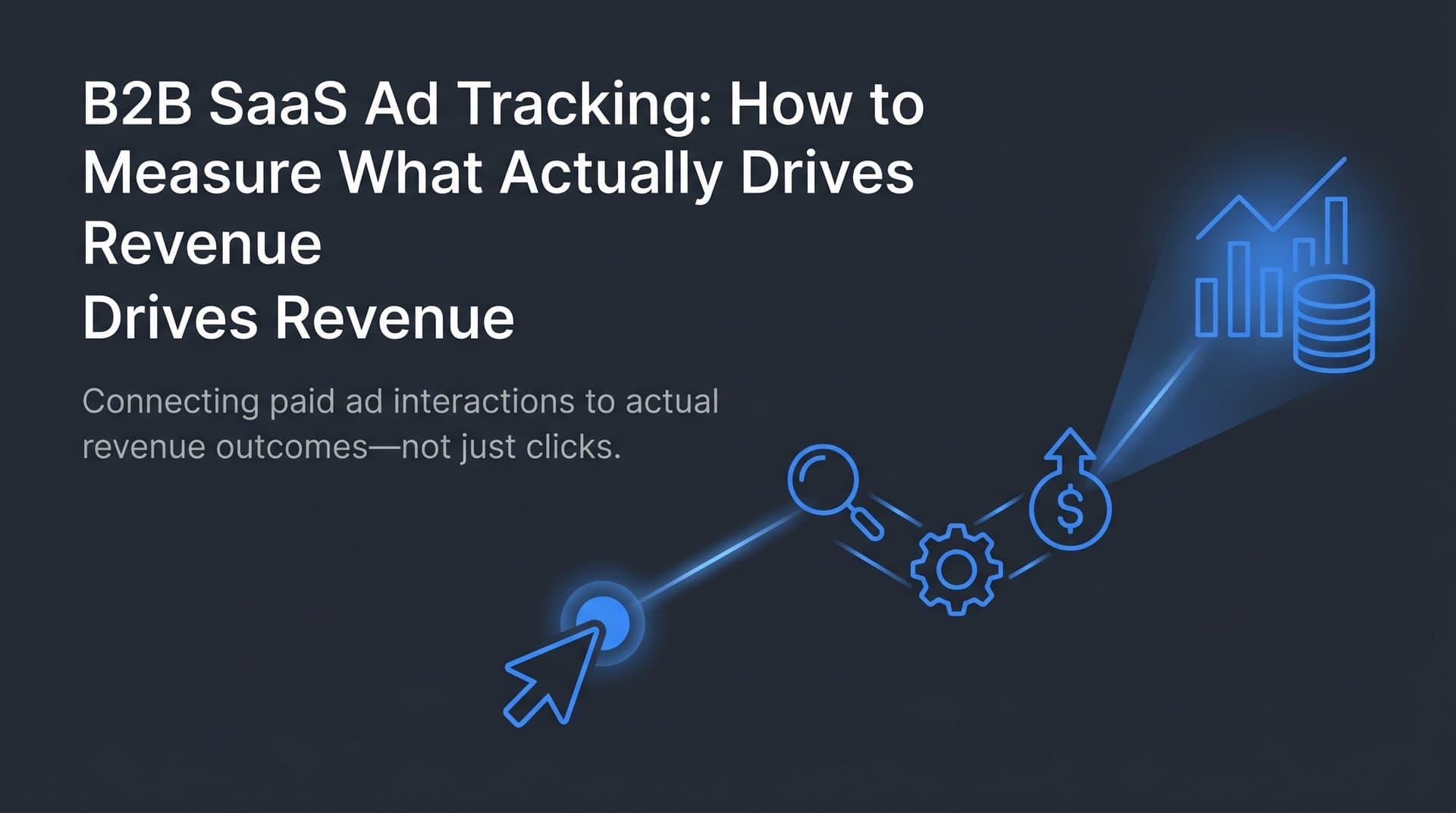
B2B SaaS ad tracking is the practice of connecting every ad interaction to the downstream revenue events that actually matter: demos booked, trials started, opportunities created, and deals closed. It is not just about knowing who clicked your ad. It is about knowing which ads produced your best customers. Done well, it transforms how you allocate budget and scale campaigns. Done poorly, you are essentially flying blind while your competitors optimize with precision.
This article breaks down exactly why standard tracking falls short for B2B SaaS, what a proper tracking system looks like, and how to build one that ties your ad spend to real revenue outcomes.
Where Standard Ad Platform Tracking Goes Wrong
Every major ad platform comes with built-in tracking. Google has its conversion tag. Meta has its pixel. LinkedIn has its Insight Tag. These tools are useful, but they were designed with simpler buying journeys in mind. For B2B SaaS, they introduce three significant problems that compound on each other.
Attribution windows do not match your sales cycle. Ad platforms typically use attribution windows of seven to twenty-eight days. That means if a buyer clicks your ad today and books a demo six weeks later, the platform never connects those two events. The conversion gets attributed to a different source, or it disappears entirely. For B2B SaaS companies with sales cycles that stretch across months, this is not a minor rounding error. It is a systematic misrepresentation of which campaigns are actually working.
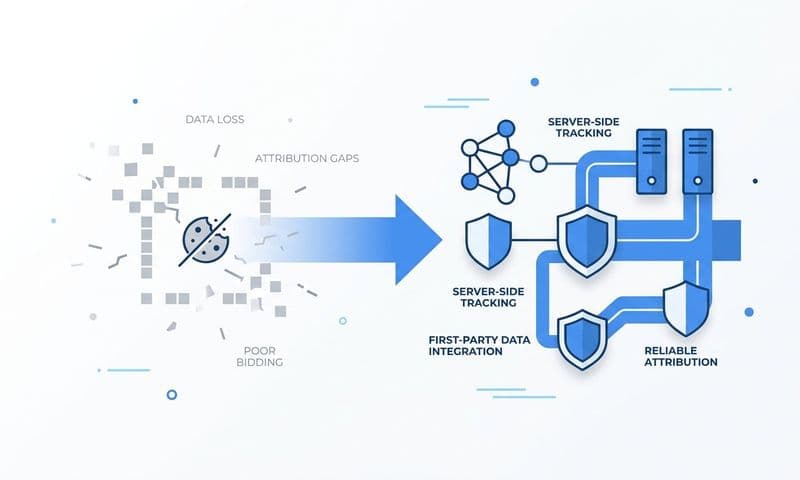
Privacy changes have created massive data gaps. Apple's App Tracking Transparency framework and the ongoing deprecation of third-party cookies have significantly reduced what browser-based pixels can capture. When a buyer clicks your LinkedIn ad on their iPhone, switches to their laptop to read your blog, and then submits a demo request from a work computer, your pixel-based tracking almost certainly misses part of that journey. Ad platforms compensate by using modeled data to fill in the gaps, which means the numbers in your dashboard are increasingly estimates rather than facts. Understanding why server-side tracking is more accurate helps explain why pixel-based approaches are falling behind.
Pixels only see the top of your funnel. Your Meta pixel fires when someone visits your landing page. Maybe it captures a form fill. But it has no idea what happens after that. It cannot see whether that lead qualified, whether they showed up to the demo, or whether they became a paying customer three months later. This means your ad platform is optimizing for early-stage actions that may have little correlation with revenue. You end up with campaigns that generate plenty of leads but very few customers, and no clear signal about why.
The result is a dashboard that looks informative but tells a misleading story. Many B2B SaaS marketers have experienced the moment of realizing their best-performing campaign by platform metrics was producing the lowest-quality leads. Standard tracking cannot prevent that from happening because it lacks the visibility to see far enough down the funnel.
The Three Layers of a Proper B2B SaaS Tracking System
Building a tracking system that actually works for B2B SaaS means connecting three distinct layers of your marketing and sales infrastructure. Think of it as building a bridge from the first ad impression all the way to a closed deal.
Layer 1: Ad Platforms. This is where your campaigns live. Google Ads, Meta Ads, LinkedIn Ads, and others each have their own tracking mechanisms and reporting. The challenge is that each platform reports differently, uses its own attribution logic, and has no visibility into what the other platforms are doing. Without a unified layer above them, you cannot compare performance across channels in any meaningful way.
Layer 2: Your Website and App. This is where the first touchpoints with your product happen. Tracking at this layer means capturing not just page visits but meaningful behavioral signals: which content a prospect consumed, which landing pages they visited, how they navigated your pricing page, and what actions they took before and after a form fill. This layer needs to be robust enough to persist across sessions and devices.
Layer 3: Your CRM and Billing System. This is where the revenue data lives. Your CRM knows which leads became opportunities, which opportunities closed, and at what deal value. Proper revenue attribution for B2B SaaS companies requires connecting this layer to your ad data, transforming tracking from a traffic measurement exercise into a revenue intelligence system.
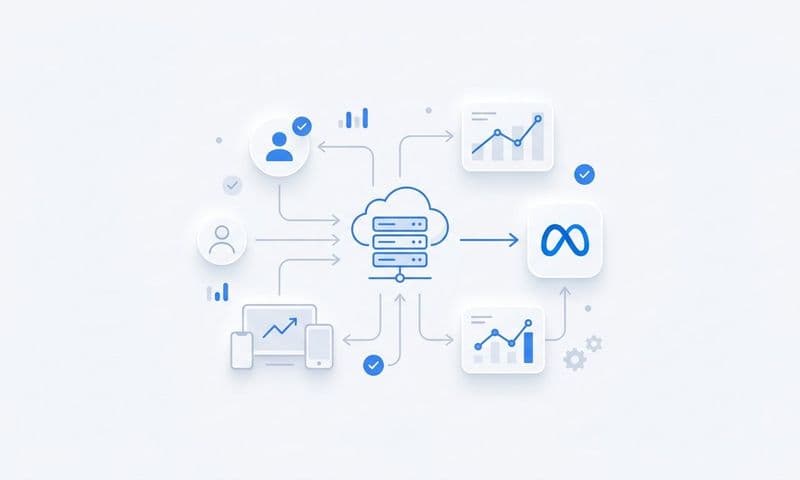
The connective tissue between these layers is server-side tracking. Unlike browser-based pixels that rely on the user's browser to fire data back to an ad platform, server-side tracking sends data directly from your server to the platform's API. This bypasses ad blockers, cookie restrictions, and browser privacy settings entirely. The result is more complete, more accurate data that reflects what is actually happening rather than what a pixel managed to capture before it got blocked.
Multi-touch attribution models sit on top of this infrastructure and determine how credit gets assigned across the journey. A linear model splits credit equally across all touchpoints. A time-decay model gives more weight to recent interactions. A position-based model emphasizes the first and last touch. None of these is universally correct, but any of them is more accurate than last-click attribution for a complex B2B buyer journey.
The Metrics That Reveal True Campaign Performance
Once your tracking infrastructure is in place, the next shift is moving beyond the metrics that ad platforms surface by default. Click-through rate and cost per click tell you about ad efficiency at the top of the funnel. They tell you almost nothing about whether your campaigns are building a business. Knowing the essential metrics every SaaS company should care about is the first step toward smarter optimization.
Cost per qualified lead is the first metric worth optimizing. Not every lead is equal. A campaign that generates fifty leads at a low cost per lead looks great until you realize only two of them met your ICP criteria. Tracking qualification rates by campaign and channel gives you a much clearer picture of where your budget is actually working.
Cost per demo and cost per trial move the measurement further down the funnel. These are the conversion events that signal genuine buying intent in most B2B SaaS models. When you can see which campaigns produce the most demos at the lowest cost, you have actionable data to guide budget decisions.
Customer acquisition cost by campaign is the metric that closes the loop. This requires pulling revenue data from your CRM or billing system and connecting it back to the campaigns that influenced those customers. Dedicated revenue tracking software for marketers makes this process far more manageable than manual spreadsheet reconciliation.
Time-to-conversion is an often-overlooked dimension. Some campaigns attract buyers who are early in their research. Others attract buyers who are close to a decision. Understanding the average time between first ad interaction and closed deal, broken down by campaign or channel, helps you set realistic expectations and design nurture sequences accordingly.
Assisted conversions reveal how different channels work together. A prospect might first discover you through a Google search ad, then engage with a LinkedIn retargeting campaign, and finally convert after clicking a branded search ad. Last-click attribution gives all the credit to the branded search campaign. Assisted conversion data shows you the full picture and prevents you from cutting the campaigns that are actually doing the early-stage heavy lifting.
Making Cross-Platform Tracking Work in Practice
Knowing what to track is one thing. Actually capturing clean, comparable data across multiple ad platforms is another challenge entirely. Here is where the operational details matter.
UTM parameters are your foundation. Every ad you run across every platform should carry UTM parameters that identify the source, medium, campaign, ad group, and ad. The critical word here is consistently. Many marketing teams use different naming conventions across platforms, or let individual team members apply their own logic. The result is data that cannot be compared or aggregated. A standardized UTM naming convention, enforced through templates or a shared tracking sheet, is one of the highest-leverage operational improvements you can make. Understanding the difference between UTM tracking and attribution software helps clarify why UTMs alone are not enough.
Capture downstream CRM events, not just form fills. Your conversion tracking should not stop when someone submits a form. Configure your CRM to pass events like "opportunity created," "demo completed," and "deal closed" back to your ad platforms through server-side connections. This requires some technical setup, but it fundamentally changes what your ad platform algorithms optimize for. When Meta or Google knows which leads actually became customers, they can find more people who look like your best customers rather than just people who are likely to fill out forms.
Feed enriched data back to ad platforms. This concept, often called conversion sync, is increasingly recognized as one of the most impactful things a B2B SaaS marketing team can do. When you send offline conversion data back to your ad platforms with hashed customer information, you give their algorithms a much richer signal to work with. Exploring conversion API tracking tools can help you implement this effectively. The platforms can then optimize their targeting and bidding toward outcomes that actually matter to your business. Many teams that implement this find that their campaigns become more efficient over time without any changes to creative or targeting settings.
The practical implication is that your tracking setup is not a one-time configuration. It is an ongoing system that needs to be maintained, audited, and refined as your funnel evolves and as privacy changes continue to shift the landscape.
How AI Is Reshaping B2B SaaS Ad Tracking
Manual analysis of multi-touch attribution data across several ad platforms and a CRM is genuinely difficult. There are too many variables, too many campaign combinations, and too much data for a spreadsheet-based approach to surface reliable insights at speed. This is where AI is starting to change the game for B2B SaaS marketers.
Pattern recognition at scale. AI-powered attribution tools can analyze thousands of customer journeys simultaneously and identify patterns that would take a human analyst days to find. Which creative formats tend to appear in the journeys of your highest-value customers? Which channel combinations produce the fastest time-to-close? These are questions that require processing enormous amounts of data, and AI handles that natively. The landscape of SaaS marketing attribution tools has evolved rapidly to incorporate these AI-driven capabilities.
Real-time budget recommendations. Rather than waiting for a weekly review to identify underperforming campaigns, AI tools can surface budget reallocation recommendations in real time based on pipeline signals. If a campaign is producing qualified opportunities at a strong rate, the system can flag it for increased investment before the window closes. If a campaign is generating volume but poor downstream quality, it gets flagged for review before more budget gets wasted.
Cometly is built specifically for this kind of AI-powered attribution and optimization. It captures every touchpoint across your customer journeys, connects ad interactions to revenue events in your CRM, and uses AI to surface which campaigns and creatives are driving your highest-value conversions. It also syncs enriched conversion data back to Meta, Google, and other platforms so their algorithms can optimize for the outcomes that actually matter to your business. The result is a system that gets smarter over time, continuously improving the quality of your ad platform's targeting based on real revenue data.
A Practical Roadmap for Building Your Tracking Stack
If you are starting from a place where your tracking is fragmented or unreliable, the path forward does not have to be overwhelming. Breaking it into phases makes it manageable.
Phase 1: Connect your core systems. Start by linking your ad platforms, website tracking, and CRM into a single attribution platform. This is the foundation that makes everything else possible. Without a unified view, you are always reconciling data manually and making decisions based on incomplete information. Cometly is designed to serve as this central layer, pulling together data from your ad platforms, your website, and your CRM into a single, coherent view of every customer journey.
Phase 2: Implement server-side tracking. Once your systems are connected, prioritize moving your conversion tracking to a server-side architecture. Comparing the top server-side tracking platforms available today can help you choose the right solution for your stack. This is the most important future-proofing investment you can make. Browser-based tracking will continue to erode as privacy standards tighten. Server-side tracking gives you a stable, reliable data collection method that does not depend on what a user's browser allows.
Phase 3: Establish a review cadence. Technology alone is not enough. Build a weekly habit of comparing your ad platform-reported metrics against your attribution data. Discrepancies between what Google or Meta reports and what your attribution platform shows are not just interesting data points. They are signals about where your optimization decisions might be going wrong. A structured weekly review turns your tracking system into an active decision-making tool rather than a passive reporting dashboard.
Phase 4: Optimize for downstream outcomes. Once you have clean data flowing through your system, shift your campaign optimization targets from top-of-funnel actions to revenue-stage events. Effective tracking of SaaS customer acquisition means feeding qualified lead and closed deal data back to your ad platforms. Set your bidding strategies to optimize for the conversion events that correlate with revenue, not just form submissions.
The Strategic Advantage of Tracking What Actually Matters
B2B SaaS ad tracking is not a technical checkbox. It is a competitive advantage. Marketers who can connect their ad spend to actual pipeline and revenue make fundamentally better decisions than those who are optimizing based on platform-reported vanity metrics. They scale the campaigns that work, cut the ones that do not, and build a compounding advantage over time.
The good news is that the tools to do this properly are more accessible than ever. Server-side tracking, multi-touch attribution, and AI-powered analysis are no longer reserved for enterprise teams with large engineering resources. Platforms like Cometly are purpose-built to solve these exact challenges: capturing every touchpoint, connecting ad interactions to revenue events, and using AI to surface the recommendations that help you scale with confidence.
If your current tracking setup leaves you guessing about which ads are actually driving revenue, that is the problem worth solving first. Everything else in your marketing strategy depends on the quality of that signal.
Ready to stop guessing and start scaling with real data? Get your free demo of Cometly today and see how it connects every touchpoint to the revenue outcomes that matter most.