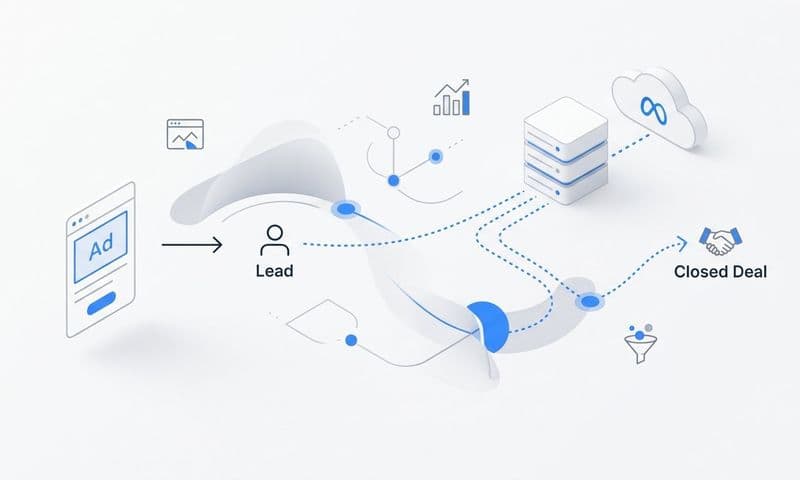
If you're a B2B SaaS marketer, you already know the frustration. A prospect clicks an ad in January, downloads a whitepaper in February, attends a webinar in March, requests a demo in April, and finally converts in May. By the time the deal closes, your ad platform is taking credit for the conversion, your CRM shows something different, and you have no reliable way to know which touchpoints actually moved the needle.
This is the core challenge of B2B SaaS attribution, and it's why choosing the right platform matters so much. The decision isn't just about dashboards or reporting. It's about whether a tool can genuinely track complex, multi-month journeys across every channel and connect that activity to real revenue.
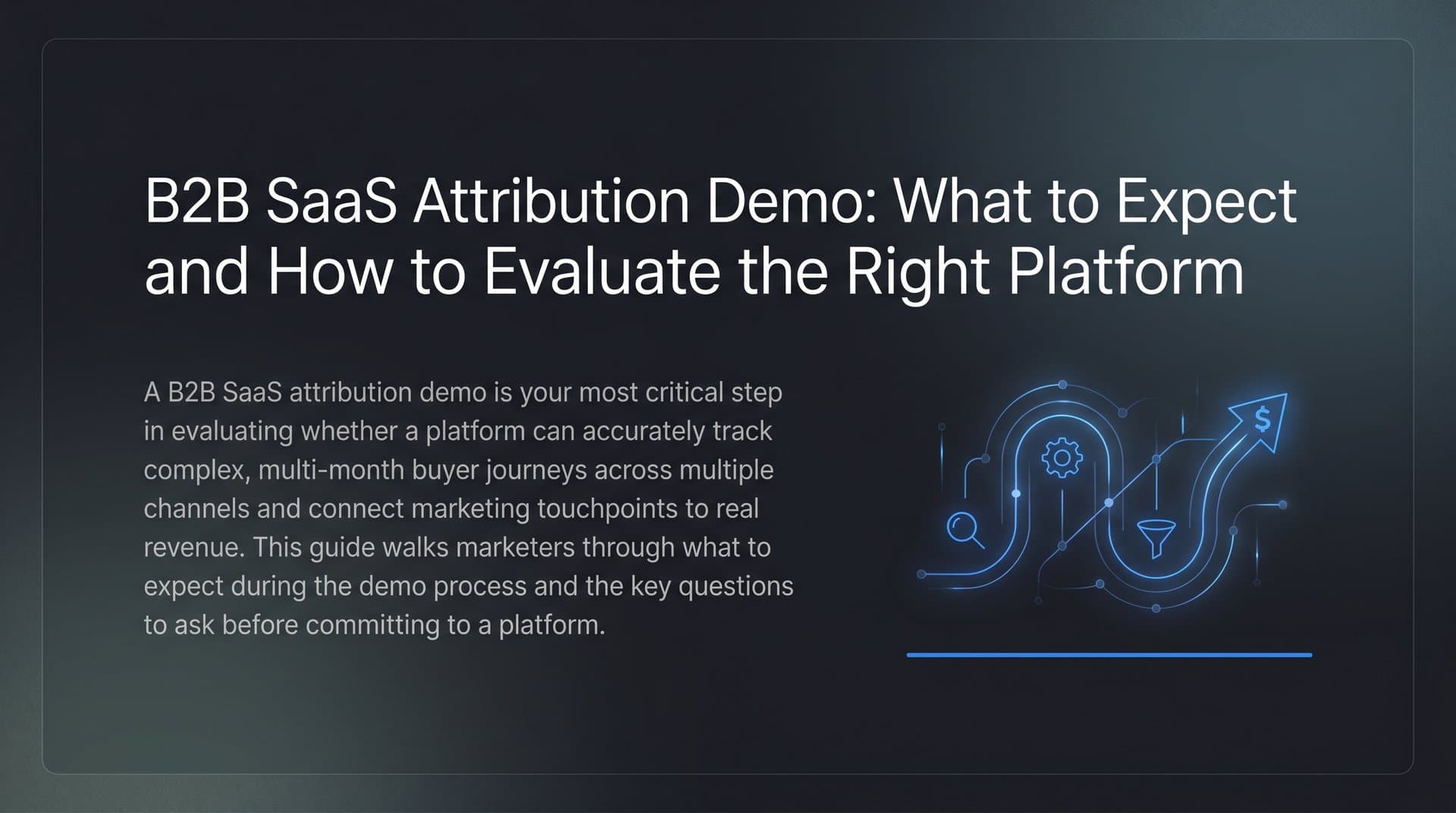
A B2B SaaS attribution demo is your best opportunity to find out. Not a sales pitch, not a feature list, but an actual demonstration of how the platform handles your specific challenges before you commit. This article walks you through everything you need to evaluate: why B2B SaaS attribution is uniquely complex, what a strong demo should show you, the features that matter most, the questions worth asking, the red flags to watch for, and how to turn your demo experience into a confident decision.
Why B2B SaaS Attribution Is a Different Problem Entirely
Most attribution tools were designed with simpler buying journeys in mind. A customer sees an ad, clicks, and buys within days. That's the e-commerce model, and it's relatively straightforward to track. B2B SaaS is a fundamentally different animal.
In a typical B2B SaaS buying cycle, you're dealing with multiple stakeholders, multiple touchpoints, and timelines that can stretch across weeks or months. A single deal might involve a marketing-qualified lead from a paid search ad, a series of nurture emails, a product demo, a free trial, a sales call, a legal review, and finally a contract signature. Each of those steps represents a touchpoint that influenced the outcome. Single-touch attribution models, which assign all credit to either the first or last interaction, simply cannot capture that complexity accurately enough to guide budget decisions.
Standard analytics platforms compound the problem. Tools like Google Analytics are excellent at tracking website behavior, but they lose visibility the moment a lead moves from your site into your CRM. There's a gap between what marketing sees and what sales sees, and that gap is where attribution breaks down. You end up with marketing reporting on leads and sales reporting on revenue, with no shared source of truth connecting the two.
Privacy changes have made things harder still. Since Apple's iOS 14.5 update, browser-based tracking has become increasingly unreliable. Cookies are being deprecated across major browsers. The result is that many B2B marketers find their ad platform data significantly undercounting actual conversions, which leads to poor optimization decisions and misallocated budgets. These are among the most common SaaS marketing attribution challenges teams face today.
Specialized attribution platforms are built to address all of this. They bridge the gap between ad click and closed deal by integrating with your ad platforms, your website, and your CRM simultaneously. They use server-side tracking to capture touchpoints that browser-based tools miss. And they provide multi-touch attribution models that reflect the reality of how B2B deals actually happen, giving marketing teams the data they need to optimize spend with genuine confidence.
What a Strong Attribution Demo Actually Looks Like
Here's where it gets interesting. Many attribution demos are polished, visually impressive, and ultimately not very informative. A vendor can show you beautiful dashboards and compelling charts without ever demonstrating whether the platform can actually solve your problems. Knowing what a genuinely strong demo looks like helps you cut through the noise.
The first thing to look for is real-time customer journey tracking. A strong demo should walk through how the platform captures a customer's journey from the first ad click through every subsequent touchpoint, including website visits, content downloads, form fills, CRM events, and eventually conversion. This shouldn't be a hypothetical scenario or a static screenshot. It should be a live demonstration using real data, showing how events flow through the system and how the platform connects activity across channels into a coherent journey view. Understanding SaaS marketing attribution tracking at this level is essential for evaluating any platform.
Multi-touch attribution model comparison is another critical element. A platform worth evaluating should be able to show you the same conversion data analyzed through multiple attribution lenses side by side. First-touch attribution tells you which channel created awareness. Last-touch tells you what closed the deal. Linear distributes credit evenly. Data-driven models use machine learning to weight touchpoints based on their actual influence on conversion. Seeing these models compared in real time helps you understand not just what the platform reports, but how it thinks about attribution and whether that thinking aligns with your business.
Pay close attention to how the demo handles conversion sync. This is one of the most important and often overlooked capabilities in B2B SaaS attribution. When your attribution platform captures a conversion in your CRM, it should be able to send that enriched conversion data back to Meta, Google, and other ad platforms. This matters because ad platform algorithms optimize based on the conversion signals they receive. If you're only sending them surface-level pixel data, they're optimizing for the wrong thing. Feeding them richer, more accurate conversion data improves targeting, reduces wasted spend, and makes your campaigns smarter over time.
A demo that skips conversion sync, or treats it as a minor footnote, is telling you something important about the platform's depth.
Five Features to Evaluate During Your Demo
When you're sitting in a demo, it's easy to get drawn into the visual appeal of a dashboard and lose track of the capabilities that actually matter. Here are five specific features to evaluate carefully.
Server-Side Tracking: Browser-based tracking is increasingly unreliable due to ad blockers, iOS privacy restrictions, and cookie deprecation. Server-side tracking routes event data through your own server before sending it to analytics and ad platforms, bypassing many of these limitations. Ask the vendor to demonstrate how their server-side tracking works and how it handles scenarios where browser-based tracking would fail. This is a non-negotiable capability for any B2B SaaS team serious about data accuracy.
CRM and Revenue Integrations: Attribution that stops at the lead level isn't attribution, it's lead tracking. The platform should integrate directly with your CRM, whether that's HubSpot, Salesforce, or another tool, and with payment platforms like Stripe. This allows the system to connect marketing touchpoints to actual revenue, not just form fills. During the demo, ask to see how a deal that closes in the CRM flows back into the attribution platform and how that revenue gets attributed to the marketing channels that contributed to it. This is the foundation of effective revenue attribution for B2B SaaS companies.
AI-Powered Recommendations: Reporting tells you what happened. Recommendations tell you what to do about it. Look for platforms that go beyond dashboards to actively surface insights: which campaigns are underperforming relative to spend, which channels are driving high-quality pipeline, where you should shift budget to improve returns. This is where AI-powered attribution tools create a meaningful advantage over traditional analytics, turning data into direction.
Ad Platform Integrations: The platform should connect natively to every major ad channel you use, including Meta, Google, LinkedIn, and others. These integrations should be bidirectional: pulling performance data in for analysis and pushing enriched conversion data back out for optimization. One-way integrations that only pull data are a limitation worth noting. Explore the best attribution tools for paid ads to understand what strong integrations look like.
Cross-Channel Attribution Across the Full Funnel: B2B SaaS journeys span many channels over long timeframes. The platform needs to track touchpoints across paid search, paid social, organic, email, and direct traffic, and stitch them together into a coherent view of each customer's journey. Ask the demo to show you a complex, multi-channel journey and how the platform attributes value across it.
The Right Questions to Ask During a B2B SaaS Attribution Demo
The questions you ask during a demo are often more revealing than the demo itself. Vendors prepare for the questions they expect. Asking specific, probing questions about your actual use case can quickly reveal whether a platform is genuinely built for B2B SaaS or just positioned that way.
Start by asking how the platform handles long sales cycles with multiple decision-makers. In B2B SaaS, a deal might involve a marketing manager who first engages with your content, a VP who attends a demo, and a CFO who signs off on the contract. Each of those people may interact with your marketing at different points. Ask how the platform tracks and connects these interactions across different individuals at the same account, and how it attributes credit when multiple stakeholders are involved. Reviewing SaaS marketing attribution best practices before your demo can help you frame these questions effectively.
Ask specifically about data accuracy methodology. One of the most persistent pain points for B2B marketers is the discrepancy between what ad platforms report and what their CRM shows as actual revenue. Meta might report 50 conversions while your CRM shows 20 closed deals. How does the platform reconcile these discrepancies? What methodology does it use to determine which data is more reliable? The answer to this question will tell you a lot about how seriously the vendor has thought about data quality. For deeper context, read about why attribution data doesn't match across platforms.
Ask about implementation timeline and onboarding support. Attribution platforms are only valuable if they're properly set up and generating accurate data. How long does implementation typically take? What does the onboarding process look like? How quickly can you expect to see actionable data flowing through the system? A vendor who gives vague answers here may be underestimating the complexity of getting the platform properly configured for your specific stack.
Finally, ask about reporting flexibility. Your marketing team needs different views than your CEO or your sales team. Can the platform generate reports tailored to different audiences? Can you create custom attribution windows that reflect your actual sales cycle length? These details matter more than they might seem during a demo.
Red Flags That Signal a Platform Is Not the Right Fit
Not every attribution platform is built for the complexity of B2B SaaS, and some vendors are better at selling than delivering. Knowing the red flags helps you disqualify the wrong options quickly so you can focus your evaluation on platforms that genuinely fit your needs.
The demo only shows e-commerce or B2C use cases. If the vendor's example journeys are all short, transactional, and single-buyer, that's a signal. B2B SaaS attribution requires specific capabilities around long sales cycles, pipeline stages, multi-stakeholder journeys, and offline conversions. A platform that can't demonstrate these scenarios during the demo likely hasn't built for them. Comparing the top B2B marketing attribution SaaS platforms can help you benchmark what to expect.
Integrations are promised but not demonstrated. Any vendor can claim integrations with HubSpot, Salesforce, Stripe, Meta, and Google. What matters is whether those integrations work in practice and whether the vendor can show them working during the demo. If the answer to "can you show me how the HubSpot integration works?" is "we can follow up on that," consider it a yellow flag at minimum.
Vague answers about attribution methodology or data accuracy. If a vendor can't clearly explain how their platform determines attribution credit, how it handles discrepancies between data sources, or how conversion data syncs back to ad platforms, that vagueness is telling. Strong attribution platforms are built on rigorous methodology, and the people selling them should be able to explain it clearly.
No mention of server-side tracking. In the current privacy landscape, a platform that relies entirely on browser-based tracking is already operating with a significant blind spot. If server-side tracking isn't part of the conversation, ask directly. If it's not on the roadmap or available, that's a meaningful limitation for any B2B SaaS team that takes data accuracy seriously.
Turning Your Demo Experience Into a Confident Decision
Watching three or four attribution demos in a compressed timeframe can leave you more confused than when you started. Every platform looks compelling in its own demo. The key is having a structured approach that lets you compare objectively rather than relying on which demo felt the most impressive in the moment.
Build a scorecard before your first demo. List the features, integrations, and capabilities that matter most to your team, weighted by priority. Server-side tracking, CRM integration, multi-touch attribution tools, conversion sync, AI recommendations, and implementation support are all worth including. After each demo, score the platform against your criteria while the experience is fresh. This removes a lot of the subjectivity that creeps in when you're comparing platforms based on memory alone.
Involve stakeholders from both marketing and sales in the demo process. Attribution data needs to serve both teams to drive real impact. Marketing needs to know which channels and campaigns are generating pipeline. Sales needs to understand which marketing touchpoints are associated with deals that actually close. When both teams evaluate the demo together, you get a more complete picture of whether the platform will work across your organization, not just for one function.
Consider requesting a pilot or proof-of-concept period with your top choice before fully committing. The most reliable way to validate data accuracy is to run the platform alongside your existing tools for a defined period and compare what it reports against your CRM numbers. A vendor who is confident in their platform's accuracy should be willing to support this kind of validation. If they're resistant to a pilot, that's worth noting.
Also factor in the quality of onboarding and ongoing support. The best attribution platform in the world doesn't generate value if it's not properly implemented. Ask for references from B2B SaaS customers of similar size and complexity, and ask those customers specifically about their implementation experience and how quickly they were able to get reliable data flowing through the system.
Your Next Steps in the Attribution Evaluation Process
A B2B SaaS attribution demo is not a formality. It's your most important opportunity to validate whether a platform can actually solve the tracking and optimization challenges that are costing your team visibility and budget efficiency every day.
The strongest platforms will show you real-time journey tracking across every channel, demonstrate multi-touch attribution model comparison, prove that conversion data syncs back to your ad platforms, and integrate directly with your CRM and payment tools. They'll give clear, specific answers about data accuracy methodology and implementation timelines. And they'll be able to demonstrate all of this using scenarios that reflect the reality of B2B SaaS buying cycles, not just simplified e-commerce examples.
Use the scorecard approach to compare platforms objectively. Bring both marketing and sales into the evaluation. And validate accuracy with a pilot before making a final commitment.
If you're ready to see what a purpose-built attribution platform looks like in practice, Cometly is built specifically for teams who need this level of clarity. With AI-powered recommendations, server-side tracking, multi-touch attribution model comparison, conversion sync to Meta and Google, and deep CRM integrations, Cometly connects every touchpoint to revenue so you can make faster, smarter decisions about where to scale. Get your free demo today and see exactly how it works for your B2B SaaS marketing stack.