You pull up Google Ads and see 50 conversions. You check Meta Ads Manager and it shows 45. Then you open your CRM and find only 30 closed deals. Three different numbers, three different stories, and zero clarity on where your budget is actually working.
If this sounds familiar, you are in good company. Attribution data mismatches are one of the most common and frustrating challenges facing digital marketers today, especially those running campaigns across multiple platforms simultaneously. The confusion often leads to distrust in the data, heated debates between teams, and worst of all, budget decisions based on whichever number feels most convincing rather than what is actually true.
Here is the thing: these mismatches are not random. They are not bugs or signs that your tracking is completely broken. They stem from specific, understandable causes rooted in how platforms measure, how privacy changes have reshaped tracking, and how different systems define success in fundamentally different ways. Once you understand why the numbers diverge, you can stop chasing perfect alignment and start building a measurement approach that actually helps you make smarter decisions.
Let's break down exactly what is happening behind the scenes.
Every Platform Counts Conversions Differently
The first thing to understand is that when you run ads on Google, Meta, TikTok, and LinkedIn simultaneously, you are not operating inside one unified measurement system. You are operating inside four separate measurement systems, each with its own rules, its own default settings, and its own incentive to claim credit for your results.
Attribution windows are a prime example. Meta Ads Manager defaults to a 7-day click and 1-day view attribution window. Google Ads uses a 30-day click window by default. This means that if a customer clicks a Meta ad on Monday and converts on the following Friday, Meta counts that conversion. If the same customer also clicked a Google ad at some point in the previous 30 days, Google counts it too. One conversion, two platforms claiming full credit. Multiply this across hundreds of conversions and you have a significant inflation of reported results.
View-through attribution makes this even more complicated. When Meta counts a conversion because a user simply saw your ad without clicking it, and Google simultaneously counts that same conversion because the user clicked a search ad, you end up with what the industry calls double-counting. The customer converted once. Your dashboards show it twice, split across platforms. Understanding the root causes behind ad platform data not matching is the first step toward resolving these issues.
There is also a deeper structural issue at play: self-attribution bias. Every major ad platform is, by design, incentivized to show you favorable results. Their business model depends on you continuing to spend money with them. This does not mean the platforms are being deliberately deceptive, but it does mean their measurement systems are built to be generous in how they assign credit to themselves. This is why independent, third-party measurement has become a best practice in the industry rather than an optional upgrade.
When you compare platform dashboards side by side and expect them to agree, you are comparing four self-reported scorecards from four competitors, each using different rules and each motivated to look good. The mismatch is not a glitch. It is the predictable outcome of how these systems are designed.
Understanding this does not mean you should ignore platform data entirely. It means you need a layer of independent measurement that sits above all of them, giving you a consistent view that none of the individual platforms can provide on their own.
The Invisible Gaps in Your Tracking
Even if every platform used the same attribution model, there would still be significant data loss happening at the tracking level itself. Privacy changes over the past few years have fundamentally altered how much user behavior ad platforms can actually observe, and the impact on attribution accuracy is substantial.
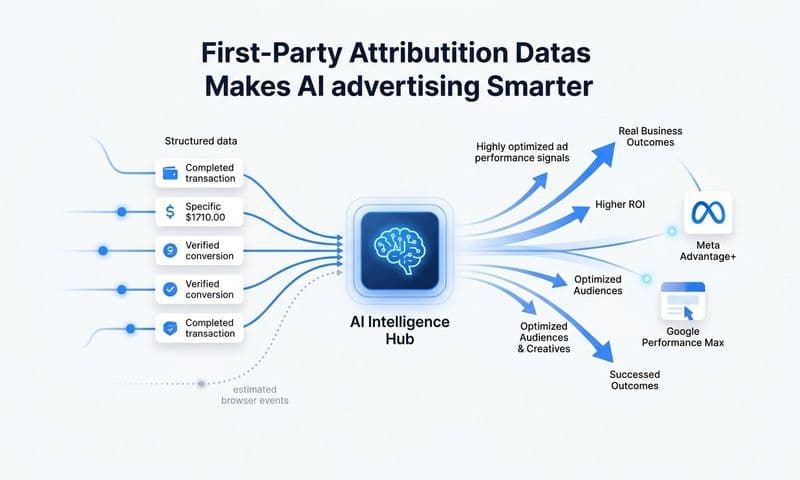
Apple's App Tracking Transparency framework, introduced with iOS 14.5, requires apps to ask users for permission before tracking their activity across other apps and websites. A large portion of users opt out. For platforms like Meta, which rely heavily on pixel-based tracking to match ad clicks to website conversions, this created a meaningful gap in observable data. To compensate, platforms began using modeled or estimated conversions, filling in the gaps with statistical inference rather than direct observation. The numbers you see in your dashboard may include a mix of confirmed conversions and modeled estimates, and the ratio between the two is not always transparent. Many businesses are now losing attribution data due to privacy updates at an alarming rate.
Browser-level restrictions compound this further. Safari and Firefox have blocked third-party cookies by default for years. Google Chrome has been evolving its own approach to privacy through its Privacy Sandbox initiative. Third-party cookies have long been the backbone of cross-site tracking, so as they disappear, the ability of client-side tracking scripts to follow users across sessions and devices diminishes.
Cross-device behavior creates another blind spot. A user might click your ad on their phone during a commute, then convert on their laptop at home that evening. Without a persistent identifier that connects those two sessions, the platform either misses the conversion entirely or attributes it incorrectly. Implementing first-party data tracking methods can help bridge these gaps and recover lost conversion data.
Speaking of long sales cycles: timing matters enormously in attribution. If you pull a report on Tuesday and your colleague pulls the same report on Thursday, the numbers will likely differ because conversions from campaigns running earlier in the week are still being processed and attributed. For businesses with longer consideration periods, the gap between when an ad runs and when a conversion is recorded can stretch across weeks or months. Comparing reports pulled at different times is a common and easily overlooked source of discrepancy.
The practical takeaway here is that no client-side tracking solution captures the complete picture anymore. The data you are working with has gaps, and those gaps are not evenly distributed across platforms. Some platforms handle them more transparently than others, which is one more reason why the numbers will never perfectly align.
Why Your CRM Tells a Different Story
Your CRM data and your ad platform data are measuring fundamentally different things, even when they are nominally tracking the same event. This is one of the most important distinctions to internalize, and it explains a lot of the frustration marketers experience when the two systems refuse to agree.
Ad platforms are optimized to count signals of intent. A form submission, a page visit, a button click, an add-to-cart event. These are the conversions that platforms report, and they are valuable leading indicators of interest. But they are not the same as revenue. A CRM, by contrast, typically tracks confirmed outcomes. A qualified lead that a sales rep has reviewed. A closed deal. A paying customer. These are downstream events that happen after the initial signal, and many of the signals that ad platforms count never make it to this stage. When your conversion data is not matching reality, this disconnect is often the culprit.
This is why it is entirely normal for your ad platforms to report 50 conversions while your CRM shows 30. The platforms counted every form fill. The CRM counted only the ones that turned into real opportunities. Neither number is wrong. They are just measuring different moments in the customer journey.
UTM parameter issues add another layer of complexity. When tracking links are broken, UTM parameters are missing, or users navigate to your site through paths that strip the parameters (such as certain redirects or social sharing behaviors), your CRM loses the source data entirely. Those conversions end up classified as direct traffic, which inflates your direct channel numbers and deflates the reported performance of your paid campaigns. Over time, this creates a systematic undercount of ad-driven conversions in your CRM that makes it look like your paid channels are performing worse than they actually are.
Different definitions of conversion across systems make apples-to-apples comparison nearly impossible without a deliberate effort to align them. Your Google Ads account might count a signup as a conversion. Your Meta account might count a lead form submission. Your CRM might count a qualified opportunity. Your finance team might count a closed deal. All four are called "conversions" in casual conversation, but they represent four completely different moments in the funnel. Until you establish a shared vocabulary and map each system's events to a common framework, comparing the numbers will always produce confusion. A thorough analysis of ad tracking discrepancy causes can help you identify where these breakdowns occur.
The goal is not to make your CRM match your ad platforms. The goal is to understand what each system is measuring and build a connected view that links ad activity to real business outcomes, not just platform-reported signals.
Attribution Models Tell Completely Different Stories
Even if you solve the tracking gaps and align your conversion definitions, you will still encounter mismatch if different reports are using different attribution models. This is a subtler problem, but it is one of the most common sources of disagreement between marketing teams and stakeholders.
Attribution models determine how credit for a conversion is distributed across the touchpoints that preceded it. The major models each tell a different story about the same customer journey. Understanding marketing attribution models and why they are important is essential for interpreting your data correctly.
First-touch attribution gives 100% of the credit to the very first interaction a customer had with your brand. If they found you through a Google search ad six weeks ago, Google gets all the credit regardless of what happened afterward.
Last-touch attribution gives 100% of the credit to the final interaction before conversion. If the customer clicked an email link right before purchasing, email gets all the credit, even if paid ads drove the initial awareness.
Linear attribution distributes credit equally across all touchpoints. Every channel that touched the customer journey gets an equal share.
Time-decay attribution gives more credit to touchpoints that occurred closer to the conversion, on the theory that recent interactions were more influential in driving the final decision.
Data-driven attribution uses machine learning to assign credit based on the actual patterns in your conversion data, weighting touchpoints according to their observed contribution to conversions.
To make this concrete: imagine a customer who first clicks a Google search ad, then sees a Meta retargeting ad three days later, then converts after clicking a link in a promotional email. Under last-touch, email gets 100% of the credit. Under first-touch, Google gets 100%. Under linear, each channel gets roughly 33%. Three reports, three completely different conclusions about which channel is working. Exploring the differences between data-driven vs rule-based attribution can help you choose the right approach for your business.
There is no universally correct attribution model. Different models are designed to answer different business questions. First-touch helps you understand what drives awareness. Last-touch helps you understand what closes deals. Multi-touch models help you understand the full journey. The problem arises when different stakeholders are looking at reports built on different models and trying to reconcile the numbers without realizing they are not comparing the same thing.
Standardizing on a consistent attribution model, or better yet, using a platform that lets you compare models side by side, is essential for reducing this type of mismatch.
Building a Measurement System That Actually Works
Understanding why attribution data does not match is useful. But the more important question is what to do about it. The answer is not to find the one magic number that makes every dashboard agree. That is an impossible standard. The real goal is to build a reliable, unified view of what is actually driving revenue so you can allocate your budget with confidence.
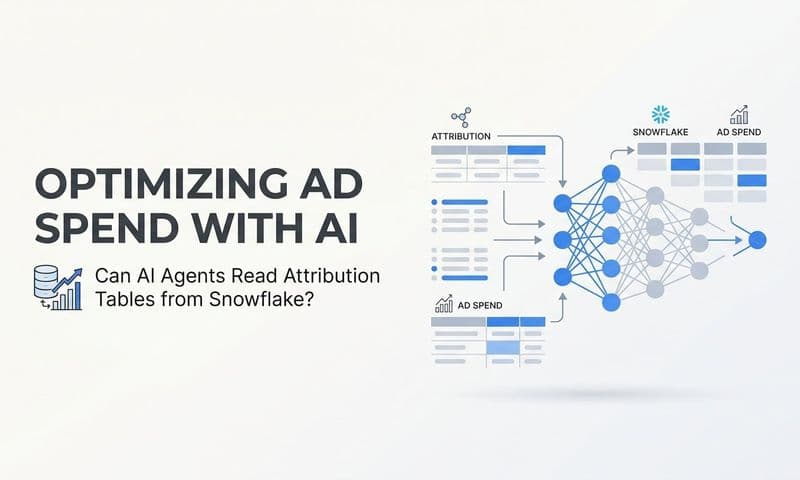
The most impactful step you can take is establishing a single source of truth. Instead of comparing siloed dashboards from each ad platform, connect your ad platforms, website tracking, and CRM data into one unified attribution system. This gives you a consistent view of the customer journey that is not filtered through any individual platform's self-reporting bias. When all your data flows into one place, you can see how touchpoints across channels work together rather than competing for credit. Learning how to fix attribution data discrepancies starts with this foundational step.
Server-side tracking is a critical component of this approach. Unlike client-side tracking, which relies on browser-based scripts that are increasingly blocked by privacy protections and ad blockers, server-side tracking sends conversion data directly from your server to the ad platforms. This means the data is not subject to the same browser restrictions, and it provides a more complete and accurate picture of what is actually happening. Many marketers who implement first-party data tracking implementation find that they recover a meaningful portion of conversions that were previously going untracked due to client-side limitations.
Standardizing your attribution windows across platforms is another practical step that reduces artificial discrepancies. If Meta is using a 7-day click window and Google is using a 30-day click window, you are comparing fundamentally different measurement periods. Aligning these settings does not eliminate all mismatch, but it removes one of the most common sources of inflated double-counting.
Aligning your conversion definitions across systems is equally important. Decide what a conversion means for your business at each stage of the funnel, and make sure every system is measuring the same event. If your ad platforms are counting form fills but your CRM is counting qualified leads, document that gap explicitly and use it to inform how you interpret the numbers rather than treating them as contradictory.
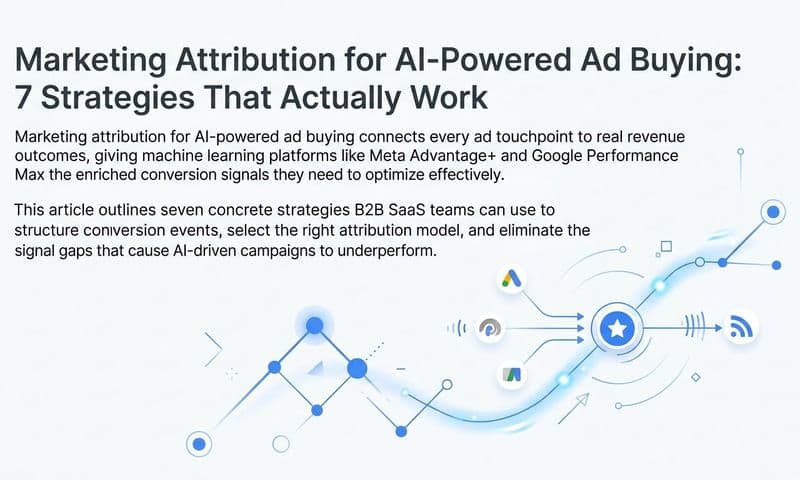
Finally, adopt multi-touch attribution as your primary measurement framework. Single-touch models like last-click are convenient but incomplete. They systematically undervalue the channels that drive awareness and consideration, which often leads to budget cuts in the channels that are actually doing the most work at the top of the funnel. Multi-touch attribution distributes credit across the full customer journey, giving you a more accurate picture of which channels are contributing and at what stage.
Platforms like Cometly are built specifically to address these challenges. By connecting your ad platforms, CRM, and website data into a single attribution system with server-side tracking and multi-touch attribution, Cometly gives you a complete, real-time view of every touchpoint in the customer journey. Instead of reconciling conflicting dashboards, you get one accurate picture of what is driving revenue, with AI-powered recommendations to help you act on it.
The Bottom Line on Attribution Mismatches
Attribution data will never match perfectly across every platform and system. That is not a failure of your setup. It is a structural reality of how ad platforms are built, how privacy changes have reshaped tracking, and how different systems define and measure success. Accepting this reality is actually the first step toward better measurement.
The marketers who get the most value from their data are not the ones who spend hours trying to reconcile every discrepancy. They are the ones who build a unified measurement framework, understand what each data source is actually telling them, and use that understanding to make confident budget decisions.
The goal is not perfect agreement between dashboards. The goal is accurate insight into what is driving real business outcomes, so you can scale what works and cut what does not.
If you are ready to move beyond platform-reported metrics and build a measurement system that gives you a true picture of your marketing performance, Cometly can help. From server-side tracking to multi-touch attribution to AI-driven recommendations, Cometly connects every piece of your marketing data so you can stop guessing and start growing. Get your free demo today and start capturing every touchpoint to maximize your conversions.