Picture this: you're managing ad campaigns across Meta, Google, and TikTok. You're spending thousands every month, watching clicks roll in, and your dashboard shows a healthy cost-per-click. But when your CEO asks which campaigns are actually driving revenue, you hesitate. You have a guess, maybe even a strong hunch, but you cannot say with certainty. That uncertainty is not a strategy problem. It is a tracking problem.
Most marketers assume conversion optimization is about better creative, sharper audience targeting, or smarter bidding strategies. Those things matter, but they are secondary. The real foundation of meaningful conversion optimization is the quality and completeness of your tracking data. When your data is broken, every optimization decision you make is built on sand.
The uncomfortable truth is that most tracking setups today are incomplete. Privacy changes, browser restrictions, and cross-device behavior have created significant blind spots that standard pixel-based tracking simply cannot fill. The result is that marketers are routinely optimizing toward the wrong outcomes, misallocating budget, and leaving real revenue on the table without even knowing it.
This article breaks down exactly why tracking gaps exist, how they quietly sabotage your conversion rates, and what modern approaches like server-side tracking, multi-touch attribution, and conversion syncing can do to fix them. By the end, you will have a clear picture of how better data becomes better performance.
Why Most Marketers Are Optimizing With Broken Data
The tracking landscape changed dramatically when Apple introduced App Tracking Transparency, limiting the ability of apps and browsers to track user behavior across platforms without explicit consent. Around the same time, major browsers began restricting or eliminating third-party cookies. These shifts were not minor tweaks. They fundamentally altered how much conversion data advertisers can reliably capture using traditional browser-based pixels.
When someone clicks your ad on their phone, browses your site, then converts later on their laptop, standard tracking often fails to connect those dots. The pixel fires on the browser, but cookie restrictions or ad blockers can prevent it from reporting back accurately. The result is a conversion that happened in reality but never appears in your dashboard. Multiply that across thousands of sessions and you have a serious data gap. Understanding cross-device conversion tracking challenges is essential to addressing this problem.
This is where the "garbage in, garbage out" problem becomes costly. Ad platforms like Meta and Google use the conversion data you send them to train their machine learning models. These algorithms decide who to show your ads to, when to show them, and how much to bid. When the conversion data they receive is incomplete or misattributed, they optimize toward audiences and placements that look good on paper but do not actually drive revenue.
Over time, this compounds. The algorithm gets better and better at finding people who trigger the incomplete conversion signals you are sending, which may be people who add to cart but never buy, or people who visit a thank-you page without completing a real transaction. Your CPA looks fine, but your actual return on ad spend tells a different story.
There is also a deeper issue with how most marketers measure success. Clicks and impressions are easy to track, but they are vanity metrics unless connected to real revenue outcomes. True conversion optimization requires tracking that follows a customer from their very first interaction, whether that is a social media ad, a search result, or a retargeting banner, all the way through to an actual purchase or closed deal. Without that end-to-end visibility, you are optimizing for activity rather than outcomes. Addressing inaccurate conversion tracking data is the first step toward fixing this.
The marketers who recognize this distinction early gain a significant edge. They stop celebrating click-through rates and start asking which touchpoints actually correlate with revenue. That shift in mindset is only possible when your tracking infrastructure is built to answer that question accurately.
The Direct Link Between Tracking Accuracy and Conversion Rates
Here is where it gets interesting. Better tracking does not just give you more data. It gives you a fundamentally different understanding of how your customers actually behave before they convert.
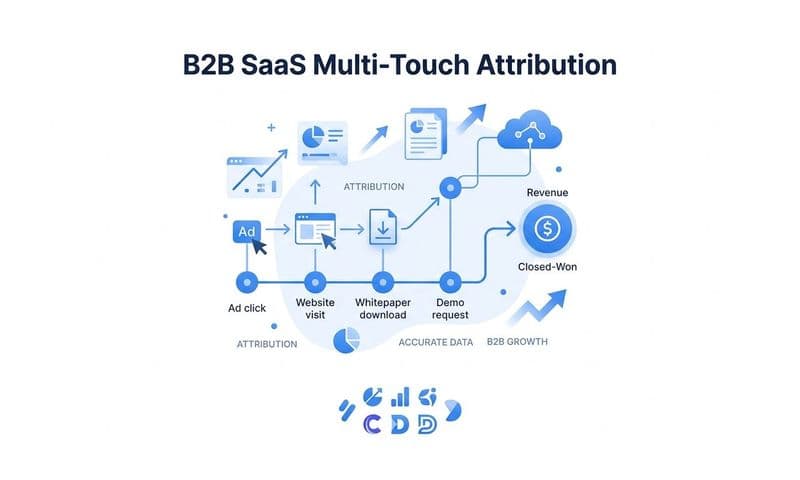
Think about the typical B2B or considered-purchase journey. A prospect might see a top-of-funnel video ad on Instagram, search for your brand name a week later, read a blog post, click a retargeting ad, and finally convert through a Google search. Last-click attribution gives 100% of the credit to that final Google search. Your Instagram campaign looks like it is contributing nothing. You cut the budget. And then your conversion volume quietly drops because you eliminated the awareness touchpoint that started the entire journey.
Accurate tracking surfaces this reality. When you can see the full customer journey, including every touchpoint that influenced a conversion, you stop making budget decisions based on a distorted picture. You start understanding which channels create demand and which channels capture it, and you fund both appropriately. A reliable cross-platform conversion tracking solution makes this level of visibility possible.
This directly improves conversion rates through smarter budget allocation. When you know with confidence that a particular campaign or audience segment genuinely drives revenue, you can shift spend toward it and away from campaigns that generate activity but not outcomes. That reallocation alone often produces meaningful improvements in overall campaign efficiency without changing a single ad or landing page.
The feedback loop dimension is equally powerful. Ad platforms are not static tools. They are learning systems that continuously update their targeting based on the conversion signals you provide. When you send accurate, complete conversion data back to Meta or Google, their algorithms get a clearer picture of what a high-value customer looks like. They find more of those people. Your targeting improves, your CPAs drop, and your conversion rates climb, not because you changed your creative, but because the platform is now working with better information.
This feedback loop is self-reinforcing. Better data leads to better targeting, which leads to more conversions, which generates more data, which further refines targeting. The marketers who establish this cycle early build a compounding advantage that becomes increasingly difficult for competitors to close.
The inverse is also true. Incomplete data creates a negative feedback loop where platforms optimize toward the wrong signals, performance gradually erodes, and marketers respond by testing new creatives or audiences when the real problem is the data quality upstream.
Server-Side Tracking: The Foundation You Cannot Skip
If browser-based pixels are the problem, server-side tracking is the solution. Understanding the difference between these two approaches is essential for any marketer serious about conversion optimization through better tracking.
A browser-based pixel is a snippet of JavaScript that fires in the user's browser when they take an action on your site. It is simple to implement and has worked well for years. But it is entirely dependent on the browser cooperating. Ad blockers can prevent the pixel from loading. Safari's Intelligent Tracking Prevention limits how long cookies persist. Cross-device journeys break the tracking chain. The pixel has no way to compensate for any of these limitations because it lives and dies in the browser environment.
Server-side tracking takes a completely different approach. Instead of relying on the user's browser to report conversion events, data flows from your website or application to your own server first. Your server then sends that data directly to ad platforms, bypassing the browser entirely. Ad blockers cannot intercept server-to-server communication. Cookie restrictions do not apply. The data arrives more reliably and more completely. Exploring the full range of server-side conversion tracking benefits helps illustrate why this approach is so impactful.
In practice, this means conversions that would have been invisible to your pixel-based setup are now captured and attributed correctly. A customer who converts on a browser with strict privacy settings, or who converts on a different device than the one they clicked the ad on, no longer disappears from your data. That conversion gets matched to the campaign that drove it.
For conversion optimization, the practical benefits are significant. You are working with a more complete dataset, which means your attribution models are more accurate, your budget decisions are better informed, and the conversion signals you send back to ad platforms are richer and more representative of your actual customer base. You gain higher confidence in the numbers you are seeing, which means higher confidence in the decisions you make based on them.
Server-side tracking also supports first-party data strategies, which are increasingly important as third-party data becomes less available and less reliable. When you own the data collection layer, you control the quality and completeness of what gets reported, rather than depending on browser behavior you cannot control. Adopting privacy-compliant conversion tracking methods ensures your setup remains sustainable as regulations evolve.
Multi-Touch Attribution: Seeing the Full Picture
Server-side tracking solves the data collection problem. Multi-touch attribution solves the data interpretation problem. Together, they give you a complete and accurate view of how your marketing actually works.
Last-click attribution is the default for most ad platforms, and it is deeply misleading. It assigns 100% of the conversion credit to the final touchpoint before purchase, ignoring every interaction that came before it. This systematically undervalues awareness channels, upper-funnel campaigns, and any touchpoint that influences the buying decision without being the last thing a customer clicked.
Multi-touch attribution distributes credit across all the touchpoints in a customer journey. Different models do this in different ways. A linear model gives equal credit to every touchpoint. A time-decay model gives more credit to touchpoints closer to the conversion, on the logic that they had more direct influence. A position-based model gives the most credit to the first and last touchpoints, recognizing both the initial awareness moment and the final conversion trigger.
None of these models is universally correct. The right choice depends on your sales cycle, your channel mix, and how your customers typically make decisions. But any of them gives you a more realistic picture than last-click alone. Understanding why your conversion tracking numbers are wrong often starts with recognizing the limitations of single-touch attribution.
The practical impact on conversion optimization is direct. When you understand which combination of channels and campaigns work together to drive conversions, you can make smarter decisions at every level. Your creative strategy improves because you understand what messaging resonates at different stages of the journey. Your audience targeting sharpens because you know which segments respond to which types of content. Your budget distribution becomes more intentional because you are funding the full funnel rather than just the bottom of it.
Multi-touch attribution also helps you avoid the trap of cutting campaigns that look unprofitable in isolation but are actually essential contributors to conversions that get credited elsewhere. That Instagram awareness campaign might look like a money pit under last-click attribution, but a multi-touch model might reveal it is influencing a significant portion of your highest-value customers before they convert through search.
Feeding Better Data Back to Ad Platform Algorithms
Collecting accurate data is only half the equation. The other half is using that data to improve how ad platforms target and optimize on your behalf. This is where conversion syncing becomes a critical part of your strategy.
Conversion syncing, sometimes called Conversion API integration or enhanced conversions, refers to the process of sending enriched, accurate conversion events from your server directly back to platforms like Meta, Google, and TikTok. Instead of relying solely on browser pixels to report what happened, you are sending first-party data from your own systems, data that is more complete, more accurate, and more representative of your actual customer outcomes. Implementing a conversion API for better tracking is one of the most effective ways to close data gaps.
Meta's Conversions API and Google's Enhanced Conversions are the most prominent examples of this approach. They allow advertisers to pass conversion data that includes customer signals like hashed email addresses, phone numbers, and other identifiers that help the platform match conversions to the users who saw or clicked your ads. This matching process improves the accuracy of attribution and gives the platform's algorithm a clearer signal about who your best customers are.
The compounding advantage here is real. When ad platforms receive better conversion signals, their machine learning models become more effective at identifying and targeting similar high-value prospects. Over time, without any manual intervention, your campaigns find better audiences, your conversion rates improve, and your cost per acquisition decreases. The platform is doing more of the heavy lifting, but only because you gave it the quality data it needed to do so.
To start capturing these benefits, the path is straightforward. Begin with a tracking audit to understand where your current setup has gaps. Identify which conversion events are being missed or misattributed. Implement server-side tracking to capture those missing events. Then establish a conversion sync workflow that sends enriched, first-party conversion data back to each of your active ad platforms on a consistent basis. Following best practices for tracking conversions accurately will help you build this workflow effectively.
This is not a one-time project. It is an ongoing practice that builds in accuracy and value over time as your dataset grows and your platforms learn from it.
A Practical Roadmap for Tracking-Driven Conversion Optimization
Understanding the concepts is one thing. Putting them into action is another. Here is a concrete approach to building the tracking foundation that makes conversion optimization actually work.
Step 1: Start with a tracking audit. Before adding anything new, understand what you have. Review your current pixel setup, identify which conversion events are being tracked, and compare platform-reported conversions against your CRM or backend revenue data. If there is a significant gap between what your ad platforms report and what your CRM shows as actual closed deals or purchases, that gap is your starting point. Learning how to fix conversion tracking errors can accelerate this process significantly.
Step 2: Implement server-side tracking. Move your core conversion events off browser-based pixels and onto a server-side setup. This ensures that conversions happening in privacy-restricted environments are still captured and attributed correctly. Prioritize your highest-value conversion events first, typically purchases, form submissions, or qualified leads, before expanding to micro-conversions.
Step 3: Connect your CRM data to your attribution platform. Browser-level tracking only tells part of the story. Connecting your CRM allows you to see which leads actually became customers, which campaigns drove those customers, and what the lifetime value of different acquisition sources looks like. This is where attribution becomes truly revenue-connected rather than just activity-connected.
Step 4: Set up conversion syncing to ad platforms. Once you have richer, more accurate conversion data, send it back to Meta, Google, TikTok, and any other active platforms using their respective conversion APIs. Feed them the outcomes that actually matter to your business, not just page views and clicks.
Measuring success over the following 30 to 90 days means looking at a few key indicators. Track improvements in data completeness by comparing the volume of conversions reported before and after implementing server-side tracking. Monitor changes in CPA and ROAS as platform algorithms begin optimizing toward better signals. Choosing the right accurate conversion tracking solution ensures you have the infrastructure to measure these improvements reliably.
The marketers who build this foundation gain a lasting competitive advantage. Conversion optimization is not a one-time project. It is an ongoing discipline, and the quality of your tracking infrastructure determines the ceiling of what is achievable.
The Bottom Line on Tracking and Conversion Performance
Conversion optimization starts with data quality. Not creative testing. Not audience tweaks. Not bidding strategies. All of those things matter, but they are downstream of the fundamental question: is the data you are optimizing against actually accurate?
The three pillars covered in this article work together as a system. Server-side tracking ensures you are capturing conversions that browser-based pixels miss. Multi-touch attribution ensures you are interpreting that data correctly, giving credit to the full customer journey rather than just the last click. And conversion syncing ensures that the accurate, enriched data you collect flows back to ad platforms so their algorithms can work harder and smarter on your behalf.
Each pillar reinforces the others. Better data collection improves attribution accuracy. Better attribution improves budget decisions. Better budget decisions improve campaign performance. Better campaign performance generates more conversion data. The cycle compounds in your favor.
The marketers who recognize this and invest in their tracking infrastructure are not just solving a technical problem. They are building a strategic advantage that grows over time as their data gets richer and their platforms get smarter.
Ready to elevate your marketing game with precision and confidence? Discover how Cometly's AI-driven recommendations can transform your ad strategy. Get your free demo today and start capturing every touchpoint to maximize your conversions.