Your ad dashboard says one thing. Your actual sales data says something else entirely. Sound familiar? For digital marketers running paid campaigns in 2026, this disconnect has become one of the most frustrating and costly problems in the industry.
Campaigns that performed reliably suddenly look like they're underdelivering. Cost-per-acquisition numbers climb without a clear explanation. Retargeting audiences shrink. And when you try to figure out which channels are actually driving revenue, the numbers across platforms tell completely different stories.
The root cause is not your campaigns. It's your tracking infrastructure, and it has been quietly breaking down since Apple introduced its App Tracking Transparency framework with iOS 14.5 back in 2021. Every iOS update since then has added another layer of privacy protection that further restricts how ad platforms collect and use conversion data. The result is a growing blind spot that affects every marketer running ads to iOS users, which is a significant portion of most audiences.
This article breaks down exactly what is happening at a technical level, how it ripples through your campaign performance and optimization, and what you can actually do to fix it. By the end, you will have a clear picture of how to build a tracking system that gives you accurate, actionable data regardless of what Apple does next.
How Apple's Privacy Changes Dismantled Cross-Platform Tracking
To understand the problem, you need to understand what changed and why it matters so deeply to ad tracking.
When Apple introduced the App Tracking Transparency framework with iOS 14.5 in April 2021, it required every app to show users an explicit opt-in prompt before tracking their activity across other apps and websites. Before this, ad platforms could silently collect behavioral data using a device identifier called the IDFA, the Identifier for Advertisers. This identifier allowed platforms like Meta and Google to connect a user who clicked an ad with a user who later made a purchase, even if those actions happened in different apps or browsers.
The opt-in prompt changed everything. The vast majority of users, when asked directly, chose to opt out of tracking. With the IDFA restricted or unavailable for most iOS users, ad platforms lost their primary mechanism for deterministic cross-app attribution. Clicks could no longer be reliably matched to conversions, creating significant conversion tracking iOS limitations that persist to this day.
But the IDFA was only part of the story. Apple's Safari browser had already been tightening its Intelligent Tracking Prevention system for years, aggressively limiting third-party cookies and shortening the lifespan of first-party cookies used for cross-site tracking. This meant that even web-based conversion tracking was becoming unreliable for iOS Safari users, who represent a substantial share of mobile web traffic.
Subsequent iOS updates compounded the problem significantly. iOS 15 introduced Mail Privacy Protection, which pre-loads email content and masks users' IP addresses, making email-based tracking and open-rate data unreliable. It also introduced iCloud Private Relay, which routes web traffic through two separate servers to obscure users' IP addresses and browsing activity from third parties.
iOS 17 brought Link Tracking Protection, which automatically strips tracking parameters from URLs shared in Safari, Messages, and Mail. This means UTM parameters and click IDs appended to links, which marketers rely on heavily for attribution, can be removed before the user even reaches your landing page. You can learn more about preparing for iOS 17 Link Tracking Shield to mitigate this specific issue. iOS 18 continued refining and extending these protections.
Each update has been a deliberate step in the same direction: giving users more control over their data and making it harder for third-party systems to observe behavior across apps and websites. For marketers, the cumulative effect is a fundamentally broken tracking playbook built on assumptions that no longer hold.
The Ripple Effects on Campaign Performance and Reporting
When conversion tracking breaks, the damage goes far beyond inaccurate reports. It actively degrades the performance of your campaigns in ways that are easy to misdiagnose.
Modern ad platforms, particularly Meta and Google, rely heavily on machine learning to optimize campaign delivery. Their algorithms need conversion signals to understand what a high-value user looks like. When iOS privacy restrictions prevent those platforms from seeing a large portion of actual conversions, the algorithms are essentially working with incomplete information. They cannot find the right audiences as efficiently, and over time this leads to higher cost-per-acquisition and wasted spend on users who are less likely to convert.
Think of it like trying to navigate with a map that is missing half the roads. You can still get somewhere, but you will take longer, spend more, and miss the most efficient routes.
Apple introduced SKAdNetwork, often called SKAN, as a privacy-preserving alternative for app install attribution. While it provides some conversion data, it comes with severe limitations. Reporting is delayed by 24 to 72 hours or more. Conversion values are aggregated and limited in granularity. You lose the user-level data that makes optimization meaningful. And SKAN only applies to app campaigns, leaving web conversion tracking without an equivalent solution.
Retargeting campaigns have been hit particularly hard. Custom audiences built from website visitors, past purchasers, or app users depend on platforms being able to identify and match those users. When iOS restrictions prevent accurate identification of a large portion of your audience, your retargeting pools shrink dramatically. This problem of losing tracking data from iOS users directly undermines campaigns that once reliably re-engaged warm prospects.
The reporting problem creates its own secondary issue: misallocation of budget. When platforms underreport conversions from iOS users, campaigns targeting those users appear less efficient than they actually are. Marketers who rely solely on platform-reported data may cut spending on channels or audiences that are actually performing well, while over-investing in areas where tracking happens to be more intact.
This is not a minor data discrepancy. For businesses with a significant iOS user base, the gap between reported conversions and actual conversions can be substantial, and every budget decision made on that flawed data is potentially costing you.
Why Platform-Native Solutions Only Solve Part of the Problem
To their credit, the major ad platforms have not ignored this problem. Meta, Google, and TikTok have all introduced tools designed to improve conversion measurement in a post-ATT world. But each of these solutions has meaningful limitations that marketers need to understand.
Meta responded with two key tools. Aggregated Event Measurement (AEM) is a framework that limits the number of trackable conversion events per domain to eight, prioritized by the advertiser. It provides some conversion data for iOS users, but it is aggregated and modeled rather than deterministic. Meta's Conversions API (CAPI) allows advertisers to send conversion events directly from their server to Meta, bypassing the browser pixel. This improves data completeness, but it still only feeds data into Meta's own reporting ecosystem, leaving poor conversion tracking accuracy on Facebook a persistent challenge.
Google introduced Enhanced Conversions, which uses hashed first-party data, such as email addresses collected at checkout, to improve the matching of conversions to ad clicks. This is a meaningful improvement for Google's own attribution, but it operates entirely within Google's walled garden.
TikTok has its own Events API that functions similarly to Meta's CAPI, allowing server-side event transmission to improve tracking on TikTok campaigns specifically.
Here is the fundamental problem with all of these solutions: each one is designed to improve reporting within that platform's own system. They do not give you a unified view across channels. They each use their own modeling and estimation methods, which means each platform tends to claim credit for conversions in ways that may conflict with what other platforms are reporting.
Run Meta CAPI alongside Google Enhanced Conversions and you will likely see total attributed conversions across both platforms exceed your actual conversion count. This is the attribution overlap problem, and understanding cross-platform conversion tracking challenges is essential for making accurate budget decisions when you are relying solely on platform-native data.
Platform-native tools are worth implementing, but they are a starting point, not a complete solution. Relying on them alone means accepting siloed, potentially inflated numbers with no way to reconcile them against reality.
Server-Side Tracking: The Technical Foundation You Need
If platform pixels and browser-based tracking are the problem, server-side tracking is the most important technical building block of the solution.
Here is how it works. Traditional pixel-based tracking relies on a small piece of JavaScript code that runs in the user's browser. When a user completes a conversion, the browser sends an event to the ad platform. The problem is that this process is entirely client-side, meaning it happens on the user's device, where iOS restrictions, ITP cookie limitations, and ad blockers can all interfere with or block it entirely. These pixel tracking issues on iOS devices are the core reason so much conversion data goes missing.
Server-side tracking moves this process off the user's device. Instead of the browser sending the conversion event, your own server sends it directly to the ad platform's API. The conversion data travels from your infrastructure to the platform's infrastructure, completely bypassing the client-side restrictions that iOS imposes.
Because server-side events originate from your server rather than the user's browser, they are not affected by ATT opt-outs, ITP cookie restrictions, or ad blockers. This means a much higher percentage of actual conversions get reported to the platforms that need that data to optimize your campaigns.
It is worth being clear about what server-side tracking is and is not. It is not a way to circumvent user privacy choices or collect data that users have explicitly refused to share. It uses first-party data that your business has already collected through your own customer interactions: purchase records, form submissions, CRM events, and similar data points. You are not tracking users without their knowledge; you are transmitting your own business data about transactions that occurred on your own platform.
This distinction matters both ethically and practically. Server-side tracking is a privacy-respecting approach that works within the boundaries Apple has established, while dramatically improving the completeness and accuracy of your conversion data.
The practical impact is significant. When platforms receive more complete conversion signals, their algorithms can optimize more effectively. Lower CPAs, better audience targeting, and more efficient budget allocation all follow from giving the machine learning systems the data they need to work properly.
Building an Attribution System Designed to Last
Server-side tracking is the foundation, but it is one piece of a larger system. Solving conversion tracking issues on iOS for the long term requires a multi-layered approach that connects first-party data collection, server-side event transmission, cross-channel attribution modeling, and conversion syncing back to each ad platform.
The goal is to create a tracking infrastructure that does not break every time Apple releases a new privacy feature, because Apple will continue releasing new privacy features. Building for resilience means building on first-party data rather than third-party identifiers that can be revoked at any time. For a deeper dive into this topic, explore post-iOS tracking solutions for marketers that are designed around this principle.
First-party data collection: Start by collecting meaningful identifiers through your own properties. Email addresses captured at checkout, account logins, phone numbers collected with consent, and CRM data all provide durable signals that you own and control. These become the connective tissue of your attribution system.
Server-side event transmission: Use those first-party identifiers to send enriched conversion events directly from your server to each ad platform's API. This ensures that your actual conversion data reaches the platforms in a form they can use for optimization, regardless of what is happening at the browser level.
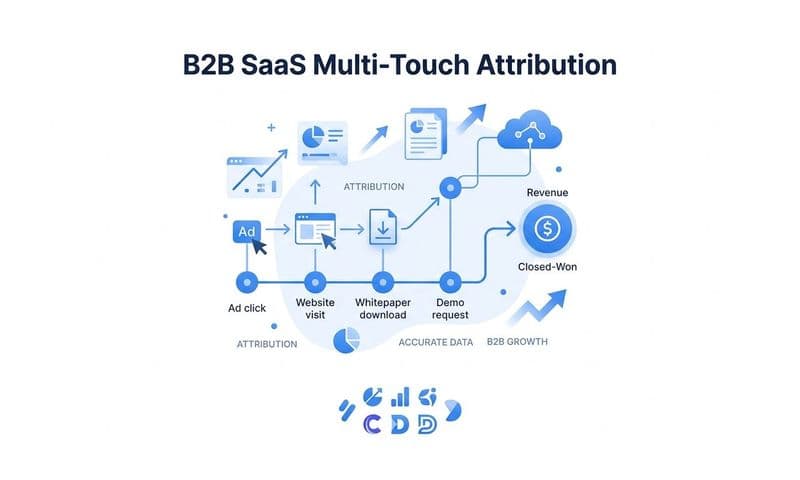
Multi-touch attribution modeling: Rather than relying on each platform's self-reported attribution, use an independent attribution model that tracks the full customer journey across all channels. Implementing a cross-platform conversion tracking solution gives you a single source of truth that is not influenced by any platform's incentive to claim credit for conversions.
Conversion sync back to platforms: Feed your verified, enriched conversion data back to Meta, Google, TikTok, and other platforms. When you give their algorithms higher-quality signals, they optimize more effectively. This is not just about reporting accuracy; it directly improves campaign performance by helping platform AI find more users who look like your actual customers.
This is exactly the architecture that Cometly is built around. Cometly connects your ad platforms, CRM, and website to track the complete customer journey in real time. Its server-side tracking captures conversions that browser pixels miss, its multi-touch attribution model provides a unified view across all channels without the inflated numbers you get from relying on platform-native reporting alone, and its conversion sync capability feeds verified conversion data back to each platform to improve algorithmic performance.
The result is a system where you can see which ads and channels are actually driving revenue, make confident budget decisions based on accurate cross-channel data, and continuously improve campaign performance by giving ad platform AI the enriched signals it needs.
Your Action Plan for Fixing iOS Conversion Tracking
Knowing the problem is one thing. Here is a concrete, prioritized path to fixing it.
Step 1: Audit your current tracking setup. Identify where you have gaps specifically related to iOS users. Check whether your pixel-based tracking is capturing a representative sample of your conversions or whether there is a significant discrepancy between platform-reported conversions and your actual backend data. Understanding why your conversion tracking numbers are wrong is the essential first step. This gap is your baseline for measuring improvement.
Step 2: Implement server-side tracking. Set up server-side event transmission to each platform you advertise on. This is the single highest-impact change you can make. Prioritize the platforms where you spend the most and where the conversion signal is most critical for algorithmic optimization.
Step 3: Build first-party data pipelines. Connect your CRM, e-commerce backend, and other customer data systems so that conversion events are enriched with first-party identifiers before being sent to ad platforms. The richer the data you send, the better the matching and optimization on the platform side.
Step 4: Configure conversion sync. Ensure that your verified conversion data is flowing back to each ad platform in a format their algorithms can use. This closes the loop between what actually happened and what the platform's optimization system knows about.
Step 5: Shift your reporting framework. Stop evaluating campaign performance based solely on what each platform reports. Move toward a unified attribution dashboard that reconciles data across all channels in one place, following best practices for tracking conversions accurately to ensure a single source of truth for budget decisions.
Step 6: Build for ongoing change. Apple will continue updating its privacy features. Design your tracking infrastructure around first-party data and server-side transmission from the start, so that future iOS updates require adjustments rather than complete rebuilds. Monitor your data quality regularly and treat tracking as an ongoing operational priority rather than a one-time setup.
The shift in mindset here is important. Conversion tracking is no longer a set-it-and-forget-it technical task. It is a core part of your marketing infrastructure that requires the same attention and investment as your ad creative or your landing page optimization.
The Bottom Line on iOS Tracking and What Comes Next
Conversion tracking issues on iOS are not a temporary glitch or a problem that will resolve itself. They represent a permanent shift in how digital advertising works, driven by a deliberate and ongoing privacy strategy from Apple. Every iOS update has moved in the same direction, and there is no reason to expect that to change.
Marketers who continue to rely on browser pixels and platform-native reporting will see their data quality erode further with each new iOS release. The gap between what platforms report and what is actually happening will widen, making it harder to optimize campaigns, allocate budgets, and justify ad spend.
The path forward is clear: invest in a first-party data strategy, implement server-side tracking as your foundation, use independent multi-touch attribution to get an accurate cross-channel view, and feed enriched conversion data back to ad platforms to improve their algorithmic performance.
This is not a small undertaking, but it is the only approach that produces durable results. And the marketers who build this infrastructure now will have a significant advantage over those who continue patching a broken system.
Cometly is built specifically for this challenge. It connects your ad platforms, CRM, and website data to track the full customer journey with server-side tracking and AI-powered attribution, then syncs verified conversions back to each platform so their algorithms can work with accurate, enriched signals. The result is clearer data, smarter optimization, and more confident decisions about where to put your budget.
If your ad data has felt unreliable and your campaigns have not been performing the way they should, the problem is almost certainly your tracking infrastructure, and it is fixable. Get your free demo today and start capturing every touchpoint to maximize your conversions.