You open your reporting dashboard Monday morning, coffee in hand, ready to review last week's campaign performance. Meta Ads Manager shows 247 conversions with a 4.2x ROAS. You feel good about that. Then you check Google Ads: 189 conversions attributed to your search campaigns. Still solid. Out of curiosity, you pull up TikTok's analytics: 112 conversions from your newest creative tests.
You do the math. That's 548 conversions across three platforms. But your actual sales? Only 312.
Welcome to the messy reality of cross platform conversion tracking challenges. Every ad platform operates like an overconfident team member claiming full credit for group work. The problem isn't just annoying—it's actively costing you money. When your attribution data doesn't reflect reality, you make budget decisions based on fiction. You scale campaigns that don't actually drive results. You cut spend from channels that are quietly doing the heavy lifting.
The good news? These challenges are solvable. Understanding why your data doesn't add up is the first step toward building a tracking infrastructure that actually tells the truth about what's working. Let's break down exactly what's going wrong and how to fix it.
The Data Fragmentation Problem: When Every Platform Claims the Win
Each advertising platform functions as its own universe with its own rules for measuring success. Meta has its pixel. Google has its conversion tag. TikTok has its tracking SDK. They all fire when someone converts on your site, and they all record that conversion in their respective dashboards.
Here's the issue: none of these platforms can see what the others are doing. Meta doesn't know that the customer who clicked your Instagram ad also clicked a Google search ad three days later. Google has no visibility into the TikTok video that first introduced your brand to that same customer. Each platform only sees its own touchpoint and applies its own attribution window to claim credit.
This creates what marketers call the "walled garden" effect. Platforms are deliberately designed to keep their data proprietary. They want you to believe their channel drove the conversion because it justifies continued ad spend with them. The result is systematic over-reporting across your entire marketing stack, a problem explored in depth in our guide to duplicated conversion tracking across platforms.
Think about a customer journey that looks like this: sees your TikTok ad on Monday, clicks a Meta retargeting ad on Wednesday, searches your brand name on Google Thursday, and converts Friday. With default attribution settings, all three platforms will claim that conversion. TikTok says their ad drove it (7-day click attribution). Meta says their retargeting sealed the deal (7-day click, 1-day view). Google says the branded search was the final touch (30-day click). Your dashboard shows three conversions. Your bank account shows one sale.
The business impact extends beyond confusing numbers. When you rely on platform-native reporting to make budget decisions, you're essentially letting each platform grade its own homework. You might see an inflated 5x ROAS on Meta and increase spend there, not realizing that many of those "Meta conversions" were actually driven by your Google search campaigns or organic social efforts. You're scaling based on phantom performance.
Budget misallocation becomes inevitable. Channels that play important roles early in the customer journey—like display ads that build awareness or content marketing that establishes trust—get undervalued because they rarely get last-click credit. Meanwhile, bottom-funnel tactics like branded search or retargeting look artificially strong because they capture demand that other channels created.
The fragmentation problem also makes it nearly impossible to understand your true customer acquisition cost. If you're counting the same conversion three times across different platforms, your blended CAC calculation will be wildly optimistic. You think you're acquiring customers for $45 when the real number is closer to $120. That gap destroys profitability, especially as you try to scale.
Privacy Changes That Broke Traditional Tracking
Just as marketers were getting comfortable with multi-platform tracking, the ground shifted beneath them. Apple's iOS 14.5 update in April 2021 introduced App Tracking Transparency, requiring apps to explicitly ask users for permission to track their activity across other apps and websites. The result? Opt-in rates have consistently remained below 25% globally, meaning the vast majority of iOS users are now invisible to traditional tracking methods.
For platforms like Meta that relied heavily on mobile app tracking, this change was seismic. Suddenly, a huge portion of the conversion data they used to optimize ad delivery and measure performance simply disappeared. The 28-day attribution window that many advertisers depended on became largely theoretical when the underlying data stopped flowing reliably.
Meta responded by implementing Aggregated Event Measurement, which limits the number of conversion events you can optimize for and introduces delays in reporting. What used to be real-time conversion data now arrives with a 24-72 hour lag, making it harder to quickly test and iterate on campaigns. The pixel that once captured rich behavioral data now operates with one hand tied behind its back. These cross platform tracking challenges have fundamentally changed how marketers approach attribution.
Third-party cookie deprecation adds another layer of complexity. While Google has repeatedly delayed the complete phase-out of third-party cookies in Chrome, the writing is on the wall. Safari and Firefox already block them by default. Browsers have implemented Intelligent Tracking Prevention features that automatically limit how long cookies persist and what data they can collect.
These privacy protections are good for users, but they've fundamentally broken the tracking infrastructure that digital advertising was built on. Cross-site tracking—the ability to follow a user from your ad on one site to a conversion on your website—has become increasingly unreliable. Cookies get deleted. Tracking scripts get blocked. User journeys become fragmented.
Consent requirements under regulations like GDPR and CCPA further complicate matters. You need explicit user consent before dropping certain tracking cookies, and many users either decline or ignore consent banners entirely. Even when users do consent, they're increasingly using ad blockers that prevent tracking scripts from loading in the first place.
The combination of platform restrictions, browser limitations, and user privacy controls has created a perfect storm for attribution accuracy. The traditional tracking setup that worked reliably for years now captures only a fraction of the actual customer journey. Marketers are making decisions with incomplete data, and the gaps are only getting wider.
The Customer Journey Blind Spots Marketers Miss
Beyond the technical limitations, there are fundamental gaps in how platforms track real-world customer behavior. The most common blind spot? Cross-device journeys. Someone sees your ad on their phone during their morning commute, researches your product on their work laptop during lunch, and finally converts on their home computer that evening. To tracking pixels, these look like three completely different people. Understanding these cross-device conversion tracking challenges is essential for accurate attribution.
Platforms have attempted to solve this with logged-in user matching—if someone is signed into their Google or Facebook account across devices, the platform can theoretically connect those touchpoints. But this only works within that platform's ecosystem and requires the user to be consistently logged in. It doesn't help you connect a TikTok ad view on mobile to a Google search on desktop to a direct website visit on a tablet.
Session breaks create similar attribution gaps. A customer clicks your ad, browses your site, gets distracted, closes the browser, and returns hours later by typing your URL directly. Most attribution models will only see that final direct visit, completely missing the ad that drove the initial discovery. The conversion gets credited to "direct" or "none," making it look like the customer found you organically when paid advertising actually did the work.
Offline conversions present an even thornier challenge. Someone clicks your ad, visits your physical store location, and makes a purchase. Or they call your sales team after seeing a display ad and convert over the phone. Or they attend a webinar you promoted through LinkedIn ads and become a customer three months later through your sales pipeline. These valuable conversions happen completely outside the view of browser-based tracking.
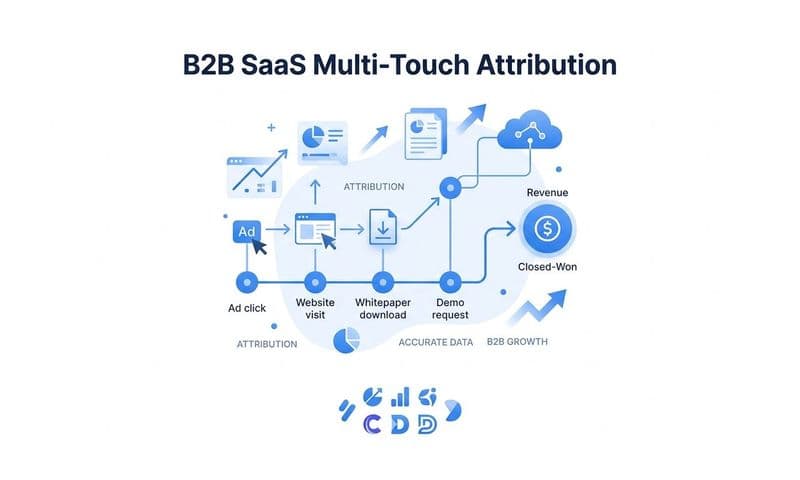
For B2B companies and businesses with longer sales cycles, this disconnect is particularly painful. The customer journey might span weeks or months and involve dozens of touchpoints: ad clicks, content downloads, email opens, demo requests, sales calls, and proposal reviews. Platform pixels only see the digital touchpoints at the very beginning of this journey. Everything that happens in your CRM, sales software, or offline interactions is invisible to ad platform attribution. Learning tracking customer journey across platforms becomes critical for these complex sales cycles.
Last-click attribution becomes especially misleading in these scenarios. The final touchpoint before conversion—often a branded search or direct visit—gets 100% of the credit, while all the awareness-building and consideration-stage marketing that made that final conversion possible gets ignored. You end up undervaluing top-of-funnel efforts and overvaluing bottom-funnel tactics that are simply capturing existing demand.
Even within digital channels, attribution models struggle with assisted conversions. A customer might interact with five different ad campaigns across three platforms before converting. Which campaign deserves credit? How much? Platform-native reporting gives you five different answers, each claiming their campaign was the primary driver. The truth is usually that all five played a role, but standard tracking infrastructure can't quantify that accurately.
Server-Side Tracking: A More Reliable Data Foundation
While browser-based tracking crumbles under privacy restrictions, server-side tracking offers a more resilient alternative. Instead of relying on pixels and cookies that fire in the user's browser, server-side tracking sends conversion data directly from your server to advertising platforms. The user's browser never enters the equation, which means ad blockers, cookie restrictions, and tracking prevention features become largely irrelevant.
Here's how it works in practice. When someone converts on your website, your server captures that conversion event along with relevant data like transaction value, product details, and customer information. Your server then sends this data to Meta's Conversion API, Google's Enhanced Conversions, or other platform APIs. The platforms receive accurate conversion information without depending on potentially blocked browser scripts.
The advantages are significant. Server-side tracking captures conversions that browser-based pixels miss entirely. If someone has an ad blocker enabled or tracking prevention turned on, your pixel might never fire. But your server still processes the transaction and can report it to ad platforms. This closes major gaps in your conversion data and gives platforms more complete information for optimization. For a detailed walkthrough, see our cross platform tracking implementation guide.
First-party data becomes your foundation. You're collecting conversion information on your own infrastructure, using your own customer data, which remains compliant with privacy regulations. You control what data gets sent to platforms and can enrich it with information from your CRM, email marketing system, or other business tools. This creates a richer, more accurate picture of customer value.
Server-side tracking also enables you to send delayed or offline conversions back to platforms. Someone fills out a lead form, and your sales team converts them into a customer two weeks later. With server-side tracking, you can send that conversion event back to the ad platform with the original click ID, allowing the platform to connect the ad click to the eventual revenue. This is impossible with browser-based pixels that only fire in real-time.
Implementation does require technical lift. You need server infrastructure capable of capturing conversion events and making API calls to advertising platforms. For many businesses, this means setting up a server-side Google Tag Manager container, configuring event forwarding, or building custom integration code. You'll need to handle user identification, match conversion events back to ad clicks using parameters like FBCLID or GCLID, and ensure data security throughout the process.
The ongoing maintenance consideration matters too. Platform APIs evolve, requiring periodic updates to your integration code. You need monitoring to ensure data flows correctly and troubleshoot when it doesn't. Server-side tracking isn't a set-it-and-forget-it solution—it requires dedicated resources to maintain effectively.
But for businesses serious about accurate attribution, the investment pays off. Server-side tracking provides a stable data foundation that isn't subject to the whims of browser updates or ad blocker adoption. It captures more complete conversion data and enables richer optimization signals for ad platforms. As privacy restrictions continue tightening, server-side approaches become not just advantageous but necessary for maintaining attribution accuracy.
Unified Attribution: Connecting Touchpoints Across Platforms
Server-side tracking solves data capture, but it doesn't solve the fundamental problem of fragmented attribution across multiple platforms. For that, you need a centralized attribution system that acts as a single source of truth. This is where unified attribution platforms come in, connecting ad data, website events, and CRM outcomes into one cohesive view of the customer journey.
The core function is deduplication and journey mapping. Instead of letting each platform claim full credit for conversions, a unified attribution system tracks all touchpoints a customer interacts with across your entire marketing stack. It sees the TikTok ad view, the Meta click, the Google search, and the email open—then assigns credit appropriately based on the attribution model you choose. This approach directly addresses the challenge of tracking conversions across multiple ad platforms.
Multi-touch attribution models distribute credit more intelligently than platform-native last-click reporting. A linear model splits credit evenly across all touchpoints. A time-decay model gives more weight to interactions closer to conversion. A position-based model emphasizes first and last touch while still acknowledging middle interactions. Data-driven models use machine learning to determine which touchpoints actually influence conversion probability.
The business impact is clarity. When you can see the complete customer journey, you stop making decisions based on each platform's biased reporting. You understand which channels work together and how they complement each other. You might discover that TikTok drives valuable awareness that Meta retargeting converts, or that organic social creates consideration that branded search captures. These insights are invisible when you only look at platform silos.
Unified attribution also enables accurate ROAS and CAC calculations. When you know the true number of conversions and can attribute them correctly across channels, your performance metrics actually reflect reality. You can confidently answer questions like "What's our blended CAC across all channels?" or "Which combination of platforms drives the highest lifetime value customers?" These answers are impossible with fragmented data. For deeper insights into this approach, explore cross platform attribution tracking.
Perhaps most importantly, feeding enriched conversion data back to ad platforms improves their optimization algorithms. When you send conversion events through Meta's Conversion API or Google's Enhanced Conversions, you can include additional data points like customer lifetime value, product categories, or lead quality scores. This gives platform algorithms better signals to optimize toward high-value outcomes rather than just raw conversion volume.
Platforms like Cometly specialize in this unified approach. By connecting your ad platforms, CRM, and website tracking, Cometly captures every touchpoint in the customer journey. The platform's multi-touch attribution models show you which channels and campaigns actually drive revenue, not just which ones get last-click credit. AI-powered recommendations identify high-performing ads across every channel, giving you confidence in where to scale spend.
The Conversion Sync feature sends enriched, conversion-ready events back to Meta, Google, and other platforms. This improves targeting accuracy and optimization performance because ad platforms receive more complete data about what drives valuable outcomes. Instead of optimizing for any conversion, they can optimize for conversions that lead to revenue.
Building a unified attribution system requires integrating multiple data sources. You need connections to each advertising platform's API, tracking implementation on your website or app, and integration with your CRM or sales system. The technical complexity is why many businesses choose dedicated attribution platforms rather than trying to build custom solutions in-house.
Building Your Cross-Platform Tracking Strategy
Understanding the problems is one thing. Fixing them requires a systematic approach. Start with an honest audit of your current tracking setup. Pull reports from each advertising platform for the same time period and compare total conversions to your actual sales or leads. The gap between claimed conversions and reality reveals how severe your attribution problems are.
Document every tracking touchpoint currently in place. List every pixel, tag, and conversion event you're tracking across platforms. Check whether you're using browser-based pixels only or have server-side tracking implemented. Review your attribution windows and models in each platform. This inventory shows you exactly where data fragmentation is happening. Our cross platform tracking setup guide provides a comprehensive framework for this process.
Prioritize fixes based on impact and complexity. If you're running significant spend on Meta or Google and still relying only on browser pixels, implementing server-side tracking through Conversion API and Enhanced Conversions should be your first priority. This single change can recover 20-30% of lost conversion data and improve optimization performance.
Next, evaluate whether your current analytics setup can provide unified reporting. If you're still manually combining data from multiple platform dashboards in spreadsheets, that's a clear signal you need a centralized attribution solution. Ask yourself: Can I see the complete customer journey across all platforms? Do I know which combination of touchpoints drives conversions? Can I accurately compare channel performance on an apples-to-apples basis?
When assessing attribution platforms, focus on these key questions: Does it integrate with all the ad platforms you use? Can it track both online and offline conversions? Does it offer multiple attribution models so you can choose what makes sense for your business? Can it send enriched conversion data back to platforms to improve optimization? What level of technical implementation does it require? Our cross platform tracking solutions comparison can help you evaluate your options.
Look for solutions that provide actionable insights, not just better data. The goal isn't to have perfect attribution for its own sake—it's to make better budget decisions and scale more confidently. An attribution platform should clearly show you which campaigns to increase spend on, which to pause, and where your tracking gaps still exist.
Plan for ongoing maintenance. Privacy regulations will continue evolving. Ad platforms will update their tracking requirements. Browser vendors will introduce new restrictions. Your tracking infrastructure needs regular attention to stay accurate. Schedule quarterly audits to verify data quality, review attribution model performance, and update integrations as needed.
Build internal expertise or partner with specialists who understand attribution deeply. This isn't a one-time project but an ongoing capability your marketing team needs. Whether that means training your current team, hiring someone with attribution expertise, or working with an agency that specializes in tracking implementation, make sure you have the knowledge resources to maintain your system effectively.
Taking Control of Your Attribution Data
Cross platform conversion tracking challenges aren't going away. If anything, they're getting more complex as privacy protections expand and customer journeys span more devices and channels. But these challenges are solvable with the right infrastructure and approach.
The competitive advantage belongs to marketers who invest in accurate attribution. When you actually know what's driving conversions, you make smarter budget decisions. You scale campaigns based on real performance, not inflated platform reporting. You understand which channels work together and optimize your mix accordingly. You feed better data back to ad platforms, improving their optimization algorithms and campaign performance.
Start by acknowledging that platform-native reporting will always be biased toward that platform's interests. Meta wants you to believe Meta drives all your conversions. Google wants credit for everything. The truth lives in the complete customer journey that spans all your touchpoints. Capturing that truth requires server-side tracking, unified attribution, and a commitment to data accuracy over convenient fiction.
The marketers winning in 2026 aren't the ones with the biggest budgets. They're the ones with the clearest view of what's actually working. They've built tracking infrastructure that survives privacy changes, connects fragmented data sources, and provides a single source of truth for performance measurement. They make decisions with confidence because their data reflects reality.
Ready to elevate your marketing game with precision and confidence? Discover how Cometly's AI-driven recommendations can transform your ad strategy. Get your free demo today and start capturing every touchpoint to maximize your conversions.