You're staring at your marketing dashboards, and something doesn't add up. Meta Ads Manager shows 50 conversions this month. Google Ads claims 40. Your CRM? Only 30 actual sales recorded. The math is broken, and so is your ability to make smart budget decisions.
This isn't a glitch in your tracking—it's the reality of modern marketing measurement. Each platform wants credit for every sale, and they're all technically right from their own limited perspective. But when you're trying to figure out where to invest your next dollar, conflicting data isn't just frustrating. It's expensive.
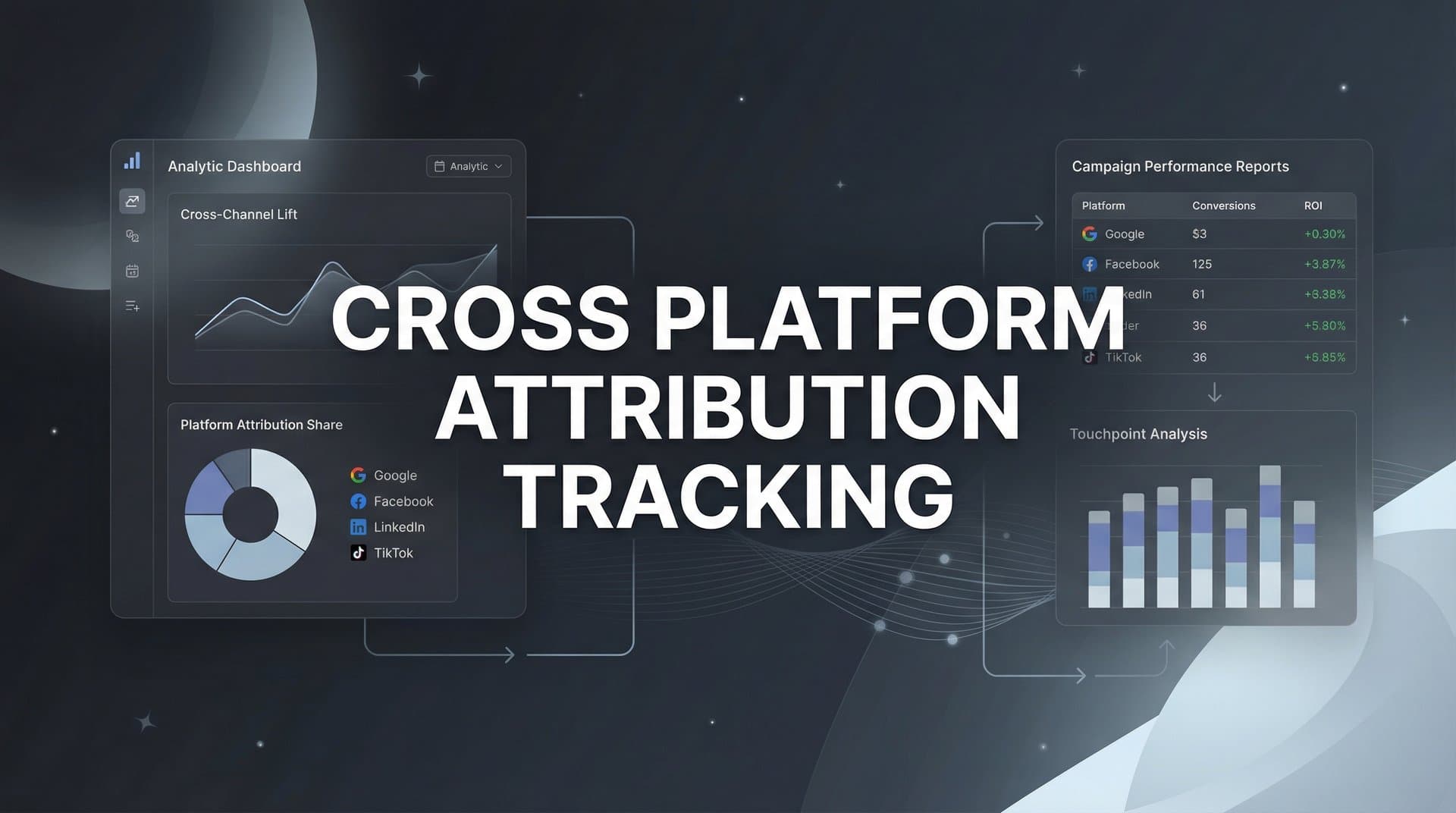
Cross platform attribution tracking solves this puzzle by connecting all your marketing touchpoints into one unified view. Instead of juggling multiple partial truths, you get a complete picture of which channels actually drive revenue. This guide breaks down how cross-platform attribution works, why it matters more than ever, and how to implement it to make confident, data-backed marketing decisions.
The Multi-Channel Measurement Problem Every Marketer Faces
Here's what's really happening when your dashboards don't match: every advertising platform operates in its own silo. When someone converts, Meta sees they clicked your ad three days ago and counts it as a Meta conversion. Google notices they searched your brand yesterday and claims credit. Your email platform sees they opened a campaign email this morning and adds another tally.
They're all reporting honestly—from their limited viewpoint. But the customer only bought once.
This over-reporting isn't malicious. It's structural. Ad platforms are designed to optimize and report on their own performance, not to play nice with your other marketing channels. Each one tracks its own touchpoints and applies its own attribution logic, completely unaware of what happened elsewhere in the customer journey.
The problem gets worse when you consider how people actually buy. Modern customer journeys rarely follow a straight line. Someone might discover your product through a Meta ad during their morning scroll, research competitors via Google search during lunch, see a retargeting ad that evening, and finally convert three days later after receiving an email reminder.
Which channel deserves credit for that sale? Without unified tracking, you're making budget decisions based on incomplete stories. You might double down on the channel that happened to get the last click, completely missing the awareness campaigns that started the journey. Or you might cut spend on channels that play crucial assist roles simply because they don't show up in platform-reported conversions.
The cost of this confusion is real. Marketers waste budget scaling channels that look good in isolation but don't actually drive incremental revenue. They underfund channels that generate awareness and consideration because those touchpoints don't get credited in last-click models. And they miss opportunities to optimize the full customer journey because they're only seeing fragments of it.
When your data is siloed, every decision becomes a guess dressed up as analysis. This is exactly why the multiple ad platforms tracking problem has become one of the most pressing challenges in digital marketing.
How Cross Platform Attribution Tracking Actually Works
Cross platform attribution tracking connects three critical data sources: your ad platforms, your website tracking, and your CRM. The goal is simple—create a single source of truth that captures every touchpoint in the customer journey and ties them all to actual revenue outcomes.
The technical foundation starts with unified tracking across all your marketing channels. When someone clicks a Meta ad, that interaction gets logged with a unique identifier. When they later click a Google search result, that touchpoint gets added to the same customer profile. When they finally convert on your website, all those previous interactions are connected to the sale.
This requires more than just installing pixels on your website. Modern attribution platforms use server-side tracking to capture data that browser-based tracking misses. Instead of relying solely on cookies that can be blocked or deleted, server-side tracking sends conversion data directly from your servers to your attribution system.
Here's why that matters: browser-based tracking has become increasingly unreliable. Safari blocks third-party cookies by default. Firefox does the same. Chrome is phasing them out. iOS App Tracking Transparency lets users opt out of cross-app tracking. If you're only using browser pixels, you're missing a growing percentage of your actual conversions.
Server-side tracking bypasses these limitations. When someone converts on your website, your server sends that conversion data directly to your attribution platform and back to your ad platforms through their server-side APIs. No browser cookies required. No privacy restrictions blocking the data flow. Finding the best server side tracking platform is essential for maintaining measurement accuracy in today's privacy-first environment.
But capturing touchpoints is only half the equation. The other half is attribution logic—how you decide which touchpoints get credit for the conversion. This is where attribution windows come into play.
An attribution window defines how far back in time you'll look to credit touchpoints. If someone clicked a Meta ad 30 days ago and converted today, should that click get credit? What about a Google ad from 7 days ago? Attribution windows let you set these parameters based on your typical sales cycle.
For products with short consideration periods, you might use a 7-day attribution window. For B2B software with longer sales cycles, you might extend that to 30 or even 90 days. The key is matching your attribution window to how customers actually behave, not using arbitrary defaults.
Once all your touchpoints are captured and your attribution windows are set, the platform can map complete customer journeys. You see the Meta ad that started awareness, the Google search that showed intent, the retargeting ad that brought them back, and the email that closed the deal. Every touchpoint, one timeline, connected to actual revenue.
Attribution Models: Choosing the Right Lens for Your Data
Now that you're capturing complete customer journeys, you need to decide how to distribute credit across touchpoints. This is where attribution models come in—different frameworks for answering the question: which channels deserve credit for this conversion?
First-touch attribution gives all the credit to the initial touchpoint. If someone's first interaction was a Meta ad, that ad gets 100% credit for the eventual sale, regardless of what happened afterward. This model is useful for understanding which channels drive awareness and start customer relationships. It answers: where do our customers first discover us?
Last-touch attribution does the opposite—it gives all credit to the final touchpoint before conversion. If someone clicked a Google search ad right before buying, that ad gets full credit, even if they'd been nurtured through multiple other channels first. This model highlights which channels close deals and drive immediate conversions.
Both single-touch models tell part of the story, but they miss the reality that most conversions involve multiple influences. That's where multi-touch attribution models provide a more nuanced view.
Linear attribution distributes credit equally across all touchpoints in the customer journey. If someone had five interactions before converting, each one gets 20% credit. This model assumes every touchpoint contributes equally to the outcome. It's straightforward and fair, though it may underweight the importance of crucial moments in the journey.
Time-decay attribution gives more credit to touchpoints closer to the conversion. The logic: recent interactions matter more than older ones because they're fresher in the customer's mind when they decide to buy. A touchpoint from yesterday gets more credit than one from two weeks ago. This model works well for campaigns focused on closing deals and pushing prospects over the finish line.
Position-based attribution (also called U-shaped) gives 40% credit to the first touchpoint, 40% to the last, and splits the remaining 20% among middle interactions. This model recognizes that starting the relationship and closing it are both crucial, while still acknowledging the role of nurturing touchpoints in between.
So which model should you use? The honest answer: compare them all. Different models reveal different insights about your marketing mix. First-touch shows you which channels are best at generating new interest. Last-touch reveals your conversion drivers. Multi-touch models expose the full journey and how channels work together. Our multi-touch marketing attribution platform complete guide dives deeper into selecting the right approach for your business.
A channel that looks weak in last-touch attribution might be your strongest awareness driver in first-touch. A channel that dominates first-touch might contribute little to actual conversions. By comparing models side-by-side, you see how each channel plays its role in the complete customer journey.
For businesses with short sales cycles and simple customer journeys, last-touch or linear models often provide sufficient insight. For companies with longer consideration periods and complex buying processes, position-based or custom multi-touch models better reflect reality.
The key is matching your attribution model to your actual sales process, not defaulting to whatever your ad platforms report.
Overcoming Modern Tracking Challenges
Even with the right attribution model and unified tracking setup, modern privacy changes have fundamentally altered how marketing measurement works. If you're still relying primarily on browser-based tracking, you're missing conversions—and the gap is growing.
Apple's iOS App Tracking Transparency requirement, launched in 2021, lets users opt out of cross-app tracking. The majority do. When someone clicks your Meta ad on their iPhone and later converts on your website, that connection often can't be made through traditional browser tracking. The result: conversions that look like they came from nowhere, and ad platforms that can't optimize effectively because they're not seeing results.
Cookie restrictions compound the problem. Safari's Intelligent Tracking Prevention limits cookie lifespans. Firefox blocks third-party cookies entirely. Chrome's planned cookie deprecation will eliminate them for the majority of web users. Browser-based tracking that worked reliably five years ago now captures only a fraction of actual conversions.
Server-side tracking solves these limitations by moving data collection from the browser to your servers. When someone converts on your website, your server captures that conversion and sends it directly to your attribution platform and ad platforms through their server-side APIs—Meta's Conversions API, Google's Enhanced Conversions, TikTok's Events API.
This approach bypasses browser restrictions entirely. No cookies required. No iOS opt-outs blocking the data. The conversion data flows directly from server to server, maintaining accuracy regardless of privacy settings.
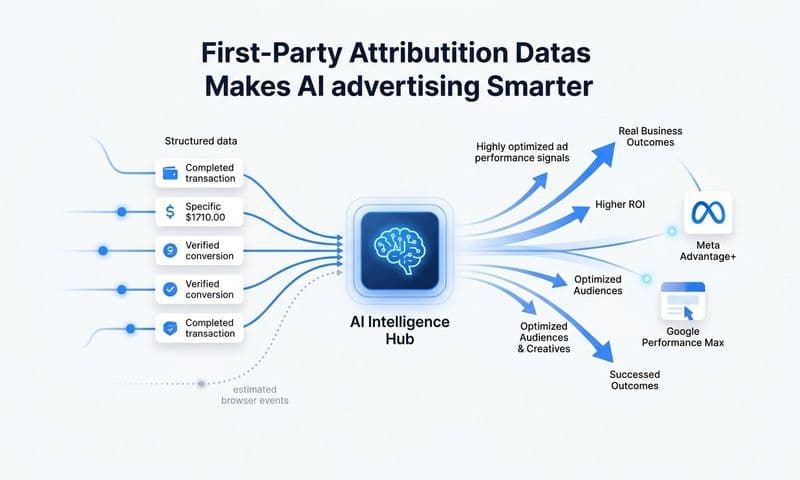
But server-side tracking does more than just maintain measurement accuracy. It also improves ad platform performance. When you send enriched conversion data back to Meta or Google through their server APIs, their algorithms get better signals for optimization.
Think about it from the platform's perspective. If they only see 60% of your actual conversions due to tracking limitations, they're optimizing based on incomplete data. They might think certain audiences or creative approaches aren't working when they're actually driving conversions that aren't being reported back.
Server-side tracking feeds complete conversion data back to the platforms. They see all your results, not just the ones that made it through browser tracking. This enables their algorithms to identify patterns more accurately, target better prospects, and optimize campaigns more effectively.
The practical outcome: better ROAS. When ad platforms can see which audiences and creative actually drive conversions, they make smarter automated decisions on your behalf. Your cost per acquisition improves because the platform is optimizing toward real results, not partial data.
Implementing server-side tracking requires technical setup, but modern attribution platforms handle most of the complexity. Our cross platform tracking setup guide walks through the implementation process step by step. You connect your ad accounts, install server-side tracking on your website, and configure conversion events. The platform manages the data flow between your site, your attribution system, and your ad platforms.
From Tracking to Action: Making Data-Driven Budget Decisions
Accurate tracking means nothing if it doesn't change how you allocate budget. This is where cross platform attribution tracking delivers its real value—transforming data into confident decisions about where to invest your next dollar.
Start by identifying which channels actually drive revenue versus which ones just assist. In a unified attribution view, you can see that Meta might generate 40% of first-touch interactions but only 15% of last-touch conversions. That doesn't mean Meta is underperforming—it means Meta's primary role is awareness and top-of-funnel, not direct conversion.
Google search, on the other hand, might show up in 60% of last-touch conversions but only 10% of first-touch interactions. Google captures high-intent prospects who are already aware and ready to buy, often after being introduced to your brand through other channels.
Understanding these roles prevents two common mistakes. First, you won't cut awareness channels just because they don't show strong last-touch attribution. Second, you won't over-invest in last-touch channels without ensuring you have sufficient top-of-funnel activity to feed them.
The next step is reallocating spend based on true contribution to revenue, not platform-reported conversions. If Meta's internal reporting shows 50 conversions but your attribution platform reveals they're only directly responsible for 20, you know the other 30 were influenced by multiple channels. This doesn't mean Meta deserves less budget—it means you need to evaluate its performance in context of the full customer journey. Understanding channel attribution in digital marketing revenue tracking helps you make these nuanced budget decisions.
Look for channels that consistently appear in high-value customer journeys. If every customer who spends over $1,000 interacted with both Meta ads and Google search before converting, you know both channels are essential to your high-value acquisition strategy. Cut either one, and you'll likely see a drop in premium customers.
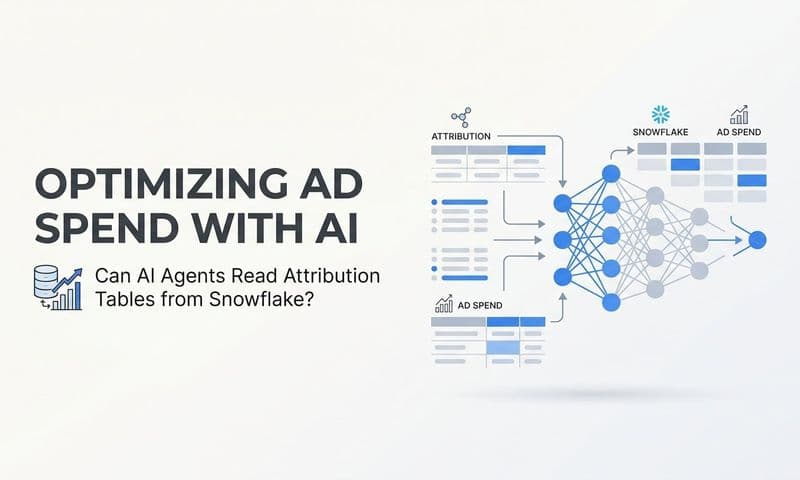
AI-powered attribution platforms take this analysis further by identifying patterns you'd miss manually. They can spot that customers who interact with three or more touchpoints convert at twice the rate of those who only see one. They can reveal that certain ad creative combinations across channels drive disproportionate results. They can predict which active prospects are most likely to convert based on their touchpoint patterns.
These insights enable proactive optimization. Instead of waiting to see which campaigns worked after the fact, you can identify winning patterns in real time and scale them immediately. You can spot underperforming combinations and adjust before wasting significant budget. Learning how to track cross platform ad performance effectively is the foundation for this kind of agile marketing optimization.
The goal isn't to find the single best channel—it's to understand how channels work together and optimize the complete system. Cross platform attribution tracking shows you which combinations of touchpoints drive results, enabling you to orchestrate campaigns across channels rather than managing them in isolation.
Putting Cross Platform Attribution Into Practice
Understanding attribution concepts is one thing. Implementing a system that actually delivers unified insights is another. When evaluating attribution solutions, focus on capabilities that directly impact your ability to make better marketing decisions.
First, look for platforms that capture data from all your marketing channels, not just paid advertising. Your attribution system should track organic search, social media, email campaigns, referral traffic, and any other channel that influences conversions. Partial tracking leads to partial insights.
Server-side tracking capability is non-negotiable. Any solution still relying primarily on browser-based tracking will miss an increasing percentage of conversions as privacy restrictions expand. Verify that the platform supports server-side integration with your major ad platforms—Meta Conversions API, Google Enhanced Conversions, and others relevant to your marketing mix.
Integration requirements extend beyond ad platforms. Your attribution solution needs to connect with your CRM to tie marketing touchpoints to actual revenue outcomes. It should integrate with your website or e-commerce platform to capture on-site behavior. It needs API access to pull data from each ad platform and push conversion data back to improve their optimization. Reviewing marketing attribution platforms revenue tracking capabilities helps ensure you select a solution that connects the full data picture.
The best attribution platforms make these integrations straightforward. You shouldn't need a development team to connect your marketing stack. Look for solutions with pre-built integrations for popular platforms and clear documentation for custom setups.
Multi-model comparison capability ensures you're not locked into a single view of your data. The platform should let you analyze the same conversions through different attribution lenses—first-touch, last-touch, linear, time-decay, position-based—and compare results side-by-side. This reveals how different channels contribute across the customer journey. The best multi-touch attribution platform options provide this flexibility out of the box.
Real-time reporting matters more than you might think. Marketing moves fast. Waiting 24 hours for attribution data means you're making decisions based on yesterday's reality. Look for platforms that process and display attribution data in real time or near-real-time, enabling you to spot trends and respond quickly.
When cross platform attribution is working correctly, it transforms how marketing teams operate. Budget discussions shift from defending individual channel performance to optimizing the complete customer journey. Campaign planning considers how channels work together, not just how each performs in isolation. Performance reviews focus on revenue contribution, not vanity metrics like impressions or clicks.
Teams gain confidence in their decisions because they're based on complete data rather than fragmented platform reports. When someone proposes increasing Meta spend, you can evaluate that recommendation in context of how Meta fits into successful customer journeys. When results dip, you can identify whether it's a channel-specific issue or a broader funnel problem.
Your Path to Marketing Clarity
Cross platform attribution tracking isn't a luxury for enterprises with unlimited budgets. It's essential infrastructure for any marketer who wants to stop guessing and start knowing what drives revenue. When you can see complete customer journeys, compare attribution models, and understand how channels work together, marketing becomes less about intuition and more about optimization.
The fragmented measurement approach that dominated digital marketing for years—trusting each platform's self-reported conversions and hoping the numbers make sense—no longer works in a privacy-first world with complex, multi-touch customer journeys. Modern marketing requires modern measurement.
The right attribution setup captures every touchpoint across all your channels, connects them to actual revenue outcomes, and reveals patterns that drive better decisions. It shows you which channels start relationships, which ones nurture prospects, and which ones close deals. It enables you to allocate budget based on true contribution rather than last-click luck.
More importantly, unified attribution data feeds back to your ad platforms, improving their optimization algorithms and delivering better results from the same spend. When Meta and Google can see all your conversions, not just the ones that made it through browser tracking, they make smarter automated decisions on your behalf.
The outcome is marketing that scales with confidence. You know which investments drive returns. You understand how channels complement each other. You can test new approaches and measure their true impact. You make decisions based on complete data rather than partial stories.
Ready to elevate your marketing game with precision and confidence? Discover how Cometly's AI-driven recommendations can transform your ad strategy—Get your free demo today and start capturing every touchpoint to maximize your conversions.