Running ads across Meta, Google, TikTok, and LinkedIn simultaneously? You're likely dealing with fragmented data, conflicting conversion numbers, and no clear picture of what's actually driving revenue.
Each platform reports different numbers. Your Google Ads dashboard shows 50 conversions, but Meta claims 75 from the same budget period. Meanwhile, your CRM says only 30 actual leads came in. Which number do you trust when it's time to scale?
This fragmentation isn't just annoying—it's expensive. You're making budget decisions based on incomplete data, potentially cutting winners and funding losers. You can't confidently answer the fundamental question every marketer faces: "What's actually working?"
Cross-platform tracking solves this by unifying your marketing data into a single source of truth. Instead of juggling five different dashboards with five different stories, you get one clear view of how your channels work together to drive revenue.
This guide walks you through setting up comprehensive tracking across all your advertising channels—from initial planning to verifying your data flows correctly. By the end, you'll have a system that captures every touchpoint, connects ad clicks to actual revenue, and gives you the confidence to scale winning campaigns.
Whether you're a solo marketer managing a $10K monthly budget or running an agency with multiple six-figure accounts, these steps work for any scale. Let's build your tracking foundation the right way.
Step 1: Audit Your Current Tracking Infrastructure
Before you build anything new, you need to understand what you're working with. Think of this like a home renovation—you can't plan the new kitchen until you know where the plumbing and electrical lines are.
Start by mapping all your active advertising platforms. Open a spreadsheet and list every platform where you're currently running ads: Meta (Facebook and Instagram), Google Ads, TikTok, LinkedIn, Twitter, Pinterest, YouTube—whatever you're using. Next to each platform, document which tracking pixels or tags are currently installed on your website.
Here's where it gets interesting: many marketers discover they have duplicate pixels, outdated tags from campaigns they ran two years ago, or platforms they're still paying for but haven't used in months. This audit reveals the clutter.
Now document your existing UTM parameter conventions. Pull up your last 20 campaigns across different platforms and look at how they're tagged. You'll probably spot inconsistencies immediately: some campaigns use "utm_campaign=spring-sale" while others use "utm_campaign=Spring_Sale" or "utm_campaign=springsale". These variations fragment your data—they look like three different campaigns to your analytics system.
Next, identify your tracking gaps. These are the conversions that happen but aren't being captured properly. Common gaps include: phone calls from ads, form submissions that don't fire tracking pixels, purchases that happen after someone clicks an ad but browses on a different device, or leads that come through your CRM but aren't connected back to the original ad source. Understanding cross-device user tracking solutions becomes essential for capturing these multi-device journeys.
List all conversion events that actually matter to your business. Don't just track what's easy—track what's valuable. For e-commerce, this might be: add to cart, initiate checkout, purchase, and repeat purchase. For B2B SaaS, it might be: demo request, trial signup, qualified lead, and closed deal. For service businesses: consultation booked, quote requested, and contract signed.
The goal here isn't perfection—it's visibility. You're creating an honest assessment of your current state so you know exactly what needs to be fixed.
Success indicator: You have a complete inventory spreadsheet showing all platforms, their installed tracking codes, your current UTM patterns, identified gaps, and a prioritized list of conversion events. This becomes your roadmap for the next steps.
Step 2: Establish a Unified UTM and Naming Convention
Inconsistent naming is the silent killer of marketing attribution. It's the reason you can't answer simple questions like "How much did we spend on prospecting versus retargeting last quarter?" because half your campaigns are labeled "prospecting" and the other half use "cold-traffic".
Your UTM structure needs to work across all platforms while remaining flexible enough to capture the details that matter to your analysis. Here's a proven framework that scales:
utm_source: The platform sending the traffic (facebook, google, tiktok, linkedin). Keep these lowercase, no spaces, no special characters. This parameter should never change—"facebook" today must be "facebook" in six months.
utm_medium: The type of traffic (cpc, social, email, display). Use this to distinguish paid from organic, or different ad formats. Consistency matters here too—decide if you're using "cpc" or "paid" and stick with it everywhere.
Related reading: our complete guide to free AI UGC video generator.
utm_campaign: Your campaign identifier. This is where most inconsistency creeps in. Establish a clear format: lowercase, hyphens instead of underscores or spaces, and a logical structure like "2026-02-spring-sale" or "q1-prospecting-saas".
utm_content: Use this to differentiate ad variations within the same campaign. Examples: "video-a", "carousel-testimonial", "image-product-shot". This lets you compare creative performance without creating separate campaigns.
If you're evaluating vendors, our Shopify ad variation generator breakdown can help.
utm_term: Originally for paid search keywords, but you can repurpose this for audience segments in social campaigns: "lookalike-purchasers", "interest-marketing-tools", "retarget-cart-abandoners".
Create a UTM generator template your team can use. A simple Google Sheet with dropdown menus for approved values prevents freelancing. When someone needs to launch a campaign, they select from pre-defined options rather than inventing new naming schemes. Proper marketing campaign tracking software can automate much of this process.
We break down the leading options in our UGC video generator guide.
Here's the common pitfall that breaks everything: inconsistent capitalization. "Spring-Sale" and "spring-sale" look identical to humans but are completely different to analytics systems. Establish a lowercase-only rule and enforce it. No exceptions.
Document this in a one-page naming convention guide. Include examples for each platform, explain why consistency matters, and make it required reading for anyone touching your ad accounts. Share it in your team wiki, pin it in Slack, and reference it during campaign planning.
Success indicator: Every team member can build a properly formatted UTM link without asking questions. Your analytics system shows clean, consistent campaign names that make sense six months later.
Step 3: Implement Server-Side Tracking for Data Accuracy
Browser-based tracking is dying. Not slowly—rapidly. And if you're still relying exclusively on pixels that fire in someone's web browser, you're losing data every single day.
Here's why: iOS privacy changes, ad blockers, cookie restrictions, and browser privacy features all interfere with traditional pixel tracking. When someone clicks your ad on their iPhone, browses your site, and converts, there's a significant chance that conversion never gets reported back to the ad platform. The pixel fires in the browser, but iOS blocks it from sending data. The ad platform thinks the campaign failed when it actually worked.
Server-side tracking solves this by capturing events on your server—where browsers can't block them. Instead of relying on JavaScript pixels that may or may not fire, your server sends conversion data directly to ad platforms through their APIs. Our comprehensive server-side tracking implementation guide covers the technical details in depth.
Setting up server-side tracking requires connecting your website events to a centralized tracking system. When someone takes an action on your site—fills out a form, makes a purchase, starts a trial—your server records that event with all the relevant data: what they did, when they did it, and which marketing source brought them there.
This is where first-party data tracking becomes crucial. You're capturing information directly from your own systems rather than relying on third-party cookies that browsers increasingly block. Your server knows someone converted because it processed the form submission or checkout—no cookie required.
The technical implementation varies based on your website platform. For WordPress sites, this might involve installing a server-side tracking plugin. For custom-built applications, it means adding tracking code to your backend that fires when conversion events occur. For e-commerce platforms like Shopify, it involves configuring webhook integrations that send order data to your tracking system.
The key is ensuring your server-side events include the same information your browser pixels used to capture: the user's click ID (fbclp, gclid, etc.), the conversion event type, the conversion value, and any relevant metadata like product categories or lead quality scores.
Configure your first-party data collection to maintain accuracy as third-party cookies disappear. This means using your own domain for tracking, storing user identifiers in your database, and matching conversion events back to the original ad clicks using server-side logic rather than browser cookies.
You'll know server-side tracking is working when you see events firing alongside your browser pixels with higher match rates. Ad platforms will show improved attribution accuracy, and you'll notice fewer "unknown" or "direct" conversions in your reports. The gap between what your analytics shows and what ad platforms report will narrow significantly.
Success indicator: Your server-side events are firing reliably, match rates improve compared to pixel-only tracking, and you're capturing conversions that previously went unattributed. You can verify this by checking event match quality scores in Meta Events Manager or Google Ads conversion tracking.
Step 4: Connect Your Ad Platforms to a Central Attribution Hub
You've audited your tracking, standardized your naming, and implemented server-side capture. Now it's time to bring everything together in one place where you can actually analyze it.
A central attribution hub connects all your advertising platforms—Meta, Google, TikTok, LinkedIn, and others—into a unified dashboard. Instead of logging into five different accounts to piece together your performance story, you see everything in one view with consistent metrics and attribution logic. This is the foundation of effective cross-platform attribution.
Start by integrating your largest ad platforms first. Most attribution systems offer direct API connections that pull campaign data, ad spend, clicks, impressions, and conversions automatically. You'll need admin access to each ad account and permission to authorize the integration.
The integration process typically involves: logging into your ad platform, navigating to business settings or API access, generating an access token or authorizing the connection, and then verifying that data starts flowing into your central hub within 24-48 hours.
Here's where mapping becomes critical: different platforms use different names for similar concepts. Meta calls them "campaigns," Google calls them "campaigns," but their structure differs. Meta's three-tier system (campaign, ad set, ad) doesn't match Google's (campaign, ad group, ad). Your attribution hub needs to normalize these differences so you can compare performance across platforms.
Map your conversion events consistently across platforms. If "Purchase" in Meta, "Conversion" in Google, and "Complete Order" in TikTok all represent the same action, configure your hub to recognize them as identical events. This consistency is what enables true cross-platform analysis.
Set up proper API connections for real-time data syncing. Most platforms support near-real-time data updates, meaning your attribution hub refreshes every few hours rather than once per day. This matters when you're actively optimizing campaigns and need current data to make decisions.
Verify data is flowing correctly from each platform by running a reconciliation check. Compare the spend, clicks, and conversions shown in your attribution hub against what each native platform reports for the same timeframe. Small discrepancies (under 5%) are normal due to timing differences and attribution windows, but large gaps indicate a connection problem that needs fixing.
Pay attention to attribution windows—the timeframe in which a conversion gets credited to an ad. If Meta uses a 7-day click window and your attribution hub uses 30 days, the numbers won't match. Align these settings so you're comparing apples to apples.
Success indicator: All your ad platforms are connected and showing data in a unified view. You can see total spend, total conversions, and overall ROAS across all channels without opening multiple tabs. The data matches each platform's native reporting within an acceptable variance.
Step 5: Link Your CRM and Revenue Data to Complete the Picture
Ad platforms can tell you someone converted, but they can't tell you if that person became a paying customer who generated actual revenue. That's where CRM integration transforms your tracking from interesting to invaluable.
Connecting your CRM—whether it's HubSpot, Salesforce, Pipedrive, or another system—lets you track leads through their entire lifecycle. You can see which ad generated a lead, when that lead became qualified, which sales rep worked the deal, and ultimately whether it closed and for how much revenue. Effective lead generation attribution tracking makes this connection possible.
This complete view changes how you evaluate campaign performance. A campaign that generates 100 leads might look better than one that generates 50—until you discover the 50-lead campaign produced 10 closed deals worth $50,000 while the 100-lead campaign closed only 2 deals worth $8,000. Without CRM data, you'd scale the wrong campaign.
The technical integration typically involves API connections similar to your ad platforms. You'll authorize your attribution hub to access CRM data, map fields between systems (matching "Lead Source" in your CRM to "utm_source" in your tracking), and configure how often data syncs.
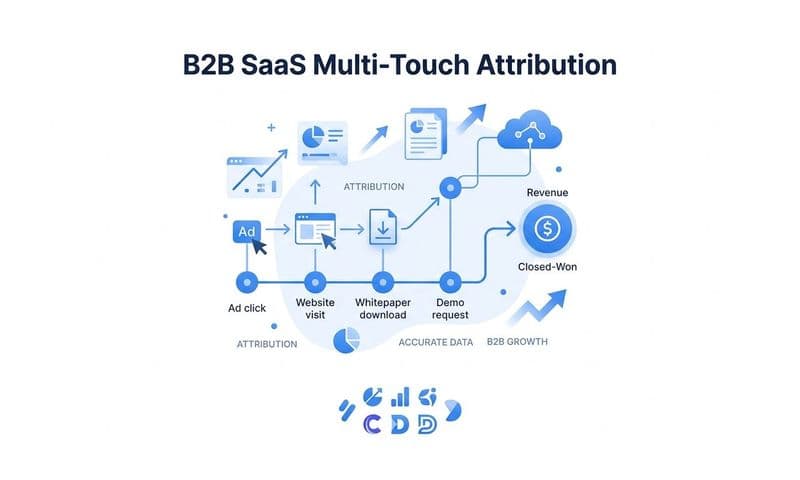
Map the customer journey from first ad click to final purchase. This means tracking: initial ad interaction, website visit, conversion event (form fill, trial signup), lead creation in CRM, lead qualification, opportunity creation, and closed deal. Each stage should maintain the connection back to the original marketing source. Dedicated customer journey tracking software can visualize this entire path.
Set up revenue attribution to see actual ROI, not just conversions. When a deal closes in your CRM, that revenue value should flow back to your attribution system and get credited to the marketing channels that influenced the sale. Now you can calculate true ROAS based on revenue, not just conversion events.
Configure lead status updates to flow back into your tracking system. When a sales rep marks a lead as "Qualified" or "Junk," that information should update in your attribution dashboard. This helps you understand lead quality by source—maybe TikTok generates high volume but low qualification rates, while LinkedIn produces fewer leads but higher quality.
The real power emerges when you can segment performance by lead status or deal stage. You might discover that retargeting campaigns don't generate many new leads but have exceptional influence on deals that close. Or that certain ad creatives attract leads who convert faster through your sales pipeline.
Success indicator: You can pull up any closed deal in your CRM and trace it back to the specific ad, campaign, and channel that originally brought that customer to your business. You can calculate revenue-based ROAS for each marketing channel and make budget decisions based on actual dollars returned, not proxy metrics.
Step 6: Configure Conversion Sync to Improve Ad Platform Performance
Here's something most marketers miss: the data flow shouldn't be one-way. You're not just pulling data from ad platforms to analyze—you should be sending enriched data back to improve their performance.
Conversion sync, also called Conversions API or server-side conversion tracking, feeds better quality signals back to Meta, Google, and other platforms. This helps their algorithms optimize more effectively because they're learning from more complete, accurate data.
Think about it from the platform's perspective: Meta's algorithm is trying to find more people like those who convert. But if you're only sending browser-based conversions—which miss 30-40% of actual conversions due to iOS and tracking limitations—Meta is optimizing based on incomplete information. It's learning from a biased sample.
When you send enriched conversion data back through server-side APIs, you're giving platforms the full picture. They see all the conversions, including ones that browser pixels missed. They get additional context like customer lifetime value, lead quality scores, or whether someone became a paying customer. This richer data helps algorithms make better targeting and bidding decisions.
Setting up conversion sync involves configuring your attribution system to send conversion events back to ad platforms via their APIs. For Meta, this means using the Conversions API. For Google, it's Enhanced Conversions. For TikTok, the Events API. The right conversion tracking tools simplify this entire process.
The key is proper event matching—ensuring the conversion data you send back can be matched to the original ad click. This requires including identifiers like Facebook Click ID (fbc), Google Click ID (gclid), or user email addresses (hashed for privacy). Higher match rates mean better optimization.
Configure which events to sync back. You don't need to send everything—focus on your most valuable conversion events. For e-commerce, sync purchases and high-value actions. For B2B, sync qualified leads and closed deals. Sending low-quality conversions can actually hurt performance by teaching algorithms to optimize for the wrong outcomes.
Test that synced conversions appear correctly in each platform's dashboard. In Meta Events Manager, you should see both pixel events and server events for the same conversions. In Google Ads, enhanced conversions should show improved match rates. This verification confirms data is flowing properly.
Monitor your event match quality scores. Meta provides a match quality indicator showing how well your server events are being matched to users. Scores above 80% are good, above 90% are excellent. Low scores indicate problems with your identifier passing that need troubleshooting.
Success indicator: Your match rates are consistently above 80%, ad platforms show both pixel and server events for conversions, and you begin noticing improved campaign performance as algorithms optimize with better data. Cost per conversion may decrease as platforms get better at finding your ideal customers.
Step 7: Validate Your Setup and Establish Ongoing Monitoring
Your tracking infrastructure is built, but don't assume it works perfectly. Testing and ongoing monitoring are what separate reliable attribution from expensive guesswork.
Start by running test conversions through each platform. Create a small test campaign on Meta, click your own ad (using a browser you don't normally use or a different device), and complete a conversion on your site. Then verify that conversion appears in: your website analytics, your attribution hub, Meta's Events Manager, and your CRM if applicable. Repeat this process for each major platform.
Compare your unified data against individual platform reports. Pull a report from your attribution hub showing last week's performance, then compare those numbers against what each native platform reports for the same timeframe. Document any discrepancies larger than 10%.
Some variance is normal and expected. Different attribution windows, timezone differences, and data processing delays all contribute to minor discrepancies. But large gaps—like your attribution hub showing 50 conversions while Meta reports 100—indicate a serious problem that needs immediate attention. Understanding the differences between Google Analytics vs attribution platforms helps explain some of these discrepancies.
Set up alerts for tracking failures or data discrepancies. Most attribution platforms can notify you when: data stops flowing from a platform, conversion volumes drop significantly, match rates fall below acceptable thresholds, or API connections break. These automated alerts catch problems before they corrupt weeks of data.
Create a weekly audit checklist to catch issues early. Every Monday morning, verify: all platforms are still connected and syncing, conversion volumes look reasonable compared to last week, match quality scores remain high, and no new tracking gaps have emerged. This 15-minute weekly check prevents small issues from becoming big problems.
Pay special attention after making changes. Launched a new website? Updated your checkout flow? Changed your form software? Any of these can break tracking. Run test conversions immediately after any change to confirm everything still works.
Document your tracking setup for future reference. Create a simple diagram showing how data flows from ad click to final attribution. Note which tools are involved, what identifiers get passed, and where potential failure points exist. When something breaks six months from now, this documentation will save hours of troubleshooting.
Success indicator: Your data is consistent across platforms with less than 10% variance, test conversions flow through your entire system correctly, and you have monitoring in place to catch issues before they impact decision-making. You trust your attribution data enough to make significant budget decisions based on it.
Your Cross-Platform Tracking Foundation Is Complete
Let's recap what you've built:
✓ Audited all current tracking and identified gaps
✓ Created unified UTM and naming conventions
✓ Implemented server-side tracking for better accuracy
✓ Connected all ad platforms to a central attribution hub
✓ Linked your CRM for complete revenue attribution
✓ Configured conversion sync to improve ad optimization
✓ Validated your setup with test conversions and ongoing monitoring
With this foundation in place, you can finally answer the questions that matter: Which channels actually drive revenue? Where should I increase budget? Which campaigns should I pause? What's my true ROAS across all platforms combined?
You're no longer flying blind, making decisions based on incomplete data from fragmented dashboards. You have a single source of truth that connects every ad click to actual business outcomes.
The real power emerges over time as you accumulate clean, consistent data. You'll spot patterns that were invisible before: certain audience segments that convert exceptionally well, creative approaches that drive higher lifetime value, or channel combinations that work better together than separately.
This is how modern marketing teams operate—with confidence backed by data, not guesswork dressed up as strategy.
Ready to implement this without the technical headaches? Cometly handles all seven steps in a unified platform, connecting your ads, website, and CRM to show you exactly what's working. From server-side tracking to AI-powered recommendations, you get complete attribution without building it yourself. Get your free demo today and start capturing every touchpoint to maximize your conversions.