You run a Facebook ad campaign targeting mobile users. Someone clicks your ad on their iPhone during their morning commute, browses your site briefly, then closes it. That afternoon, they search for your brand on their work laptop, read reviews, and add items to cart—but don't buy. Three days later, they open your retargeting email on their tablet while relaxing at home and finally complete the purchase.
Which touchpoint deserves credit for that conversion?
If you're relying on traditional analytics, you're probably seeing that tablet session as the hero—the last click before purchase. But you just spent ad budget on a mobile campaign that's showing zero conversions, even though it started the entire journey. This is the attribution blindspot that costs marketers millions in misallocated budget every year.
Cross device attribution solves this problem by connecting the dots across every screen your customers use. Instead of treating each device as a separate user, it stitches together fragmented interactions to reveal the complete path to conversion. For marketers running campaigns across multiple channels and devices, this isn't just helpful—it's essential for understanding what actually drives revenue.
The Multi-Device Reality Marketers Can't Ignore
Cross device attribution is the methodology for tracking and connecting user interactions across multiple devices—smartphones, desktops, tablets—to accurately attribute conversions to the right touchpoints. It answers a fundamental question: how do you measure marketing performance when your customers don't stay on one device?
The numbers tell a clear story. Customers routinely interact with brands across three or more devices before converting. They discover products on mobile, research on desktop, and purchase wherever is most convenient. This device-hopping behavior has become the norm, not the exception.
Traditional single-device attribution treats each device as an isolated silo. Your analytics platform sees three different "users" when it's actually one person moving through their decision journey. The mobile ad click? Marked as a bounce with no conversion. The desktop research session? Looks like direct traffic. The tablet purchase? Gets all the credit.
This creates dangerously incomplete data. You're making budget decisions based on a fractured view of customer behavior. Mobile campaigns appear to underperform because you can't see the conversions they initiate. Desktop retargeting looks like a miracle worker because it captures the final click. Your attribution model is essentially rewarding the closer while ignoring everyone who brought the customer to the table.
The consequences are real. Marketers cut spending on mobile discovery campaigns that actually drive valuable awareness. They over-invest in bottom-funnel tactics while starving the top of the funnel. Budget flows to wherever the last click happened, regardless of what actually influenced the buying decision.
Cross device attribution fixes this by creating a unified view of each customer's journey. It recognizes that the person who clicked your Instagram ad on their phone is the same person who researched on their laptop and bought on their tablet. Every touchpoint gets measured as part of a connected sequence, not as isolated events.
This matters more than ever because device fragmentation keeps accelerating. Customers don't just use multiple devices—they switch between them constantly throughout their day. Your attribution needs to keep pace with how people actually behave, or you're optimizing campaigns based on fiction.
Deterministic vs. Probabilistic: Two Paths to Cross Device Tracking
There are two fundamental approaches to connecting devices to the same user, and understanding the difference between them is crucial for evaluating attribution platforms.
Deterministic matching uses authenticated data to definitively link devices. When a user logs into your website or app on their phone and later logs in on their laptop, you know with certainty these devices belong to the same person. The login credentials create an irrefutable connection.
This approach delivers the highest accuracy possible. There's no guesswork—you have concrete proof that Device A and Device B belong to User 1. For businesses with strong login ecosystems (think Netflix, Amazon, or any SaaS platform), deterministic matching provides rock-solid cross device data.
The limitation? Scale. Deterministic matching only works when users authenticate. If someone browses your site without logging in, you can't deterministically connect their sessions across devices. For many businesses, the majority of traffic is anonymous, which means deterministic matching alone leaves significant gaps.
Probabilistic matching takes a different approach. Instead of requiring login data, it analyzes patterns and signals to statistically infer device connections. The system examines factors like IP addresses, device types, browser configurations, operating systems, location data, and behavioral patterns to calculate the likelihood that multiple devices belong to the same user.
Think of it like this: if a user visits your site from an iPhone in Brooklyn at 8 AM, then visits from a MacBook Pro at the same Brooklyn IP address at 9 AM, probabilistic matching assigns a high confidence score that these devices belong to the same person. Add in similar browsing behaviors, overlapping time patterns, and consistent location data, and the statistical confidence increases.
Probabilistic matching provides much broader coverage than deterministic methods. It can connect devices even when users never log in, capturing anonymous browsing behavior across your entire audience. This makes it valuable for businesses without strong authentication requirements.
The tradeoff is certainty. Probabilistic matching makes educated guesses based on statistical models, not definitive proof. While sophisticated algorithms achieve high accuracy rates, there's always some margin of error. Two people sharing the same household IP address might occasionally be misidentified as the same user.
Most advanced attribution platforms use a hybrid approach that combines both methods. They prioritize deterministic matches when authenticated data is available, then supplement with probabilistic matching to fill the gaps. This delivers optimal coverage—the certainty of deterministic matching where possible, plus the reach of probabilistic methods for anonymous traffic.
When evaluating attribution solutions, ask which methods they use and how they balance accuracy versus coverage. A platform relying solely on deterministic matching might give you perfect data for 30% of your traffic while missing 70%. One using only probabilistic methods might cover everyone but with lower confidence. The best cross device user tracking solutions intelligently combine both approaches to maximize accurate cross device tracking across your entire customer base.
Privacy Changes That Reshaped Cross Device Attribution
The cross device attribution landscape transformed dramatically over the past few years, and privacy regulations are the driving force behind these changes.
Apple's App Tracking Transparency framework, introduced in 2021, fundamentally disrupted traditional cross device tracking methods. iOS now requires apps to explicitly ask users for permission to track their activity across other companies' apps and websites. The result? The vast majority of users opt out, eliminating the Identifier for Advertisers (IDFA) as a reliable cross device signal.
This wasn't a minor adjustment—it removed a cornerstone of mobile attribution. Marketers who relied on IDFA to connect app behavior to web conversions suddenly lost visibility into huge portions of their customer journeys. The clean device graphs that powered cross device attribution became fragmented overnight.
Google's planned deprecation of third-party cookies in Chrome compounds the challenge. While the timeline has shifted multiple times, the direction is clear: the cookie-based tracking that enabled cross device attribution for years is being phased out. Browsers are increasingly blocking third-party cookies by default, and the infrastructure that connected user behavior across websites is crumbling.
These privacy changes aren't temporary disruptions—they represent a permanent shift in how tracking works. The old playbook of relying on third-party identifiers and cross-site cookies is obsolete. Marketers need attribution solutions built for a privacy-first world.
This is where server-side tracking becomes essential. Instead of relying on browser-based cookies that users can block and privacy frameworks restrict, server-side tracking collects data on your own server. When a user interacts with your site or app, the event data is sent directly to your server, processed there, and then selectively shared with analytics and ad platforms.
Server-side tracking offers several critical advantages for cross device attribution. It's more resistant to ad blockers and browser privacy features that interfere with client-side tracking. You maintain better control over what data is collected and how it's used. Most importantly, you can build attribution on first-party data—information collected directly from your customers with their consent.
First-party data has become the foundation for accurate cross device attribution in this new privacy landscape. This includes data from authenticated logins, CRM systems, purchase histories, and direct customer interactions. Unlike third-party data that's gathered from external sources, first-party data belongs to you and comes with explicit user consent.
The shift toward first-party data and server-side tracking isn't just about compliance—it's about building attribution on a stable foundation. Third-party cookies and device identifiers are disappearing. Browser restrictions keep tightening. But first-party data collected through server-side tracking remains reliable and privacy-compliant.
For marketers, this means your attribution strategy needs to prioritize first-party data collection at every touchpoint. Implement tracking that captures user interactions directly—from ad clicks through website behavior to CRM events. Use server-side solutions that process this data on your infrastructure, not just in the browser where it's increasingly blocked. Understanding cookieless attribution tracking is now essential for maintaining measurement accuracy.
The platforms that will deliver accurate cross device attribution going forward are those built on server-side architecture and first-party data, not those clinging to deprecated tracking methods. Choose attribution solutions designed for the privacy-first reality, not the cookie-based past.
Building Your Cross Device Attribution Strategy
Implementing effective cross device attribution requires a systematic approach that connects your data sources and captures the complete customer journey.
Start with comprehensive first-party data collection. Your attribution is only as good as the data you capture. Implement tracking that records user interactions at every touchpoint—ad clicks, website visits, content engagement, form submissions, email opens, and CRM events. The goal is to create a complete record of how customers interact with your brand across all channels and devices.
Use server-side tracking to ensure this data collection is reliable and privacy-compliant. Set up tracking that captures events on your server, not just in the browser where ad blockers and privacy features can interfere. This gives you consistent, accurate data about user behavior regardless of browser settings or device restrictions.
Pay special attention to capturing identifiers that enable cross device matching. When users authenticate, record those login events and use them to definitively link devices. For anonymous traffic, ensure you're collecting the signals that enable probabilistic matching—IP addresses, device types, timestamps, and behavioral patterns. Mastering cross device conversion tracking methods is critical for connecting these fragmented journeys.
Connect your data sources to create a unified view. Cross device attribution requires integrating data from multiple systems. Your ad platforms show which ads users clicked. Your website analytics reveal browsing behavior and session data. Your CRM tracks leads, opportunities, and closed revenue. These systems need to talk to each other.
Look for attribution platforms that integrate natively with your marketing stack. The best solutions connect directly to Facebook Ads, Google Ads, TikTok, LinkedIn, and other ad platforms to automatically import campaign data. They integrate with your CRM to track conversions through the entire sales funnel. They capture website behavior through server-side tracking that works across all devices.
This integration creates a unified customer journey view. When someone clicks your Facebook ad on mobile, browses your site on desktop, and converts via a sales call logged in your CRM, your attribution platform should connect all these touchpoints as a single journey. Without this integration, you're still looking at fragmented data silos.
Choose attribution models that account for multi-device journeys. Last-click attribution fails spectacularly in a multi-device world because it credits whatever device happened to be used for the final conversion, ignoring everything that came before. If you want to understand how different devices contribute to conversions, you need multi-touch attribution.
Multi-touch attribution models distribute conversion credit across multiple touchpoints based on their role in the customer journey. A linear model spreads credit equally across all interactions. A time-decay model gives more weight to recent touchpoints. A position-based model emphasizes first and last touches while acknowledging middle interactions.
The specific model matters less than using an approach that recognizes multiple touchpoints across devices. When you can see that mobile ads drive discovery, desktop sessions facilitate research, and tablet interactions close conversions, you can make informed decisions about where to allocate budget across devices and channels.
Advanced attribution platforms let you compare multiple models side-by-side. This reveals how different attribution approaches change your understanding of campaign performance. You might discover that mobile campaigns look weak under last-click attribution but show strong performance under first-click or multi-touch models—a signal that mobile is driving valuable awareness even if conversions happen on other devices.
The key is moving beyond single-touch attribution that can't possibly capture multi-device reality. Implement attribution models that account for the complete customer journey across every screen.
Turning Cross Device Insights Into Better Ad Performance
Accurate cross device attribution isn't just about better reporting—it's about making smarter decisions that improve campaign performance and ROI.
Identify which channels and ads initiate versus close conversions. Cross device data reveals the distinct roles different channels play in your customer journey. You might discover that Instagram ads on mobile drive high-quality traffic that researches extensively on desktop before converting. Or that LinkedIn campaigns generate awareness that leads to direct site visits on other devices days later.
This insight prevents the classic mistake of cutting campaigns that appear to underperform on last-click metrics but actually drive valuable upper-funnel engagement. When you can see that mobile social ads initiate 40% of your eventual desktop conversions, you stop treating mobile and desktop as competing channels and start optimizing them as complementary parts of a unified strategy.
Use this data to set appropriate goals for different channels. Your mobile campaigns might focus on driving awareness and initial engagement, while desktop retargeting focuses on conversion. Your attribution model should reflect these different roles rather than judging every channel by the same last-click conversion metric. Understanding cross channel attribution marketing ROI helps you see the complete picture.
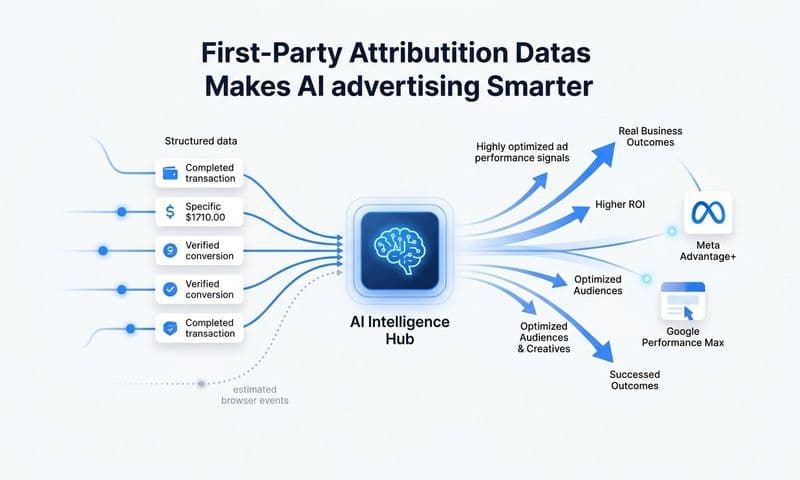
Feed accurate conversion data back to ad platforms. This is where cross device attribution creates a powerful feedback loop that improves targeting and optimization. When you send complete conversion data back to Facebook, Google, and other ad platforms—including conversions that happened on different devices—their machine learning algorithms get better training data.
Ad platforms optimize based on the conversion data you provide. If you only report conversions that happen on the same device as the ad click, you're teaching the algorithm that mobile ads don't convert, even when they actually drive conversions on other devices. The platform then reduces delivery to mobile users who are likely to convert, creating a self-fulfilling prophecy of poor mobile performance.
Server-side conversion tracking solves this by sending enriched conversion events back to ad platforms regardless of which device the conversion happened on. When someone clicks your Facebook ad on mobile and converts on desktop, your attribution platform can fire a conversion event back to Facebook that properly credits the mobile ad impression. Implementing proper Facebook attribution tracking ensures the algorithm receives accurate signals about which users actually convert.
This is what "feeding ad platform AI better data" means in practice. You're not just improving your own reporting—you're making the ad platforms smarter about who to target and how to optimize delivery. Better data input creates better optimization output.
Reallocate budget based on true cross device attribution. This is where cross device insights translate directly into ROI improvements. When you understand the full value each channel and device contributes to conversions, you can shift budget away from overvalued last-click touchpoints and toward undervalued discovery and consideration channels.
Many marketers discover they've been dramatically under-investing in mobile campaigns because traditional attribution couldn't connect mobile interactions to desktop conversions. Cross device data might reveal that mobile drives 35% of conversion value through assisted conversions, even though it only shows 15% of last-click conversions. That's a signal to increase mobile investment, not cut it.
The same applies to channel mix decisions. You might find that paid search captures demand but doesn't create it, while paid social drives discovery that leads to branded search conversions days later. Without cross device attribution, you'd over-credit search and under-invest in social. With accurate data, you can balance your budget across the full funnel.
Use cross device insights to test and optimize device-specific creative and landing pages. If you know mobile users typically research before converting on desktop, you can optimize mobile experiences for engagement and information gathering rather than immediate conversion. If tablet users convert at high rates, you can create tablet-optimized experiences that capitalize on this behavior. Tracking the right marketing attribution metrics ensures you're measuring what matters most.
The goal is moving from gut-feel budget allocation to data-driven decisions based on complete customer journey visibility. Cross device attribution gives you the insights to confidently scale what works and cut what doesn't, based on true contribution to revenue rather than incomplete last-click data.
Moving Forward with Confidence
Cross device attribution isn't a nice-to-have feature for modern marketers—it's the foundation for understanding what actually drives revenue in a multi-device world. When customers routinely interact with brands across three or more screens before converting, any attribution approach that treats devices as silos is measuring fiction, not reality.
The two core approaches—deterministic matching using authenticated data and probabilistic matching using behavioral signals—each have strengths and limitations. The most effective attribution platforms combine both methods, delivering the certainty of deterministic matching where possible and the coverage of probabilistic methods for anonymous traffic. This hybrid approach provides the most complete view of cross device customer journeys.
Privacy changes have fundamentally reshaped how cross device attribution works. The deprecation of third-party cookies and restrictions on mobile identifiers mean attribution strategies must be built on first-party data and server-side tracking. Solutions that rely on outdated tracking methods are already failing as browsers and operating systems tighten privacy controls. The platforms that deliver accurate attribution going forward are those designed for a privacy-first world from the ground up.
Building an effective cross device attribution strategy means starting with comprehensive first-party data collection across every touchpoint, integrating your data sources to create unified customer journey views, and implementing multi-touch attribution models that account for multi-device behavior. It means moving beyond last-click metrics that systematically misattribute value in cross device journeys.
The real value of cross device attribution comes from turning insights into action. When you can see which channels initiate conversions versus which ones close them, you stop making budget decisions based on incomplete data. When you feed accurate conversion data back to ad platforms, their optimization algorithms get smarter about targeting and delivery. When you reallocate budget based on true multi-device contribution, you invest in the channels that actually drive revenue rather than just the ones that capture the last click.
Platforms that capture every touchpoint—from initial ad click through CRM events—and connect them into complete customer journeys give marketers the confidence to scale campaigns effectively. You're not guessing which campaigns work or cutting budget from channels that appear weak under flawed attribution. You're making decisions based on accurate data about how customers actually move through their buying journey across every device they use.
Ready to elevate your marketing game with precision and confidence? Discover how Cometly's AI-driven recommendations can transform your ad strategy—Get your free demo today and start capturing every touchpoint to maximize your conversions.