You're staring at three different dashboards, and they're telling you three different stories. Facebook Ads Manager proudly displays 50 conversions from last week's campaign. Your CRM shows 30 new customers. Your finance team just sent over a spreadsheet counting 25 actual sales with payment confirmed.
Which number is real? More importantly, which number should guide your budget decisions for next month?
This measurement gap isn't just frustrating—it's expensive. When you can't trust your conversion data, you end up scaling campaigns that look profitable but actually drain resources, while cutting budgets from channels that quietly drive your best customers. Facebook marketing measurement has evolved from a straightforward tracking exercise into a complex discipline that requires understanding privacy changes, attribution models, and the technical infrastructure that connects ad clicks to actual revenue.
The challenge isn't that Facebook's numbers are wrong—it's that different measurement methods capture different slices of reality. Your job as a marketer is to build a measurement approach that gives you confidence in your decisions, even when the numbers don't perfectly align. This guide breaks down why measurement has become so complicated, what tools and techniques actually work, and how to create a tracking system that reflects what's really happening in your business.
Why Your Facebook Numbers Don't Match Reality
The measurement confusion you're experiencing isn't your fault. Something fundamental changed in how Facebook can track conversions, and it happened almost overnight.
When Apple released iOS 14.5 in April 2021, they introduced App Tracking Transparency—a feature that requires apps to ask permission before tracking users across other apps and websites. Most users opted out. Suddenly, Facebook lost visibility into a massive portion of conversion activity, particularly on mobile devices where the majority of social media browsing happens.
Facebook's response was to introduce something called Aggregated Event Measurement, which limits advertisers to optimizing for just eight conversion events per domain. More significantly, Facebook began relying heavily on modeled conversions—statistical estimates of conversions that couldn't be directly observed due to tracking limitations.
Here's what that means in practice. When Facebook reports a conversion, it might be one of three things: a directly observed conversion where the pixel fired and Facebook could definitively connect it to an ad click, a modeled conversion where Facebook uses machine learning to estimate that a conversion probably happened based on patterns from users who do allow tracking, or an estimated conversion that fills gaps in the data.
The distinction matters because modeled and estimated conversions are educated guesses, not verified events. They're useful for optimization—Facebook's algorithm needs signal to learn—but they're not the same as confirmed sales in your bank account. Understanding these attribution challenges in marketing analytics is essential for interpreting your data correctly.
Then there's the attribution window problem. Facebook lets you choose different attribution windows: 1-day click, 7-day click, 1-day view, and so on. A 1-day click attribution window only counts conversions that happened within 24 hours of someone clicking your ad. A 7-day window counts conversions up to a week after the click.
Change your attribution window, and your conversion numbers change dramatically. A campaign showing 100 conversions on a 7-day click window might show only 60 conversions on a 1-day window. Neither number is "wrong"—they're just measuring different things. But if you're comparing performance across platforms that use different default windows, you're comparing apples to oranges.
The reality is that Facebook's platform-reported numbers will always be an incomplete picture. Browser-based tracking faces limitations from ad blockers, privacy-focused browsers like Safari and Firefox that block third-party cookies by default, and users who simply clear their cookies regularly. Every one of those scenarios creates a blind spot in your measurement.
The Four Pillars of Facebook Marketing Measurement
To build accurate measurement, you need to understand the four complementary approaches that work together to give you a complete picture of performance.
Platform-Native Metrics: Facebook Ads Manager provides immediate visibility into campaign performance—impressions, clicks, click-through rates, and platform-reported conversions. These metrics are useful for optimization and quick performance checks, but they have inherent limitations. Facebook can only report what it can see, and privacy changes have significantly reduced that visibility. Platform metrics also exist in a silo—they don't show you how Facebook ads interact with your other marketing channels or what happens after someone becomes a customer. For a deeper dive into what to track, explore our guide on Facebook marketing metrics.
Pixel and Conversions API: The Facebook Pixel is a piece of JavaScript code that fires when someone visits your website, tracking page views, add-to-cart events, purchases, and custom conversions you define. It's been the backbone of Facebook tracking for years, but it's increasingly unreliable as browsers block third-party tracking technologies.
That's where Conversions API comes in. Instead of relying on browser-based tracking, CAPI sends event data directly from your server to Facebook. When someone completes a purchase, your server notifies Facebook directly, bypassing all the browser limitations that plague pixel-based tracking. This server-side approach captures conversions that pixels miss—users with ad blockers, people browsing in private mode, or anyone who disabled tracking permissions. Learn how to sync conversion data to Facebook Ads for a complete implementation walkthrough.
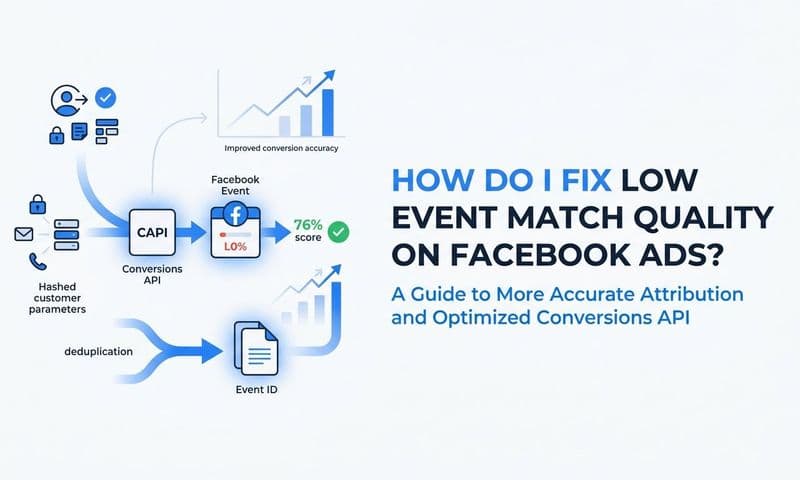
The key is implementing both pixel and CAPI together, with proper event deduplication to avoid counting the same conversion twice. When both fire successfully, you keep the pixel event. When the pixel is blocked but your server captures the conversion, CAPI fills the gap. This dual approach dramatically improves tracking accuracy.
Third-Party Attribution: Facebook's platform metrics only show you what happens within Facebook's ecosystem. But your customers don't live in a single platform—they see your Facebook ad, then search for your brand on Google, read reviews, visit your website multiple times, and eventually convert. Facebook's last-click attribution claims credit for that conversion, but was it really the Facebook ad that drove the sale, or did it just happen to be the last touchpoint before purchase?
Third-party attribution platforms solve this by connecting data from all your marketing channels—Facebook, Google, email, organic search, direct traffic—and showing you the complete customer journey. These multi-touch marketing attribution software tools track individual users across touchpoints and apply attribution models that distribute credit more fairly across the channels that actually contributed to the conversion.
More importantly, they connect your ad data to actual CRM records and revenue outcomes. This closed-loop reporting shows you which Facebook campaigns drove customers who actually paid, not just which campaigns drove conversions according to Facebook's pixel.
Incrementality Testing: All the tracking methods above measure correlation—they show which ads were present before a conversion happened. But correlation isn't causation. Maybe those customers would have purchased anyway, even without seeing your ads.
Incrementality testing measures true causal impact by running controlled experiments. The most rigorous approach is a lift study where you create a holdout group that doesn't see your ads, then compare conversion rates between the exposed and holdout groups. The difference represents the incremental conversions your ads actually caused.
Facebook offers brand lift studies and conversion lift studies for advertisers with sufficient budget and scale. These studies require statistical rigor and meaningful sample sizes, but they provide the gold standard answer to the question: "Are my ads actually working, or would these people have converted anyway?"
Setting Up Accurate Conversion Tracking
Theory is useful, but accurate measurement starts with proper technical implementation. Here's how to set up tracking infrastructure that captures reliable conversion data.
Start with the Facebook Pixel. Install the base pixel code in the header of every page on your website—this establishes the foundation for tracking. Then configure standard events for the key actions that matter to your business: ViewContent when someone views a product page, AddToCart when they add items, InitiateCheckout when they begin the purchase process, and Purchase when they complete a transaction.
The Purchase event is critical. Make sure it fires only on your order confirmation page and includes the actual transaction value in the event parameters. This allows Facebook to optimize for purchase value, not just purchase volume—a crucial distinction if your products have different profit margins. Our detailed guide on how to improve Facebook Ads tracking covers advanced configuration techniques.
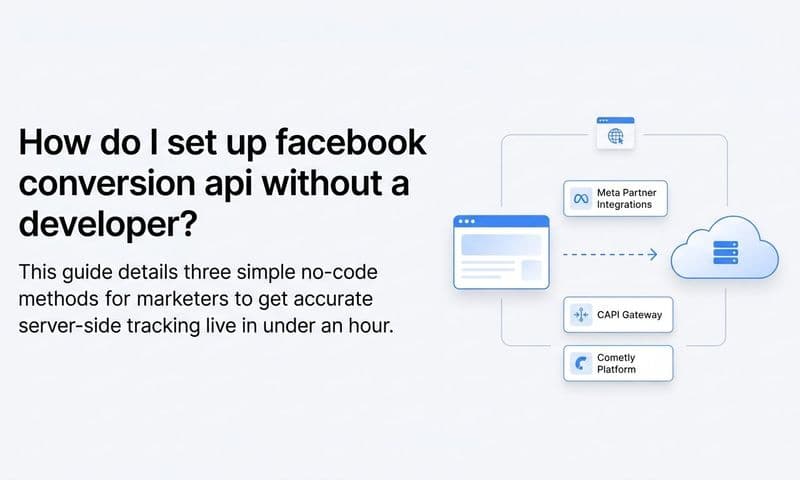
But the pixel alone isn't enough anymore. Implement Conversions API to capture server-side events that bypass browser limitations. If you're using Shopify, WooCommerce, or another major e-commerce platform, look for native CAPI integrations or official plugins that handle the technical setup for you.
For custom implementations, your server needs to send event data to Facebook's API endpoint whenever a conversion happens. Include as much customer information as possible—email, phone number, first name, last name, city, state, and zip code. Facebook hashes this information and uses it to match conversions back to the user who saw your ad, even when cookie-based tracking fails.
The most critical technical detail is event deduplication. When both your pixel and CAPI successfully fire for the same conversion, you need to ensure Facebook only counts it once. Implement this by passing an identical event_id parameter in both the pixel event and the CAPI event. Facebook uses this ID to recognize duplicate events and count them only once.
Test your implementation thoroughly. Use Facebook's Events Manager to verify that events are firing correctly, check that event parameters include the right data, and confirm that deduplication is working by looking for the "deduplicated" flag in your event diagnostics.
Attribution Models: Choosing the Right Lens
Once your tracking infrastructure is solid, you need to decide how to distribute credit for conversions across the multiple touchpoints in a customer's journey. This is where attribution models come in.
Last-Click Attribution: This is the simplest model—100% of the credit goes to the last ad someone clicked before converting. Facebook's platform reporting uses last-click by default. It's easy to understand and implement, but it completely ignores the awareness and consideration work done by earlier touchpoints. If someone sees your Facebook ad, then searches for your brand and clicks a Google ad before purchasing, Google gets all the credit under last-click, even though Facebook introduced them to your brand.
First-Click Attribution: The opposite approach—all credit goes to the first touchpoint. This makes sense if you're primarily focused on customer acquisition and want to understand which channels are best at introducing new prospects to your brand. But it ignores the nurturing and conversion work done by subsequent touchpoints.
Linear Attribution: This model distributes credit equally across all touchpoints. If someone interacts with four ads before converting, each gets 25% credit. It's more fair than last-click or first-click, but it treats all touchpoints as equally important, which rarely reflects reality. The ad that introduced your brand probably deserves more credit than the retargeting ad they saw the day before purchase.
Data-Driven Attribution: The most sophisticated approach uses machine learning to analyze thousands of customer journeys and determine how much credit each touchpoint type actually deserves based on its impact on conversion probability. Google Analytics 4 and advanced attribution platforms use data-driven models that adapt to your specific business and customer behavior patterns. Understanding the different attribution models in digital marketing helps you choose the right approach for your business.
For most businesses, multi-touch attribution models that distribute credit across multiple touchpoints provide the most accurate picture of what's working. They show you how Facebook ads contribute to the customer journey, even when they're not the final touchpoint before purchase.
Your attribution window choice matters just as much as your model. If your sales cycle is typically two weeks—prospects see your ad, think about it, research alternatives, then purchase—you need an attribution window that captures that full cycle. A 1-day click window would miss most of your conversions, while a 28-day window might over-attribute conversions to ads that had minimal actual influence.
Match your attribution window to your actual customer behavior. Look at your CRM data to understand how long it typically takes from first touchpoint to purchase, then choose a window that captures that journey without extending so far that you're claiming credit for conversions your ads didn't really influence.
Key Metrics That Actually Matter for Facebook Campaigns
Once your measurement infrastructure is in place, focus on the metrics that actually drive business outcomes. Vanity metrics like reach and impressions tell you how many people saw your ads, but they don't tell you whether those ads were profitable.
Cost Per Acquisition (CPA): This is the fundamental efficiency metric—how much you spend to acquire one customer. Calculate it by dividing your total ad spend by the number of conversions. But here's the critical detail: use verified conversions from your CRM or payment processor, not just Facebook-reported conversions. Your real CPA is based on customers who actually paid, not modeled conversions that may or may not represent real sales.
Track CPA trends over time. If your CPA is increasing, it might mean your audience is saturating, your creative is fatiguing, or competition is driving up auction prices. If it's decreasing, you're getting more efficient—either your targeting is improving, your creative is resonating better, or you're benefiting from algorithmic learning.
Return on Ad Spend (ROAS): This measures revenue generated for every dollar spent on ads. A 3x ROAS means you generate three dollars in revenue for every dollar spent. Calculate it by dividing revenue attributed to Facebook ads by your total Facebook ad spend.
But be careful with platform-reported ROAS. Facebook's attribution might claim credit for revenue that other channels contributed to. For accurate ROAS, use multi-touch attribution that distributes revenue credit across all the channels that influenced the purchase. This gives you blended ROAS—a more realistic picture of profitability that accounts for cross-channel influence. Implementing channel attribution for revenue tracking ensures you're measuring true performance.
Customer Lifetime Value (CLV): CPA and ROAS measure immediate returns, but the real value of a customer extends far beyond their first purchase. CLV represents the total revenue you expect from a customer over their entire relationship with your brand.
This metric transforms how you evaluate Facebook performance. A campaign with a $100 CPA might look expensive if your average order value is $80. But if customers acquired from that campaign have a CLV of $500 because they make repeat purchases, that $100 CPA is actually extremely profitable.
Use cohort analysis to understand long-term value from Facebook-acquired customers. Group customers by the month they were acquired, then track their purchasing behavior over time. You might discover that customers from certain campaigns or audience segments have dramatically higher retention rates and lifetime value, even if their initial CPA was higher.
The most sophisticated approach is to calculate CAC:CLV ratio—customer acquisition cost compared to customer lifetime value. A healthy ratio is typically 1:3 or better, meaning the lifetime value is at least three times what you paid to acquire the customer. This ensures you're not just breaking even on customer acquisition, but building sustainable, profitable growth.
Building a Measurement Stack That Scales
Individual metrics are useful, but real measurement power comes from connecting your data sources into a unified system that shows you the complete picture of marketing performance.
The foundation is connecting Facebook ad data to your CRM. This closed-loop integration allows you to see which specific Facebook campaigns drove which specific customers, along with their actual revenue, repeat purchase behavior, and lifetime value. Most modern CRMs offer native integrations with Facebook or can connect through tools like Zapier.
When a lead comes in from Facebook, your CRM should automatically capture the source campaign, ad set, and ad that drove it. As that lead moves through your sales process, your CRM tracks every interaction. When they become a customer, you now have a complete record: this specific Facebook ad drove this customer who generated this much revenue. Explore the best marketing attribution tools to find the right solution for your tech stack.
Marketing attribution platforms take this concept further by unifying data from all your marketing channels—Facebook, Google, email, organic search, direct traffic, offline events—into a single view. These platforms track individual users across touchpoints, apply attribution models to distribute credit fairly, and show you which channel combinations drive the best results.
The real power comes when attribution platforms feed data back to ad platforms. When you send accurate conversion data back to Facebook through Conversions API, you're teaching Facebook's algorithm which conversions are real and valuable. This improves campaign optimization because Facebook can target more people who look like your actual customers, not just people who look like platform-reported conversions.
Create dashboards that show true marketing performance, not just platform-reported metrics. Your dashboard should display verified conversions from your CRM, attributed revenue using your chosen attribution model, actual ROAS based on real revenue, and customer acquisition costs compared to lifetime value. Leveraging data visualization tools for marketing analytics makes this data actionable for your entire team.
The key is consistency. Pick your attribution model, your attribution window, and your data sources, then stick with them. Measurement doesn't need to be perfect—it needs to be consistent enough that you can identify trends, make comparisons, and confidently decide where to allocate your budget.
Making Measurement Work for Your Business
Accurate facebook marketing measurement isn't about finding the single "correct" number that perfectly represents reality. That number doesn't exist. Different measurement methods capture different aspects of performance, and the gap between platform-reported conversions and actual revenue will always exist to some degree.
What matters is building a measurement system you can trust to guide decisions. When you combine pixel tracking with server-side Conversions API, implement multi-touch attribution that shows the complete customer journey, connect your ad data to CRM records and actual revenue, and focus on metrics that reflect real business outcomes, you create a foundation for confident scaling.
The marketers who win aren't the ones with perfect measurement—they're the ones who understand their measurement limitations, account for them in their decision-making, and continuously improve their tracking infrastructure as technology and privacy regulations evolve.
Start by auditing your current setup. Is your pixel firing correctly? Have you implemented Conversions API? Are you tracking conversions all the way through to actual revenue in your CRM? Can you see how Facebook ads interact with your other marketing channels? These questions reveal where your measurement gaps exist and where to focus your improvement efforts.
The investment in proper measurement infrastructure pays dividends every time you make a budget decision. When you can confidently identify which campaigns drive profitable customers, you stop wasting money on channels that look good in platform reporting but don't actually drive business results. You start scaling what works and cutting what doesn't, based on data that reflects reality.
Ready to elevate your marketing game with precision and confidence? Discover how Cometly's AI-driven recommendations can transform your ad strategy—Get your free demo today and start capturing every touchpoint to maximize your conversions.